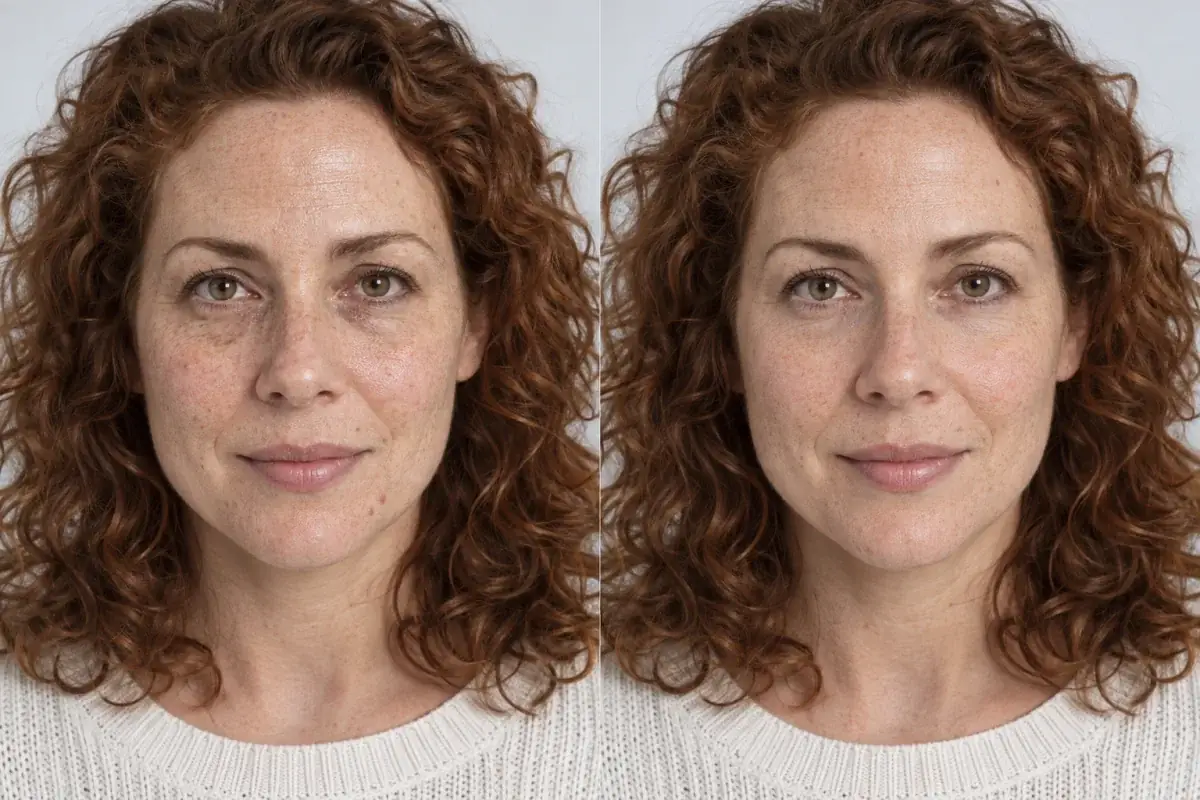

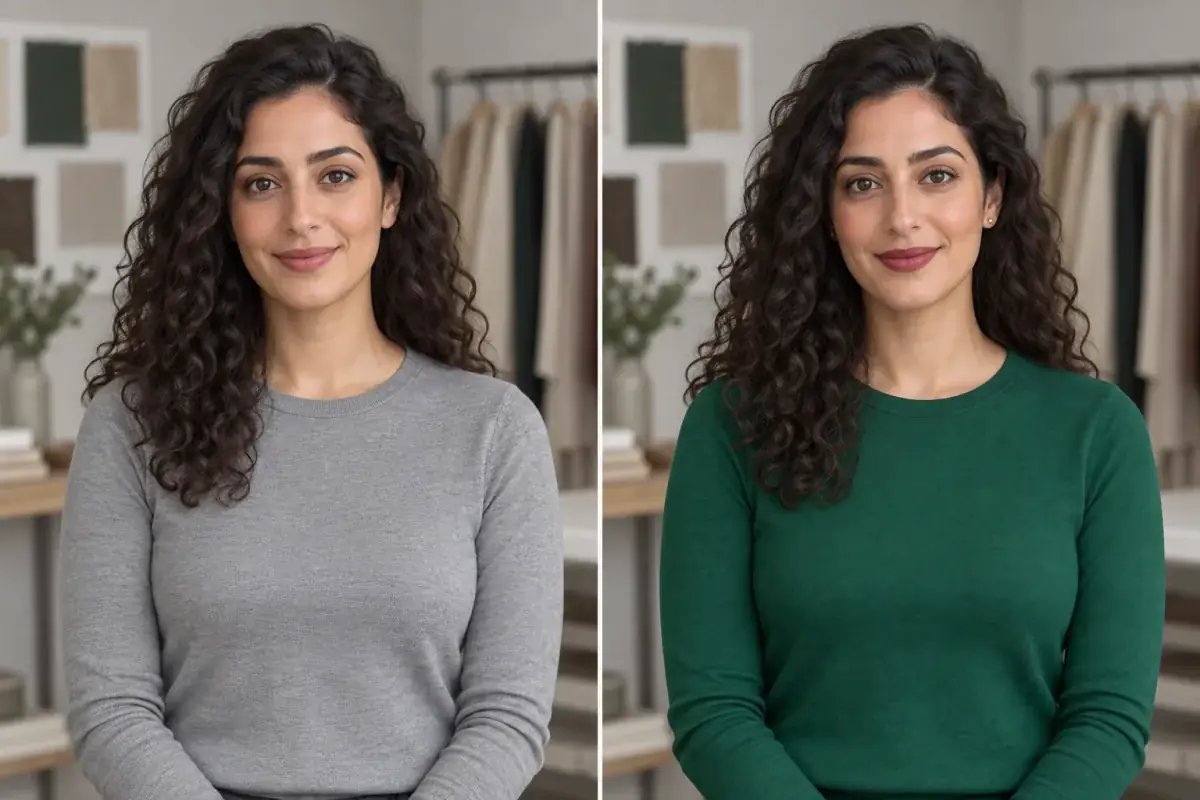
What hair color suits me? The decision guide
Hair color suits you when it agrees with three things you already carry: the temperature under your skin, the depth gap between your hair and your face, and the color of your eyes. Everything else is a variation on those.
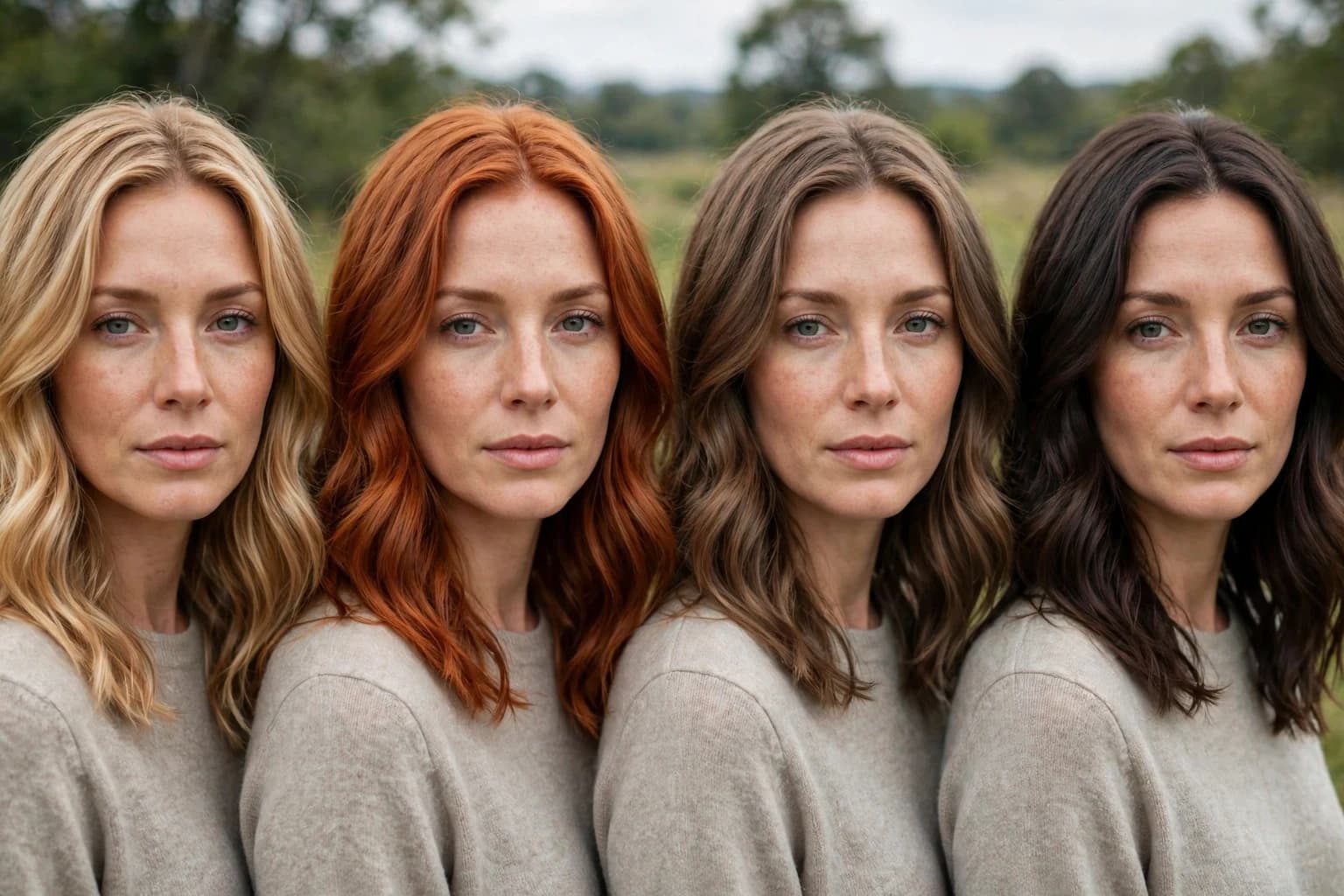
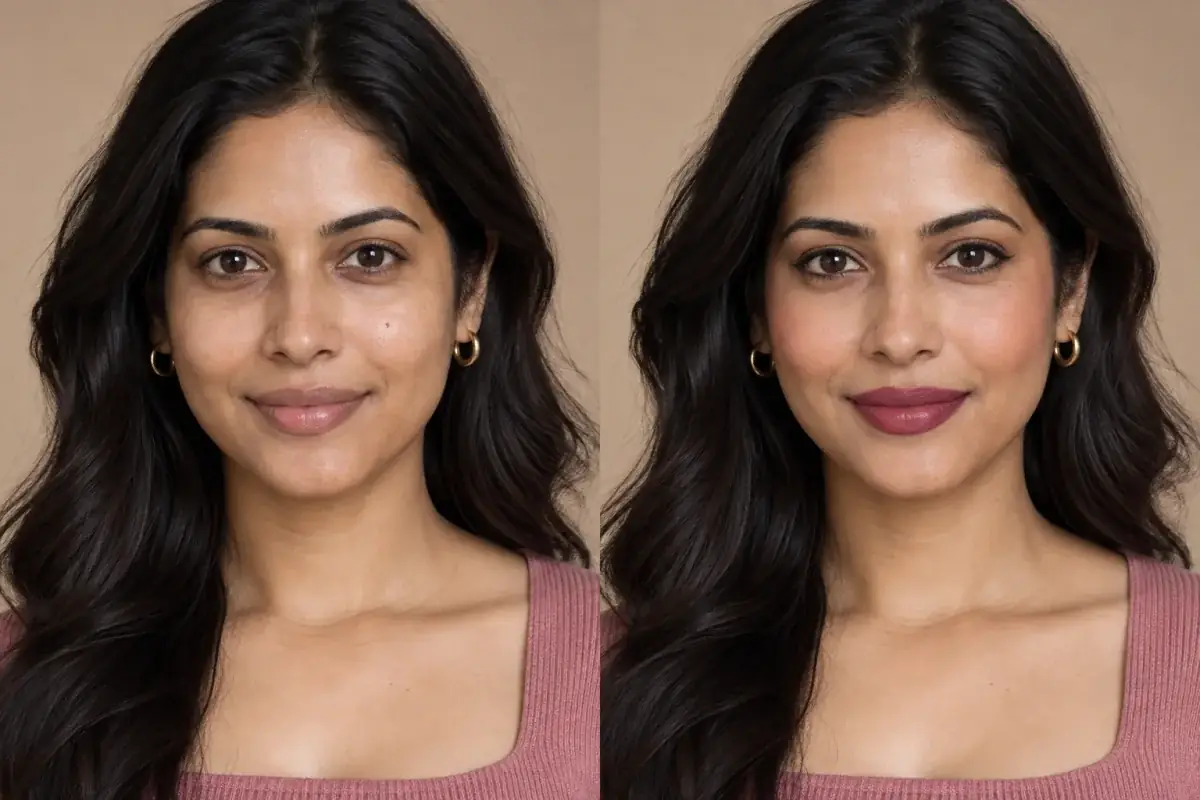
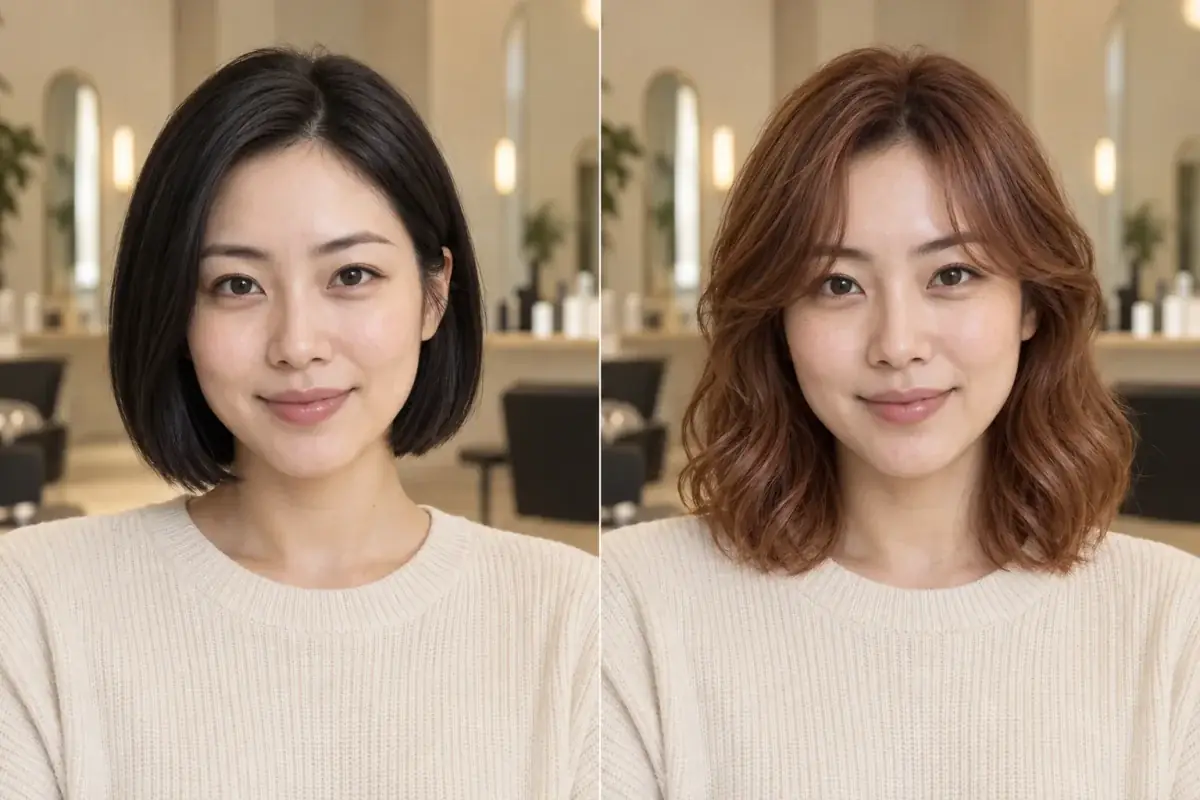
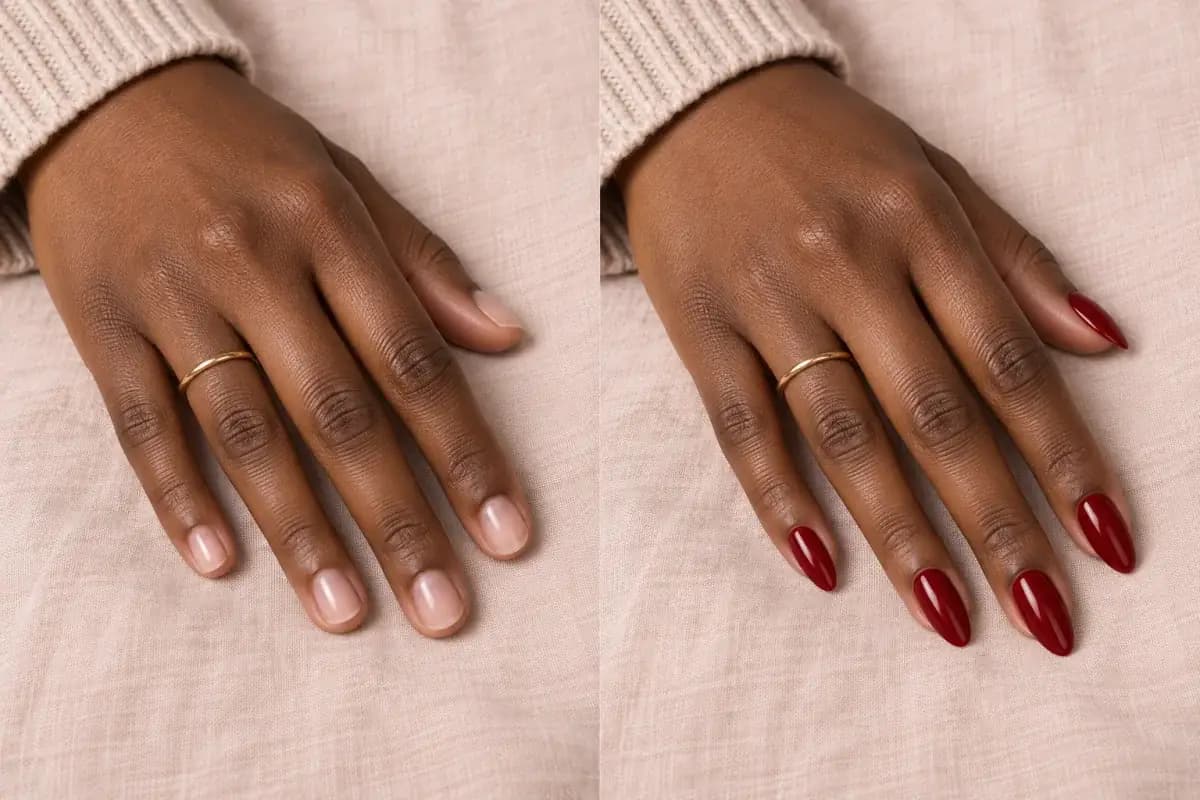
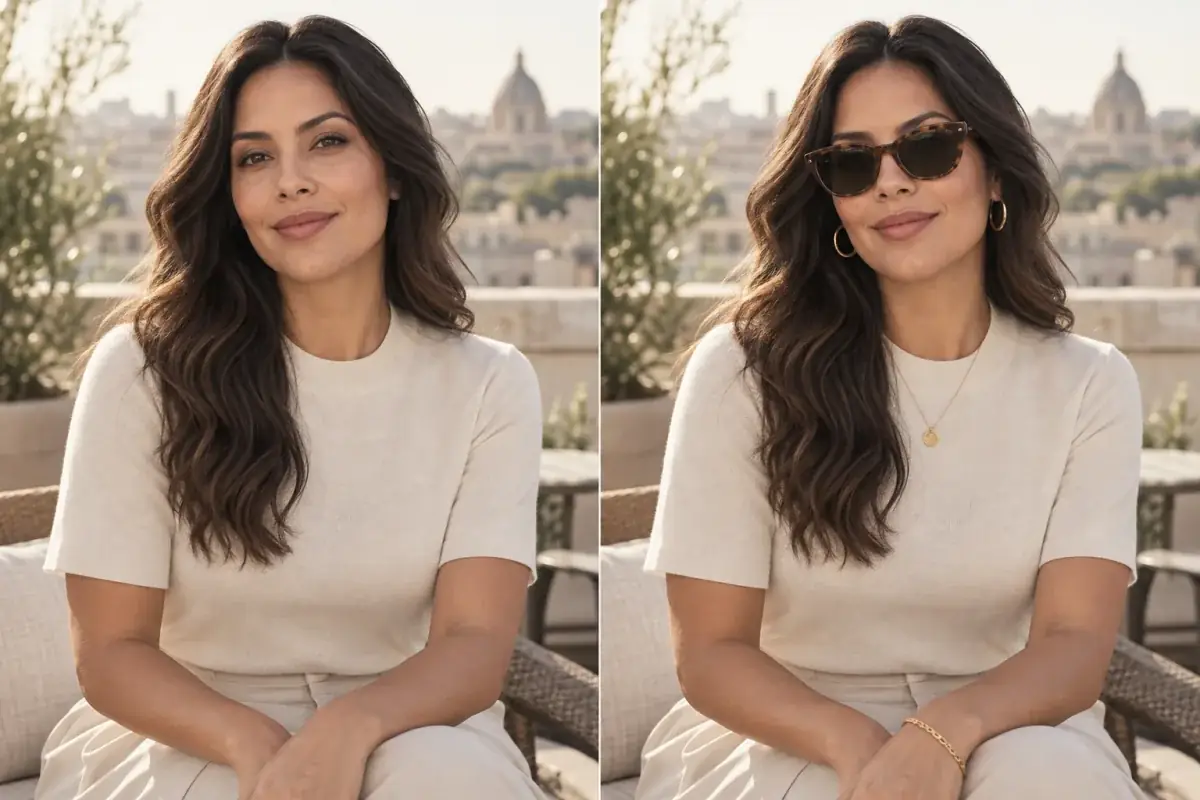
One face, four shade families. The two that agree with her undertone and depth settle; the two that fight them sit on top.
Direct answer
What hair color suits me? The hair color that suits you is decided by three things: your skin undertone (warm, cool or neutral), your depth contrast (how far the color sits from your natural level, which runs from level 1 black to level 10 light blonde), and your eye color. Warm skin suits golden blonde, honey, copper and caramel; cool skin suits ash blonde, platinum, ash brown and mocha; and whatever your family, the finalists should be seen on your own photo before a salon touches them.
What actually decides which hair color suits you?
Three factors do almost all of the work, and each one is checkable at home in minutes.
Undertone is the temperature under your skin, not the color on its surface. Warm skin carries gold or peach underneath and suits hair with warmth inside it. Cool skin carries pink or blue and suits hair with the warmth removed. Neutral skin borrows from both, which is why neutral colorings get the widest shade list. If you do not know your undertone, the tests that separate it from surface tone are in our undertone guide.
The undertone test itself takes a minute. Look at your wrist in daylight: skin that reads golden, peachy or yellow is warm; skin that reads pink, rosy or slightly blue is cool; skin where you honestly cannot call it is usually neutral. Gold jewellery disappearing into your skin while silver sits on top of it points the same way. What does not work is judging from your surface depth alone, because deep skin can be cool and pale skin can be warm, and confusing the two is how most people end up in the wrong family entirely.
Depth contrast is the gap between your skin and your hair. Hair color is graded in levels, from 1 (black) through 5 (medium brown) to 10 (light blonde). A coloring with deep features against deep skin carries a level 2 espresso easily and disappears into a level 9 blonde. A light, low contrast coloring is the reverse. Moving two to three levels from your natural base reads as a change; moving five reads as a costume unless your contrast can fund it.
Eye color is the tiebreaker, and it works by simple color logic. Hair frames the eyes, so a shade that repeats or opposes the iris changes how strong the eyes look. It rarely overrules undertone, but between two shades in the right family, it picks the winner.
Which shade families suit each coloring?
Two things to notice in the table. First, every family contains a blonde, a brunette and a red, so your undertone narrows the version, never the whole direction. A warm coloring and a cool coloring can both wear red; one wears copper, the other wears burgundy. Second, the mistake column is where salon regret actually lives. Almost nobody picks a color from the wrong direction entirely; they pick the right direction in the wrong temperature.
Within your family, you still have to pick a level, and the level decides how the shade behaves day to day. Staying within two levels of your natural base gives you the soft version: believable, low regrowth line, forgiving light. Moving three to four levels gives you the statement version of the same shade, with a visible root in four to six weeks and a salon habit to match. Neither is better; they are different commitments wearing the same color, and the commitment question is worth answering before the shade question.
Our longer guide works through the shade by shade reasoning behind this table.
- Warm: golden, peachy or yellow based skin; Shade families that suit it: Golds, coppers, warm browns; Named shades to start from: Golden blonde, honey blonde, true copper, caramel, warm chestnut; The usual mistake: Ash anything: it grays the skin it sits next to.
- Cool: pink, rosy or blue based skin; Shade families that suit it: Ashes, cool browns, blue based reds; Named shades to start from: Ash blonde, platinum, ash brown, mocha, burgundy, cherry cola; The usual mistake: Golden blonde and orange copper: both read brassy against pink skin.
- Neutral: no clear warm or cool lean; Shade families that suit it: Both families, at medium strength; Named shades to start from: Mushroom brown, bronde, beige blonde, soft copper, chocolate; The usual mistake: Going to either extreme, icy platinum or fiery copper, without testing first.
- Olive: greenish cast under the skin; Shade families that suit it: Cool and neutral browns, muted reds; Named shades to start from: Ash brown, cool espresso, smoky brunette, muted auburn; The usual mistake: Saturated gold and orange, which amplify the green; the full olive breakdown is its own guide.
What does your eye color change?
Eye color works because hair is the largest area of color next to your eyes, and color relationships are mechanical. Shades opposite your iris on the color wheel make the iris look stronger; shades near it make the whole face read harmonious and softer.
Treat eye color as the last filter, not the first. A shade in the wrong undertone family with the perfect eye pairing still fails, because the skin is the larger surface and it votes first.
- Blue eyes: warm frames make them look bluer. Copper, golden blonde and warm browns are the classic pairing, and on cool or pink skin strawberry blonde gives the warmth without the flush of a full fiery red.
- Green eyes: red is opposite green, so mahogany, cherry reds and warm auburn pull the green forward harder than any other family. Green eyed readers asking about copper are usually right, and that decision has its own guide.
- Brown eyes: the most flexible. Deep brown eyes look striking against cool ash tones and blue black, while golden brown eyes light up next to honey and chocolate.
- Hazel eyes: you choose which half to feature. Dark chocolate pushes the green forward; golden brown pulls the amber around the pupil instead.
Which hair colors fail most often, and why?
- Ash blonde on warm skin: ash is blue and gray based, and laid over golden skin it reads as gray-green at the hairline. The skin looks drained even though the blonde itself is pretty. The warm fix is honey or golden blonde at the same level.
- Jet black on a light, low contrast coloring: level 1 against pale skin and light eyes takes all the contrast in the face for itself. The features flatten and the hair reads as a wig line. Espresso at level 2 to 3 gives the same drama at a fundable contrast.
- Orange gold on olive skin: olive coloring already carries green, and saturated yellow-orange shades push that green to the surface. Cool ash browns and muted reds keep the olive cast quiet instead.
- Pale platinum on deep, warm skin: the level jump is eight or more, so the hair arrives before the face does, and the warmth in the skin turns the platinum's coolness into a visible fight. Caramel and copper at level 6 to 7 deliver the brightness at half the distance.
- A shade chosen from a celebrity photo: the most common failure of all, because the photo matched her undertone, her depth and her eyes, not yours. The shade was never the decision; the coloring underneath it was.
Why does seeing the finalists on your own photo settle it?
Rules work on averages, and your face is not an average. The table above narrows thirty possible shades to perhaps four that fit your undertone, depth and eyes, and at that point the remaining question is no longer general. It is whether this copper, at this level, on this face, settles or shouts, and no rule table can answer a question that specific.
That is the step a preview exists for. Put the two or three finalists on one honest photo of yourself, in daylight, and compare them against your skin rather than against each other. The right one does a specific thing: your skin evens out and your eyes sharpen, the same test a colorist runs with drapes. Testing previews uses credits from your plan, so run the finalists the table gave you, not the whole shade chart.
Take your two finalists from the table and put them on your own photo before you book anything.
Source: Uptone undertone guide
Source: Uptone hair colour guide
Rules narrow the field, they do not pick the shade
Undertone, depth and eye color are sorting tools, not a verdict. They reliably remove the shades that will fight your coloring, and that removal is most of the value. Between the three or four shades that remain, the answer is personal and visual, and it is settled by seeing them on your face, not by a stricter rule.
Take the theory out of it.
The article's argument ends in a shortlist: two to four named shades that fit the reader's undertone, depth and eyes. The only step that can rank a shortlist that personal is seeing each shade on the reader's own face, which is exactly the try-on this links to.
Questions people ask
What hair color suits me?
The one that agrees with your undertone, depth and eye color: warm skin suits golden blonde, honey, copper and caramel, while cool skin suits ash blonde, platinum, ash brown and mocha. Neutral skin can wear both families at medium strength. Narrow it to two or three named shades, then judge them on your own photo.
How do I find my undertone for hair color?
Look at the cast under your skin rather than its surface depth: gold and peach mean warm, pink and blue mean cool. Silver jewellery settling against your skin while gold looks separate is another warm-cool tell. Our undertone guide walks through the tests, including what to do when they disagree.
Can I wear a hair color outside my shade family?
Yes, if you adjust the version rather than abandoning the direction. Cool skin that wants copper can wear a muted, rose-leaning copper instead of a fiery orange one, and warm skin that wants ash can take a beige blonde with a little gold kept in. The family is a starting point, not a ban.
How far from my natural color can I go?
Two to three levels from your natural base reads as a believable change on most colorings. Five or more levels asks your natural contrast to fund a much bigger gap, which light, low contrast faces usually cannot. Staying near your depth is also what keeps regrowth soft and upkeep low.
Should I decide from a photo of someone else with the color?
Use it for the shade name, never for the verdict. A reference photo shows the color on her undertone, her depth and her eyes, and all three differ from yours. Save the name, then preview that exact shade on your own photo before you book.