






Copper hair on olive skin: which copper works, and which one turns you sallow
The guides argue about copper on olive skin because they are describing two different colours: one has a brown base and works, one is bright orange and does not.
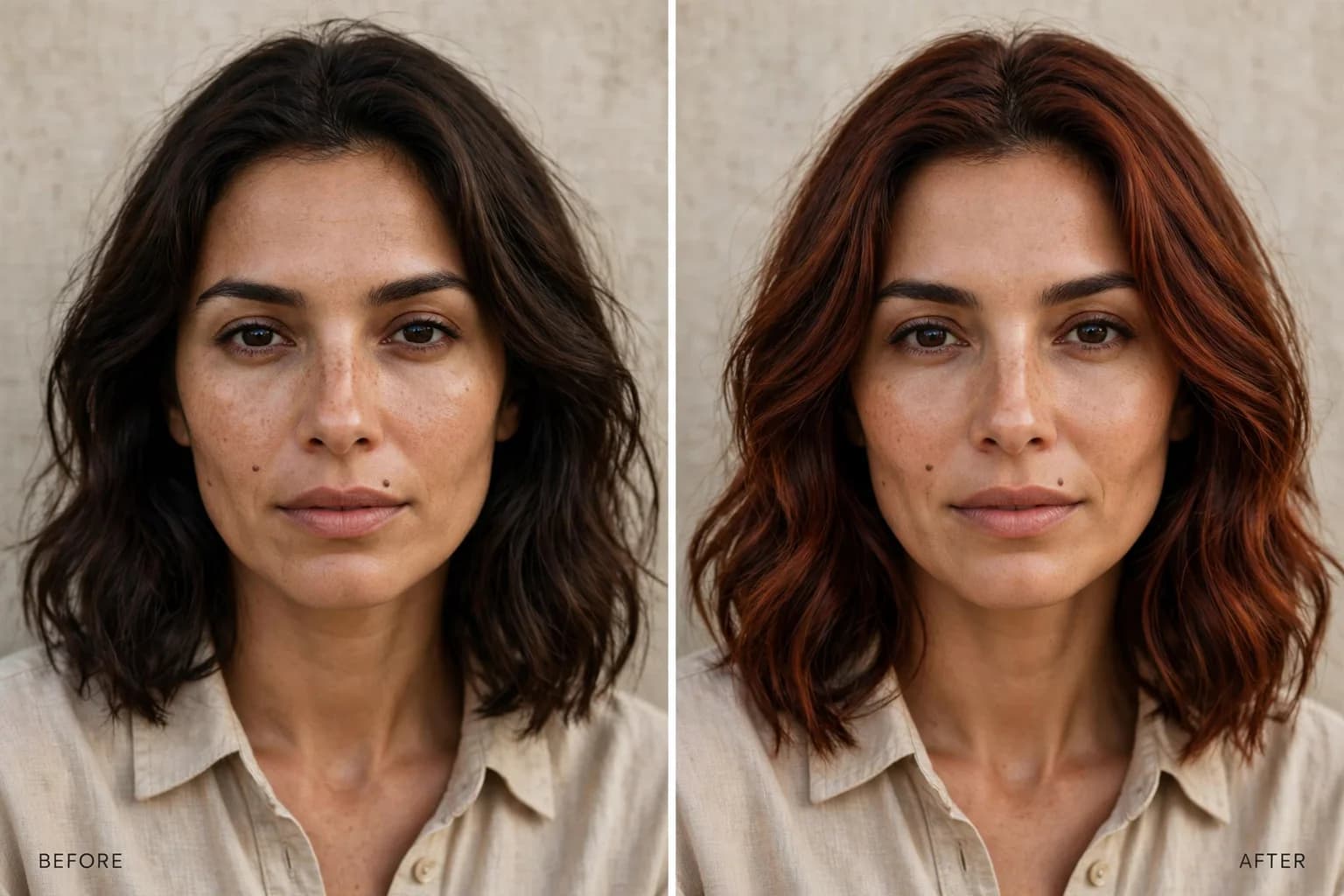
Same face, the copper with brown underneath it: the skin stays clear because the orange never travels alone.
Direct answer
Does copper hair suit olive skin? Yes, when the copper has brown depth. Deep auburn-copper, burnt copper brown and cinnamon copper suit olive skin because the brown base keeps the orange in check and mirrors the warmth already in the skin. The version that fails is bright orange copper with no brown underneath it: placed next to the green cast in olive skin, pure orange turns the skin sallow and slightly green. Copper is two colours wearing one name, and olive skin can wear exactly one of them.
Why do the guides disagree about copper and olive skin?
Read the olive-skin hair guides side by side and you will find a flat contradiction. Some rank copper among the best colours for olive skin. Others advise avoiding red hair with olive skin altogether, on the grounds that red and copper bring the green in the skin forward in an unhealthy way. Both camps sound certain, and both are describing real results.
The disagreement dissolves once you ask which copper each guide means. The guides that warn you off copper illustrate it, more often than not, with bright orange-red shades: the vivid, almost neon copper of a fresh dye job with no brown in the base. The guides that recommend copper illustrate it with auburn-leaning shades, where brown is doing half the work. Same word, different colour, opposite verdicts, both honestly come by.
This matters because the salon conversation uses the same single word. Asking for copper with olive skin is a coin flip between the two versions unless you specify the brown base. Everything else in this article is about making that specification precise: by version, by your depth, and by what the colour does to the rest of your makeup.
Source: Glowsly, best hair colours for skin tones (the disagreeing position)
Which coppers work on olive skin?
The working versions share one trait: brown underneath the orange, in varying proportions.
The placement versions deserve a word of their own. Ribbons and balayage are how olive skin wears bright copper safely: the bright shade exists in the hair, but the colour sitting against the face is the dark warm base. It is the same logic as the shades above, one level removed. Depth near the skin, brightness at a distance.
Palette Hunt's olive-skin copper guide makes the eye-colour refinement as well: brown and hazel eyes generally suit the deeper auburn-coppers, while greener or green-flecked hazel eyes can carry brighter copper at the ends, with the root kept dark and warm.
- Deep auburn-copper: brown-red base with a copper reflect. The safest copper family for olive skin, best for most olive skin, especially medium and deep.
- Burnt copper brown: brunette first, copper second; reads as a warm brown until light hits it. Best for first-time copper and conservative workplaces.
- Cinnamon copper: sits between brunette and copper, spiced rather than bright. Best for olive skin that wants warmth without drama.
- Mahogany copper: deep red-brown with a copper edge. Best for deep olive skin and dark eyes, where brighter coppers would float.
- Copper-gold ribbons: fine bright copper woven through a dark warm base, never chunky. Best for wanting brightness without a full bright head.
- Strawberry copper balayage: lighter copper kept to the ends, roots left dark and warm. Best for light olive skin, and the lowest commitment on this list.
Which copper turns olive skin sallow: wrong vs right?
- Bright orange copper, all over, vs deep auburn-copper: the bright version throws orange light onto skin that already carries green and gold, and the mixture reads sallow. The auburn version adds red-brown, which olive skin recognises as its own warmth, deepened.
- A copper gloss over an ash or cool base vs over a warm base: copper pigment over ashy brown mixes toward muddy, because the base and the reflect are fighting. Copper needs a warm or neutral base underneath it to stay clean.
- Chunky bright highlights at the front vs fine ribbons through the lengths: placement is a verdict, not a detail. Bright copper framing the face puts the failing version exactly where it does the damage; the same brightness through the ends is the version that works.
- Keeping your usual warm bronzer routine vs adjusting the blush: a warmer face of makeup on top of warmer hair doubles the orange in the picture. Copper hair usually asks for the blush moved toward rose-brown and the bronzer used less, not more.
- Matching the reference photo's skin instead of your own: most copper reference photos are taken on fair, pink-based skin, where bright copper is flattered by contrast. Olive skin needs the brown-based version to get the same photograph.
Does the right copper depend on your depth?
Yes, and this is the second specification most guides skip. Olive is an undertone, not a depth: it runs from fair to deep, and the copper has to match the depth as well as the temperature.
Fair olive skin can wear the lightest versions on the list, cinnamon and strawberry copper, as long as some depth stays at the root. Taken fully light and fully bright at once, copper washes fair olive out the way any low-contrast combination does. Medium olive skin is the natural home of the middle list: auburn-copper, burnt copper brown and cinnamon all sit at its depth without adjustment. Deep olive skin needs the deep end: mahogany copper and deep auburn, because a bright copper at a light level floats above a deep complexion instead of connecting with it.
There is also a seasonal wrinkle worth knowing. Olive skin's green cast is usually more visible in winter, when the golden part of the skin fades, and quieter in summer. A copper that behaved in August can argue with your skin in January. The brown-based versions are far more forgiving of that shift, which is another reason they are the recommendation and the bright version is the exception.
What should I ask my colourist for?
Bring the specification, not just the shade name. Copper is the colour where the consultation decides the result. Save the version name, the base instruction and the gloss plan as a Salon Card: with this shade, the sentence about keeping the brown in it is worth more than any photograph.
- The version named in full: auburn-copper or cinnamon copper, never copper alone, and a reference photo whose model's skin looks like yours.
- The brown base kept and stated: ask for the base to stay in the colour, especially at the roots and around the face.
- A gloss or strand test first if you are coming from a cool or ash base: the base underneath decides whether the copper lands clean or muddy.
- The fade, honestly: copper fades toward a lighter, more ginger version of itself, so ask what it becomes at week six and what gloss restores the brown depth, not just the brightness.
Olive is not one skin tone
Olive describes an undertone that can be warm, neutral or cool, at any depth from fair to deep, and it shifts with tanning through the year. The version logic in this article holds across that range, but it does not make one named shade right for every olive reader. If your olive skin leans distinctly cool, the reds in the working list should lean auburn rather than orange, and the on-photo test matters more, not less.
Take the theory out of it.
The published advice on copper and olive skin flatly contradicts itself, because the guides mean different colours by the same word. The try-on ends the argument on the reader's own face: bright copper and auburn-copper side by side, at her depth, in the same light.
Questions people ask
Does copper hair suit olive skin?
Yes, in its brown-based versions: deep auburn-copper, burnt copper brown and cinnamon copper all harmonise with olive undertones. The version that fails is bright orange copper with no brown underneath, which turns the green cast in olive skin sallow.
What is the best copper shade for olive skin?
Deep auburn-copper is the safest all-round choice, because its brown-red base mirrors olive warmth without pure orange. Medium olive skin also wears burnt copper brown and cinnamon well; deep olive skin should stay at the mahogany end.
Will copper hair make my skin look green?
The bright orange version can, by contrast: orange light beside the green cast in olive skin emphasises both. Brown-based coppers do the opposite, adding red-brown warmth that reads as the skin's own colour, deepened.
Does copper work on dark olive skin?
Yes, at the deep end of the family: mahogany copper and deep auburn-copper have enough depth to connect with a deep complexion. Light, bright coppers tend to float above deep skin instead of harmonising with it.
How fast does copper hair fade?
Copper is one of the fastest-fading salon colours, and it fades toward a lighter, more ginger version of itself as the pigment leaves. A gloss refresh that restores the brown depth, not just the brightness, is the maintenance that keeps the olive-safe version intact.