Which hair colours suit your skin tone, and which rules to ignore
There are three things that genuinely predict whether a hair colour will suit you. Most advice covers one of them and invents rules for the rest.
The three things that actually matter
Whether a hair colour works on you comes down to undertone, depth, and contrast. Everything else (season names, celebrity comparisons, what is trending) sits on top of those three.
Undertone decides the version. If your skin runs warm, golden and copper versions of a colour sit comfortably; ashy versions can read grey against you. If your skin runs cool, the reverse. This does not restrict which colours you can have. It tells you which blonde, not whether blonde.
Depth decides the distance. Going more than about two shades from your natural depth is a bigger change than the colour name implies, and it is where most disappointment lives, not because the colour was wrong but because the gap was larger than anyone said out loud.
Contrast is the one that gets left out, and it is the most predictive of the three. It is the difference in lightness between your hair and your skin. High contrast (dark hair, fair skin) makes features read sharply. Low contrast (hair and skin close in depth) reads soft. Changing your hair colour changes your contrast, and that is usually what people are reacting to when they say a colour looks wrong on them.
How to read your own contrast
This is worth doing because it explains results that undertone alone cannot.
Take a photo of yourself in daylight and convert it to black and white. Ignore colour entirely and look at how far apart your hair and skin sit on the grey scale.
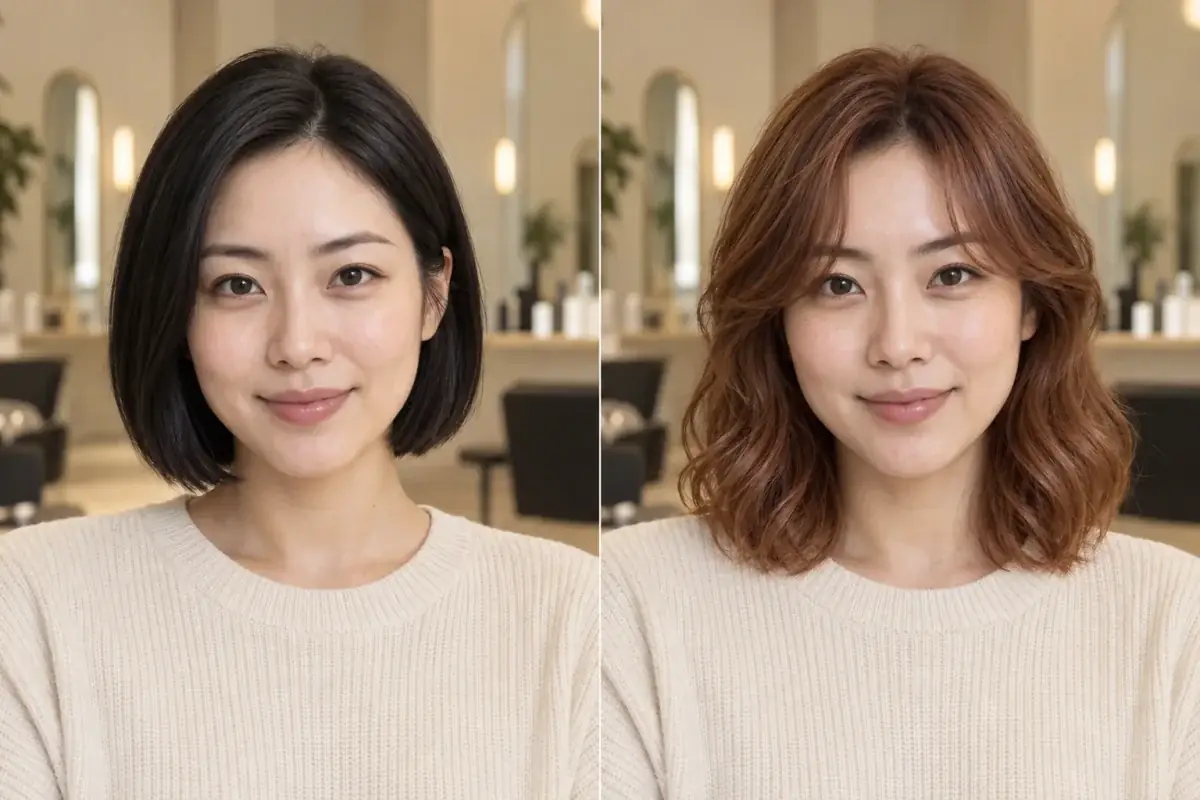
If they are far apart, you are high contrast, and your features are currently being framed strongly. Going lighter will reduce that framing, which some people love and others find washes them out. If they are close together, you are low contrast, and a dramatic change in depth will introduce framing you have never had, which is a bigger shift than the swatch suggests.
- High contrast, going lighter: expect features to soften. Keeping depth at the roots or around the face holds some of the framing.
- Low contrast, going darker: expect features to sharpen noticeably. This is often described as looking harsh, which usually means unfamiliar rather than wrong.
- Either, staying within two shades: contrast barely moves, which is why small changes reliably look like an improved version of you rather than a different person.
The rules worth keeping
A few pieces of common advice do hold up, for reasons that are worth knowing.
- Warm skin, warm colour is a real pattern rather than a superstition: matching undertone keeps the skin looking clear rather than sallow. It is a default, not a law.
- Very ashy blondes on very fair cool skin can leave nothing to separate hair from face. Some people want exactly that effect; it is worth knowing it is the effect you are choosing.
- Face-framing pieces are the cheapest way to test a colour. They change the light around your face, which is most of what you are judging, at a fraction of the commitment.
- Going lighter than about three shades from natural in one appointment is where hair damage becomes the real constraint. That is a hair-health question rather than a colour-suit question, and it deserves an honest answer from a colourist rather than a swatch book.
The rules worth ignoring
Others are inherited and do not survive contact with actual faces.
The idea that certain colours are forbidden after a certain age is fashion, not colour theory. Grey coverage and grown-out roots are maintenance questions; nothing about a colour becomes unsuitable because of a birthday.
Season systems (spring, summer, autumn, winter) are a shorthand for combinations of undertone, depth and contrast. They can be a useful vocabulary and they are not a diagnosis, and a system that sorts every human face into four boxes should be treated accordingly.
And the largest one: the assumption that the goal is to look like a different, better-proportioned person. Choosing a hair colour is a preference, not a correction.
What to ask a colourist
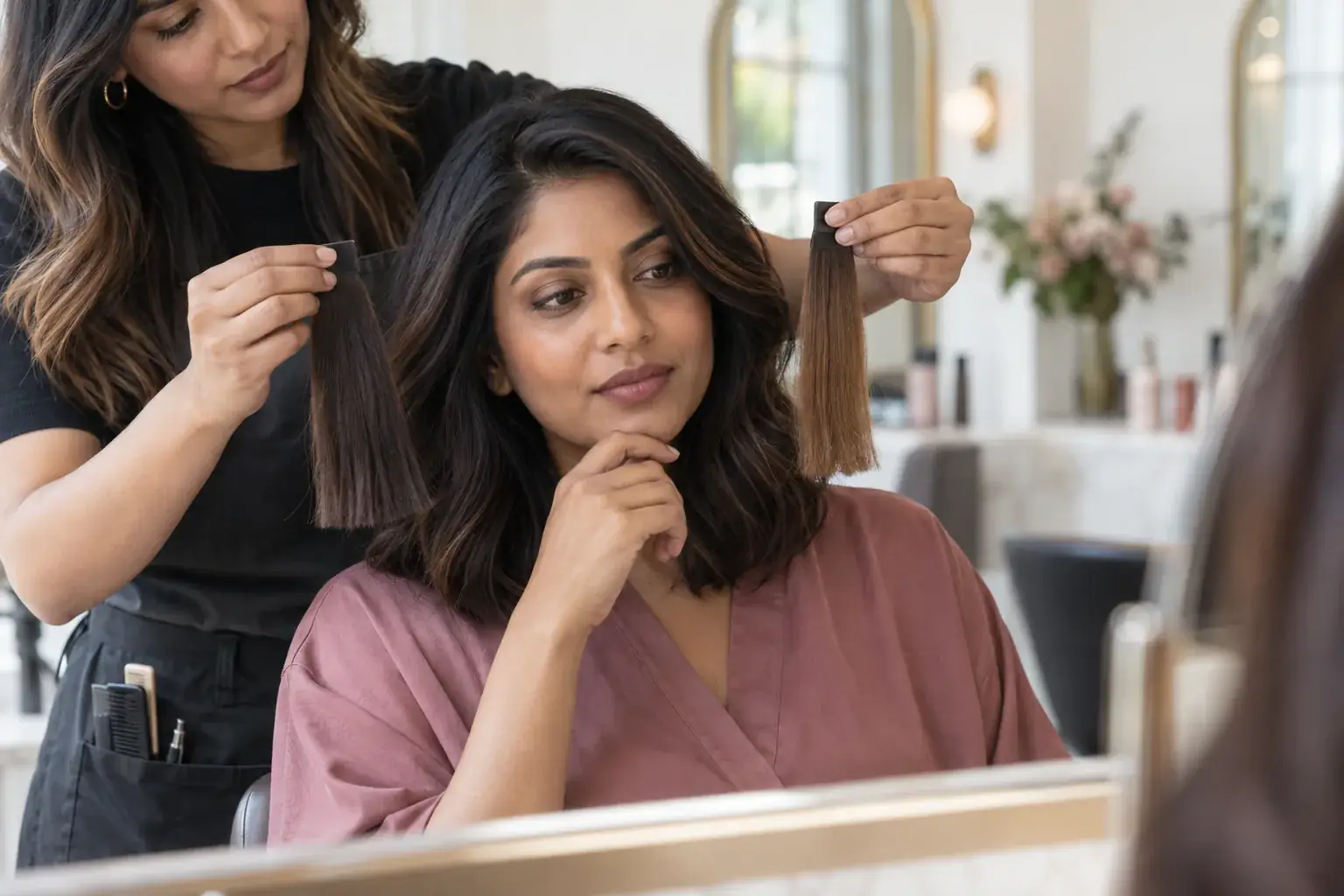
The most useful thing you can bring to an appointment is not a photograph of a celebrity. It is a description of an effect and an honest account of maintenance.
Ask what your natural level is and how many levels the colour you want sits away from it. Ask what the regrowth will look like at six weeks, because that is what you will live with for most of the time you have the colour. Ask what it costs to maintain, in appointments per year rather than in one price.
A colourist can answer all three precisely. The one question they genuinely cannot answer in advance is whether you will like seeing it on yourself, which is the question worth resolving before the appointment rather than during it.
A preview is a preview
Seeing a colour on a photo of yourself answers a lot (mostly whether the contrast change is one you like), and it does not answer everything. It cannot tell you how your specific hair will take the dye, how much lift it needs, or how it will fade over eight weeks. Those depend on your hair's history, porosity and current colour, and they are questions for a colourist with your hair in their hands.
Take the theory out of it.
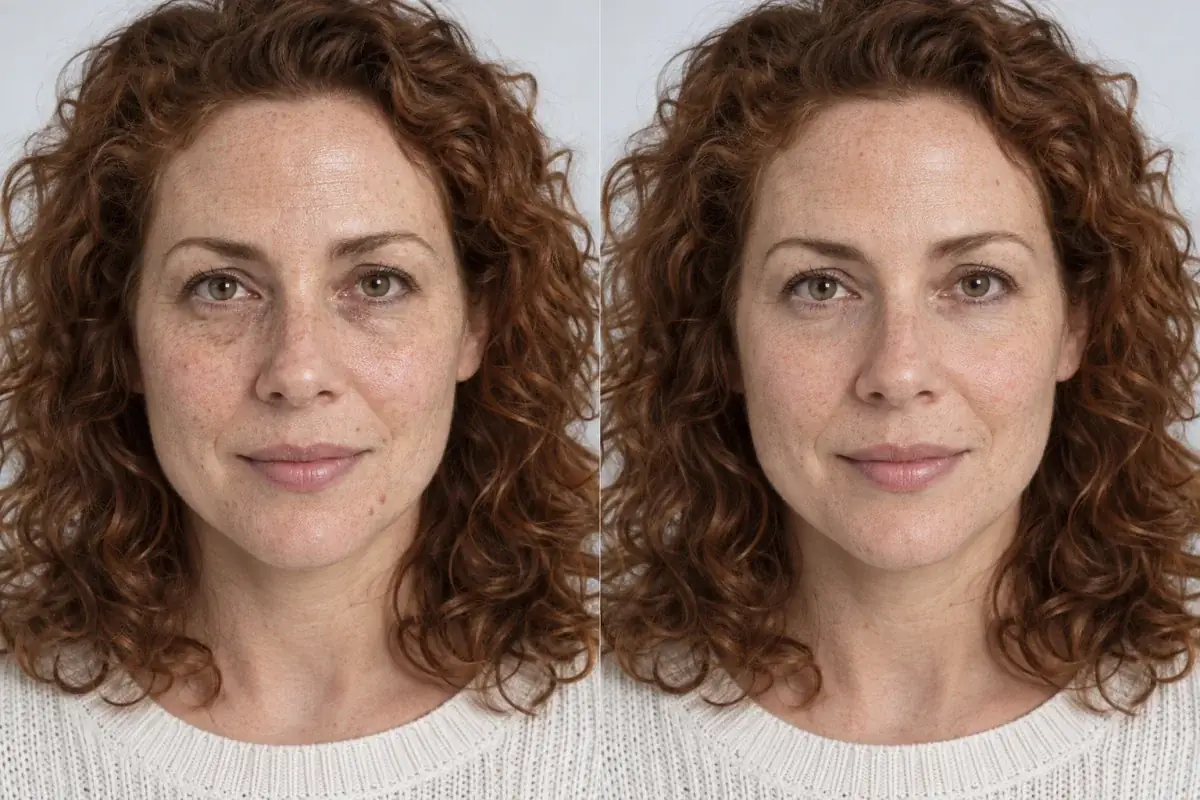
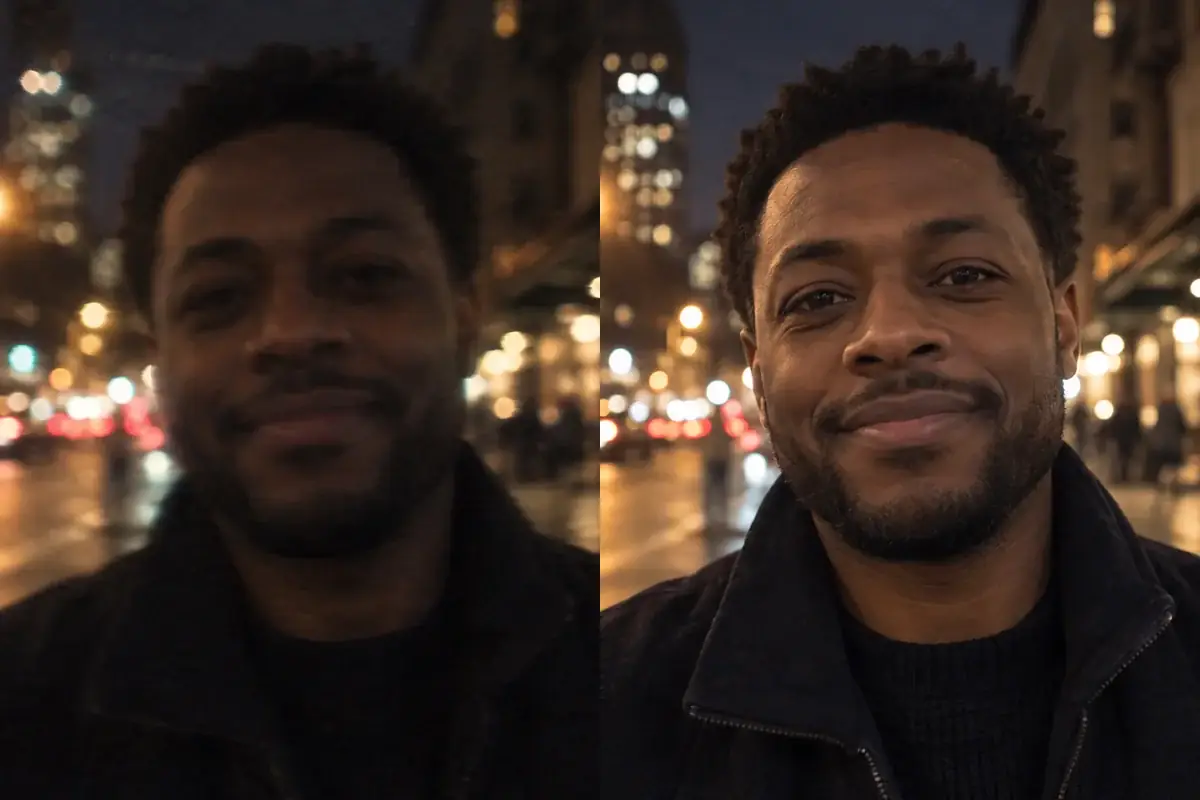
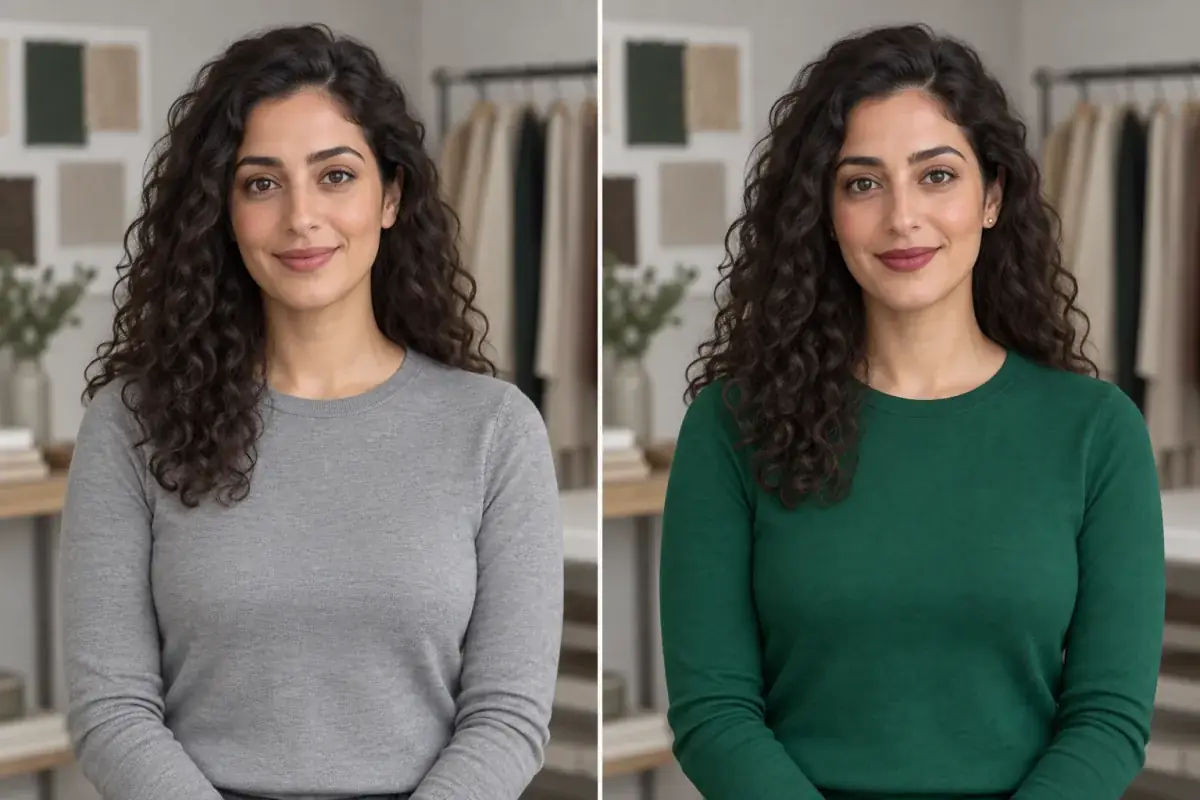
Contrast is hard to imagine and instant to recognise. Put the colour on a photo of yourself and the question stops being theoretical: you either like what it does to your face or you do not.
Questions people ask
What hair colour suits cool undertones?
Ash-based versions of whatever depth you want: ash blonde, ash brown, cool-toned black, and burgundy or plum reds rather than copper. The word to look for on a box or in a formula is ash or neutral rather than golden.
Can I go blonde with warm olive skin?
Yes, with the version chosen deliberately. Golden and honey blondes sit comfortably against olive; very ashy blondes can pull the green in olive skin forward. This is one of the clearest cases where the version matters and the colour itself does not.
How many shades lighter can I safely go?
Two to three levels in one appointment is the usual safe range, and beyond that it becomes a multi-session process. This is a hair-health limit rather than an aesthetic one, and a colourist who tells you it will take two visits is being straight with you.
Why does my hair colour look wrong even though it suited the photo?
Usually contrast rather than colour. A shade shown on hair a different depth from yours produces a different amount of separation from the skin, and that separation is most of what you are reacting to.
Does hair colour need to match my eyebrows?
Not match, but a gap of more than two or three shades starts to read as deliberate rather than natural, which is fine if it is deliberate. Going much lighter is the case where brows usually need adjusting too.