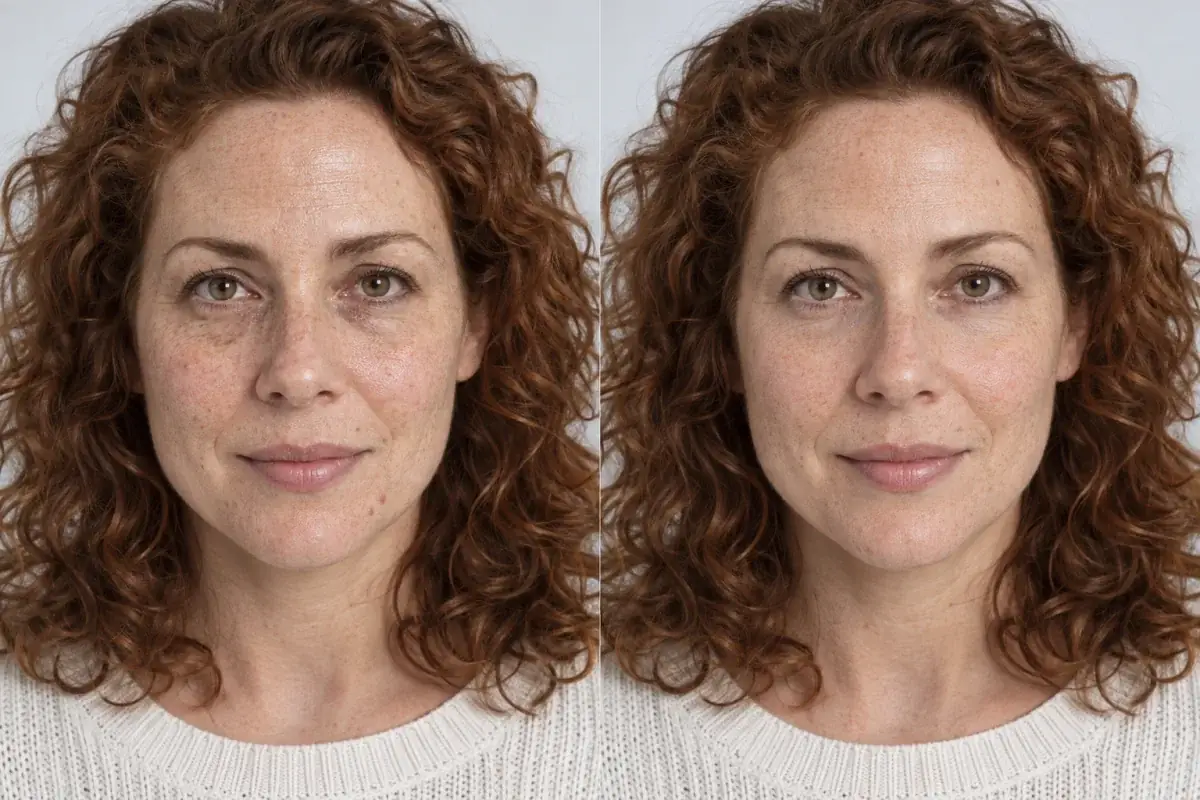
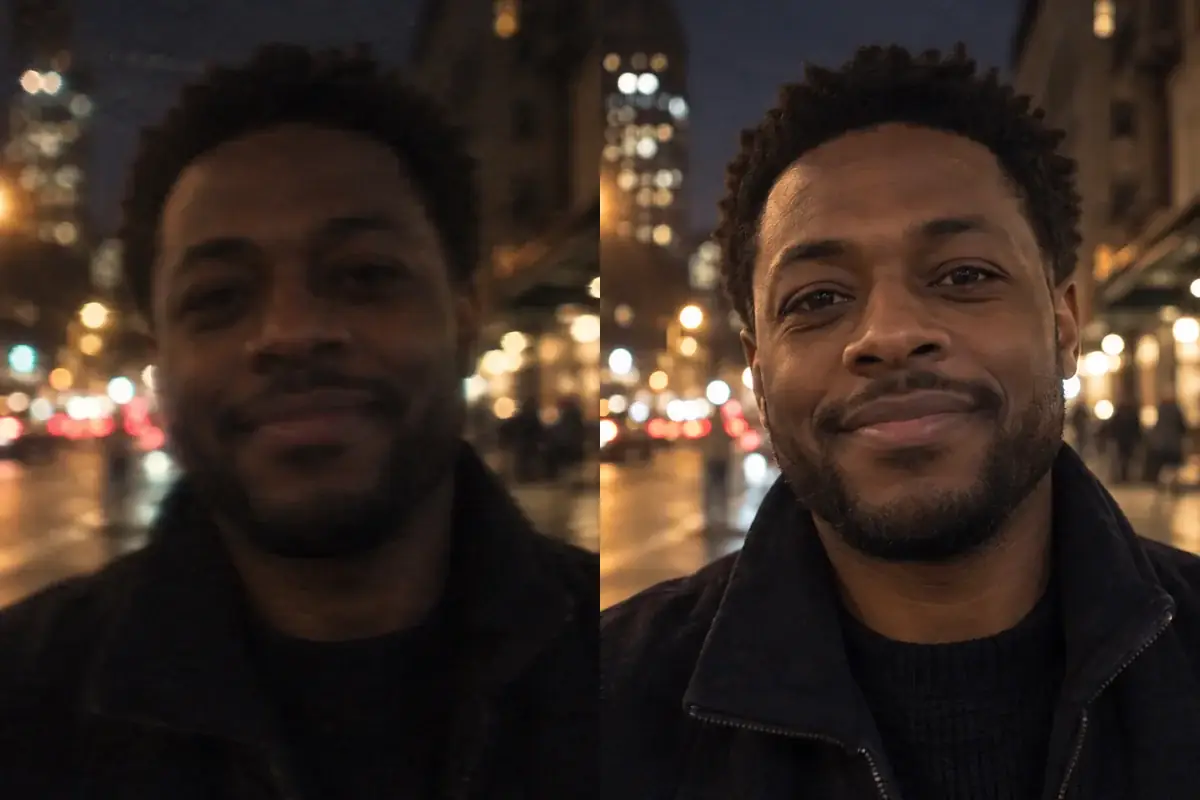
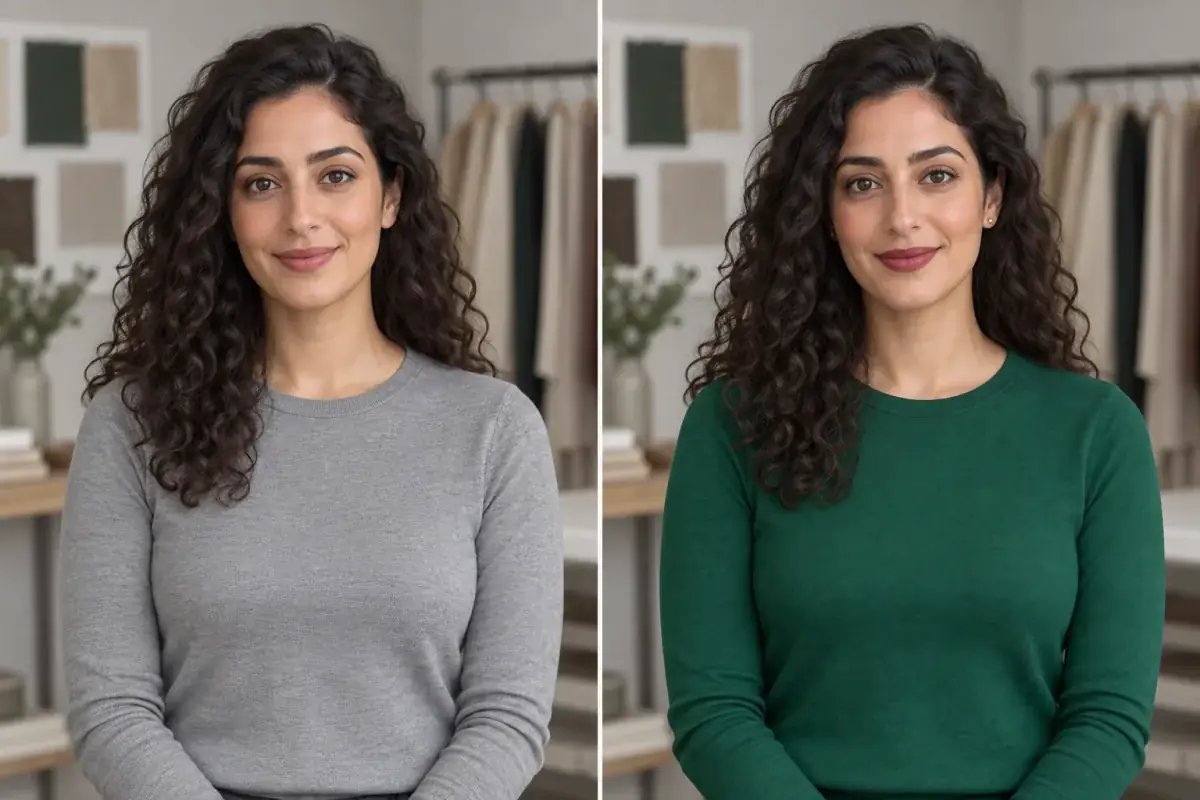
What hair color makes you look younger? Warmth, dimension and a softer hairline
Nobody looks younger because of a shade name. They look younger when the color returns light to the face, moves instead of sitting flat, and stops drawing a hard line where the hair begins.
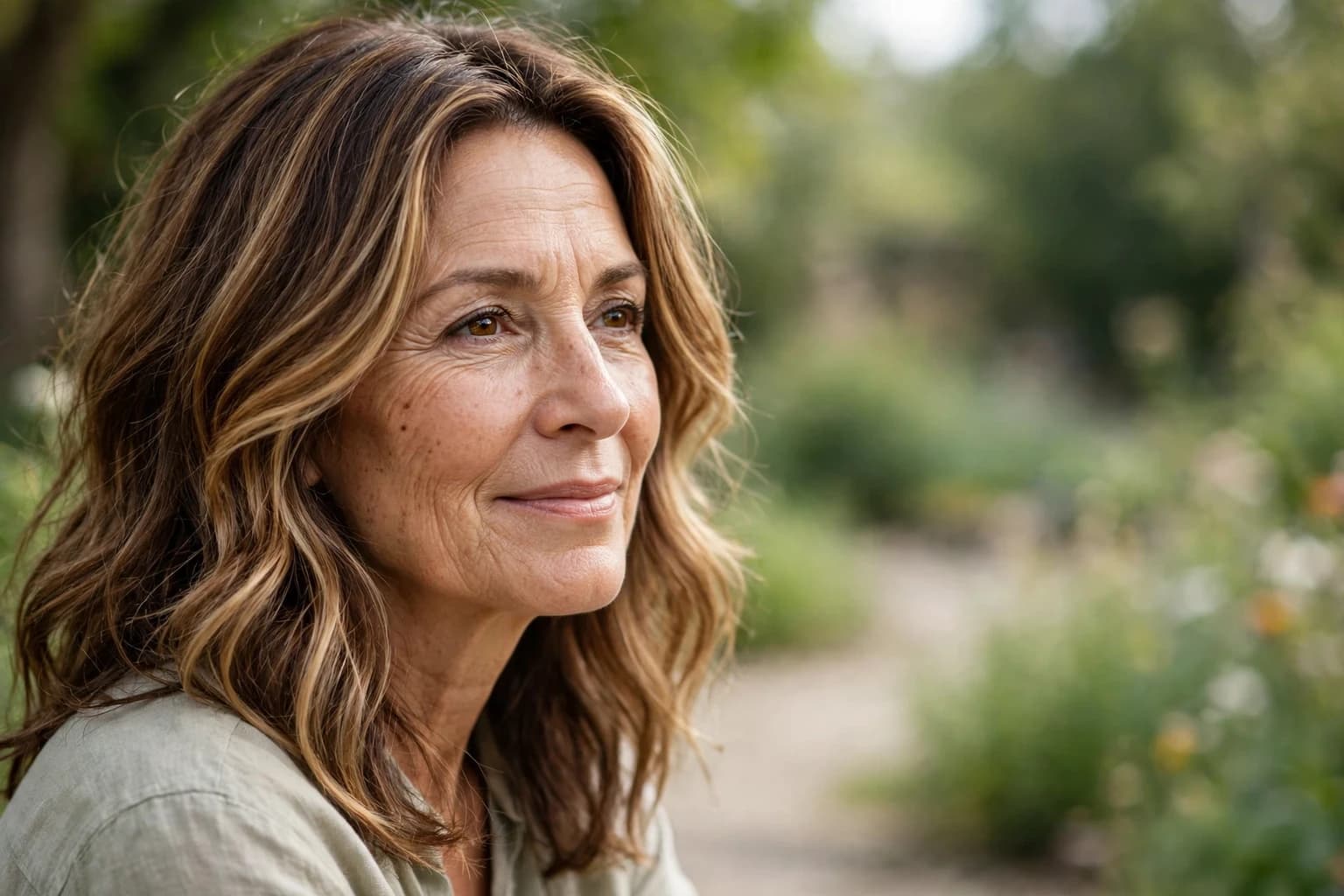
The youthful effect is placement and dimension: light beside the face, depth behind it, and no hard root line.
Direct answer
What hair color makes you look younger? The color that reads younger is warm or softly neutral at the face, one to two levels lighter around the hairline than the base behind it, and built from at least two tones instead of one flat shade. Honey, caramel, warm champagne, cinnamon and soft copper do this for warm coloring; beige blonde, soft mocha and muted chestnut do it for cooler coloring. Grey looks youngest when it is blended with fine highlights, lowlights or a translucent gloss rather than either hidden under opaque dye or left as a hard stripe at the part.
Why does color beside the face change how old you look?
The hairline is the frame the eye uses to read the face, so the two inches of hair closest to the skin matter more than the lengths. Light, warm pieces at the front bounce light onto the cheeks and soften the contrast between hair and skin. Celebrity colorist Chase Kusero makes the same point about honey blonde in Parade's guide: warm blondes soften features and brighten the complexion, while cool ashy blondes can wash the face out.
That does not mean everyone should go blonde, or even lighter overall. The lift only needs to happen at the frame. A brunette can keep a level 5 base through the back and carry level 7 caramel pieces around the face, and the face reads brighter while the hair still reads brunette. Going lighter everywhere raises maintenance, dries the hair and often removes the depth that was giving the face its structure.
Skin also changes with time, which is why a shade that worked at thirty five can fail at fifty. PaletteHunt's over 50 guide notes that skin can lose pigment and contrast as collagen falls, so a once flattering dark shade may read severe against the same face later. The color did not change. The canvas did.
Why does dimension read younger than one flat shade?
Natural hair is never one color. It is darker at the root, lighter where sun and friction hit it, and mixed strand by strand, which is why it moves when the head moves. A single opaque shade removes that variation, and the eye reads the result as a helmet: solid, still and obviously applied. Flat color also shows every regrowth line at full strength, because there is no variation at the root to hide a stripe of grey.
Dimension fixes both problems with contrast kept small. The useful range is two to three levels between the darkest and lightest pieces: a level 5 espresso base with level 7 toffee pieces, or a level 7 dark blonde base with level 9 champagne pieces. Beyond three levels the pieces read as stripes, and stripes date a color faster than grey does. Fine placement beats chunky placement for the same reason: babylights, fine balayage and woven lowlights imitate natural variation, while wide ribbons imitate a salon visit.
Shine is part of dimension, not a separate extra. A gloss seals the cuticle and makes the tones reflect light together, which is why a four to six week gloss can make an unchanged color look freshly done. Byrdie's colorists describe gloss as deposit only color with no lift and no hard demarcation line, lasting about four to six weeks depending on washing.
Which named shades create the effect?
The shade still has to pass the first test in the decision guide: it must agree with your undertone, depth and eye color. A younger looking shade in the wrong family is just a new mistake with better marketing. If you have not settled the family yet, start there.
- Warm blonde direction: honey blonde, warm champagne and golden beige at the face, over a base one to two levels deeper. The classic combination is a soft golden base with face framing honey highlights, blended rather than striped.
- Warm brunette direction: warm chestnut, rich toffee and soft mocha, with cinnamon or amber pieces through the mid lengths and ends. This is the youngest route for readers who do not want to be blonde at all.
- Red direction: soft copper and warm auburn. Colorist Rita Hazan describes auburn as a youthful pop of color that brings warmth back into the face; choose golden copper for warm skin and deeper cinnamon for cooler or deeper skin.
- Cool direction: beige blonde, pearl grey and deliberate silver can read young on genuinely cool, pink or neutral coloring. The rule is softness, not warmth at any cost: ash fails when it is flat and grey based, not when it is muted, shiny and dimensional.
- Grey forward direction: silver, graphite and pearl grey worn as the main color, with lowlights kept through the back so the silver has depth behind it. Deliberate silver reads modern; accidental grey stripes at the part read neglected, and the difference is blending.
What are the grey blending options, honestly?
Grey blending is also where the low maintenance question takes over. Each option trades coverage against calendar, and the full comparison of grow out, visits and cost is in the companion guide.
- Translucent gloss or demi color: deposits tone over grey so strands look tinted rather than opaque. It fades over four to six weeks, leaves almost no root line and is the lowest commitment option. Coverage is partial by design, so very dense grey will still show through, softly.
- Fine highlights and lowlights: light pieces imitate the grey's brightness while dark pieces restore depth, so incoming grey joins the pattern instead of fighting it. Refresh runs at eight to twelve weeks, and a full transition from opaque dye can take six to twelve months.
- Shadow root or root smudge: a slightly deeper shade melted at the root softens the line between dyed hair and regrowth. It buys extra weeks between appointments and is the cheapest change for someone whose current color is right but whose roots announce it.
- Full opaque coverage: still the right answer if you want no grey visible at all. The honest cost is a root appointment every three to four weeks, because the contrast between dyed lengths and grey regrowth is at its maximum.
Which color mistakes add years?
Put the brighter frame on your own photo and compare it with your current color at the same hairline:
- Too dark at the hairline: jet black or blue black against skin that has lost contrast sharpens every line and circle the face carries. Warm espresso at level 2 to 3 keeps the drama and removes most of the harshness.
- Too ashy on warm skin: grey based blonde or ash brown over golden or olive skin drains the complexion, because the hair and the skin are now arguing about temperature. Move the same level toward beige, honey or mocha.
- One flat shade, root to tip: no variation means no movement, and the regrowth line arrives as a stripe within two to three weeks.
- Brightness placed at the back instead of the face: light ends under dark roots can look striking, but the face gets none of the light. Move the lightest pieces forward.
- Chasing the shade you wore at twenty five: your skin, contrast and grey pattern have moved. Color for the face in the mirror now, not the one in old photographs.
How should you choose between lighter, warmer and blended?
Choose by the failure you can see. If your face looks shadowed beside your hair, you need light at the frame. If your skin looks grey or sallow beside your color, you need warmth or a softer neutral in the same family. If the color itself is fine for ten days and then the parting gives it away, you do not need a new shade at all; you need blending, through a gloss, a shadow root or fine dimension.
Preview the change on your own photo before the salon, and judge it in daylight at arm's length. The younger looking version is the one where your skin evens out and your eyes sharpen, not the one that looks most dramatic as a thumbnail.
Color helps, and it has limits
Hair color can return light, soften contrast and remove the tired signals sent by flat dye and hard roots. It cannot lift skin, restore hair density or reverse texture change, and any guide that promises a facelift from a shade chart is selling something. Dry, damaged hair reads older than grey hair does, so condition and shine are part of the result, not an afterthought.
Take the theory out of it.
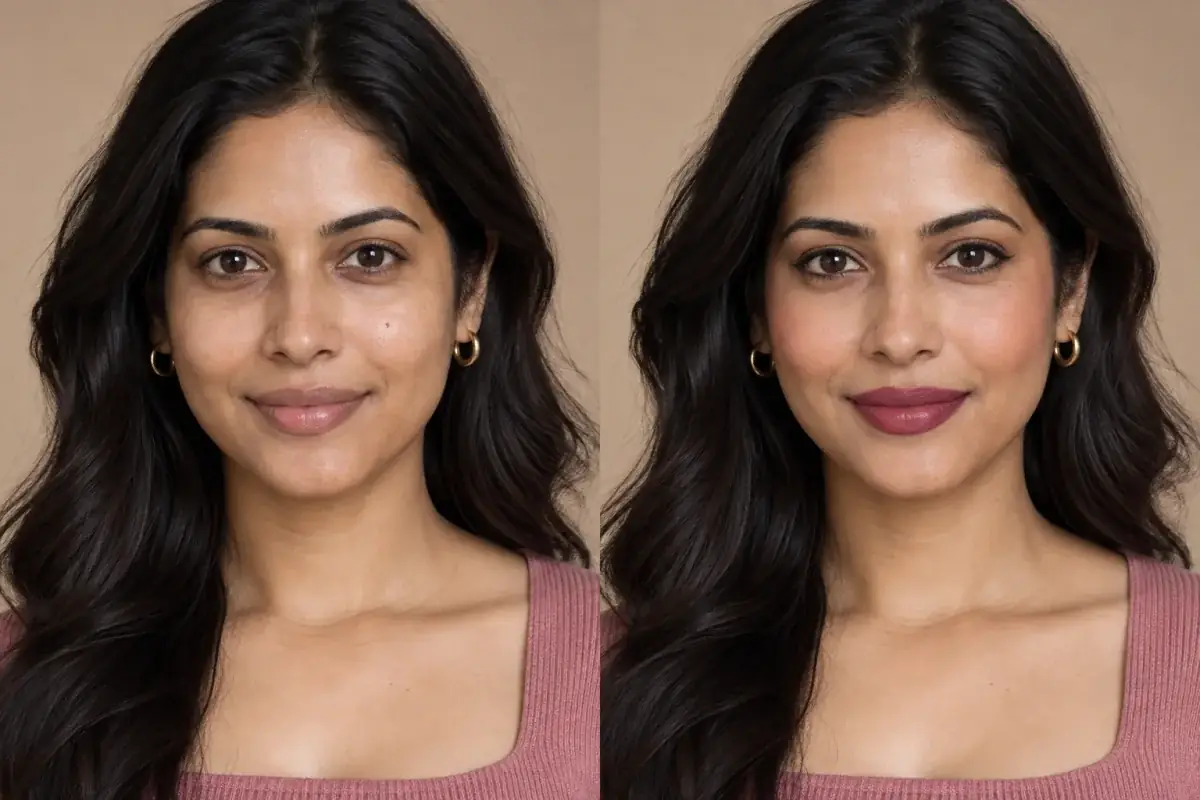
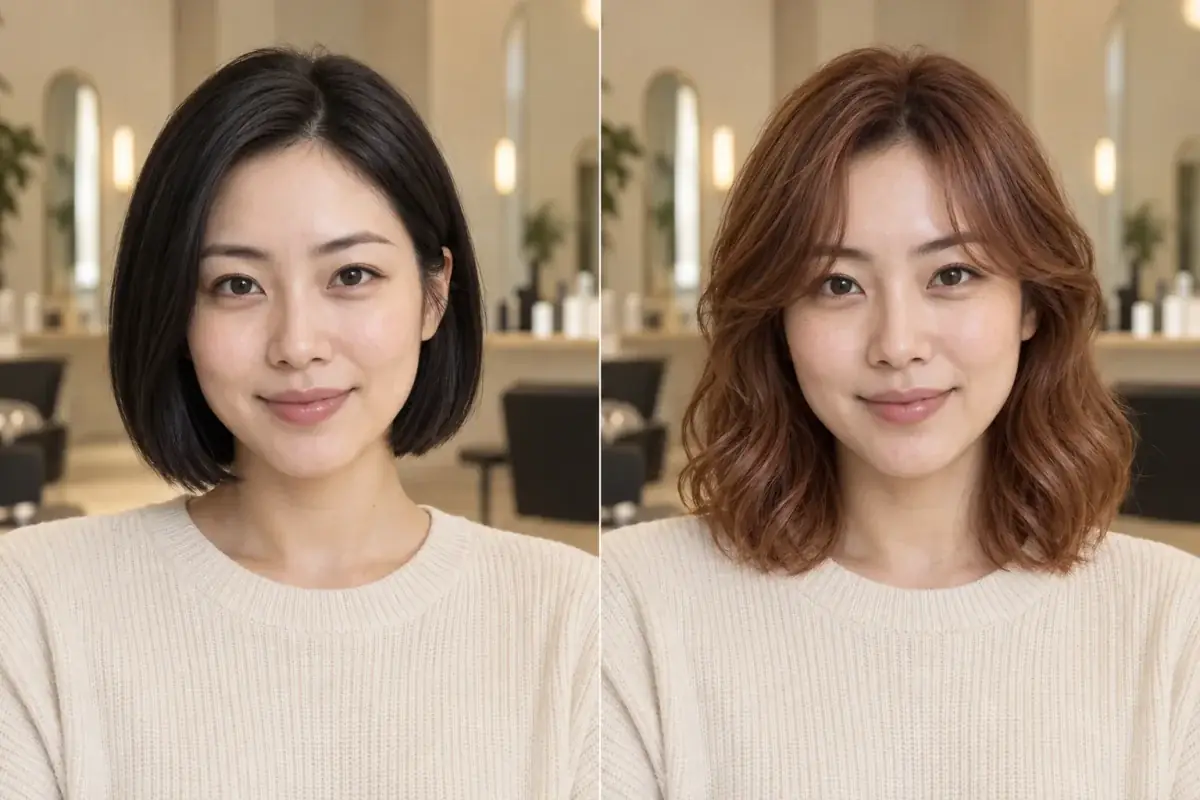
The article's rules end in placement: light at the frame, depth behind it and softness at the root. That placement can only be judged on the reader's own face, against her own skin and grey pattern, which is what the try-on shows.
Questions people ask
What hair color makes you look younger?
Warm or softly neutral color with lighter pieces framing the face, a base one to two levels deeper behind them, and at least two tones working together. Honey, caramel, cinnamon and soft copper do this for warm coloring, while beige blonde and soft mocha do it for cooler coloring. One flat shade in any family reads older than a dimensional one.
Should I go lighter or darker to look younger?
Neither, as a whole head decision. Add light only where the face needs it, at the hairline and front sections, and keep depth through the back for structure. Going lighter everywhere raises upkeep and can wash the face out, while going darker everywhere sharpens contrast against the skin.
Is black hair aging?
Jet black and blue black usually are, because the contrast against skin that has lost pigment is severe and grey regrowth shows against them within about two weeks. Warm espresso or dark chocolate at level 2 to 3 keeps the dark effect with far softer edges.
What is grey blending, and does it look younger than full coverage?
Grey blending mixes fine highlights, lowlights or a translucent gloss into your color so grey joins the pattern instead of being hidden under opaque dye. It reads younger than full coverage once regrowth starts, because there is no hard stripe at the part, but it only ever softens grey rather than erasing it.
How often does younger looking color need refreshing?
A gloss lasts about four to six weeks, dimensional balayage and highlights run eight to twelve weeks between refreshes, and opaque root coverage needs an appointment every three to four weeks. The softer the root transition, the longer the color keeps its effect between visits.