

Low maintenance hair color ideas: grow out, salon visits and cost compared
Low maintenance is not a shade. It is a grow out pattern. The right question is not which color is easiest, but which one still looks intentional ten weeks after the appointment.
The cheapest color per appointment is rarely the cheapest per year. The calendar is the real price list.
Direct answer
What is the lowest maintenance hair color? Balayage and grey blending tie for first place: both are designed to grow out without a line, so full appointments land two to four times a year, with an optional gloss between them. A gloss on its own is the cheapest option per visit but fades in four to six weeks. A shadow root stretches existing highlights by softening the regrowth line. The highest maintenance choice is the one people pick for simplicity: one opaque shade root to tip, which needs a root appointment every four to six weeks, or eight to twelve visits a year.
Why is grow out the thing that decides maintenance?
Hair grows about half an inch a month, so every color has an appointment hidden inside it. What differs is whether the new growth announces itself. Color placed at the scalp in a solid block, foil highlights to the root, opaque grey coverage, creates a visible line the week the roots reach a quarter inch. Color kept away from the scalp, melted at the root or mixed with your own grey creates a gradient, and a gradient has no deadline.
This is why comparing appointment prices misleads. Toronto salon price data makes the point plainly: root touch ups and all over color can look cheaper per visit than balayage, but at every four to six weeks they total roughly 1,000 to 2,000 dollars a year, while balayage at every three to four months totals roughly 700 to 1,600 dollars a year. The per year column is the honest one, and it is the column the table below is built on.
If you are choosing the shade itself at the same time, settle the family first with the decision guide, then choose the technique here.
How do the main options compare on grow out, visits and cost?
Prices move with city, hair length and stylist level, sometimes by more than the gaps between rows. Treat the table as a shape, not a quote: the ranking of visits per year is stable even where the money is not.
- Balayage: No line: brightness sits in the mid lengths and ends, roots stay close to natural; Full salon visits per year: 2 to 4 full appointments: partial every 12 to 16 weeks, full every 10 to 12 weeks, often stretched further; Between visit care: Optional gloss every 4 to 6 weeks to correct brass; Typical cost shape, US and EU: US: partial about $120 to $200, full about $180 to $400. EU salon menus commonly start near €80 for a face frame and €180 to €230 for a full head
- Shadow root on highlights or balayage: The root line is melted, so regrowth reads as depth rather than a stripe; Full salon visits per year: 3 to 5 lightening appointments, because each one lasts longer; Between visit care: Gloss or toner refresh between appointments; Typical cost shape, US and EU: Usually an add on rather than a standalone service: one US salon lists it at $50 on top of highlights or balayage from $245
- Gloss or glaze only: Nothing to grow out: the tone simply fades evenly over the whole head; Full salon visits per year: 0 lightening visits: gloss appointments every 4 to 6 weeks if you keep the tone, about 8 to 10 short visits a year; Between visit care: None: the gloss is the maintenance; Typical cost shape, US and EU: US: about $30 to $100 in many salons, $75 to $125 in Los Angeles per Byrdie's colorists. Often the cheapest single ticket on the menu
- Lived-in brunette: Dimension is painted through the lengths while the base stays near your natural level, so roots disappear into it; Full salon visits per year: 2 to 3 appointments; Between visit care: Gloss every 6 to 8 weeks if warmth fades or brass appears; Typical cost shape, US and EU: Priced like partial balayage in most salons: roughly $120 to $260 in the US, since less lightener and less chair time are involved
- Grey blending: Incoming grey joins fine highlights and lowlights, so the part never shows a solid stripe; Full salon visits per year: 3 to 4 appointments, at eight to twelve week intervals; Between visit care: Translucent gloss every 4 to 6 weeks if the grey turns dull or yellow; Typical cost shape, US and EU: Highlight pricing plus gloss: roughly $150 to $350 per main appointment in the US, less often than the three to four week root cycle it replaces
- One opaque shade, root to tip, for contrast: A clear line at the part within 3 to 4 weeks, fastest against grey; Full salon visits per year: 8 to 12 root appointments; Between visit care: Root sprays and powders only hide the line for a day; Typical cost shape, US and EU: Cheapest per visit, most expensive per year: roughly $90 to $180 per root appointment in published North American price guides
Who does balayage suit, and where does it fail?
Balayage suits anyone whose goal shade is lighter than their base in the mid lengths and ends: bronde, caramel, honey and mocha all live here, and the mocha version has its own guide. Because the root is left natural or shadowed, it also suits readers whose grey is still scattered, since new growth blends into the untouched root area.
It fails two groups. Readers who want brightness at the scalp itself will always see the dark root they asked to keep. And readers with dense grey at the front hairline may find balayage ignores the exact place their grey is loudest, which is where grey blending or a face framing highlight pattern does the job instead.
What does a shadow root actually buy you?
A shadow root is a slightly deeper shade blended down from the scalp into lighter color. Alfredo James Hair Design, which lists the service at a 50 dollar add on, puts the mechanism plainly: most people return for lightening because of the line at the root, not because the ends have faded, and softening that line stretches the same highlights for weeks longer.
Book it when your current highlights or balayage are right and only the regrowth line is wrong. Skip it if your goal is grey coverage at the root: a shadow root blends and deepens, it does not cover, and a root retouch is the correct service for that job.
Why is a gloss the cheapest real color change?
A gloss is deposit only, demi permanent color: it adds tone and shine, can deepen or warm a shade, and cannot lift, so it cannot make you blonder. Byrdie's colorists put the result at four to six weeks, with no strong demarcation line as it fades, and a typical salon price of 30 to 100 dollars.
That profile makes gloss the correct first step for three readers: anyone testing copper or a warmer brunette before committing, anyone whose color is right but dull, and anyone blending early grey who accepts soft coverage in exchange for zero root line. Its limit is the calendar: the ticket is small, but at eight to ten visits a year the annual total can pass a balayage habit. Low price per visit and low maintenance are not the same claim.
What makes lived-in brunette and grey blending different from balayage?
Lived-in brunette is balayage's logic applied at brunette depth: the base stays within a level of your natural color, and dimension comes from painted pieces in toffee, chestnut or mocha rather than from lift. Because the contrast is low, fading is nearly invisible, which is why two to three appointments a year can hold it.
Grey blending starts from the opposite problem. Instead of keeping color away from grey, it recruits the grey: fine highlights copy its brightness, lowlights restore the depth around it, and a translucent gloss tunes its tone. The transition from opaque dye takes patience, six to twelve months is a realistic arc, but every stage is designed to look deliberate. The younger looking side of blending, and the shade choices inside it, are covered in the companion guide.
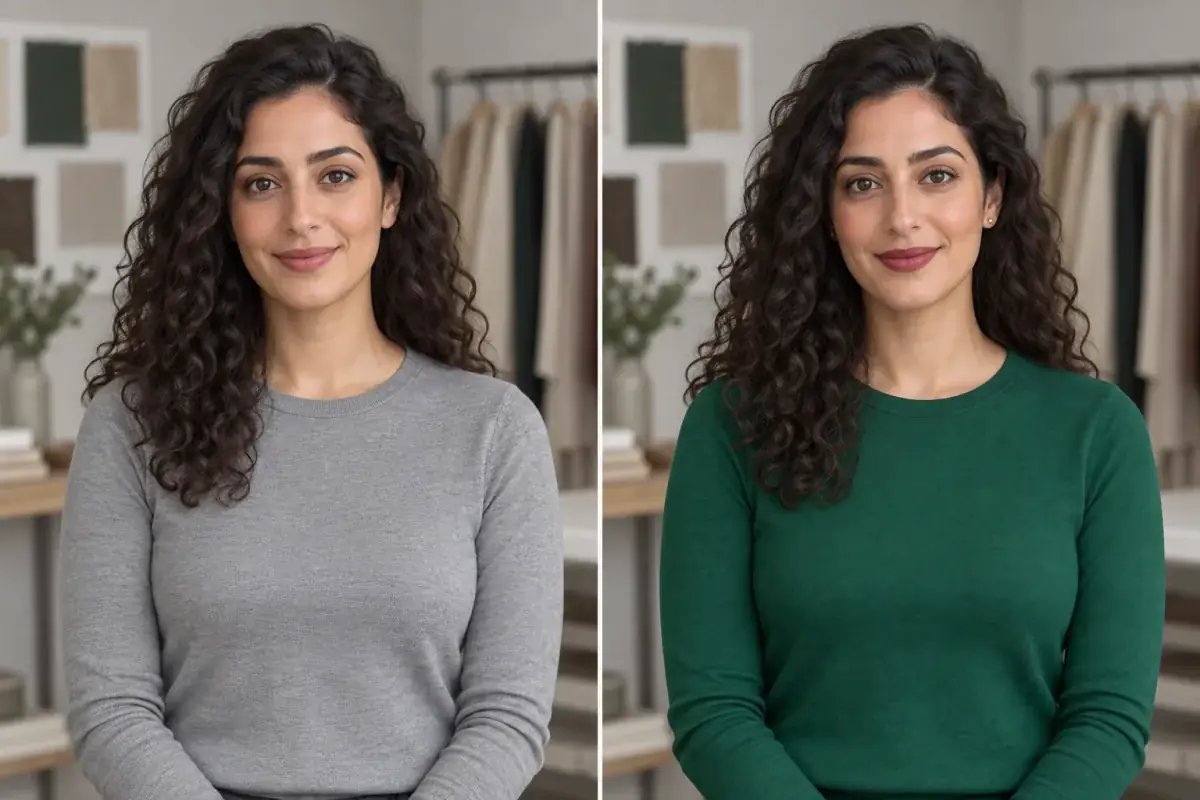
Check the low contrast version of your goal shade on your own photo, roots included:
How should you pick by calendar rather than by photo?
Count the appointments before you look at the shade. If you will realistically visit four times a year, balayage, lived-in brunette and grey blending are your honest options. If you enjoy a monthly salon rhythm and want a constant tone, a gloss habit is cheap and pleasant. If your non negotiable is zero visible grey, accept the three to four week root cycle and price it per year before booking, because that decision is a subscription, not an appointment.
Low maintenance still needs a tone plan
Every option here eventually loses tone before it loses placement: blondes go brassy, brunettes go dull and grey can yellow. A gloss or toner refresh is not a failure of the low maintenance promise; it is the small print that makes the big appointments stretch. Budget for the refresh when you compare the rows, or the cheapest row will surprise you later.
Take the theory out of it.
Each option commits the reader to a year of appointments at a set rhythm. Seeing the shade on her own photo first, including how it sits against her natural root color, is the cheapest way to avoid signing up for the wrong subscription.
Questions people ask
What is the lowest maintenance hair color?
Balayage and grey blending, because both grow out as a gradient instead of a line, so full appointments land two to four times a year. A gloss is cheaper per visit but fades in four to six weeks, and one opaque shade needs roots every four to six weeks despite looking simplest.
How long does balayage last before it needs redoing?
Partial balayage commonly runs 12 to 16 weeks and full balayage 10 to 12 weeks before regrowth or fading asks for a refresh, and many readers stretch further. A gloss every four to six weeks keeps the tone clean between those appointments without new lightening.
Does a shadow root cover grey?
No. A shadow root deepens and blends the root area so the line between regrowth and highlights disappears, but the grey itself remains visible, just softer. If zero visible grey is the goal, you need a root retouch or opaque coverage, on a three to four week cycle.
How long does a hair gloss last, and what does it cost?
About four to six weeks depending on how often you wash, fading evenly with no root line. Byrdie's colorists put typical salon pricing at 30 to 100 dollars, rising to 75 to 125 dollars in Los Angeles, which makes it the cheapest color appointment and a frequent one.
Is low maintenance color cheaper over a year?
Usually, yes, and the calendar is why. Published salon price data puts root touch up habits at roughly 1,000 to 2,000 dollars a year against roughly 700 to 1,600 dollars for balayage, even though balayage costs more per appointment. Count visits per year, not the single ticket.