






Mocha balayage: who it suits, and what it looks like from your starting color
Mocha balayage is a warm, blended brunette painted lighter through the ends, and the same shade name produces four different results depending on the color you start from.
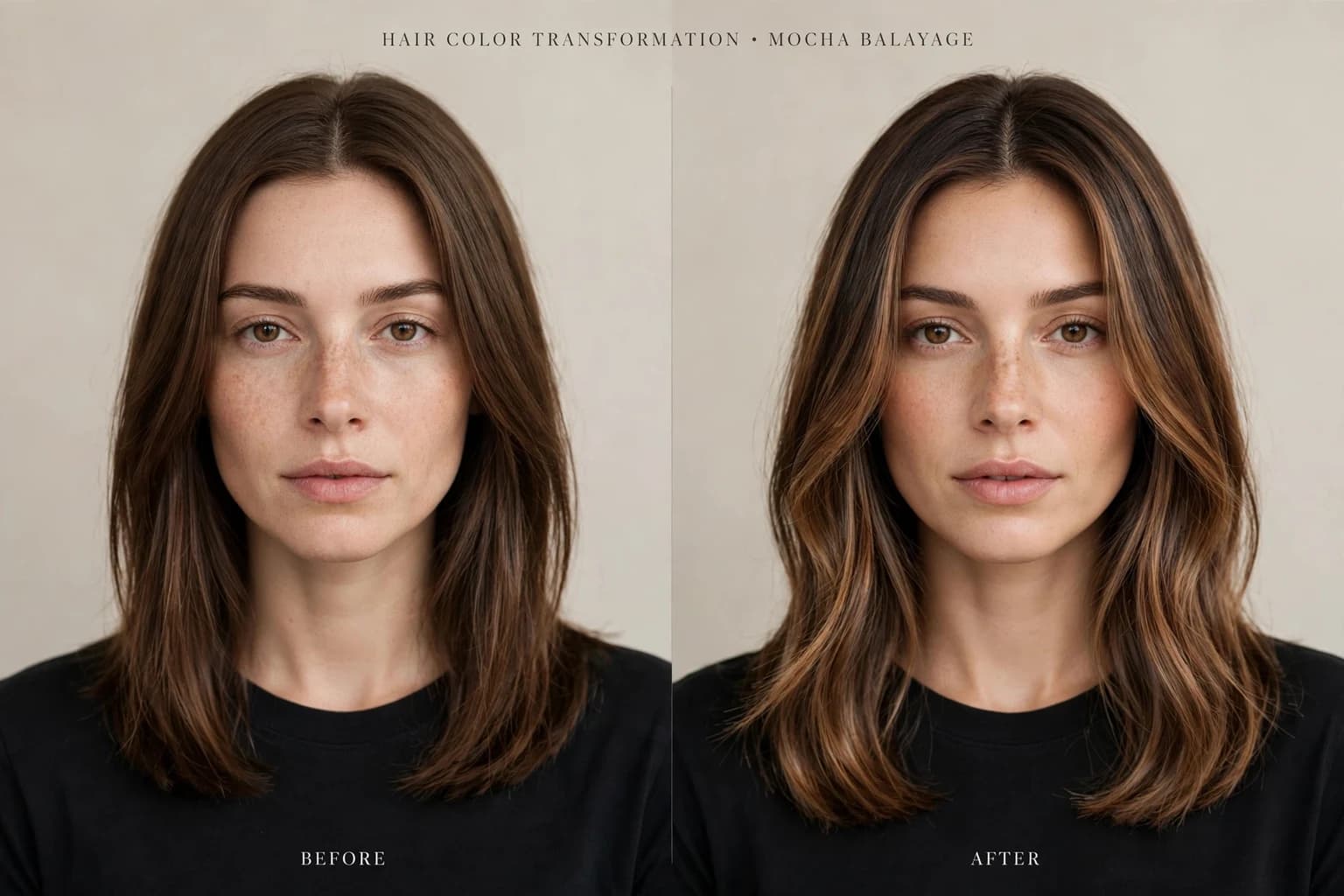
Same hair, mocha balayage added: the root stays her own color, the light is painted where the sun would put it.
Direct answer
What is mocha balayage? Mocha balayage is a hand-painted highlighting technique that blends warm mocha tones (milk chocolate, soft caramel and espresso browns) through the mid-lengths and ends of brunette hair, keeping your natural color at the root. It suits most skin tones because the version adjusts: warmer skin carries richer caramel and espresso mochas, cooler skin suits a softer milk-chocolate mocha. Searches for mocha balayage hair grew 949% year on year in Pinterest's Beauty Trend Report 2026: the unanswered part of the trend is what it does from your starting color, which is what this page works through.
Who does mocha balayage suit?
Almost anyone brunette or going brunette, with one condition: the mocha has to be mixed to your temperature, not taken off a chart. Mocha is a family, not a shade, and its range runs from cool milk chocolate to warm caramel-espresso.
Warm and olive skin usually suits the richer end: caramel and espresso mochas, with enough warmth in the toner to keep the skin looking clear. The failure mode here is going too ashy in an attempt to avoid brassiness: ash on warm skin reads flat and gray, and the hair looks dull rather than expensive.
Cool skin suits the softer end: milk-chocolate mocha, with the warmth dialed down but not out. The failure mode is the opposite one: too much red or caramel in the formula, which can look harsh against cool skin, as stylists quoted in current mocha coverage put it. The balance is the whole job.
Deep skin carries the deepest versions best: espresso roots melting into rich mocha and warm bronze ends keep enough contrast around the face. Fair skin usually wants the lift kept gentle and the face-framing pieces fine, so the contrast stays soft.
What will mocha balayage look like from my starting color?
This is the section the trend photos skip, because they only show the finished color. Your result is your starting color plus the painted pieces, and the two interact.
From near-black or dark brown hair: the most dramatic version, and the one in most of the saved photos. The painted pieces need real lift to show as mocha rather than as a faint reddish hint, so expect the ends to be lightened several levels and then toned down to mocha. The result is high dimension (dark root, glowing ends), and it is the version where the toner matters most, because lifted dark hair wants to sit warm-orange before it sits mocha.
From medium brown hair: the easiest starting point, and the most natural result. Your base is already inside the mocha family, so the appointment is about placement and gloss more than lift: ribbons of milk chocolate and caramel, brighter around the face. If the trend photos look effortless, they usually started here.
From light brown or dark blonde hair: a softer, lower-contrast version: more mocha melt than balayage statement. The risk runs the other way: pieces can lift too light and read blonde, losing the brunette depth that makes mocha look expensive. Ask for depth to be put back at the root and through some ends, not just light added.
From bleached or highlighted blonde hair: mocha balayage is a going-darker decision, and a good one: it is the standard route back to brunette with dimension instead of a flat block of brown. Expect lowlights and a root melt, not just a toner: porous bleached hair grabs color unevenly and fades fast at first, so the first result often needs a second gloss before it settles. The before/after is the largest of any starting color, which is exactly why it should be previewed rather than imagined.
From red or previously colored hair: the honest complication. Existing red pigment warms everything put over it, and previous color changes how evenly lightener lifts. A colorist may need a color-removal or correction step first, and the mocha you get at the first appointment may sit warmer than the target. This is a two-appointment conversation, not a failed result.
Which version goes wrong: and what to ask for instead?
- Too ashy: the hair looks gray-brown and the skin looks tired. Mocha is meant to keep warmth. Ask for milk-chocolate, not ash brown, in the toner.
- Too red: the pieces read copper-red instead of mocha, especially in sunlight. Ask where the formula sits between caramel and red, and look at the colorist's own photos in daylight, not salon light.
- Face-framing pieces too light: a bright blonde money piece against a mocha melt pulls the whole look back to blonde. Ask for face pieces one level softer than the photos you are showing.
- Stripes instead of a melt: balayage should have no visible line where the color starts. If regrowth lines are your fear, say so: placement can be kept lower and more diffused.
How much maintenance is mocha balayage, honestly?
Lower than full color or foil highlights, not zero. The painted placement is why: because the root stays your own color and the light starts diffused, regrowth grows out softly instead of as a line. What fades is the toner and the gloss, not the placement.
Stylists quoted on the mocha family suggest refresh visits roughly every eight to 12 weeks to keep the color rich, with color-protecting shampoo and conditioner at home in between. Current mocha aftercare guidance adds three specific things: a gloss treatment between color appointments, a hydrating mask in summer or with regular heat styling, and UV protection plus a fresh-water rinse around swimming.
One counterintuitive warning from the same stylists: do not reach for purple shampoo at the first sign of warmth. Mocha is supposed to be warm; over-toning is how it goes flat and loses the richness you paid for. Use it only if your colorist advises it for your specific result.
What should I ask my colorist for?
Bring a photo of mocha balayage on your own hair, at your own starting color, rather than a finished photo from a different base. Save the version name, the placement and the gloss plan as a Salon Card and bring that to the appointment.
- Your starting level, and how many levels the lightest pieces need to lift: this decides both the result and the hair-health conversation.
- The mocha version by name: milk-chocolate for cooler skin, caramel-espresso for warmer skin, and where on that range your toner will sit.
- Placement in plain words: how high the light starts, how bright the face pieces are, and how it will look grown out at two months: that is the version you will live with longest.
- The fade plan: what the toner fades to, when the gloss refresh is, and what it costs: in appointments per year, not one price.
A preview shows color, not condition
A try-on shows where the mocha tones will sit and how they read against your skin. It cannot show how your hair will lift: that depends on its condition, its history and previous color, which only a colorist handling it (and a strand test, if the history is complicated) can judge. If your hair is bleached, fragile or carrying old color, treat the preview as the target and the strand test as the permission.
Take the theory out of it.
The article's core problem is personal (the same shade reads differently from each starting color), so the try-on is preset to mocha balayage on the reader's own photo, and the Salon Card closes the colorist section.
Questions people ask
Is mocha balayage low maintenance?
Lower than full color or foils, because your root stays your own color and regrowth grows out softly. The upkeep is gloss and toner: stylists suggest refresh visits roughly every eight to 12 weeks, with color-safe products at home.
Will mocha balayage suit cool skin tones?
Yes, in its softer version (a milk-chocolate mocha with the warmth reduced). Warm skin suits the richer caramel and espresso versions; the version, not the trend, is what has to match your temperature.
Can I get mocha balayage on black hair?
Yes, and it gives the strongest dimension of any starting color. The painted pieces need several levels of lift and careful toning, because lifted black hair pulls warm-orange before it sits mocha.
What does mocha balayage look like on bleached hair?
It becomes a going-darker service: lowlights and a root melt over the blonde, rather than one flat brown. Porous bleached hair fades fast at first, so expect a second gloss before the color settles.
How do I maintain mocha balayage at home?
Color-protecting shampoo and conditioner, a weekly hydrating mask if you heat-style, UV protection and a fresh-water rinse around swimming, and a gloss between appointments. Skip purple shampoo unless your colorist advises it. Mocha is meant to be warm.