

Going blonde from dark hair: what it actually takes
The gap between the photo you saved and the appointment you booked is usually measured in sessions, money and hair health. Here is the honest version.
Why it cannot be done in one appointment
Lightening hair removes pigment rather than adding it. Dark hair contains a lot of warm pigment underneath the brown you can see, and lightening exposes it in a fixed order: dark brown, then red, then orange, then gold, then pale yellow.
Every dark head passes through orange on the way to blonde. That is chemistry, not a mistake, and anyone promising to skip it in a single session is either bleaching aggressively enough to damage the hair or is going to tone over orange and watch it come back.
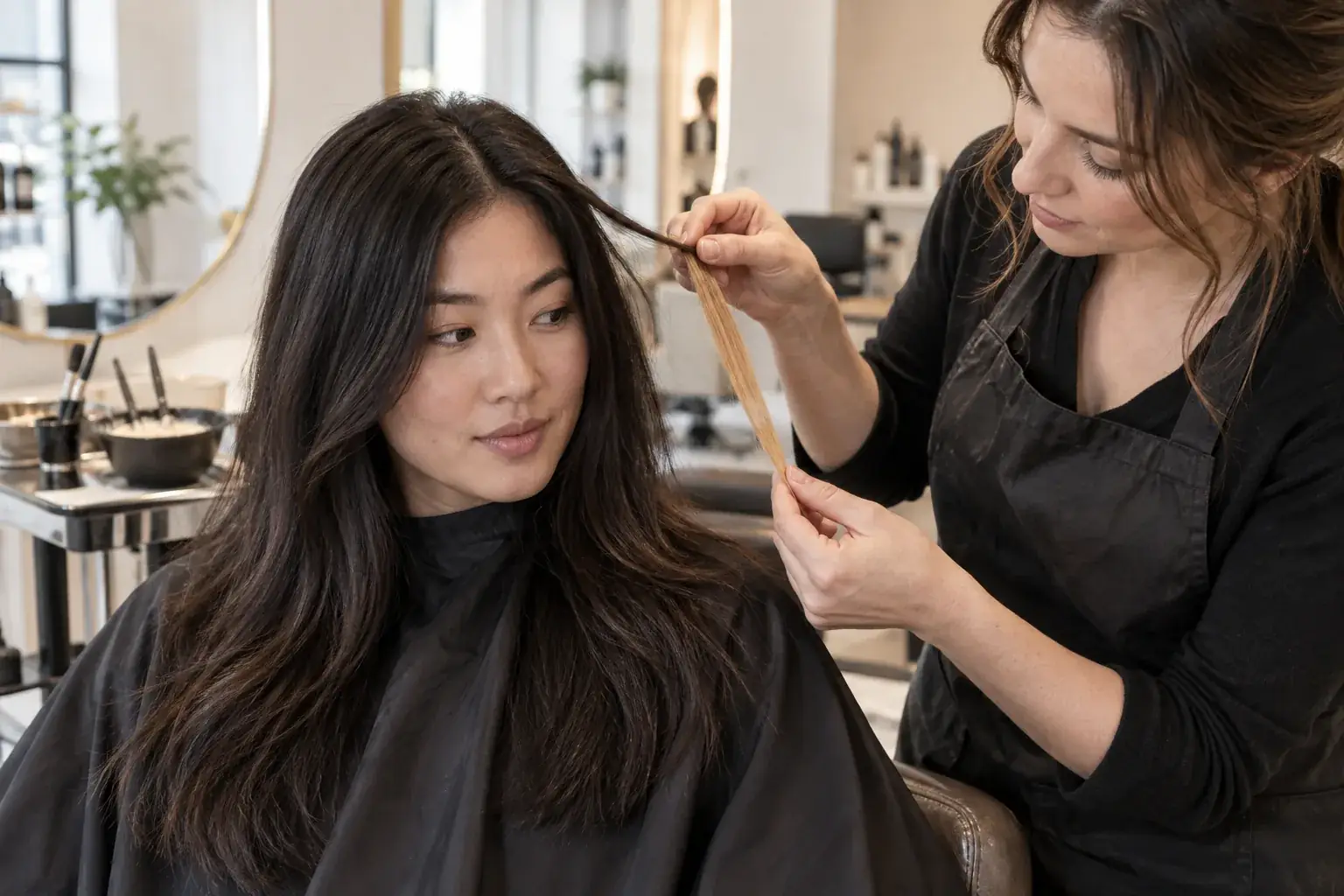
A responsible colourist lifts two to three levels per session and lets the hair recover in between. Going from a level 2 or 3 black-brown to a level 8 or 9 blonde is therefore two to four appointments spread over months, not one long Saturday.
What brassiness actually is
Brassy is the word for that exposed warm pigment showing through. It is not dye that went wrong; it is the underlying colour of your own hair at that stage of lift.
Toner neutralises it (purple against yellow, blue against orange), but toner is a deposit sitting on top and it washes out over four to six weeks. When the toner goes, the warmth underneath is still there, which is why blonde looks perfect for a fortnight and progressively more golden after that.
This is the single most common source of disappointment in going blonde, and it is entirely predictable. Understanding it in advance changes it from a failure into a maintenance schedule.
The real maintenance cost
The appointment price is the smallest part of the number. Going blonde from dark is a commitment to an ongoing routine, and it is worth pricing honestly before you start.
- Root regrowth is visible within four to six weeks on dark hair, versus twelve or more when the gap is small. A full head of blonde on naturally dark hair needs attention roughly every six to eight weeks.
- Toner refreshes sit between colour appointments, either at the salon or with a purple shampoo at home.
- Bleached hair is more porous, which means it needs different products, and it takes and loses colour faster ever afterwards.
- Balayage and lived-in techniques exist largely to solve this. Leaving the root darker means regrowth is part of the design rather than a deadline, and it is the reason so many people end up there after one round of full blonde.
How to tell whether your hair can take it
Hair history matters more than hair type. A colourist will ask, and the answer changes what is possible.
Previously coloured hair, especially with box dye or anything containing metallic salts, does not lift evenly and can react badly to bleach. Henna is the clearest case: it can make lightening genuinely unsafe, and it is worth saying so unprompted.
Hair that has already been lightened has less structural integrity left to spend. Fine hair reaches its limit sooner than coarse hair. Previously relaxed or chemically straightened hair is generally not a candidate for heavy lift at all.
A strand test answers this in twenty minutes and costs nothing. Any colourist who skips it before a large lift on unknown hair history is taking a risk with your hair rather than their own.
Deciding before you book
Three questions resolve most of the uncertainty, and none of them require an appointment.
First: which blonde? Ashy, golden, honey and platinum are different destinations with different journeys, and undertone decides which sits comfortably against your skin. Bring a shade, not the word.
Second: how much contrast are you giving up? Dark hair against your skin is currently framing your features strongly. Blonde reduces that framing, and that change is what people are reacting to when they say they do not look like themselves. It is worth seeing before it is permanent.
Third: will you maintain it? This is not a character question. Some people enjoy a six-week salon rhythm and some do not, and the second group is much happier with balayage than with full blonde, which is a decision better made in advance than after three months.
What a preview cannot tell you
Seeing blonde on a photo of yourself answers the question a swatch cannot: whether you like what the loss of contrast does to your face. That is the subjective half and it is genuinely the harder half. It cannot tell you how many sessions your hair needs, whether your hair history makes lifting safe, or how it will fade. Those depend on your hair's porosity and what has been on it before, and they need a strand test and a colourist.
Take the theory out of it.
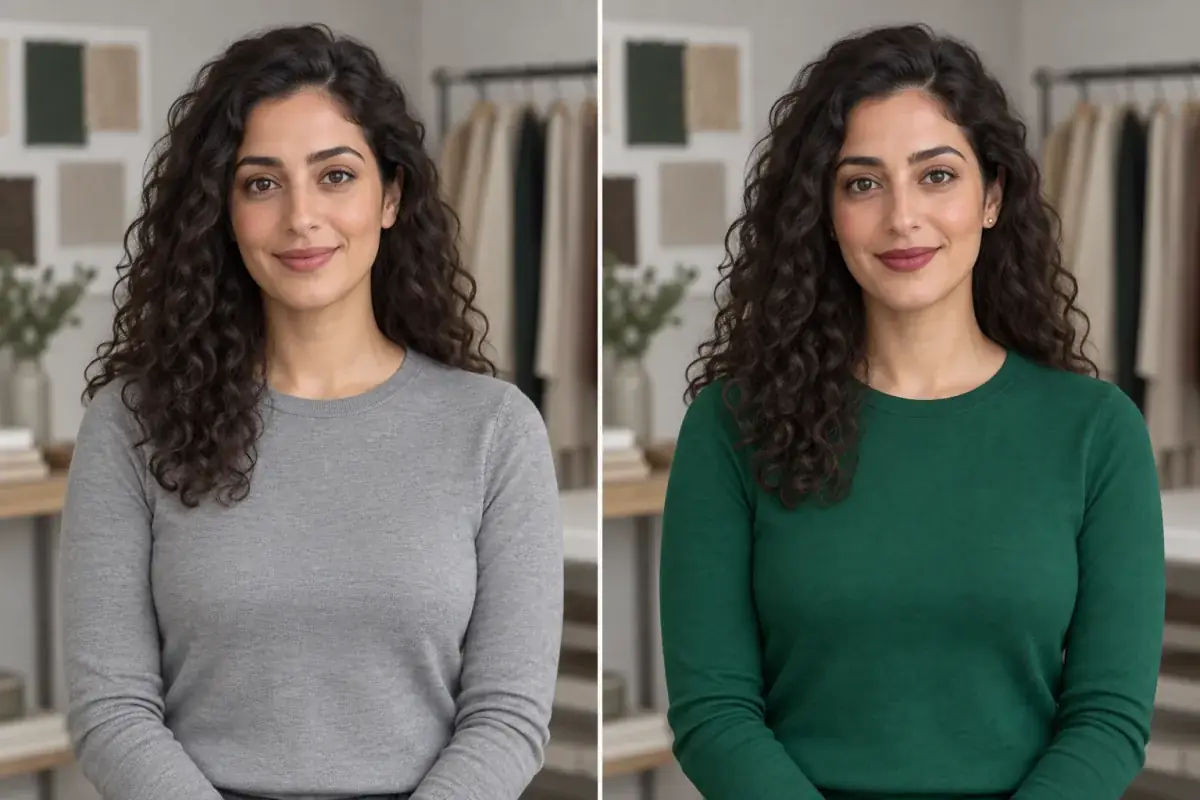
Before a four-month, multi-session commitment, it is worth knowing whether you like the result. Try several blondes on a photo of yourself and take the one you actually want to your colourist.
Questions people ask
How many sessions does dark to blonde take?
Usually two to four, spread over months. A colourist lifts two to three levels per session and lets the hair recover in between. Anyone offering black to platinum in a single sitting is either damaging the hair or over-promising.
Why does my blonde keep turning brassy?
Because the warmth is your own underlying pigment, and the toner covering it washes out in four to six weeks. It is not a fault in the colour. Purple shampoo between appointments slows it; nothing removes it permanently short of further lifting.
Can I go blonde if I have used box dye or henna?
Box dye complicates it: lift is often uneven. Henna can make bleaching genuinely unsafe because of how it reacts, so tell your colourist unprompted even if it was years ago. In both cases a strand test is not optional.
How much does maintaining blonde cost?
Price it per year, not per appointment: roughly every six to eight weeks for roots on naturally dark hair, plus toner refreshes and different products for porous hair. Balayage costs more per visit and less per year because regrowth is part of the design.
Will blonde suit me?
The reliable version of that question is whether you like what losing contrast does to your face. Dark hair frames features strongly and blonde softens that. Some people love it and some feel washed out, and it is much cheaper to find out on a photo than in a chair.