



Should I go copper? The full decision
Copper is the color people ask about by name, in chats, in comments and to AI, more than any other single shade. It is also the color with the widest gap between how easy it looks and how fast it leaves, so the decision deserves the full picture.
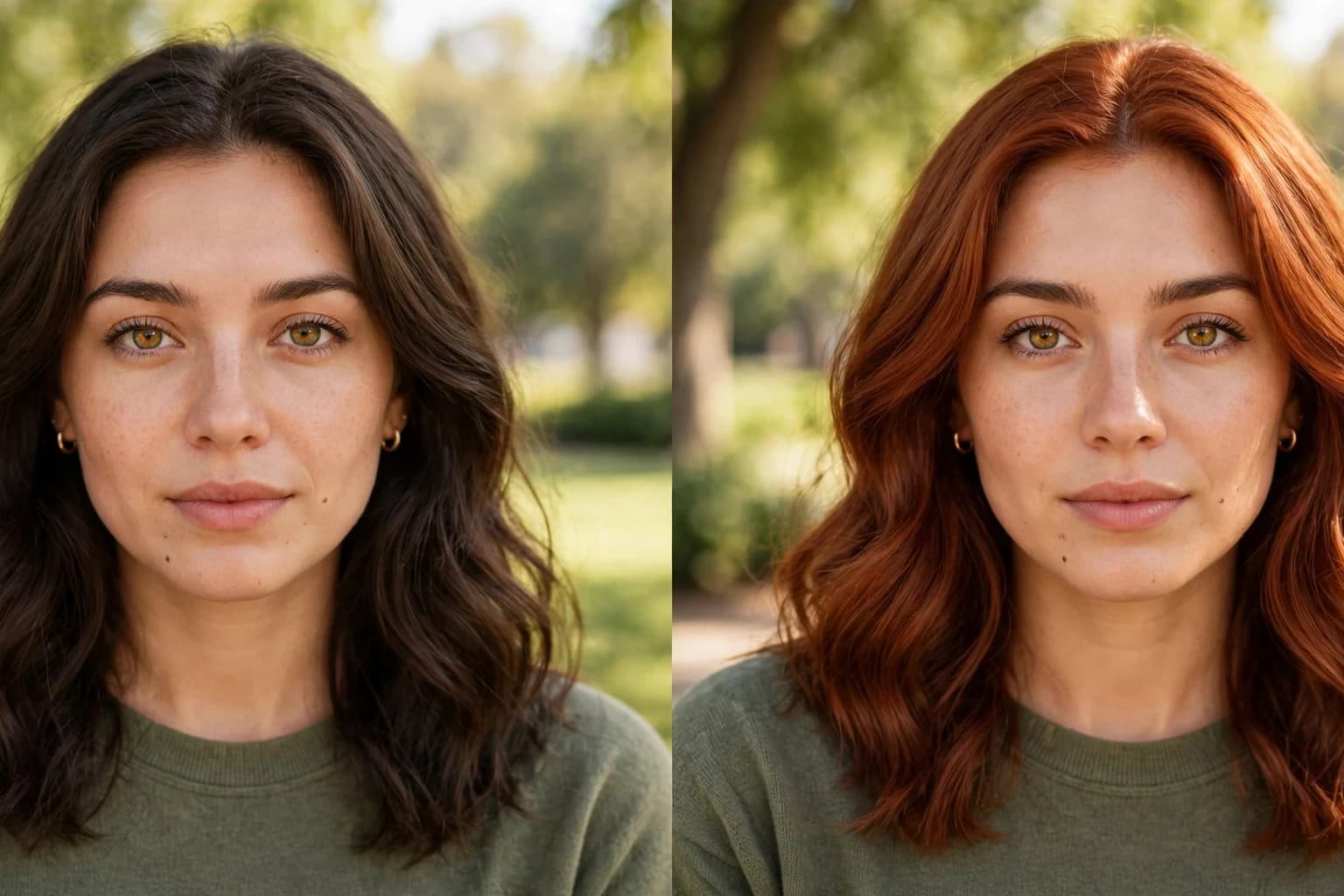
Same face, true copper. On a warm coloring the shade reads as glow; the test is whether your skin does this with it.
Direct answer
Should I dye my hair copper? Go copper if your coloring is warm or neutral, especially with green, hazel or warm brown eyes: copper is built from the same orange and gold pigments your skin already carries, so it reads as glow rather than dye. Two honest warnings come with it. Copper fades faster than any other salon color, needing a gloss refresh roughly every 4 to 6 weeks, and cool, pink based skin should choose a muted auburn or cherry toned copper instead of the fiery version. Test the exact shade on your own photo first.
Who does copper flatter, and why?
Copper flatters by agreement. Its pigments are orange, red and gold, and on skin with warm or neutral undertones those pigments rhyme with what is already there, so the eye reads the color as part of the person. Freckled, golden and peachy colorings get the strongest version of this effect, which is why natural redheads cluster in exactly that skin family.
Eyes amplify it. Red sits opposite green on the color wheel, so copper hair makes green and hazel eyes look measurably greener, and it warms brown eyes toward amber. Blue eyes get a softer version of the same contrast.
Depth matters as much as temperature. On light and medium skin, copper's glow reads directly. On deep skin, a level 5 or 6 copper brown gives the same warmth with enough depth behind it to hold its own, where a bright level 8 copper can look like it is floating. The shade richens deep skin beautifully when the level is chosen first and the reflect second.
Two colorings should be careful rather than excluded. Cool, pink based skin can flush next to a fiery orange copper, because the shade throws warmth onto a face that has none to spare; the fix is a copper with the orange turned down, a muted auburn, a rose copper or the deep cherry end of the family. Olive skin is its own case entirely, decided by how much green the shade wakes up, and it is covered in full in our olive skin guide.
Which copper should you choose?
Copper is a family, not a shade, and most disappointment comes from ordering the family name and receiving the wrong member.
Ask for the member by name and level, not for "copper". A colorist hears the family name and reaches for their house version, which may sit two levels or one temperature away from the one you pictured.
- True copper; Level and character: Level 7 to 8, bright orange red, reflect.4; Suits best: Warm and neutral skin, green or hazel eyes; Watch out for: The fastest fader in the family; needs the gloss habit.
- Copper brown; Level and character: Level 5 to 6, copper woven through brunette; Suits best: Brunettes going copper for the first time, medium and deep skin; Watch out for: Can read as plain brown indoors if the copper is too shy.
- Soft copper blonde; Level and character: Level 8 to 9, copper diluted into blonde; Suits best: Blondes and light bases wanting warmth without depth; Watch out for: Goes pinkish as it fades; our comparison with honey blonde is here.
- Cherry cola; Level and character: Level 4 to 5, deep red brown with a cherry cast; Suits best: Cool and neutral brunettes, the copper-adjacent choice; Watch out for: It is a red brown, not a true copper; the full guide.
- Auburn; Level and character: Level 5 to 6, red brown, muted and deeper than copper; Suits best: Cool skin's safest entry, deeper colorings; Watch out for: Reads brunette in low light; the copper glow is a daylight effect.
What does copper honestly cost you in upkeep?
This is the section most copper content skips, and it is the one that decides whether you still love the color in month three.
Copper fades first because of pigment size. Red and copper color molecules are larger than brown or blonde ones, so they sit shallower in the hair shaft and wash out sooner, especially in the first two weeks, when loose pigment leaves in every rinse. Expect the salon brightness to soften noticeably by week three, and plan a gloss or toner refresh every 4 to 6 weeks to put the shine and the orange back. Between refreshes, sulfate free washing in cooler water is the difference between a slow fade and a fast one.
Week by week, the fade has a shape worth knowing in advance. Week one is the salon version, brighter than the shade will ever be again, and some of that is loose pigment rather than your color. By week three the brightness has settled into the real copper, the one you will actually live in. By week five or six, on unprotected washing, it has drifted toward a soft, brownish auburn, still attractive, but no longer the shade you paid for. The gloss appointment exists to reset that clock, which is why colorists book it before you leave rather than waiting for you to notice the drift.
The regrowth side is kinder than blonde. Copper at level 6 or 7 sits near most natural depths, so roots grow in as a soft shadow rather than a hard line, and a root melt can stretch appointments to 8 or 10 weeks. Budget honestly: the color appointment itself is a standard single process price, but the gloss habit adds roughly four to six smaller appointments a year that blonde and brunette do not demand.
Compare true copper against copper brown on your photo; the upkeep is similar, the effect is not.
What should you ask your colorist for?
Bring the preview of the shade on your own face, not a celebrity photo. Your colorist is matching a level and a reflect to your skin, and your face is the reference that matters.
- The shade named at member level: "true copper at a level 7 with a.4 copper reflect", or "copper brown at a level 6", never just "copper". The reflect number is what separates copper from a red or a gold that happens to be warm.
- A fill first, if you are coming from blonde or heavily lightened hair. Lightened hair has had its warm pigment stripped out, and copper laid straight over it can turn hollow or muddy; colorists add the missing warmth back in a filling step before the target shade. Skipping it is the most common copper correction story.
- A strand test if your hair carries old dark dye. Copper over previous color lifts unevenly, and the test shows the real result on your hair rather than on the shade chart.
- The fade plan, agreed before you leave: which gloss refreshes it, at what interval, and which sulfate free wash they want you on.
How can you test copper before you commit to it?
Test in two stages, cheapest information first. Stage one is the photo: run true copper and copper brown on one honest portrait and judge them against your skin, not against each other. The right one evens your skin out and sharpens your eyes; the wrong temperature will look like it is sitting on top of you. That test costs credits, not an appointment, and it kills most wrong coppers in a minute.
Stage two is a low commitment version in real hair, if the photo says yes but you are still unsure: a copper gloss over your current color, copper highlights, or a copper balayage that keeps your natural root. All three fade out or grow out without a correction appointment, and all three tell you how the color behaves on your actual hair, in your actual light, which is the one thing a preview cannot show. They also answer the upkeep question with evidence: six weeks of living with a gloss tells you whether the fade pace annoys you before you have committed to the full color and its full maintenance bill.
Copper is a top up habit, not a one off color
Every other shade family lets you forget the salon for a couple of months. Copper asks for a gloss every 4 to 6 weeks and gentle washing in between, and it repays that attention with a glow few colors match. Decide on the habit, not just the shade: if the upkeep sounds like a burden now, copper brown or a gloss first will tell you the truth at a tenth of the commitment.
Take the theory out of it.
The decision this article cannot make for the reader is whether true copper or copper brown settles on her specific skin, and that is a one minute visual test on her own face. The try-on answers the undertone question with evidence instead of probabilities.
Questions people ask
Does copper hair suit cool skin tones?
The fiery, orange led copper usually fights cool, pink based skin and makes it look flushed. Choose a turned down member of the family instead: muted auburn, rose copper or the cherry depths of cherry cola. Preview the exact shade on your photo, because this boundary is decided by your specific skin, not by the rule.
How fast does copper hair fade?
Faster than any other salon family, because copper and red pigment molecules are larger and sit shallower in the hair. Expect visible softening inside three weeks and plan a gloss or toner refresh every 4 to 6 weeks. Sulfate free washing in cooler water stretches the interval noticeably.
Can a brunette go copper in one appointment?
Usually yes. Most natural brunettes sit within two or three levels of the copper family, so a single process appointment with the right reflect gets there without lightening sessions. The exception is hair carrying old dark dye, which needs a strand test and sometimes a lift first.
Does going copper damage your hair?
Less than going blonde does. Copper is normally a deposit or a gentle lift of one to three levels, not a bleach out, so the hair keeps most of its strength. The damage risk is repetition: glosses and refreshes are mild, but stacking processes on fragile, previously lightened hair still needs a colorist's judgement.
What is the cheapest way to try copper?
A copper gloss over your current color, which fades out over a few weeks with no root line and no correction if you change your mind. Copper highlights or a copper balayage are the next step up. Before any of them, preview the shade on your photo: that test is nearly free and rules out the wrong temperature instantly.