






Cherry cola brunette: who it suits, and the fade nobody warns you about
Cherry cola is the brunette route into red: a red-violet shine over your own brown base, which is why it flatters almost everyone and why its fade is the whole story.
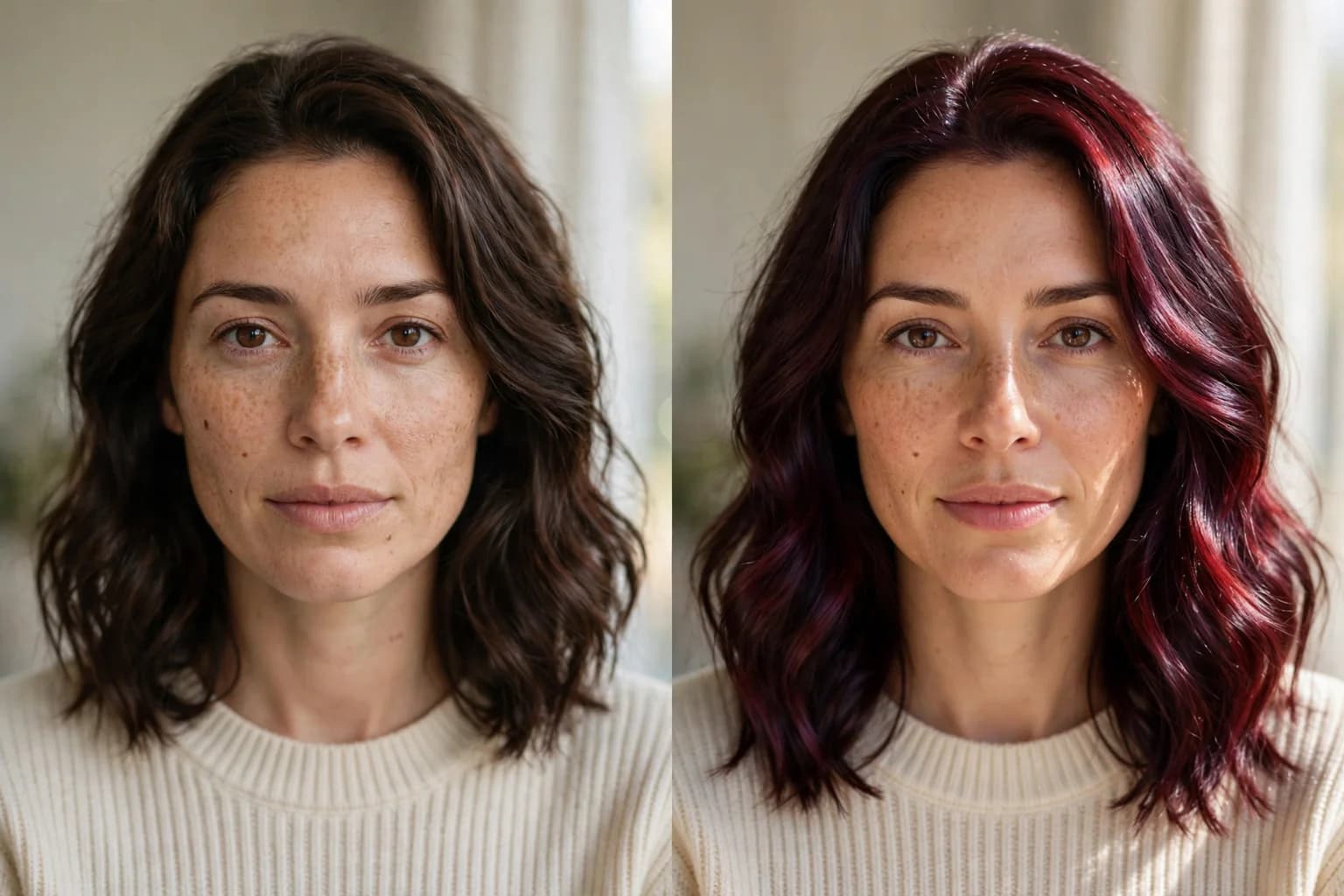
Same hair, one gloss: indoors the after photo reads espresso, and the cherry reflect is what daylight finds.
Direct answer
What is cherry cola brunette? Cherry cola brunette is a deep brown base with a red-violet reflect over it: espresso in indoor light, black cherry when daylight hits it. It suits natural brunettes best, because the easiest and most wearable version needs no bleach at all, just a demi-permanent gloss layered over your own base. Blondes can wear it too, but for them it is a darker, higher-commitment colour change, not a gloss.
How is cherry cola different from burgundy and auburn?
All three are red-browns, and the names get used loosely in salons, which is where most disappointments with this shade begin. The difference is which colour does the talking.
Cherry cola is brunette first. Brown is the base and the main event; the red-violet is a reflect, a shine of colour that shows when light moves across the hair. Indoors, most people will simply read you as a brunette with unusually glossy hair.
Burgundy is the violet turned up until it competes with the brown. It reads as a colour in its own right in all lights, and it sits cooler and more dramatic. Auburn is the opposite direction: red-brown where the red is warm, copper-leaning, and visible as warmth rather than shine. If the reference photos you keep saving show copper or rust tones, you do not want cherry cola; you want auburn, and asking for the wrong name is how people end up with a shade they like on someone else.
One more distinction matters for upkeep. Cherry cola is usually applied as a gloss or demi-permanent colour over an existing base, which is why it can be done with no lift. Burgundy and auburn are more often permanent colour or involve some lightening. Same family photo, different service, different fade, different bill.
Who does cherry cola suit, by undertone?
The shade is adjustable, which is the real reason it suits so many people: the red-to-violet balance can be mixed toward your temperature instead of against it.
Depth matters as much as temperature. The darker your skin, the deeper the base should stay, because the contrast between a deep complexion and a bright red reflect can tip the shade from glossy to costume. Colourists adjust this instinctively; it is worth saying out loud anyway.
- Warm skin: lean the mix redder, toward mahogany. The red side harmonises with golden skin, and the brown base stops it tipping into copper.
- Cool skin: lean the mix toward violet and plum. A red-heavy version can fight cool skin; the violet side reads as richness instead of warmth.
- Neutral skin: the classic balance, equal parts red and violet over the brown, is yours. You are the reader this shade was photographed on.
- Olive skin: usually the violet side, for the same reason olive skin argues about reds generally. Pure red can pull the green cast in olive skin forward; violet-red sits cooler and tends to flatter. Published advice disagrees about reds on olive skin in general, so this is the pairing most worth testing on your own photo rather than trusting either way.
What does it look like from your starting colour?
The same formula is four different colours on four heads, because a reflect can only modify what is underneath it.
- Black or very dark brown hair: the subtlest version. Expect shine and a cherry cast in sunlight or under bright light, and near-invisible change indoors. For many first-time colour clients this is the point, not a drawback.
- Medium brown hair: the full read. The reflect shows in ordinary light, the base still reads brunette, and this is the starting colour most reference photos are actually taken on.
- Light brown or dark blonde hair: the brightest version, and the warmest. With less depth underneath, the red shows more and the violet less, and the result can read closer to a red than a cola. Ask for the mix deepened if you want the brunette-first effect.
- Previously highlighted or porous hair: the risky version. Porous lengths grab red-violet pigment faster and deeper than healthy roots, so the ends can go brighter than the top and fade faster too. A strand test or a gloss-only first appointment is the honest way in.
How does cherry cola fade, honestly?
This is the section the trend coverage skips, and it is the one that decides whether you still like the colour in week five.
Red pigment is the largest colour molecule hair dye uses, and it leaves first. Every red shade fades faster than its brown or blonde equivalent; cherry cola is no exception, it just fades more gracefully than most reds because the brown base stays behind. Real Simple's colourist interviews put the maintenance plainly: routine glosses are part of the deal if you visit the salon regularly.
A typical gloss over a natural base runs like this. Weeks one and two, the reflect is at full strength and the colour reads cherry in most lights. Weeks three and four, it softens toward mahogany: still clearly red-brown, less violet. Weeks five and six, most of the reflect has gone and what remains is a warm brunette, at which point a gloss refresh, usually booked every four to six weeks, restores it. Because nothing was lifted, growing it out costs nothing but patience; there is no demarcation line to manage.
Washing decides the speed. Hot water, daily washing and clarifying shampoo will pull a gloss out in half the time. Cool water and washing less often are not glamorous advice, but with this shade they are the difference between a four-week colour and a six-week one.
What should I ask my colourist for?
The exact wording matters with this shade, because cherry cola alone can come back as anything from a violet-brown to a bright red. Say it in layers, and save the formula direction, level and refresh interval as a Salon Card. Bring a photo of the shade on your own face rather than a celebrity's: her starting base is not yours, and with a reflect shade the base is half the colour.
- A demi-permanent gloss in a red-violet reflect over my natural base, no lift. Naming demi-permanent is the important part: it deposits colour without opening the hair, so the fade is soft and the grow-out is free.
- Your direction named: redder for warm skin, more violet for cool or olive skin. If you cannot describe it, show the reflect you want in a daylight photo.
- The level agreed out loud: cola shades live at the deep end, roughly levels 3 to 5. If your base is lighter and you want the deep version, that is a colour change first and a gloss second.
- The refresh booked before you leave: a gloss every four to six weeks, and the shade name written down so the refresh matches the original mix.
It is a reflect, not a lightener
A gloss cannot lighten hair, full stop. On a dark base, cherry cola gives you shine and a cherry cast in good light, not a visibly red head of hair in every room. If you want the red to read in all lights, you are asking for lift, which is a different service with bleach, a higher price and a harder fade. Neither choice is wrong; confusing the two is how the shade gets its disappointed reviews.
Take the theory out of it.
Cherry cola is a reflect shade, so its entire effect depends on the reader's starting base and the light. The try-on shows the daylight version on her own hair, which is the version the salon photos promise and the version worth deciding on.
Questions people ask
Does cherry cola hair need bleach?
Not on natural brunette hair. The standard version is a demi-permanent gloss over your own base, with no lift. Bleach only enters the picture if your hair is very dark and you want the red visible in all lights, or if you are starting from a much lighter colour and changing depth first.
How long does cherry cola hair last?
A gloss version looks its strongest for about two weeks, softens toward mahogany over weeks three and four, and is mostly a warm brunette by weeks five and six. A gloss refresh every four to six weeks is the standard upkeep colourists quote for it.
Does cherry cola suit cool skin tones?
Yes, if the mix leans violet. Cool skin should ask for the plum or red-violet side of the shade rather than the redder mahogany side, which can fight cool colouring. The brown base keeps either version wearable.
What is the difference between cherry cola and burgundy hair?
Proportion. Cherry cola is brunette first, with a red-violet reflect that shows in light; burgundy turns the violet up until the colour reads as a shade in its own right in all lights. Cherry cola is also usually a gloss, burgundy more often a permanent colour.
Will cherry cola work on black hair?
Yes, as the subtlest version: shine and a cherry cast in sunlight or bright light, and very little visible change indoors. If you want red that reads in every room on a black base, that requires lifting the base first, which is a different appointment.