

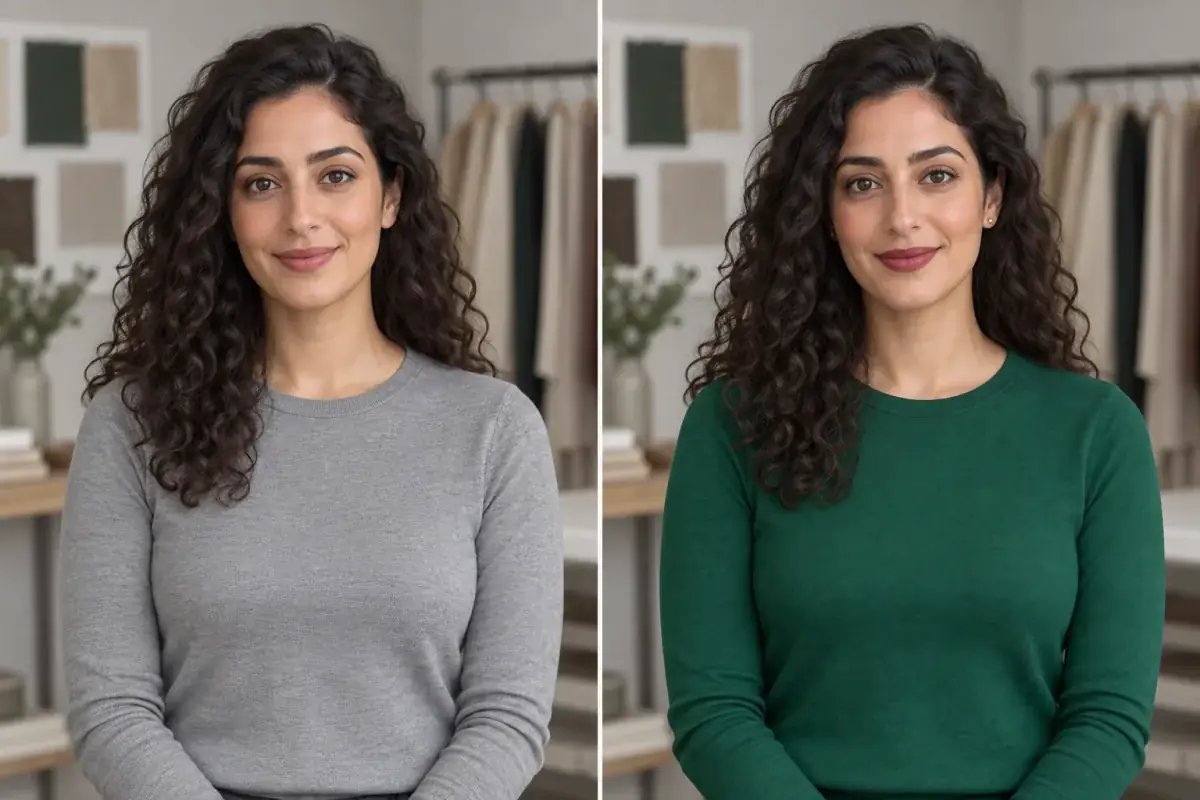
What to ask your stylist for: salon words decoded
The gap between the photo you saved and the hair you leave with is usually vocabulary. Stylists work in levels, placements and finishes; clients arrive with screenshots. This guide translates, word by word, with the sentence to say for each one.
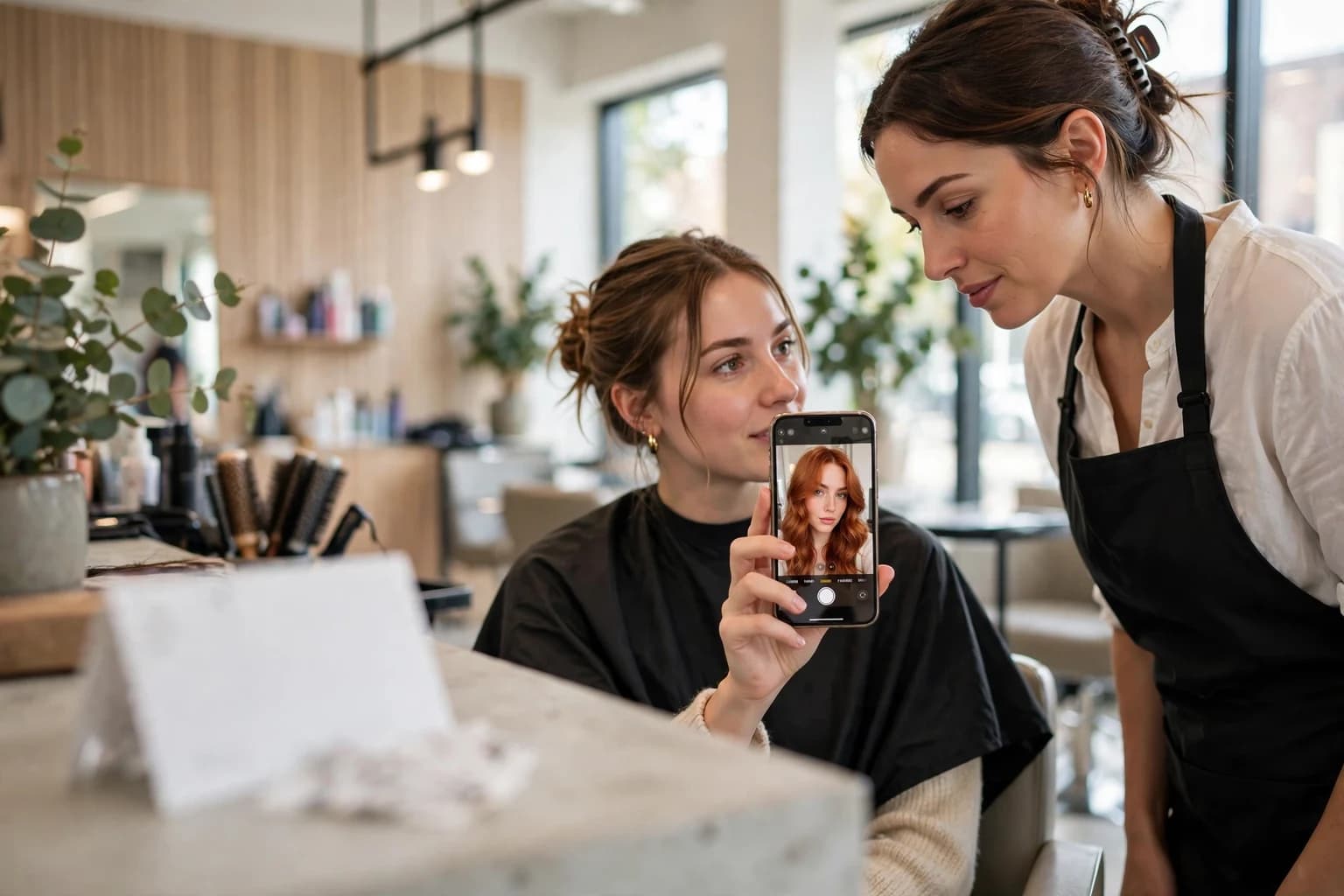
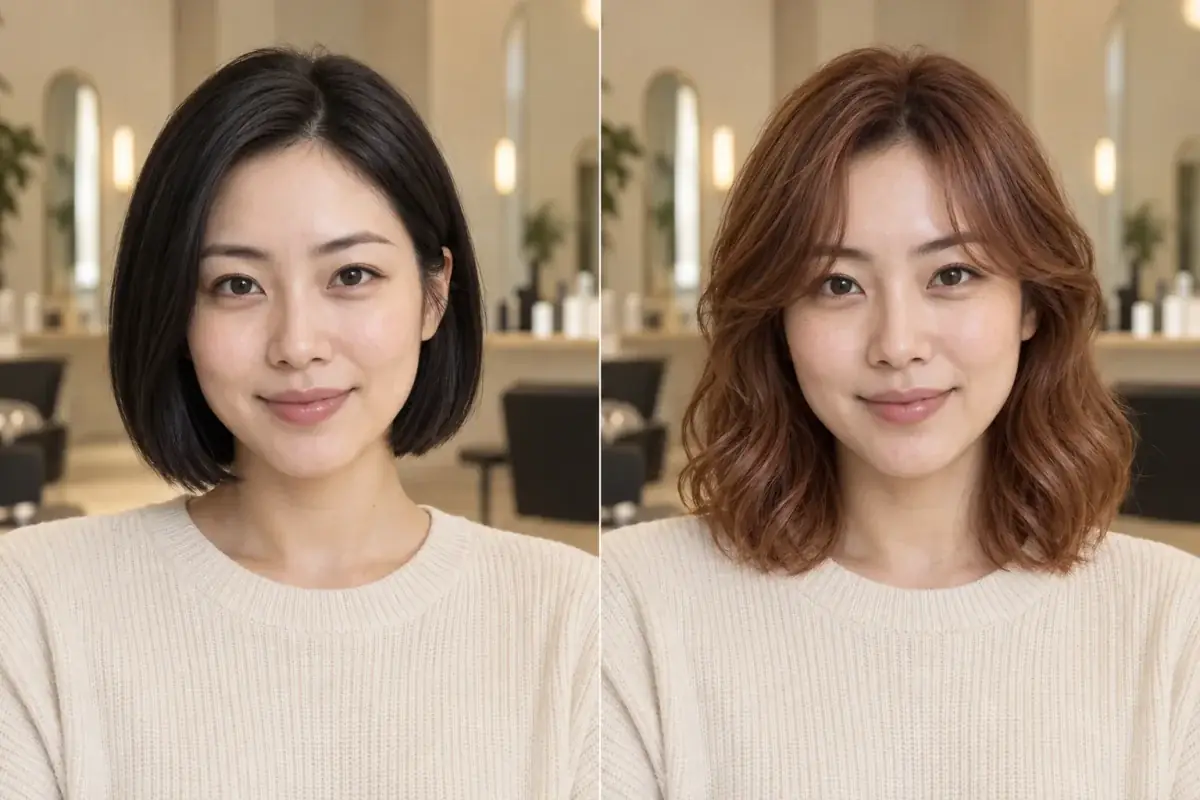
The strongest consultation tool is your own face in the target colour, with the shade name and level written down. The words in this guide are how you talk about it.
Direct answer
What should you ask your stylist for? Ask in their units, not in screenshots: the depth ("a level 7"), the family and tone ("copper, warm, no ash"), and the placement ("a money piece with a shadow root, lightness through the ends"). Those three decisions are what every trending phrase actually describes, and a stylist can quote and execute all three in one consultation. Bring a preview of the colour on your own face with the shade name and level saved, ideally as a Salon Card, and the words and the picture will be describing the same hair.
Why do shade numbers matter more than shade names?
Because names are marketing and numbers are measurements. One brand's "copper sunset" is another brand's "amber glow", and neither tells a stylist anything she can mix from. The number does. L'Oréal Professionnel posts its copper formulas on TikTok as pure arithmetic, "iNOA shade 6.46 + 6.4 + 7 on the roots and 6.46 + 7.43 on the ends", because professionals read that sentence the way you read a recipe.
The first number is the level, the depth, running from 1 black to 10 lightest blonde. The numbers after the point are the reflect:.1 is ash,.3 is gold,.4 is copper,.6 is red. So a level 7.4 is a medium blonde depth carrying a copper reflect, and "a level 9 or 10", the phrase clients repeat from stylist videos, means a very light blonde canvas. When a client comments "my stylist used 5 rc for the base, bleached highlights then 7rc", she is speaking this language fluently: a level 5 red copper base, lightened pieces, a level 7 red copper over them. You do not need the whole chart. You need your target as a level and a reflect, because that is the form your stylist can act on and the form a Salon Card stores.
What does "money piece" actually mean?
The money piece is the bright section at the very front: the strands framing your face, lightened more strongly than the rest so your face gets the light even when the overall colour stays deep. The name comes from where the money shows. It is a placement, not a colour, so it can be blonde on a brunette, copper on a brunette, or a soft beige on a blonde, and it can be bold and wide or a whisper a few strands across.
Say this: "I want a money piece, brighter pieces right at my front hairline, blended back into the rest, about this wide", and hold up one or two fingers to show the width, because width is the variable clients and stylists most often picture differently. It grows out kindly, since it sits where hair is shortest and finest, and it is usually added inside a colour appointment rather than booked alone. Ask whether it is included in the service price, because salons split on that.
What is a shadow root, and how is it different from a root smudge?
Both are root finishes that soften the line where colour meets regrowth; they differ in depth. A root smudge is the short version, a melt of about half an inch to two inches in a shade close to your natural root, used to blur the edge of fresh highlights. A shadow root travels further, roughly two to four inches, and often sits a touch deeper than your natural colour, creating a deliberate gradient from a darker root into lighter lengths.
Say this for the smudge: "Please smudge the root so the highlights do not start on a hard line." Say this for the shadow: "I want a shadow root a few inches deep in my natural shade, so it grows out softly for months." If you only remember one distinction, remember this: a smudge hides the join, a shadow makes the join part of the design. Both are applied after lightening, usually as a demi permanent colour, and both are the machinery behind the next phrase.
What does "lived-in colour" commit you to?
Lived-in colour is not a technique; it is the finished look the techniques above are hired to produce: depth at the root, lightness through the mid lengths and ends, and no visible line anywhere, so the colour looks like something your hair does rather than something done to it last Tuesday. It is typically built with foils or painted pieces for the lightness, then a root smudge or shadow and a gloss to melt it together.
What it commits you to is the point of it: fewer, bigger appointments. A lived-in colour is designed to stretch three to four months between lightening visits, with an optional gloss in between to refresh tone, where traditional highlights want the chair every six to ten weeks. Say this: "I want lived-in colour: keep my root depth, put the lightness through the ends, and I want to stretch appointments to three or four months." A stylist hears a placement, a finish and a maintenance budget in one sentence, and can tell you immediately whether your starting hair supports it.
Is it balayage or highlights?
The two most confused words in the salon, because photos of both look similar and the difference is method and grow out, not the picture.
One honest complication: many salons achieve the balayage look with foils, a hybrid nicknamed foilayage, because foil gives more lift and more control. If you asked for balayage and foils come out, that is not a bait and switch; it is the stylist choosing the tool that reaches your target level. Judge the result and the grow out, not the utensil.
- Balayage: Colour painted freehand onto the surface, lighter toward the ends, root left deeper; Say this: "Painted lightness through the mid lengths and ends, soft at the root"; What it commits you to: Appointments every three to four months; brightness is softer, lift is gentler
- Highlights: Fine sections lightened in foils, brightness from root to tip; Say this: "Foils for brightness from the root, a partial set around my part and face"; What it commits you to: The chair every six to ten weeks; a visible regrowth line between visits
- Money piece: The brightest strands at the front hairline, framing the face; Say this: "Brighter pieces at my front hairline, about this wide"; What it commits you to: A small add on inside a colour service; grows out softly
- Shadow root: Root colour melted two to four inches down to deepen and blend; Say this: "A shadow root a few inches deep in my natural shade"; What it commits you to: Months of soft grow out; refreshed when the lightness is redone
- Gloss: A demi permanent shine and tone coat, no level change; Say this: "A gloss to refresh the tone and shine, no lightening"; What it commits you to: Twenty minutes in the chair; fades over four to six weeks
- Toner: The same family as a gloss, aimed at correcting tone, usually after lightening; Say this: "Tone it cooler" or "tone it warmer", naming the direction; What it commits you to: Fades before the lightening does; the fix when colour turns brassy
What is the difference between a gloss and a toner?
Very little, and knowing that saves you money and confusion. Both are demi permanent, deposit only services: they change tone, never level. The salon shorthand worth memorising is that lightener changes the level, while toner and gloss change the tone. "Toner" is the word for the corrective use, neutralising brassiness or cooling a blonde right after lightening. "Gloss" is the word for the same chemistry booked as a refresh, adding tone and a shine finish to colour that is already the right depth, and it takes about twenty minutes.
Say this between big appointments: "I just want a gloss today, refresh the tone and the shine, no lightening." It is the cheapest service on the colour menu and the one that makes existing colour look freshly done. When brassiness is the complaint, name the direction, "cooler" or "warmer", rather than the product, because direction is what the stylist actually formulates.
What should you bring, and which tone words should you use?
Bring evidence, in this order: a preview of the target colour on your own face, the shade name and level written down, and your hair history, including box dye and when it went in. The Salon Card exists to carry exactly that set:. A celebrity photo can come too, as a mood reference, but the preview of your own face is the document the consultation should be run from, because it already accounts for your skin.
Tone words carry more weight than clients realise, because a stylist formulates from your adjectives. The stylist genre that answers these questions online is blunt about it: ask for "a level 9 or 10" and specify the tones you want while "avoiding undesirable tones like ashy gray", because "ashy" said casually can land as an instruction. Warm words are honey, caramel, golden, copper and amber. Cool words are ash, icy, pearl and mushroom. Neutral sits between them as beige and natural. If you do not want a tone, say so by name; silence about ash has put more grey violet into warm blondes than any other single word. And borrow the precision of the best client question in the research, "an inch off of my length", for cuts as well: amounts in numbers survive translation, amounts in gestures do not.
Decide the level and the placement on your own photo first, then let the card carry them to the chair:
Salon words are a dialect, not a law
Salons and brands reuse the same words for slightly different services, and a shadow root in one salon is a root melt in another and a root tap in a third. The words in this guide are the widely shared meanings, and they will get you understood in most chairs, but they are a shortcut, not a contract. The contract is the preview on your own face plus a level and a shade name, which is why the card matters more than the vocabulary: learn the words to have the conversation, and bring the picture to settle it.
Take the theory out of it.
Every phrase decoded in this article converges on three facts a stylist needs: the shade, its level and its placement. The Salon Card stores exactly those next to the preview photo, so the reader arrives with the vocabulary already written down and a picture that outranks any description.
Questions people ask
What should I say if I want the colour in a photo I saved?
Translate the photo into the three decisions before you sit down: the level (how light or deep it is, 1 to 10), the tone family (copper, golden, ash, red), and the placement (all over, money piece, lightness through the ends). Then show a preview of that colour on your own face rather than only the stranger's photo, because your skin changes how the shade reads. The sentence is: "This level, this tone, placed like this, on me."
Is a money piece a separate appointment?
Usually not. It is normally added inside a colour service as the front section of the same lightening or colour work, and it takes minutes rather than its own booking. Some salons price it as an add on and some include it, so ask when you book rather than at the till.
Should I book a gloss or a toner?
They are the same family of demi permanent, deposit only colour, so book by the job rather than the name. Book a toner right after lightening to set or correct the tone, and a gloss between appointments to refresh tone and shine on colour that is already the right depth. Neither lightens anything; if you want to be lighter, that is a lightening service, not a finish.
What does it mean when my stylist says level 9?
It means depth: level 9 is a very light blonde, one step below the lightest blonde at level 10 and well above medium brown at level 4. Stylists quote levels because a single number fixes the depth exactly, while names like "dark blonde" mean different shades to different people. If a level is quoted at you, ask what it means for upkeep and regrowth, because lighter levels show roots and fade faster.
Can I ask for lived-in colour on dark hair?
Yes, and brunettes are arguably its best case, because the look is built on keeping natural depth at the root and placing lightness through the ends, which dark hair supplies for free. Ask for the gradient to stay subtle, a level or two of lift through the ends rather than a blonde transformation. The grow out advantage is the same: months between appointments instead of weeks.