

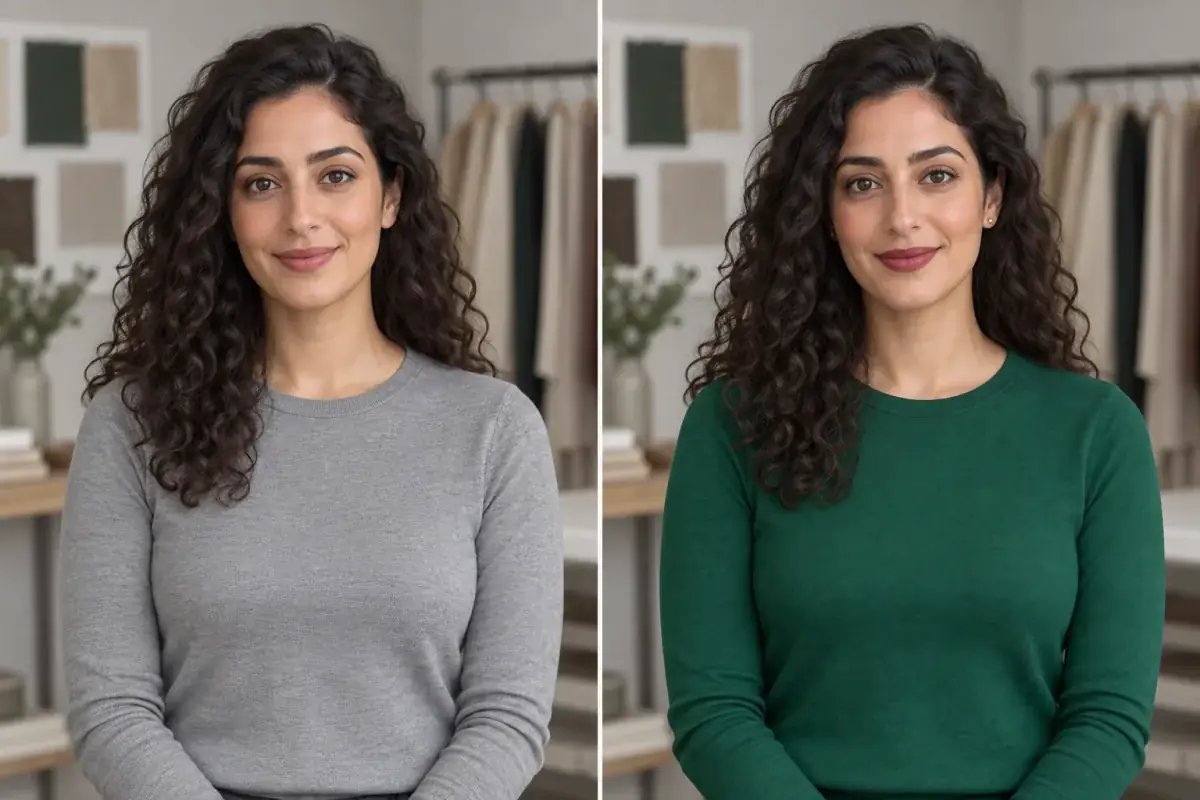
Brunette to blonde: will it suit you, and what it actually takes
Blonde from brunette is the most expensive sentence in hair, in money, in sessions and in upkeep. Whether it suits you is three tests; whether it is worth it is a fourth, and this guide runs all four before you book a consultation.
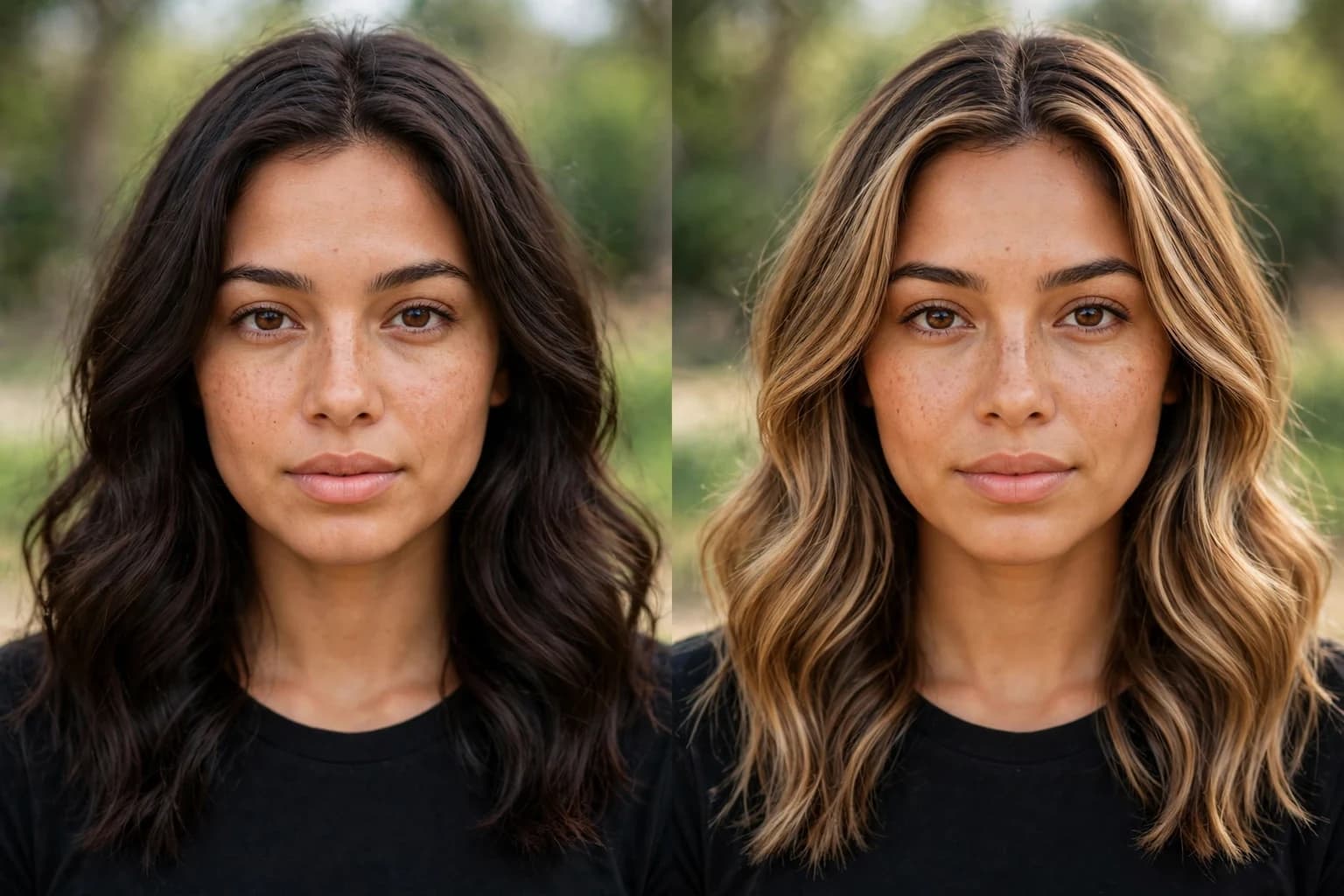
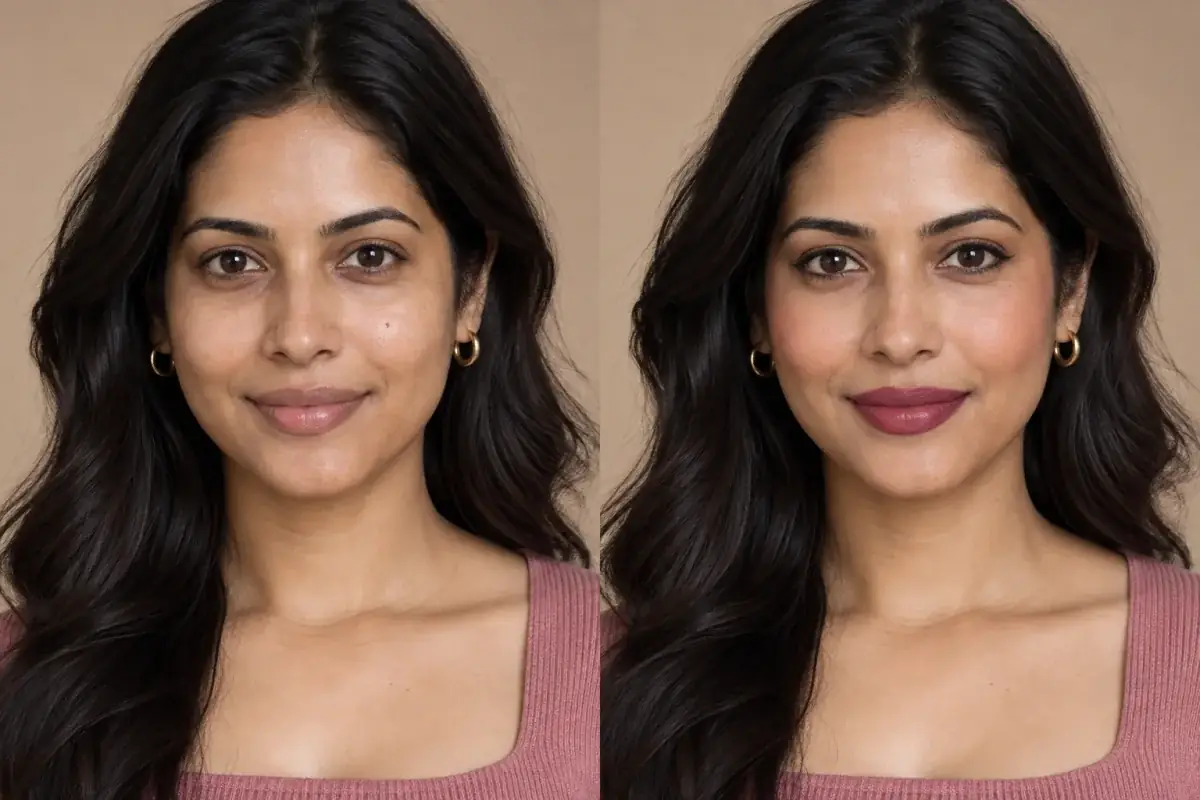
Same face, brunette to bronde. The bridge shades keep the root depth her contrast runs on, and lighten everything the face can spare.
Direct answer
Will blonde suit me if I am a brunette? Blonde suits a brunette when three tests pass: your undertone has a blonde version waiting for it (honey and golden for warm skin, ash and beige for cool), your natural contrast can survive losing the dark frame around your face, and your eyes stay strong without that frame. If it passes, expect the honest route in: 2 to 4 salon sessions spaced 2 to 3 weeks apart, a first transformation in US salons of roughly $250 to $400 from a dark base, and root upkeep every 6 to 8 weeks. Preview the target blonde on your own photo before any of that money moves.
Will blonde suit your coloring? The three tests
Test one is undertone, and it decides which blonde, not whether blonde. Warm skin takes honey, golden and caramel blondes, the ones with light inside them. Cool skin takes ash, beige and icy blondes, with the gold removed. The failures people call "blonde does not suit me" are usually this test run wrong: a warm coloring in an ash blonde looks gray skinned, and a cool coloring in a golden blonde looks brassy, and both conclude the whole direction was wrong when only the temperature was.
Test two is the contrast budget, covered in its own section below, because it is the test most brunettes actually fail.
Test three is eye color, read honestly. Dark hair frames the eyes and lends them strength. Brown and hazel eyes framed by blonde lose that borrowed contrast and have to carry the face alone; some do easily, especially warm brown eyes next to honey tones, and some go quiet. Light eyes, blue and green especially, tend to gain from blonde, since the frame lightens toward their own depth. None of this is visible in a shade chart. It is visible in ten seconds on your own photo, which is why the preview is test three's real form.
How much contrast can your face afford to lose?
Contrast is the depth gap between your hair and your skin, and brunette hair is doing quiet structural work: it outlines the face, strengthens the brows and makes the eyes the darkest feature. Blonde removes that outline. A face with strong features and deep coloring can pay that cost and simply look brighter. A soft, low contrast face can be left looking unfinished, as if the frame had been taken off the picture.
You can estimate your budget before any preview. If you look most like yourself in deeper lip colors and defined brows, your face is spending contrast and blonde will tax it. If pale colors wash you out but you also look tired in very dark tops near your face, you sit in the middle, and the middle is exactly where the bridge shades in the last section were invented.
One more budget item is easy to miss: your brows. Brows carry a large share of the face's contrast, and they stay brunette when the hair goes blonde unless you address them. Some new blondes look washed out not because of the hair level but because the brows are now the only dark feature left, reading as two separate decisions. A brow tint one to two shades lighter, or simply a softer brow pencil, rebalances the whole face for the price of a coffee, and it is reversible in a way bleach is not.
Two engineering fixes exist for a tight contrast budget. A shadow root keeps your natural depth at the parting and around the hairline, so the face keeps its frame while the lengths go blonde. And keeping the blonde at level 7 or 8, a dark or medium blonde, instead of chasing level 10 platinum halves the contrast you spend. Both are reasons "blonde did not suit me" often means "that blonde, at that level, with no root, did not suit me".
What does going blonde from brunette actually involve?
The short version, because the full process deserves its own guide and has one: our going blonde guide walks through every stage in depth.
The shape of it: each lightening session lifts roughly 2 to 3 levels safely, so a level 4 brunette aiming at a level 9 blonde needs the pigment removed in stages, with 2 to 3 weeks between sessions for the hair to recover. Industry reporting puts 92 percent of dark haired clients in the 2 to 4 session range. Inside each session: bleach to lift, a toner to cancel the orange and yellow the lift exposes, and a bond building treatment such as Olaplex or K18, typically adding $25 to $40, which is the difference between blonde hair and blonde straw.
Previously dyed brunette hair changes the maths again, and it is the most common surprise in the chair. Artificial pigment does not lift like natural pigment; dark box dye can hold the hair at an orange plateau for a full session, and the route out may need a color removal step before lightening even starts. That is correction territory, with correction pricing, and it is why the consultation questions about your hair history are not small talk. Virgin brunette hair is the straightforward case; everything else is a negotiation with chemistry you have already done.
Damage is real but manageable when the pace is honest. Hair that has been lifted four or more levels is permanently more porous and drier; it breaks more easily wet, and it drinks toner unevenly, which is why rushed one day transformations so often come back as corrections. The strand and elasticity test at your consultation exists to tell your colorist how much of this your hair can fund.
Settle the level before the sessions: preview a level 8 dark blonde against a level 10 platinum on your photo.
What does it cost, in money and in upkeep?
Salon price data from a US salon's published breakdown, by starting level:
Follow up sessions typically run 60 to 75 percent of the first session's price, so a dark brunette's full journey commonly totals $400 to $900 before upkeep starts. London, Paris and Berlin salons price the same journey in the same shape, in euros, with capital city chairs at the top of the band.
Upkeep is the permanent part. Roots need attention every 6 to 8 weeks at 40 to 60 percent of the original service cost, purple shampoo weekly at $12 to $28 a bottle to hold brass down, and bond treatments at home in between. Call it $50 to $100 a month, forever, or the blonde degrades into the brassy, patchy state that gives the direction its bad name. If that sentence ends your interest, it has done its job here rather than at the salon till.
- Level 1 to 4, dark brown to black; First transformation: $250 to $400; Sessions: 2 to 4; Why: Double process, bleach and toner, the most product and chair time.
- Level 5 to 6, medium brown; First transformation: $180 to $280; Sessions: 1 to 2; Why: One full lift usually reaches a wearable blonde, then toning.
- Level 7 to 8, light brown; First transformation: $120 to $200; Sessions: 1; Why: Minimal lift; mostly tone and gloss work.
Which shades bridge brunette and blonde?
The bridge shades exist for the brunette who passes tests one and three but has a tight contrast budget, or a tight money budget. They deliver most of the brightening at a fraction of the sessions and upkeep.
Every bridge shade has the same hidden virtue: it is also the audition. Six weeks in bronde tells you more about your life as a blonde than any consultation, at a price that lets you change your mind.
- Bronde: brown and blonde woven together at your natural depth, one session, no hard root line. It is the standard first step and the standard retreat position if full blonde disappoints.
- Honey blonde: the warm bridge, level 7 to 8 with gold kept in; it reads blonde against brunette while keeping warmth next to warm skin. Our shade by shade comparison with its copper neighbour.
- Mocha balayage: lightening placed through the lengths and ends in a cool neutral brown, keeping your root and frame fully brunette. The full suitability guide.
- Money piece and face framing: two bright sections at the front only. The cheapest possible test of how your face reacts to blonde at your hairline, and reversible in one appointment.
A preview shows the destination, not the damage
Seeing blonde on your photo settles the suitability question honestly, and it cannot show you the texture bill: lifted hair is drier, more porous and more fragile than the hair in the picture, and no preview can render that. Decide the shade from the preview; decide whether to pay for it from the session count, the upkeep cost and your hair's current condition, all three of which this guide has tried to state plainly.
Take the theory out of it.
The suitability tests in this article converge on one visual question, whether the reader's face keeps its strength without the brunette frame, and the honest way to answer it is her target level of blonde on her own photo, before a $400, four session journey begins.
Questions people ask
Can I go from brunette to blonde in one session?
Occasionally, from a light or medium brown in strong condition, and rarely to a bright blonde. From dark brown or black, one session means lifting five or more levels at once, which is where breakage and patchy orange results come from. Plan on 2 to 4 sessions spaced 2 to 3 weeks apart and treat a stylist promising otherwise as a warning sign.
How many sessions does dark brown to blonde take?
Two to four for most people, since each session lifts about 2 to 3 levels safely. A level 4 brunette heading for a level 9 blonde should expect three as the working number. Your consultation strand test gives the personal answer, because previously dyed hair lifts slower than virgin hair.
Will blonde hair wash me out?
It can, if your natural contrast is low or the blonde's temperature fights your undertone. The fixes are built into the choice: keep a shadow root so your face keeps its frame, stay at a level 7 or 8 instead of platinum, and match the temperature, honey for warm skin, ash or beige for cool. Previewing the exact level on your photo shows the washout risk before it is real.
How often will I need root touch ups as a blonde?
Every 6 to 8 weeks for an all over blonde, at roughly 40 to 60 percent of the original service cost. A shadow root or a balayage placement stretches that to 10 to 12 weeks because the regrowth lands as a gradient instead of a line. Skipping touch ups is what turns blonde brassy and banded.
Can I go back to brunette if blonde does not suit me?
Yes, and it is much easier than the trip out, because going darker is a deposit, not a lift. Lifted hair is porous, so the brunette may need filling with warm pigment first and can fade faster than natural color for a while. Many people land on a bridge shade like bronde on the way back and stay there.