


What Hair Color Should You Buy on Black Friday? Try It First
Sale week asks you to decide fast, and hair color decided fast is the hardest choice to undo. This guide slows down one step: try the shade on your own photo first, then buy the dye or book the salon color that already looks right on you.

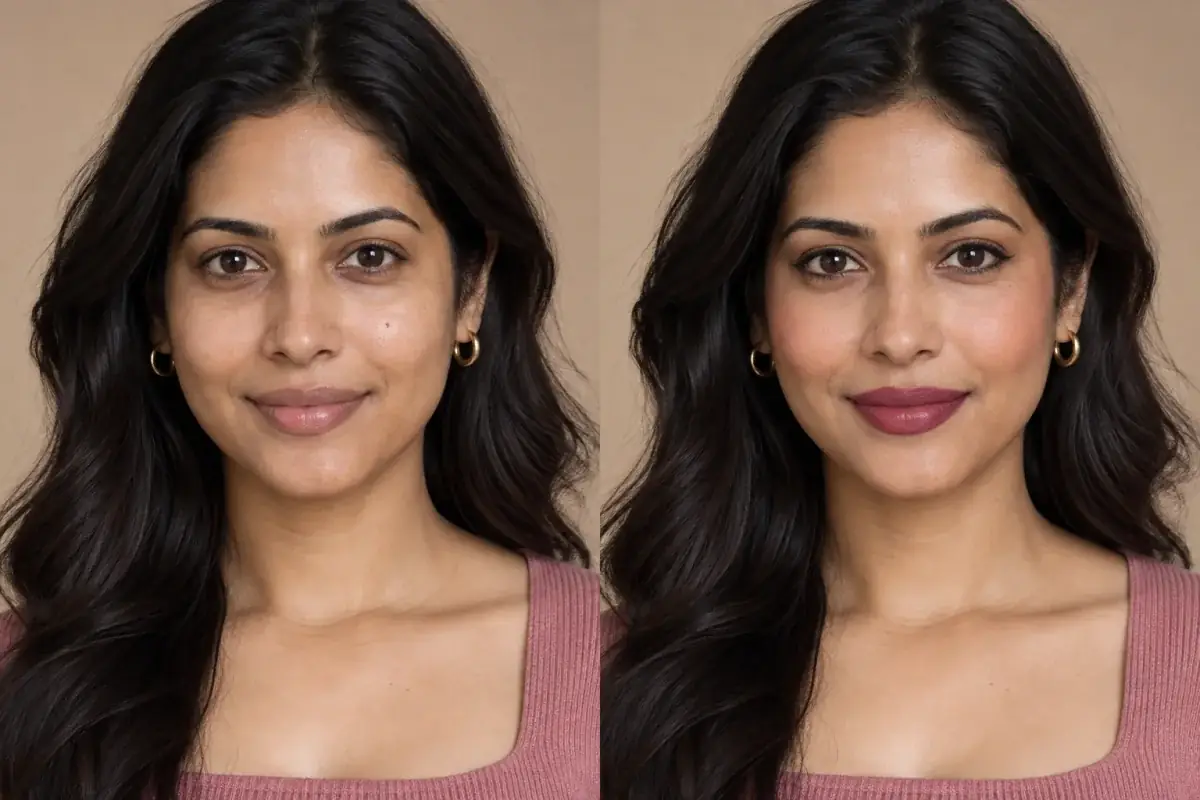
The whole idea in one frame: the shade on your own hair, before any money changes hands.
Direct answer
Buy the hair color you have already seen on your own photo, not the one that looks best in the bottle or on a model. Black Friday through Cyber Monday runs as one blended sale window, from about 21 November into early December, and it is the week you choose hair color faster than at any other time.
The fix is one step, in the right order: upload your photo, see mocha balayage, cherry cola, or copper on your own hair, and only then buy the dye or book the salon color. Your first preview needs no account.
Key takeaways
- Try every hair color on your own photo before you buy it. The bottle, the swatch, and your hair are three different colors.
- Start with mocha balayage, cherry cola, and copper, the three holiday hair colors sale week is built around.
- Undertone decides the family, and the photo decides the winner inside that family.
- Black Friday through Cyber Monday is one blended window, and the sale framing here ends in early December.
- Your first preview needs no account. Sign up only to save or download a look.
What does try before you buy mean for hair color during sale week?
It means reversing the usual order. Normally you buy the dye, take it home, apply it once, and then decide whether it was a mistake. During sale week that order gets expensive, because you choose between several shades in one basket instead of one, and a wrong hair color cannot be returned. Try before you buy puts the test first: upload one photo, pick the shade, and see it on your own hair, at your length, with your current base color visible, before any money changes hands.
The step takes under a minute per shade. Open the hair color try on, upload a clear daylight photo of yourself, and run mocha balayage, cherry cola, and copper side by side on the same photo. If a shade wins, buy it or book it with confidence. If it loses, you spent a minute, not the price of a dye box or a salon appointment.
Which hair colors should you try first?
Start with mocha balayage, cherry cola, and copper, the three holiday hair colors sale week pushes hardest, and the three where a photo test changes the decision most. Mocha balayage is the safest: soft dimension on a dark base, low upkeep, forgiving across undertones. Cherry cola is bolder: a deep brunette with a red cherry glow that behaves very differently on warm versus cool skin. Copper is the highest commitment: the most striking of the three, and the one whose fading and upkeep surprise people most.
Do not start with five or six shades. Three finalists, tested on the same photo, beat a long shortlist tested in different light. Narrow by undertone first, using the sections below, then let the photo decide the winner inside that family. If none of the three flatters you, look at a different family, like ash brown or golden blonde, instead of buying a shade you have already seen lose.
Does mocha balayage suit your skin tone?
Mocha balayage suits the widest range of skin tones of any holiday hair color, which is why it is the safest first test. It is soft dimension on a dark base rather than a single flat color: darker roots melting into a cool to neutral mocha through the lengths. Warm skin glows when the mocha leans slightly warm and golden through the ends, cool skin when it leans ash and neutral, and olive skin when it stays muted and neither too warm nor too ashy. Deep skin carries the richest version of it, with the dimension showing as a soft glow rather than a sharp contrast.
Our mocha guide explains who it suits in full: /blog/mocha-balayage-who-it-suits. Use it to narrow your version, then test that version on your photo through /hair-color-try-on. Judge it at your length and with your current base visible, since balayage reads differently at different lengths and on grown out roots. If you are taking the result to a salon, save the winning photo: it shows your colorist the dimension you want on your head, not on a model.
Does cherry cola suit your skin tone?
Cherry cola is a deep brunette with a red cherry glow, and it is the shade where undertone decides everything. Warm skin glows when the cherry leans warm and brick red through the lengths, cool skin when it leans wine and berry, and olive skin when it stays deep and muted rather than bright. The same bottle can read as a rich brunette on one person and as an obvious red on another. Cherry cola also fades: the red glow softens first, so the shade you buy and the shade you live with for a month are not quite the same color.
Our cherry cola guide covers that split in full: /blog/cherry-cola-brunette-who-it-suits. Use it to pick your version, then test it against mocha balayage on the same photo through /hair-color-try-on. Judge both in daylight and at arm's length, and judge them against the clothes you actually wear. If cherry cola wins, buy that one shade. If it loses to mocha, you have saved yourself a dye box and a month of a red glow you did not want.
Should you go copper, and what does the upkeep really look like?
Copper is the most striking of the three holiday colors, and the one most worth testing, because its upkeep surprises people more than any other shade. Copper fades faster than brunette shades: the warm pigment washes out with every wash, so the copper you buy and the copper you live with after a few weeks are different colors, and keeping it vivid takes regular toning or refresh appointments. That is a reason to test it first: copper either lights up your skin immediately on the photo or it does not.
Warm skin usually takes copper most naturally, while cool skin needs a softer, more muted copper rather than a bright orange leaning one. Olive skin can carry copper beautifully when it stays deep and muted, and deep skin carries the richest copper of all. Start with our copper guide: /blog/should-i-dye-my-hair-copper. It covers the fading, the upkeep, and the versions honestly. Then test copper against your current base through /hair-color-try-on, and ask yourself one question: do you love it enough to maintain it? If the answer is yes, buy it with confidence. If the answer is no, mocha or cherry cola will make you happier for longer.
How do you choose between two hair colors?
Start by narrowing to two finalists, not five. Five shades tested quickly teach you less than two shades tested carefully, because the differences that matter between two close shades only show up when you compare them on the same photo, in the same light, at the same length. Put mocha balayage against cherry cola, or cherry cola against copper, and judge them side by side rather than one at a time from memory.
Our choosing guide walks through that comparison step by step: /blog/how-to-choose-between-two-hair-colors. Its core method is simple: pick the two finalists by undertone, test both on one photo through /hair-color-try-on, judge them in daylight and at arm's length, and keep the one that makes your skin look clearer rather than the one that looks most dramatic close up. The winner is the shade you still like when you glance at the photo the way a stranger would.
Box dye or salon color: which should you buy in the sale?
That depends on how far the new color sits from your current base, and on how much correction a mistake would cost. A box dye suits a shade close to your current color: one or two levels lighter or darker, same tonal family, no bleach needed. A salon color suits everything else: a big level change, a move from dark to light, balayage dimension that needs painting by hand, or any change where bleach is involved. A wrong box dye costs a dye box and a correction appointment. A wrong salon color costs the appointment itself plus weeks of growing out or recoloring.
If you are taking the result to a salon, our salon preview guide explains how to use the photo with your colorist: /blog/preview-hair-color-before-salon. Save the winning try on photo and show it at the appointment: it shows the shade on your head, at your length, with your base visible, which ends the old problem of reference photos belonging to someone else's face. If you are buying a box dye, test the exact shade you plan to buy, not a close cousin, since two dyes that look identical on the box can sit a full step apart on your hair. Either way, test first through /hair-color-try-on, and buy only the winner.
How do you try a hair color on your own photo in under a minute?
The steps are the same for every shade, and the whole test takes less time than reading a single product review. First, take or choose a clear photo of yourself in daylight, facing the camera, with your hair fully visible and no heavy filter on it. Second, open the hair color try on at /hair-color-try-on. Third, upload the photo and pick the shade. Fourth, judge the result at arm's length as well as close up, in daylight, against the clothes you actually wear.
Two questions come up every time: privacy, covered in the hub guide at /blog/black-friday-beauty-try-before-you-buy, and cost, where the first preview needs no account and you only sign up to save or download. If a shade wins, save the photo: it shows the shade on your hair instead of describing it in words, and it is the most useful thing you can take into a store or a salon.
When does the Black Friday window actually run?
Black Friday through Cyber Monday runs as one blended sale window, not two separate events. Most deals open well before Black Friday itself, run through the weekend, and extend into Cyber Monday and the days after it, with some events stretching into early December. That is why this guide treats the whole stretch as one window: the shopping is continuous, the same shades are on offer throughout, and the try before you buy step is worth doing at any point inside it.
Cyber Monday is the tail of that window, not a second peak. It is online by origin, built around last chance framing and online only codes, and it suits the shopper who missed the weekend or is still deciding. Do not wait for Cyber Monday expecting better or different hair color deals: the shades worth testing are the same throughout the window. One timing note matters for this guide itself. The sale framing here ends in early December. After that point, the shades and the method still hold, but the sale week language goes stale, and the guide should be read as a hair color guide rather than a sale guide.
What should you not do during sale week?
Do not buy five dyes to test at home. That is the most expensive way to answer a question a photo answers in a minute, and four of the five boxes will sit unused. Do not trust the bottle, the swatch stick, or the model's photo: none of those is your hair.
Do not buy a shade only because it is viral. A shade can trend for reasons that have nothing to do with your undertone, and virality is not a shade match. Test the viral shade the same way as any other: if it flatters you on your photo, buy it with confidence, and if it does not, let it trend without you. Do not let a free gift decide where you spend. A free shade bundled with a purchase is only a good deal if you wear the shade.
A try on shows the shade on your photo, not a promise
A photo try on shows you the shade on your own hair, which is far more information than a bottle or a swatch gives you. It is not a guarantee: screens and lighting shift color, a salon formula differs from a dye box, and a shade can read differently in daylight than under shop lights. Check the winning shade in daylight before you buy it, and show the saved photo to your colorist or compare it against the shade you hold in the store. Also note that the sale framing in this guide ends in early December; after that point, read it as a hair color guide and use the try on steps exactly the same way.
Take the theory out of it.
This guide is about one decision, hair color, so it points straight at the hair color try on rather than the picker. Upload one photo, pick mocha balayage, cherry cola, or copper, and see the shade on yourself before you buy it. The first preview needs no account.
Questions people ask
Should I try a hair color on my photo before buying a box dye on Black Friday?
Yes, because a box dye cannot be returned once it is on your hair, and two dyes that look identical on the box can sit a full step apart once applied. A photo try on shows the exact shade on your own hair, at your length, with your current base visible, before you pay for any of it. Test the exact shade you plan to buy, judge it in daylight and at arm's length, and buy only the winner.
Does mocha balayage suit warm or cool skin?
Both, in different versions, which is why it is the safest holiday color to test first. Warm skin glows when the mocha leans slightly warm and golden through the ends, while cool skin glows when it leans ash and neutral. Olive skin suits a muted mocha that stays neither too warm nor too ashy, and deep skin carries the richest version, with the dimension showing as a soft glow rather than a sharp contrast.
How long does copper hair last, and why does it fade?
Copper fades faster than brunette shades because its warm pigment washes out with every wash, so the vivid copper you buy softens within a few weeks unless you refresh it with toning or salon appointments. That upkeep is the real cost of copper, more than the dye or the appointment itself. Test it first to see whether you love it enough to maintain it, and if you do, plan the refresh before you buy, not after it fades.
Can I take the try-on photo to my salon?
Yes, and you should, because a saved try on photo shows your colorist the shade on your head, at your length, with your base visible, which is far more useful than a reference photo of someone else's face. Show it at the appointment and ask what formula gets closest to it on your hair, since a salon formula differs from a dye box and your colorist can adjust for your base. Our salon preview guide explains the conversation.
Do I need an account to try a hair color on my photo?
No. Your first preview needs no account: upload one photo, pick the shade, and see it on yourself. You only sign up when you want to save or download a look, which is worth doing for the winning shade, since the saved photo is the most useful thing you can take into a store or a salon.