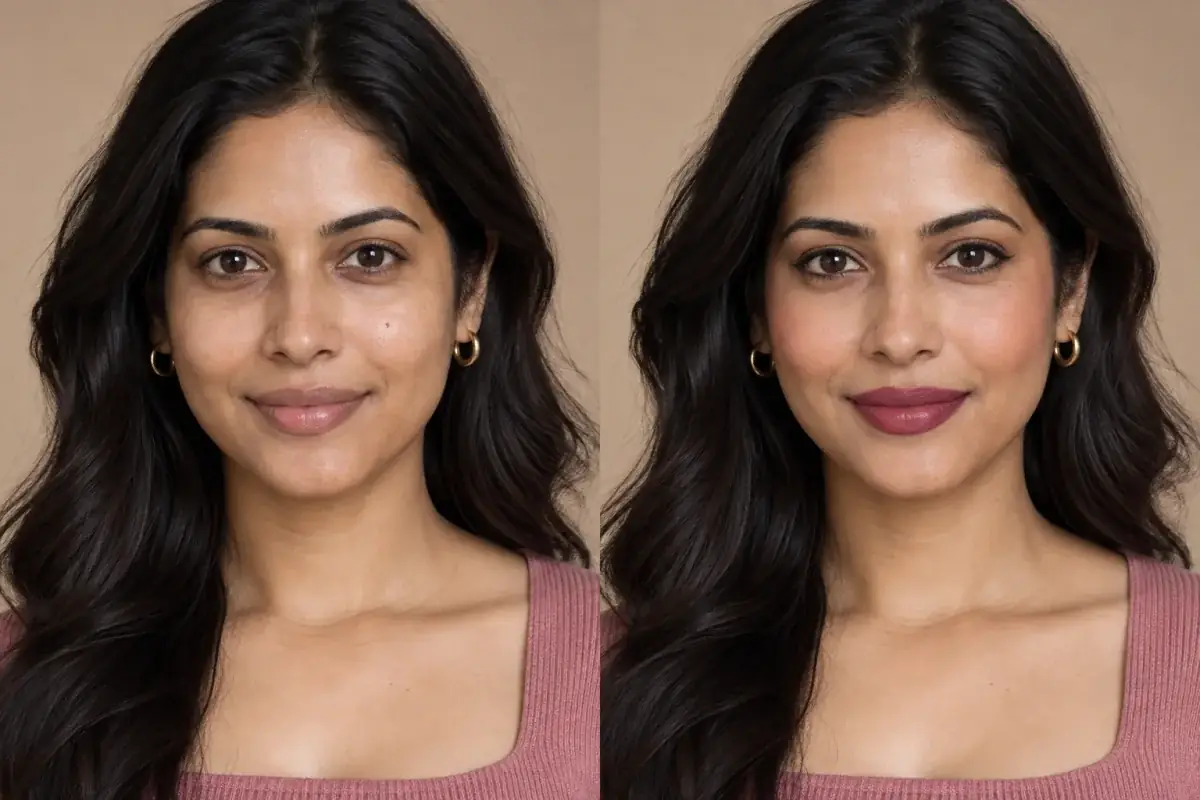


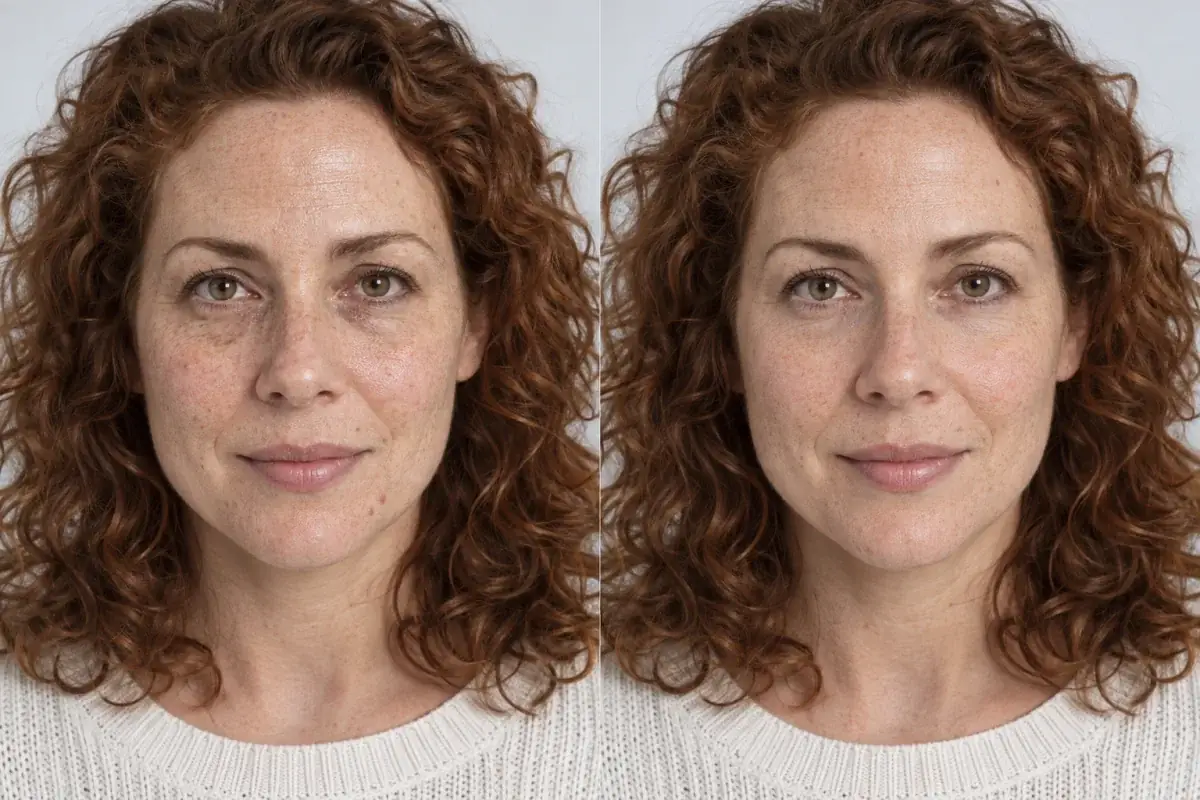

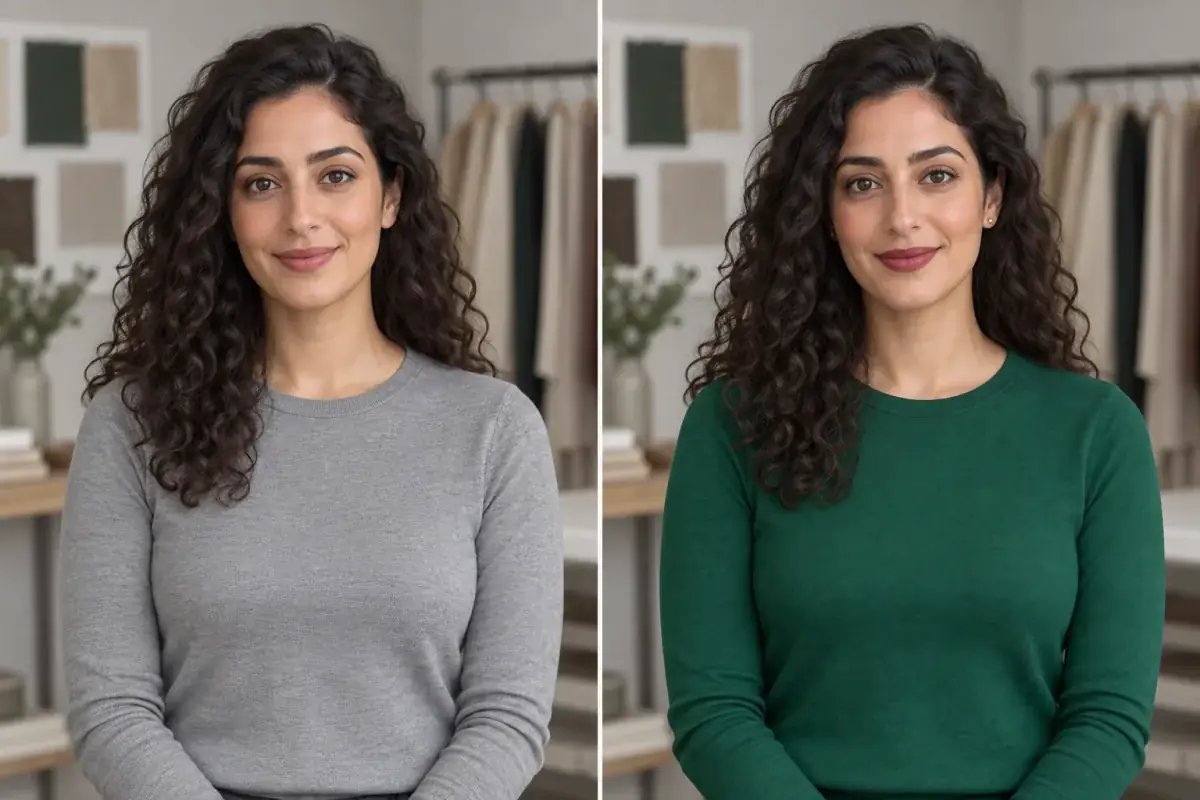
How do you choose between two hair colors?
Being stuck between two shades is not indecision; it is the last step of the decision working properly, because both finalists have already passed the rules. What settles it is not more information but a short series of tests, run in the right order.
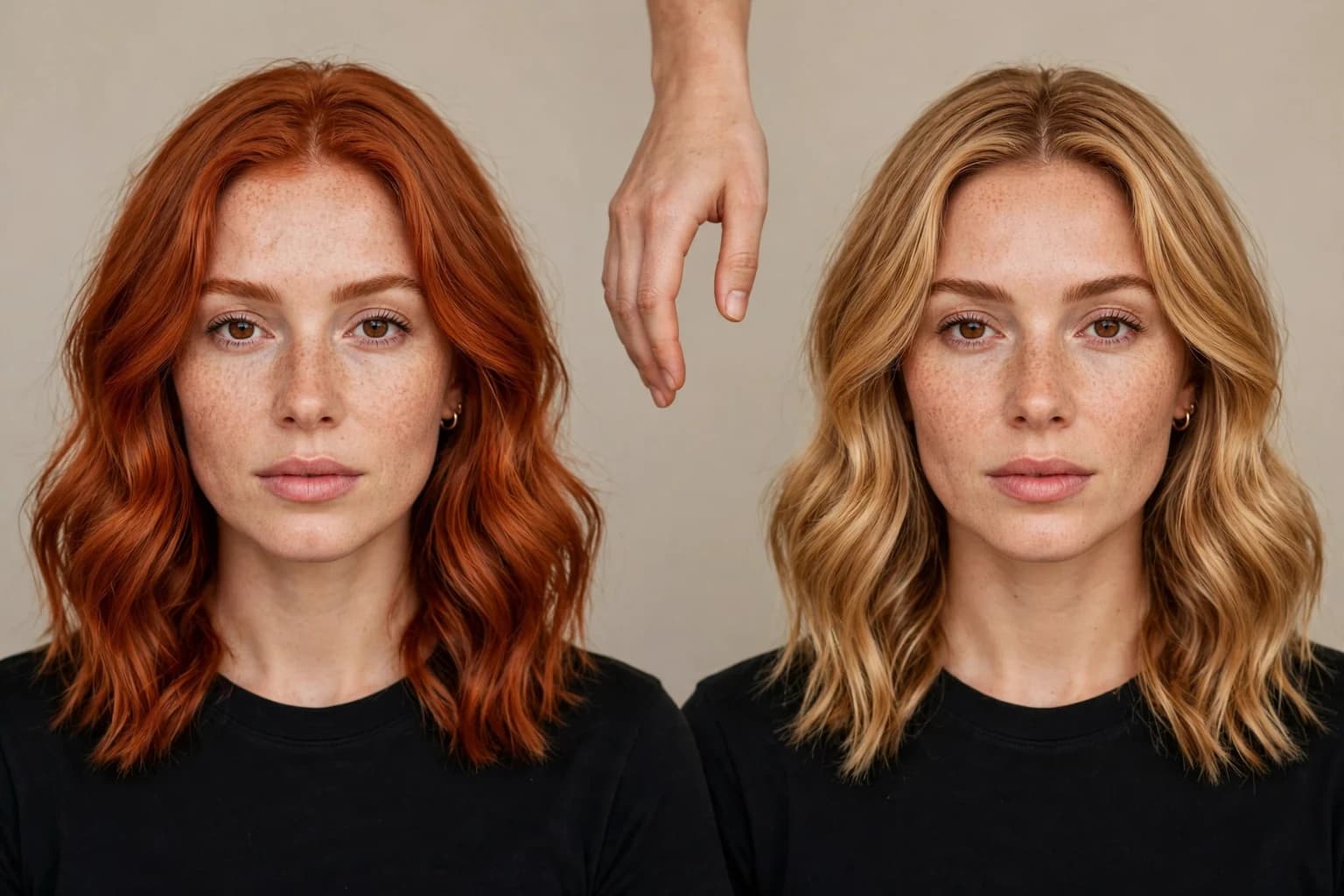
Two finalists, one face: the tests in this guide judge the pair against your skin, your calendar and your budget, in that order.
Direct answer
How do you choose between two hair colors? Run five tests in order and let the earlier tests outrank the later ones. First, the undertone tiebreak: if one finalist sits outside your temperature family, it loses, whatever its charms. Second, the contrast budget: the shade at least two levels from your skin tone wins over the one that matches it. Third, maintenance reality: compare the two on visits and cost per year, not per appointment. Fourth, the one photo comparison: both shades on the same photo of you, judged skin first, eyes second. Fifth, the 48 hour rule: live with the winner for two days before booking. If the pair is still tied after all five, choose the one that is easier to reverse.
Key takeaways
- Order matters: undertone first, contrast second, maintenance third, the photo fourth, time fifth. A shade that fails an early test should not be rescued by a later one.
- The contrast rule of thumb from working colorists: a shade at least two levels darker or lighter than your skin tone flatters; a shade at your skin's own depth washes you out.
- Compare the finalists on cost per year, not per appointment: a cheaper ticket on a four week cycle loses to a bigger ticket twice a year.
- If everything ties, pick the easier reversal: the shade closer to your natural level, or the one available as a gloss or demi first.
What is the undertone tiebreak?
Most finalist pairs are not really two shades; they are one shade in two temperatures, copper against auburn, honey blonde against ash blonde. That is why the first test is temperature. Your undertone, warm, cool or neutral, is the vote your skin casts, and it outranks preference because the skin is the larger surface in every mirror and photograph. If one finalist is outside your family, it will read as sitting on top of you while the other settles, and no amount of liking it fixes that.
If you do not know your undertone, the tests that find it are in our undertone guide. If both finalists are inside your family, which is common when the shortlist came from the decision guide, the tiebreak is silent and you move to the second test with both shades still alive. The tiebreak also has a soft form worth using: between a warm and a neutral version of the same shade, the neutral is the safer keeper, because it survives your skin's seasonal shifts between summer and winter.
What is the contrast budget test?
Hair flatters when it is visibly different in depth from the skin it frames. Colorist Alaina Manibog's two shade rule, quoted in NewBeauty, puts the working version plainly: aim for a color at least two shades darker or lighter than your skin tone, because when hair and skin sit at the same depth and tone, the face reads washed out and dull. Apply it to your pair: the finalist that keeps a clear depth gap from your skin wins this test, and the one hovering at your skin's own level loses, even if its temperature is perfect.
Your natural contrast sets the budget for the test. A high contrast coloring, deep features against deep skin or pale skin with dark natural hair, can fund a dramatic gap in either direction. A low contrast coloring has a smaller budget, and for her the test often eliminates the extreme member of the pair: the level 2 espresso or the level 10 platinum, leaving the moderate shade as the honest winner. Neither result is a consolation prize; it is the shade that will still look intentional at arm's length, which is the distance the world sees you at.
What does maintenance reality say about the pair?
Put the two finalists on a calendar and a budget, per year. Copper against honey balayage is the classic pair to run it on: copper asks for a gloss every four to six weeks and gentle washing forever, while balayage asks for two to three larger appointments a year and forgives a skipped month entirely. Priced honestly, the copper habit can cost more across a year than the balayage despite the smaller tickets, and it certainly costs more attention. The technique by technique comparison is in our technique guide, and the fade timeline behind the copper side of this test is in our copper timeline guide.
Ask the lifestyle version of the question too. Do you swim weekly, wash daily, heat style most mornings? Each habit taxes the two finalists differently, and the shade that survives your actual life beats the shade that suits an imaginary one. A finalist that needs behavior you do not have is not a finalist; it is a wish.
How does the one photo comparison work?
This is the test the earlier ones cannot replace, because it judges the specific shades on the specific face. Take one honest photo, front facing, daylight, no filter, and preview both finalists on that same photo. The method in full, including the photo rules and the Salon Card that follows, is in our preview guide; the short version is a fixed judging order.
Judge skin first: the right shade evens it out and makes it look rested, while the wrong one brings out redness, sallowness or shadow. Judge eyes second: the right frame sharpens them before you can say why. Judge the whole picture third, at arm's length. Then repeat the comparison in a second light, morning daylight and bathroom light, because screens flatter warm shades in the evening and cool shades at noon, and a finalist that only wins in one light will lose in the other room for as long as you wear it. A straight verdict tool can help formalize the call: exists for exactly this head to head, and it uses credits the same way the try-on does.
Run your two finalists on one photo and judge them in the fixed order, skin, eyes, whole picture.
What is the 48 hour rule?
Do not book on the day you compare. Save both previews, live with them for 48 hours, and look at each once in the morning and once in the evening across the two days. The rule works because novelty fades on its own schedule: the bolder finalist almost always wins the first hour on surprise alone, and the honest winner is the one you keep reopening on day two, in ordinary light, with an ordinary face.
Two signals are worth trusting at the end of the 48 hours. The first is which preview you showed someone else, or wanted to: people share the version they already believe. The second is which shade you have started planning around, imagining with your clothes and your makeup. Imagination is a vote your conscious mind has not tallied yet. If, after two days, neither signal has fired and the tests are level, use the tiebreak of last resort: pick the easier reversal. Choose the finalist closer to your natural level, or the one that exists as a gloss or demi version, wear it for a month, and let real hair cast the final vote. The salon words for booking either version precisely are decoded in our stylist guide.
Source: Uptone preview workflow guide
Source: Uptone decision guide
A tie is information, not failure
If two shades survive all five tests, the honest conclusion is that both suit you, and the choice between them is taste, not correctness. Readers torture themselves at this stage looking for a sixth test that will make the decision feel scientific. There is not one. Pick by calendar and reversibility, enjoy the winner, and remember the runner up is not lost: it is your next color, already vetted, when this one has run its course.
Take the theory out of it.
Tests one to three are rules and arithmetic; test four is the one that needs the reader's own face. The try-on puts both named finalists on a single photo so the comparison is between shades, not between selfies.
Questions people ask
Should I ask friends or social media to vote between two hair colors?
As entertainment, yes; as a decision, no. Voters judge the photo, the lighting and their own taste, and they systematically prefer the bolder option because it photographs as more of a change. Run the five tests for the verdict and use the vote, if at all, to check you are not missing something obvious.
What if both hair colors look good on my photo?
Then both suit you, and the decision moves to the tests that are not about looks: maintenance per year, and reversibility. Choose the one your calendar and budget hold more easily, or the one available as a gloss or demi first, and keep the runner up as your next color.
Should I always pick the lower maintenance color?
No. Maintenance is test three of five, not a veto, and a shade you love at a gloss every five weeks beats a shade you tolerate twice a year. The test exists to make you choose the upkeep knowingly, with the annual number in front of you, not to eliminate every shade that asks for care.
How many finalist shades should I preview?
Two or three. The preview workflow in our salon guide uses a likely winner, a stretch and a control, and beyond three the comparisons blur into each other and the decision gets worse, not better. If you are previewing six shades, the real problem is the shortlist, and the decision guide rebuilds it.
Can I try one color now and the other later?
Yes, and order matters: wear the easier reversal first. A demi or gloss version, or the finalist closer to your natural level, lets you gather a month of real evidence and still reach the second shade in one appointment. Going straight to the harder reversal first can make the runner up a correction instead of a choice.