

What haircut suits my face shape? Why the chart is a starting point, not the answer
The face shape chart is the most repeated answer in hair, and it is a good starting point. It is not the answer, because it knows one thing about you and your hair has at least four more things to say.

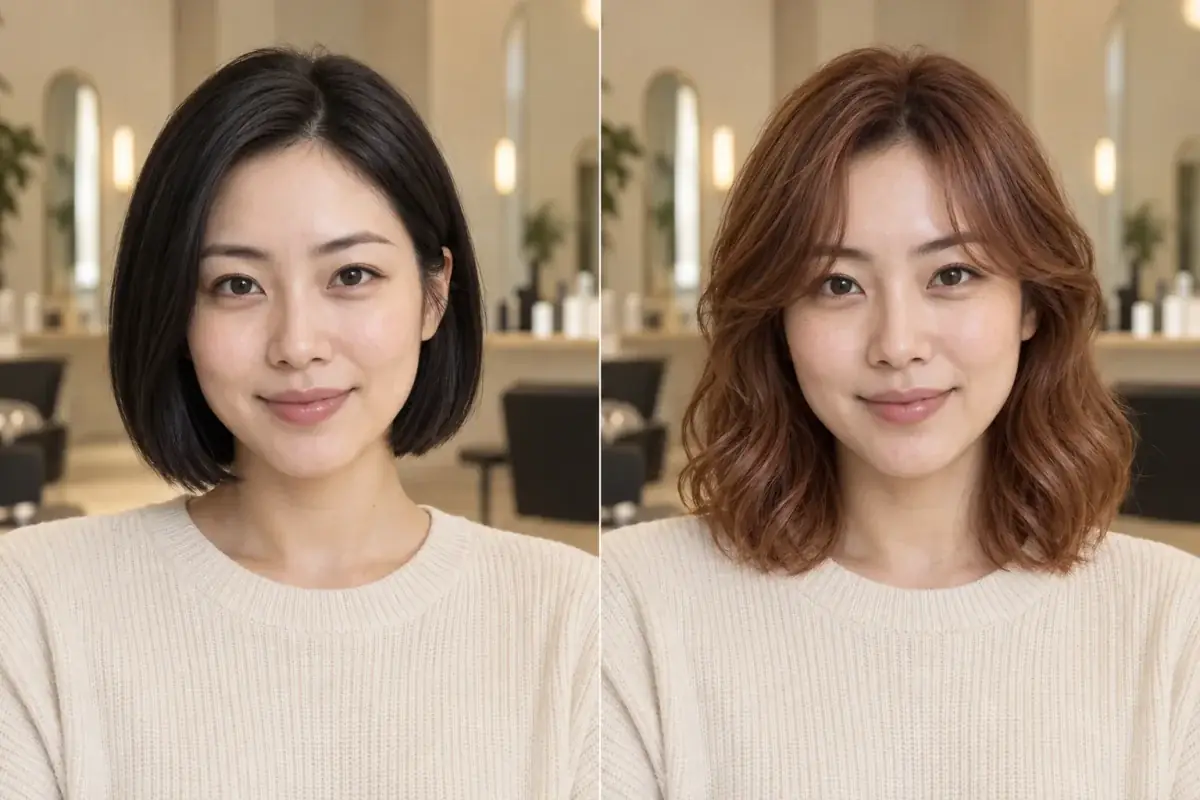
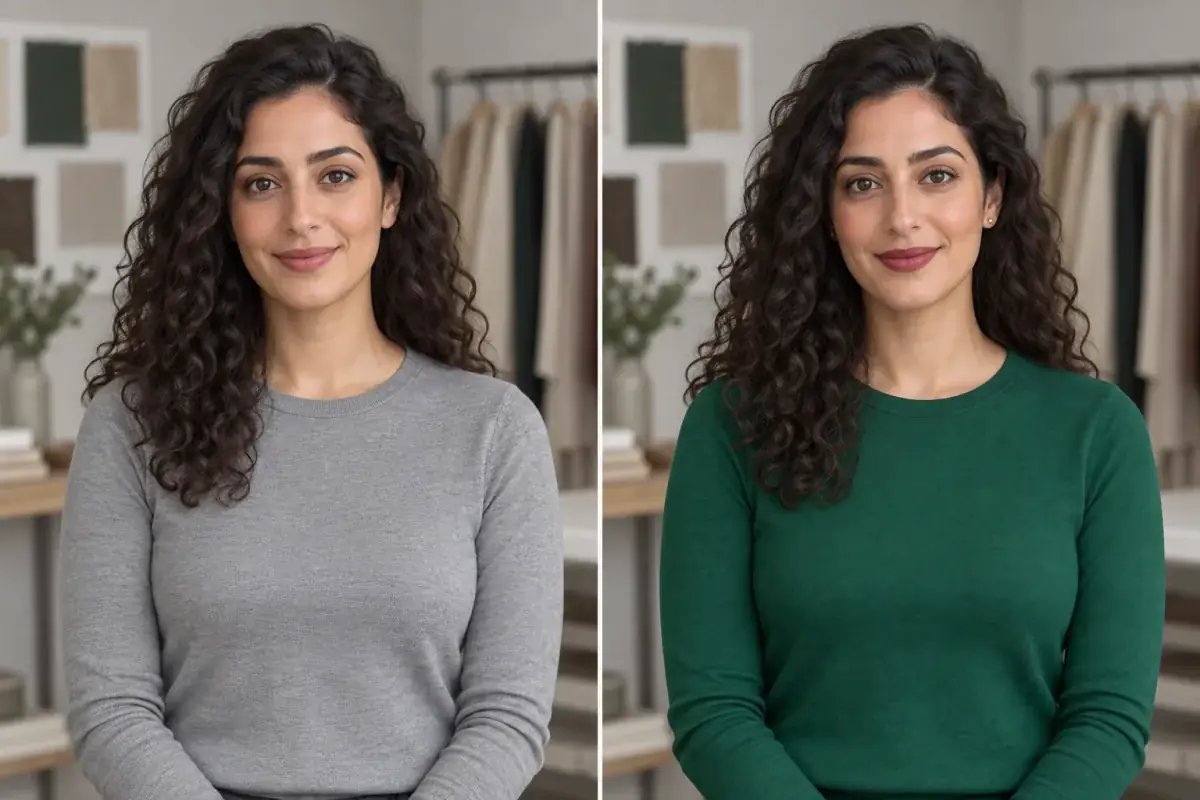
The chart shortlisted these three. Only one of them survives contact with her texture, her mornings and her face, and the preview is where that gets decided.
Direct answer
What haircut suits my face shape? Use the chart to shortlist, never to decide. The chart is right about balance: round faces want length and height, square faces want softening, long faces want width, heart faces want weight at the jaw. But it assumes your hair is average in texture, density and behaviour, and yours is not. Curly hair shrinks as it dries, fine hair cannot hold the chart's heavy shapes, and a cut you will not style is a cut that does not suit you. Take two or three cuts from your shape's row, put them on your own photo, and let the preview settle what the chart started.
How do you find your face shape in about a minute?
Tie your hair back, face a window, and take a straight on photo. Then compare four widths: your forehead at its widest, your cheekbones from outer eye corner to outer eye corner, your jaw from below one ear to your chin, doubled, and your face length from hairline to chin. You do not need exact numbers. You need to know which width is biggest and whether your face is longer than it is wide, and those two answers place you in the chart.
If your length is about one and a half times your cheekbone width with a softly rounded chin, you are oval. Length and width about equal with no hard angles is round; the same proportions with visible corners at the jaw is square. A forehead clearly widest, narrowing to a small chin, is heart. Cheekbones widest with a narrow forehead and chin is diamond. Noticeably longer than wide, with all three widths similar, is oblong. If two rows seem to fit, you are between shapes, which is normal: work from the row that matches your widest measurement. Our full walkthrough, with photos, is the face shape tool.
What does the chart say for each face shape?
The chart's whole theory is one sentence: hair balances what the face has in surplus and supplies what it lacks.
One pattern is worth seeing before you use the rows. Notice how rarely the chart prescribes the extreme version of anything: the longest hair, the shortest crop, the heaviest fringe all appear as things to avoid somewhere. That is because most faces sit within a step or two of balanced, so most good cuts are moderate corrections, not transformations. If a row's shortlist feels underwhelming, that is the chart working as intended. The dramatic cuts that dominate social feeds usually succeed on contrast and texture, the variables in the section after next, not on geometry.
That is the chart used properly: six rows, six shortlists. Our longer guide works through the same shapes with more cuts and more exceptions. What neither the chart nor the guide can do is see your hair.
- Oval: already balanced, so almost everything is open, blunt bobs, long layers, pixies, curtain bangs. The one trap is a heavy straight fringe, which can shorten an oval into looking round.
- Round: add height and length, keep width off the cheeks. Long layers falling below the chin, a deep side part, side-swept bangs, volume on top. Avoid the blunt chin length bob, which parks the widest part of the cut on the widest part of the face.
- Square: soften the corners. Layers starting below the jaw, waves, a long bob ending past the chin, a side-swept fringe. Avoid a blunt cut ending exactly at the jawline, which draws a second hard line under the first.
- Heart: add width at the jaw and take it away at the forehead. Chin or collarbone length cuts with volume sitting low, curtain bangs, a side part. Avoid tall volume on top and tight slicked back styles.
- Oblong: shorten visually and add width. A blunt bob or lob, waves through the mid-lengths, and a fringe, curtain or blunt, to cut the forehead down. Avoid very long straight hair and height on top, which stretch the face further.
- Diamond: widen the forehead and chin so the cheekbones stop being the only wide point. Chin length styles with volume at the jaw, a side-swept fringe, texture around the chin. Avoid anything slicked tight to the head.
Why does curly hair break the chart's length maths?
Because the chart measures the cut wet and you wear it dry. Curly and coily hair contracts as it dries, a behaviour the hair world calls shrinkage, and on the tightest curl patterns hair can recoil dramatically, in some cases by up to half its wet length, as the shrinkage guidance cited in our face shape guide documents. A chart that prescribes a chin length bob for your face shape has quietly assumed the bob stays at chin length. On curly hair cut wet to the chin, the dry result can sit at the jaw or higher, which is a different cut with a different balance, and on a round face it can land at exactly the widest point the chart told you to avoid.
The fix is not to abandon the chart but to translate it. If your hair shrinks, take your shortlist to a stylist who cuts curly hair dry, or preview the cuts at their dry length rather than their salon length. The same applies in miniature to wavy hair and to anyone whose hair is cut wet and styled straight but worn natural. Length is the chart's main variable, and shrinkage rewrites it.
What moves the answer more than face shape does?
Ask a working stylist what decides a haircut and face shape rarely comes first. Texture decides what a cut can physically do: fine hair will not hold heavy disconnected layers, and thick hair in a short blunt bob grows outward instead of down. Density decides whether the chart's volume instructions are even available to you; a cut that adds width with bulk assumes bulk exists. Growth pattern, your cowlicks and hairline, decides where a fringe can sit and which way a part will fall, whatever the chart prefers.
Lifestyle is the variable clients lie about most. A French bob looks effortless in photographs and asks for regular blow drying to stay that way; long layers forgive a week of neglect. And personal contrast, the strength of your features and colouring, decides whether a dramatic cut reads as striking or as noise: strong features carry sharp, geometric cuts that can overwhelm a softer face at the same shape. Two women with identical face shapes and different answers to these five questions need different haircuts. That is not the chart failing. That is the chart finishing its job early, the way a map finishes before the weather starts.
How do you settle it on your own photo?
Take the two or three cuts from your row and put them on your own photo in the haircut try-on, using a clear, straight on picture with your hair off your face. Then judge them as a stylist would, in this order: does the balance match the chart's intention for your shape, does the cut look plausible on your texture and density, and can you see yourself spending its styling minutes on a wet Tuesday in February. The cut that passes all three is your answer, and it is allowed to be the one your shape's row did not list first.
Concrete examples help. The butterfly cut is the chart's long layers answer with the face framing turned up, and it survives on more textures than its drama suggests. The French bob is the oblong and oval rows' blunt bob with a softer finish, and it is the cut whose styling cost surprises people most. Preview both against your chart's plainer options and the differences stop being abstract. Each try-on uses credits from your plan, so spend them on the real shortlist, and save the winner to show your stylist.
The chart is a tiebreaker, not a law
Plenty of people look best in the exact cut their face shape supposedly forbids, because something else, great texture, strong features, a cut they simply love, outweighs the geometry. If a preview of a forbidden cut delights you and the same cut keeps winning every time you look, believe the preview. Rules about balance describe averages; the photo shows a person.
Take the theory out of it.
The chart gives you two or three candidates and five unmeasured variables. The try-on tests the candidates against the variables, on the only face the answer is about.
Questions people ask
How do I know my face shape?
Tie your hair back, take a straight on photo in daylight, and compare four things: forehead width, cheekbone width, jaw width and face length. Whichever is widest, plus whether your face is longer than it is wide, names your shape. If two shapes seem to fit, work from the one matching your widest measurement.
What haircut suits a round face?
Cuts that add height and vertical length while keeping width off the cheeks: long layers falling below the chin, a deep side part, side-swept bangs, or a pixie with volume on top. Avoid a blunt chin length bob and a full rounded fringe, which both widen the widest point. Preview the shortlist, because forehead height shifts the answer.
Does face shape really matter when choosing a haircut?
It matters, but less than most guides claim. It sets a sensible shortlist based on balance, then texture, density, growth pattern and how much styling you will actually do outweigh it. Treat the chart as a starting point and a tiebreaker, and let seeing the cut on your own photo make the final call.
What if I am between two face shapes?
That is common, and it is not a problem to solve. Take the shortlist from the row matching your widest measurement, borrow one cut from the neighbouring row, and preview all of them. Being between shapes just means your shortlist is one cut longer.
Can I see a haircut on my photo before cutting it?
Yes. Upload a clear, straight on photo to the haircut try-on and apply your shortlisted cuts to your own face, keeping your features unchanged. Compare them side by side and save the winner to show your stylist, which turns a chart's general advice into a specific brief.