


French bob or layered bob: which cut suits your face shape?
The two bobs are not two versions of one cut. One is a length decision and the other is a shape decision, and your face shape picks which question you are actually answering.
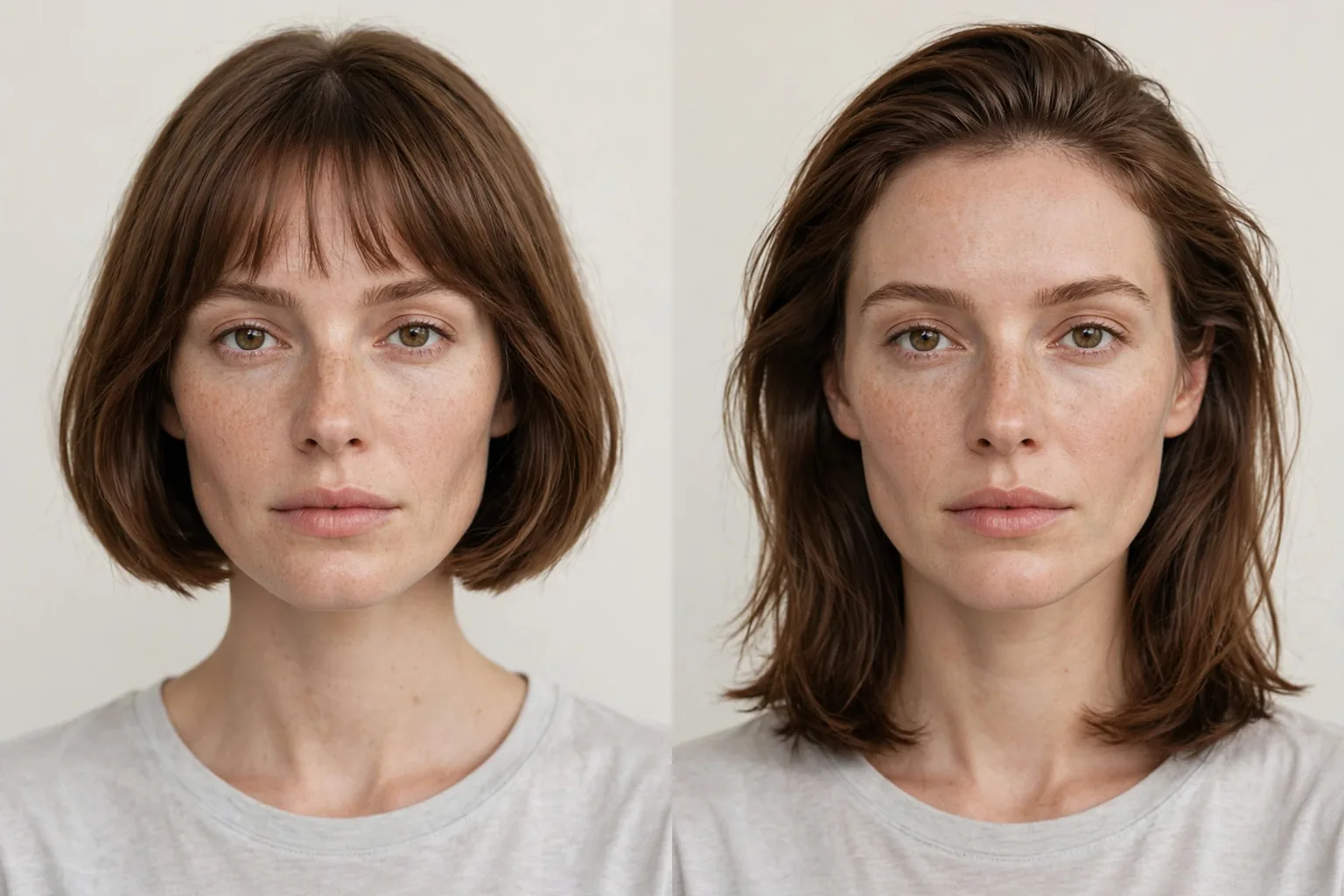
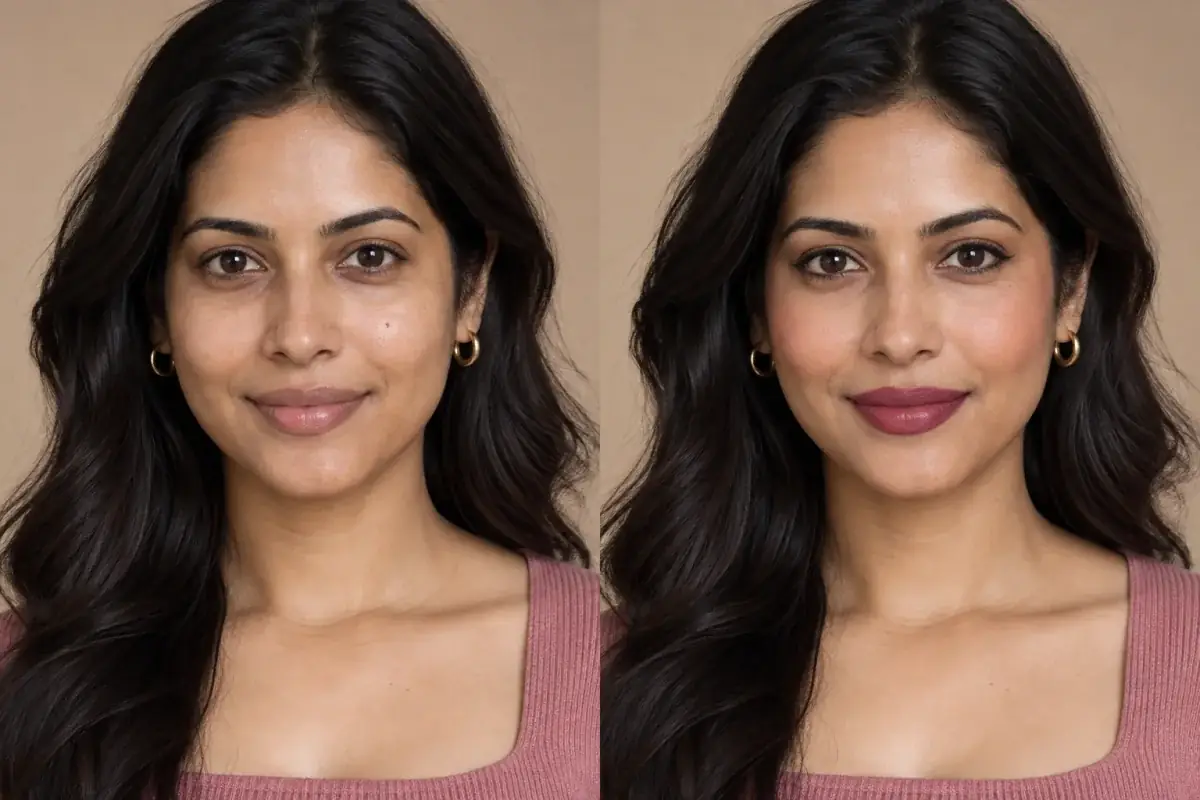
Same face, two decisions: the French bob puts its line at the jaw, the layered bob puts its shape in the layers and keeps the length.
Direct answer
French bob or layered bob: which one suits me? If your face is square or heart shaped, start with the French bob: it ends at the jaw, is cut mostly blunt, and usually comes with wispy bangs, and that short horizontal line balances a strong jaw and a wide forehead. If your face is long, start with the layered bob, kept at or above the collarbone, because its layers add width without adding length. Round faces are the one shape this guide skips on purpose, because their bob rules are different and already covered in full in our hairstyles for round faces guide.
What is the difference between a French bob and a layered bob?
They are answers to two different questions. The French bob is a length decision: one blunt line that ends around the jaw, minimal layering, and a fringe that is part of the cut's identity rather than an extra. The layered bob is a shape decision: the length can sit anywhere from the chin to the collarbone and usually sits longer, and the shape comes from layers cut through the mid lengths and ends, which remove weight and add movement.
That is why the two cuts fail differently. A French bob fails when the line lands in the wrong place for your face. A layered bob fails when the layers start at the wrong height.
- End length: the French bob ends at jaw level, sometimes just above it; the layered bob runs from chin to collarbone, usually below the jaw.
- How it gets its shape: the French bob is one blunt line with minimal layering; the layered bob takes its shape from layers through the mid lengths and ends.
- Bangs: on the French bob a wispy or full fringe is part of the cut and the default; on the layered bob bangs are optional, curtain bangs or none at all.
- Best faces in this guide: the French bob suits square and heart faces; the layered bob suits long faces, and square faces that want softness.
- Grow out: the French bob loses its line quickly and needs trims every 6 to 8 weeks; the layered bob is forgiving, and 10 to 12 weeks is common.
- Daily styling: the French bob wants its ends turned under or tousled, plus a daily minute for the fringe; the layered bob air dries into shape more easily.
Source: Hair.com by L'Oréal, French bob guide: the cut ends around the jawline, fringe as a defining element
Which bob suits a square face?
A square face has one dominant feature, the jaw, and both cuts have to negotiate with it. The French bob can work beautifully here: Harper's Bazaar's stylist Michael Gray lists square among the shapes the cut works amazingly with, because the modern version is soft around the face rather than severe. The condition is placement. A blunt line that stops exactly on the jaw angle underlines the widest, strongest part of the face. Ask for the ends just below the jaw, textured rather than razor blunt, or keep the jaw length and let wispy bangs break up the horizontal line.
The layered bob is the safer default for square faces: the layers blur the jaw's corners instead of ending beside them, and the extra length pulls the eye downward past the jaw rather than stopping on it. Choose by hair and temperament. Fine or straight hair that will not hold a blunt line belongs in the layered version. A square face that wants the sharp, deliberate look should take the French bob, with the texture conditions above.
Which bob suits a heart face?
This is the French bob's home ground. A heart face is wide at the forehead and narrow at the chin, and a cut that ends at the chin or jaw adds width at exactly the level where the face has least of it. The fringe does the other half of the job, taking visual width off the forehead. Of the three shapes in this guide, heart needs the classic version adapted least: blunt line, wispy bangs, jaw length.
The layered bob works on a heart face with one control: keep the layering low. Layers that start at the cheekbone or below add movement without adding width at the top of the head. Heavy layering through the crown does the opposite, widening the widest part of the face and leaving the narrow chin looking narrower. If you prefer the longer cut, that single instruction, layers start low, is the whole brief.
Which bob suits a long face?
A long face needs width and must refuse length, so the two cuts swap their usual ranking here. The French bob's horizontal jaw line works in your favor: it interrupts the face's vertical line, and bangs shorten the read further.
The layered bob is where long faces go wrong, because its most common version, collarbone length, center part, gentle layers, adds vertical lines on both sides of an already long face. The working version is specific: keep the longest layer at or above the collarbone, start the layers around the cheekbones so the width lands at the sides, and wear a side part rather than a center one. Follow those three settings and the layered bob adds the width a long face wants. Ignore them and you have bought a longer looking face with layers in it.
Should I get bangs with my bob?
Treat bangs as the third decision, separate from the cut itself. Searchers already do: French bob with wispy bangs is one of Pinterest's fastest growing hair searches, up 394 percent year on year.
Wispy bangs are the low risk version: they soften a square forehead, shorten a long face, and grow out into face framing layers if you tire of them. A full, blunt fringe is the strongest shortening tool a long or heart face can use, and the highest upkeep item in this entire guide, with trims every 2 to 3 weeks and a daily minute of styling. No bangs keeps a layered bob at its most versatile and is the right call if your forehead is short or your hairline has a strong cowlick.
The fringe decision can be tested the same way as the cut: our should I get bangs page puts curtain, wispy, blunt and side swept fringe on one photo.
Source: Rush, 10 chic French bob hairstyles: face shape and texture adaptations, bangs options
What does the upkeep actually look like?
The French bob is low styling and high appointment discipline. The line is the cut, so it is trimmed every 6 to 8 weeks before the ends drift past the jaw and the shape turns into an ordinary bob. Daily effort is small: ends turned under with a round brush, or tousled and left, plus the fringe minute if you wear one.
The layered bob reverses the trade. There is no single line to lose, so the grow out is graceful and 10 to 12 weeks between trims is normal. It also air dries into its shape more honestly, because the layers do the work that styling does in the French bob. If your constraint is salon visits, take the layered bob. If your constraint is morning time, the French bob asks less of you at home and more of your calendar.
Preview both cuts on your own photo, side by side, before the consultation: one preview costs one credit.
What should I ask my stylist for?
Ask in landmarks, not trend names. A stylist can execute a landmark precisely; French bob alone leaves the placements that decide the cut to chance.
Photograph the result, save the end length, layer start and trim interval as a Salon Card, and bring a photo of the cut on your own face to the consultation rather than a model's. Her jaw line is doing half the work in every reference photo, and it is the half that will not transfer.
- The end length named against your jaw: ends just below my jaw or ends at my jaw, chosen for your face shape from the sections above, and agreed before cutting starts.
- For the French bob: a blunt baseline, with ends textured if your face is square, kept blunt if it is heart or long. Layering minimal, and internal only if your hair is thick.
- For the layered bob: the layer start named by landmark too, cheekbone for long faces, below the jaw for square faces, low for heart faces, and the longest layer capped at the collarbone.
- Bangs decided as their own line item: wispy, full or none, with their trim interval agreed at the same time.
- The trim interval written down: 6 to 8 weeks for the French bob, 10 to 12 for the layered bob.
A preview shows the shape, not the behavior
A try-on shows the silhouette honestly: where the line falls against your jaw, how the length reads against your face shape. It cannot show how your own hair behaves at that length. Hair that is calm at collarbone length can spring, flick or collapse at the jaw, and a cowlick that is invisible in long hair can run a short fringe. Treat the preview as the shape test and the decision tool, and put the texture question to your stylist directly: what will my hair actually do at this length, on a normal morning?
Take the theory out of it.
The article's central claim is that this decision turns on placements measured against the reader's own jaw and cheekbones: where the French bob's line ends, and where the layered bob's layers start. The try-on shows both placements on her own face before scissors are involved, which no reference photo can do.
Questions people ask
Will a French bob suit me?
If your face is heart shaped, almost certainly: the jaw length adds width at a narrow chin and the fringe balances a wide forehead. Square faces suit it with textured ends placed just below the jaw, and long faces suit it because the horizontal line shortens the face's read. Round faces follow different rules, covered in our round face hairstyles guide.
Is a French bob or a layered bob better for a square face?
The layered bob is the safer choice, because its layers blur the jaw's corners and its length carries the eye past the jaw. The French bob works too, and looks more deliberate, provided the ends are textured and sit just below the jaw rather than stopping bluntly on the jaw angle itself.
Does a layered bob make a long face look longer?
The common version does: collarbone length with a center part adds vertical lines to a face that needs width. Kept at or above the collarbone, with layers starting around the cheekbones and a side part, the same cut adds width at the sides instead and suits a long face well.
How often do a French bob and a layered bob need trimming?
A French bob needs a trim every 6 to 8 weeks, because the jaw length line is the cut and it drifts quickly; a full fringe needs its own trim every 2 to 3 weeks. A layered bob has no single line to lose, so 10 to 12 weeks between trims is normal.
Can I see a French bob on my own face before I cut it?
Yes. The haircut try-on puts the French bob and the layered bob on your own photo, so you can compare where each cut's line falls against your jaw before committing. One preview costs one credit, and you can save the winning version as a Salon Card for your stylist.