







Shape, texture and everyday movement

Hairstyles for round faces that work in real life.

A round face does not need to be hidden or made thinner. Use length, parting, volume and texture to create the balance or contrast you actually want.

Try a haircut directionUse a clear photo with hair visible
Six adults with round faces wear varied hairstyles while reading, walking, cycling, shopping and working
The haircut should survive movement, weather and the way you style it on an ordinary day.
Quick answer

Styles with movement below the cheek, deliberate height, an off-centre part or visible vertical lines often balance a round face, but texture and personal style matter more than a universal rule.

  • Keep the widest volume above or below the cheeks when you want more length.
  • A side or soft off-centre part introduces useful asymmetry.
  • Layers should be designed for your natural texture, not copied from straight hair.
  • A rounded bob can also look excellent when you want to echo the face rather than counter it.

01

Short hair can create clean structure

A pixie with height at the crown and tapered sides creates a vertical line while keeping the face open. A textured crop can do the same through separated pieces. For a bob, length just below the chin and movement around the jaw often feels less circular than a one-length shape that ends at the widest point of the cheek.

That does not make a rounded chin-length bob wrong. If you want a sculptural, fashion-led result, repeating the curve can look deliberate. The rule is to know whether you are balancing or echoing the geometry.

Pixie with height

Tapered sides and lift through the top create a strong open silhouette.

Angled bob

A slightly longer front and off-centre part add diagonal movement around the jaw.
02

Medium lengths offer the easiest flexibility

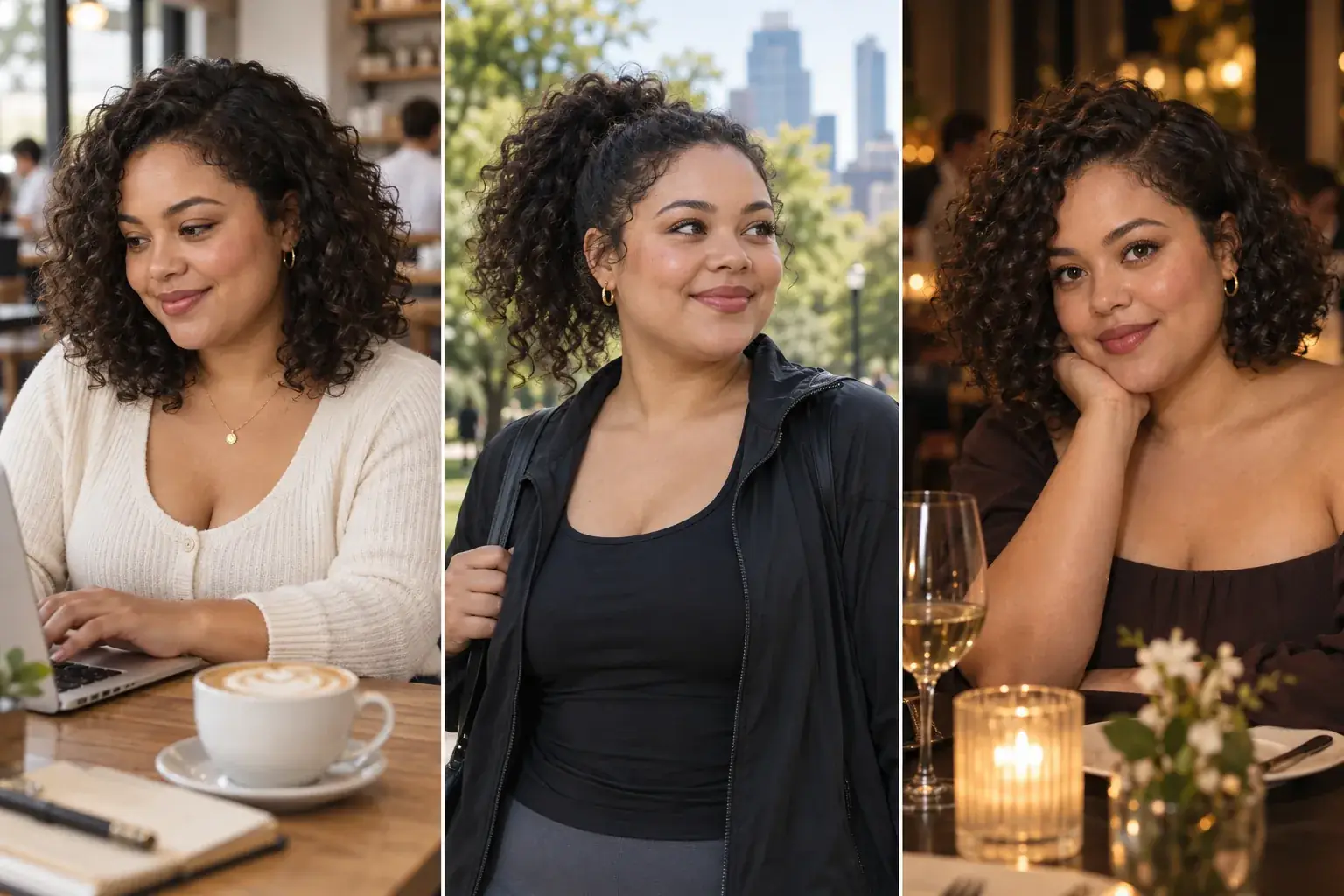
A collarbone lob clears the cheeks and gives enough length for waves, straight styling, a ponytail or a half-up look. Long face-framing layers can begin below the cheekbone and move towards the collarbone, preventing all the width from gathering at one horizontal point.

On wavy hair, ask for layers that release movement without making the ends thin. On curls, the placement should be judged dry or curl by curl so the widest point lands where intended.

The same round-faced woman wears layered curls, a high ponytail and a side-parted curly bob in different settings
Parting, height and where the width sits can change the effect without trying to disguise the face.

A practical path

Turn inspiration into a salon request

  1. 01

    Choose the silhouette

    Decide whether you want elongation, softness, graphic contrast or a shape that celebrates roundness.

  2. 02

    Match the texture

    Save references with a similar curl pattern, density and amount of styling so the finish is realistic.

  3. 03

    Describe the landmarks

    Tell the stylist where the shortest layer, widest point and overall length should sit on your face and shoulders.

03

Long hair needs shape, not only length

Very long one-length hair can create verticality, but it may also sit flat at the top and heavy at the ends. Long internal layers, a soft side part and movement from below the cheek add life without creating a shelf around the face.

For coily hair, a stretched oval, layered halo or high puff can place height and width deliberately. Volume is not the enemy. Its position controls the silhouette.

Straight or wavy

Long layers and an off-centre part prevent one heavy curtain of hair.

Curly or coily

Use rounded, oval or graduated layers according to where you want lift and fullness.

04

Parts, fringe and updos

A deep side part creates the strongest asymmetry. A soft off-centre part gives a quieter effect. A centre part can still suit a round face, especially with longer pieces that fall below the cheek. Curtain or side-swept fringe adds diagonal movement; dense straight-across fringe creates stronger horizontal emphasis.

For updos, leave height at the crown or a few long pieces around the face when you want length. A sleek high ponytail, textured top knot or low side bun can all work. Judge the style from the front and profile, because the full silhouette matters more than one face-shape label.

Try before you decide

Compare the silhouette on your own face.

Test short, medium and long directions before discussing texture, density and maintenance with a stylist.

Try a haircut directionUse a clear photo with hair visible

Useful answers

Questions people ask

Reviewed 19 September 2026

What haircut is most flattering for a round face?

There is no single winner. Collarbone lobs, angled bobs, pixies with height and long layers are useful starting points because they let you control where width and movement sit.

Can a round face wear a bob?

Yes. A bob below the chin, an angled shape or an off-centre part can create length, while a rounded chin-length bob can deliberately echo the face for a stronger fashion look.

Are bangs good for round faces?

Curtain, wispy and side-swept bangs often add movement or asymmetry. Blunt bangs can also work when you want graphic contrast rather than elongation.

Does a centre part make a face look rounder?

It can emphasise symmetry, but length and face-framing pieces may still create a vertical line. Compare a centre and off-centre part on the same hairstyle before deciding.