






A haircut decision, not a face-shape rule

Should you get bangs?

The useful answer depends on texture, growth pattern, maintenance and the effect you want. Compare fringe directions on your own face before the first cut.

Preview bangs on your photoStart longer, then compare shorter
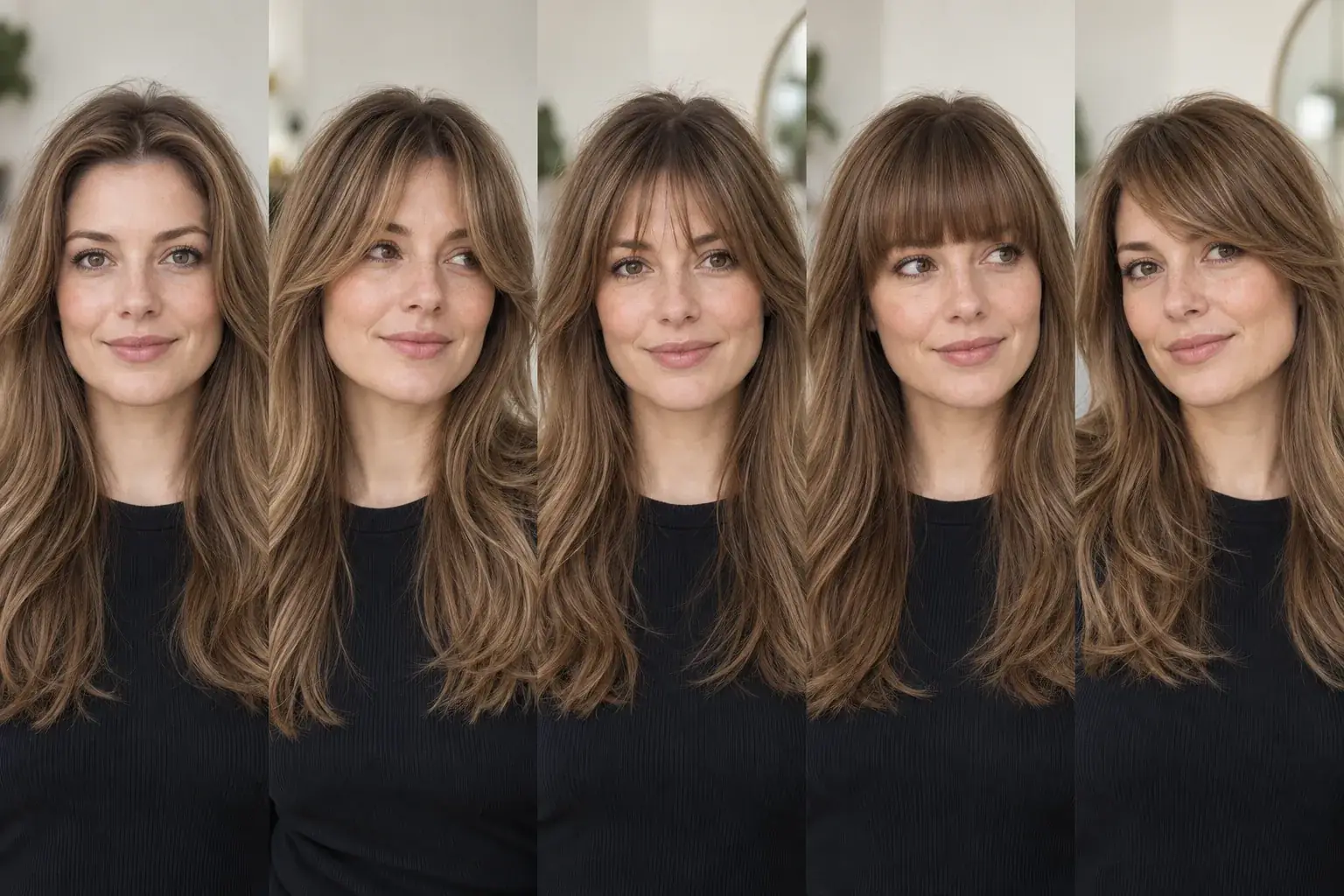
The same woman shown without fringe and with curtain, wispy, blunt and side-swept bangs
Keep identity and hair colour constant so length, density and shape are the real comparison.
Quick answer

Bangs are worth considering if you like the framing effect and can accept regular trims or styling. Start with a longer, softer fringe when you want lower commitment or have an uncertain growth pattern.

  • Curtain bangs are flexible because they can blend into layers as they grow.
  • Blunt bangs create stronger geometry and usually need more frequent trims.
  • Cowlicks and curls do not rule out bangs, but they change the cut and styling plan.
  • Preview the fringe both with hair down and in your normal tied-back style.

01

Choose a fringe by effect

Curtain bangs open through the centre and place movement around the cheekbones. Wispy bangs keep visible space between strands and feel lighter across the forehead. Blunt bangs create a clear horizontal line and make the haircut more graphic. Side-swept bangs add asymmetry and can blend into layers with less commitment.

Face shape can suggest proportions, but it should not become a ban. The same round face can wear a narrow curtain fringe for length, a soft side fringe for asymmetry or a micro fringe for deliberate contrast. Style and hair behaviour decide which version feels convincing.

Curtain

Longer at the outside, adaptable, easy to part and often the easiest first fringe.

Wispy

Airy and soft, but fine pieces can separate faster on oily skin or in humid weather.

Blunt

Strong impact and eye emphasis with the highest demand for precise trims.

Side-swept

A flexible asymmetric choice that can merge into face-framing layers.
02

Texture changes the cutting plan

Straight hair shows the cut line clearly. Wavy hair may create lift and separation. Curly and coily hair can make a beautiful fringe, but it must be cut with shrinkage, curl pattern and day-two behaviour in mind. A fringe that is measured wet can spring much shorter after drying.

Density matters too. Fine hair needs enough width to make a fringe visible without removing too much from the sides. Dense hair may need internal weight removal so it moves rather than sitting like a solid block.

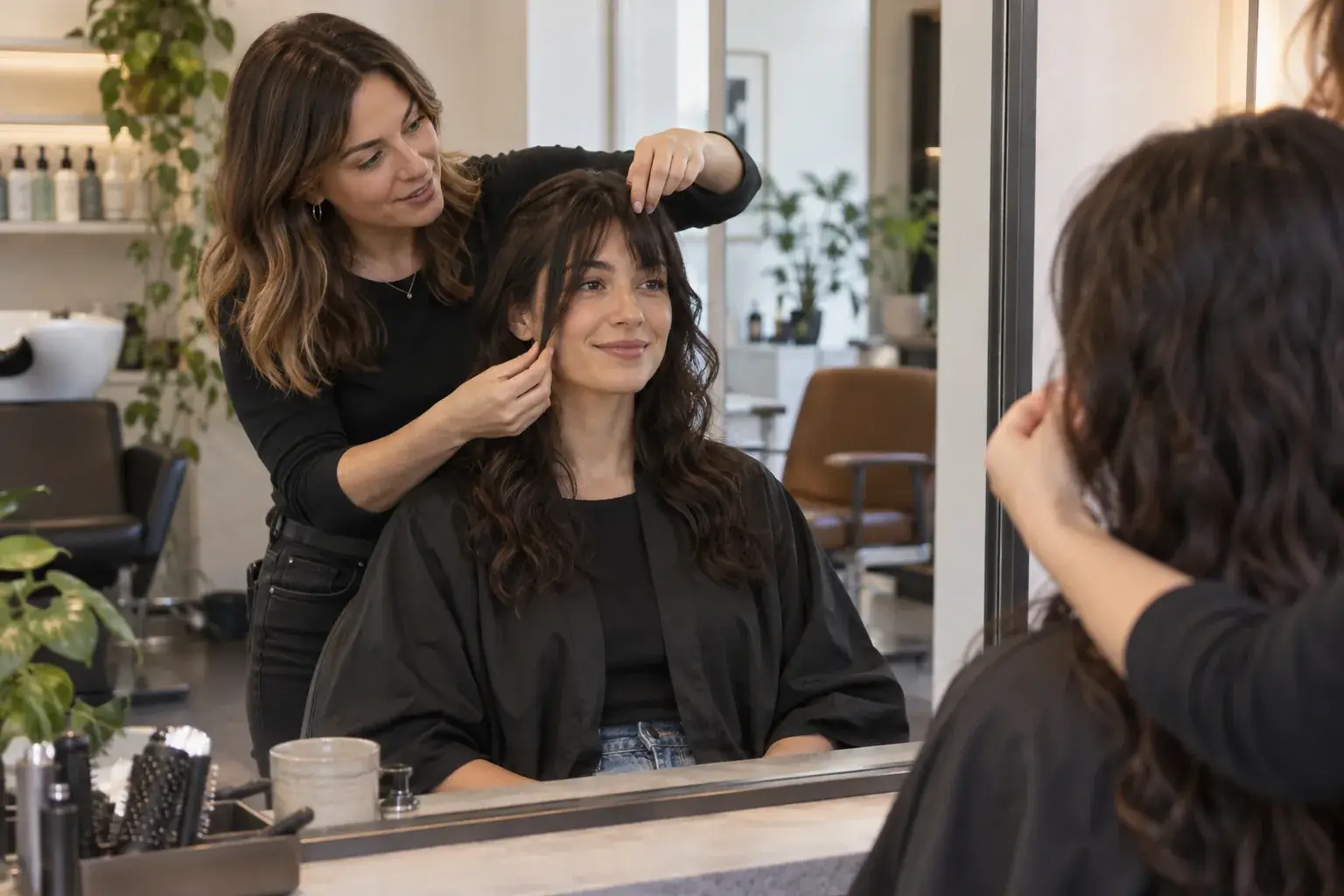
Stylist compares shorter and longer fringe sections on a client in a salon mirror
Take a saved reference to the salon and discuss how the shape translates to your density and growth pattern.

A practical path

Decide with your real routine in mind

  1. 01

    Name the effect

    Choose whether you want softness, eye emphasis, forehead coverage, stronger geometry or a change that still tucks away.

  2. 02

    Check the hair behaviour

    Notice texture, density, cowlicks, shrinkage and how quickly the front becomes oily. These facts shape the cut more than a face-shape chart.

  3. 03

    Preview and consult

    Try two lengths on your photo, save the strongest result and ask a stylist how to adapt it to the way your hair dries naturally.

03

The maintenance question

Ask how much morning effort you will actually give it. Some people can mist and reshape curtain bangs in two minutes. Others need heat, a round brush or a small roller. Blunt fringe often needs a trim every three to five weeks to stay at a chosen eye or brow line, while longer curtain pieces can grow for longer.

Plan for warm weather, exercise, hats and the days you want the hair tied back. A good fringe works with enough of your real week, not only the salon blowout.

Lower upkeep

Long curtain fringe, cheekbone pieces or a soft side fringe that can tuck away.

Higher upkeep

Dense blunt fringe, very short fringe or a shape that fights a strong cowlick.

04

What to show your stylist

Bring a front and side reference with hair texture similar to yours. Include a photo of the result you do not want as well. Words such as wispy and curtain are interpreted differently, while visible length, width and density give the stylist something concrete to discuss.

Ask how the fringe will look air-dried, where it should begin on the head and how it will grow into the rest of the cut. If you are unsure, start longer. A fringe can always become shorter during the appointment.

Try before you decide

See the framing effect before the scissors.

Compare fringe shapes on one clear photo and bring the saved direction to a stylist who can adapt it to your texture and growth pattern.

Preview bangs on your photoStart longer, then compare shorter

Useful answers

Questions people ask

Reviewed 19 September 2026

What bangs are easiest to grow out?

Long curtain bangs and side-swept fringe usually blend into face-framing layers most easily. Very short or dense blunt bangs have a longer visible grow-out stage.

Can curly hair have bangs?

Yes. Curly fringe can be soft, defined or graphic. It should be cut with shrinkage and the natural curl pattern in mind, preferably close to the way you normally wear it.

How often do bangs need trimming?

A precise blunt fringe may need attention every three to five weeks. Longer curtain or side fringe can usually go longer, depending on how quickly your hair grows.

Do bangs cause forehead breakouts?

Hair products, oil and friction can contribute for some people. Keep the fringe and skin clean, avoid heavy product at the roots and speak with a clinician if breakouts persist.