
What Makeup Shades Suit Olive Skin? Try Them on Your Photo
Most shade advice splits skin into warm and cool, and olive skin fits neither. This guide is the library for olive undertones: how to tell, which families flatter, and which to skip, all testable on your own photo.
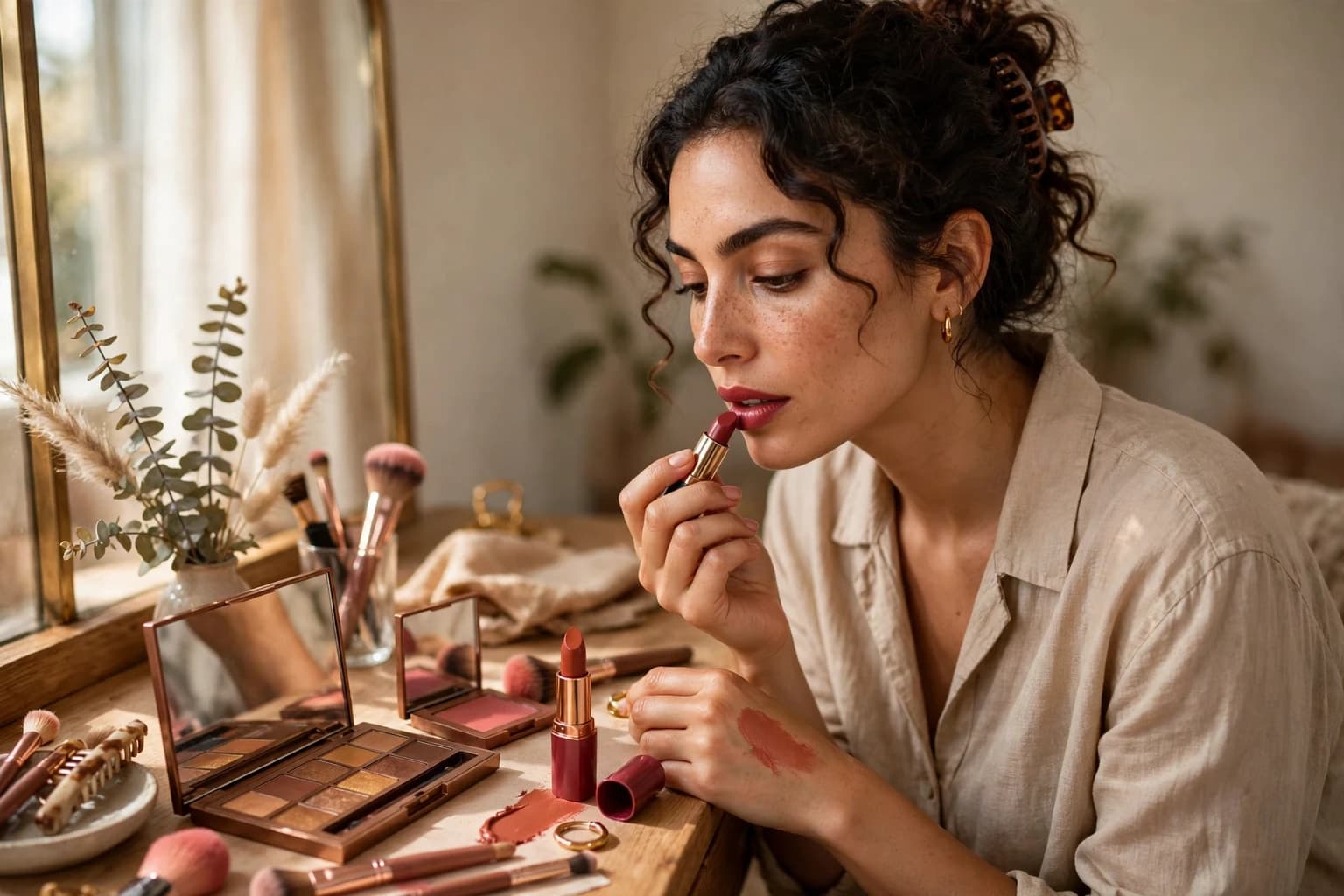
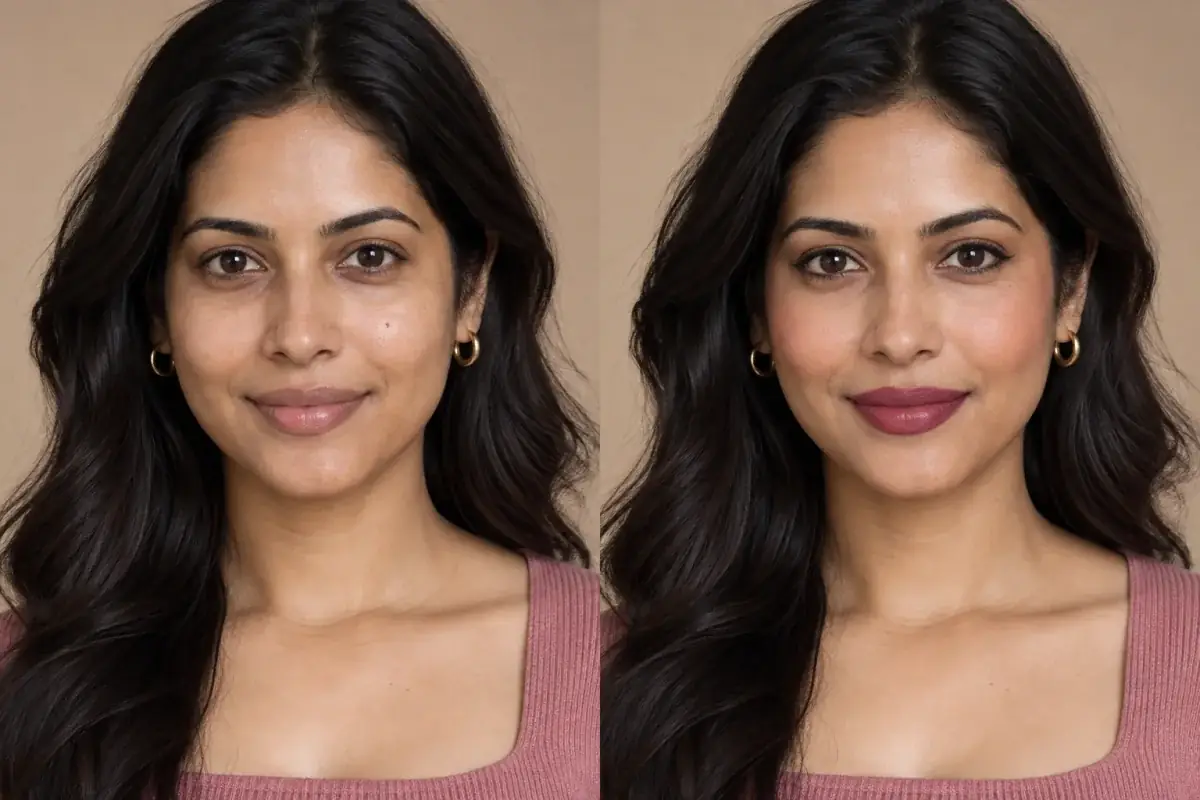
The olive library in one frame: muted warm families, tested on your own photo before you buy.
Direct answer
Olive skin suits muted warm shades best: terracotta and brick lips, warm rose and deep peach blush, and bronze, warm brown and deep plum eyeshadow, because olive undertones carry a greenish grey cast that turns icy pastels ashy and bright oranges brash.
The method is simple. Start from the families in this guide, shortlist two or three shades in each category, and try them on your own photo through /makeup-try-on before you buy anything. Your first preview needs no account. The photo settles what advice cannot, because olive skin varies from warm golden to cool grey, and the same family reads differently on each. That is why this page is a library, not a prescription: it gives you the families to test, and the photo picks the winner.
Key takeaways
- Olive skin has a greenish grey undertone that warm and cool advice both miss, so start from olive families, not from warm or cool charts.
- Lip winners: terracotta, brick, muted red, berry and deep plum. Lip risks: icy pink, pale pastel and neon.
- Blush winners: warm rose, terracotta and muted deep peach. Blush risks: bright orange and bubblegum pink.
- Eyeshadow winners: bronze, warm brown, olive green, gold and deep plum. Eyeshadow risks: icy pastels and stark silver.
- Try every shade on your own photo through /makeup-try-on before you buy it. Your first preview needs no account.
How do you know you have olive undertones?
Olive skin is an undertone, not a skin depth, so it appears at light, medium and deep skin tones alike. The most reliable sign is your veins: on olive skin they tend to look green rather than blue or purple, because the greenish cast of the skin mixes with the blue of the vein. A second sign is how your skin reads in different light. Olive skin can look slightly grey or greenish next to pure white, which is why a pure white top can wash you out while cream or off white flatters you. A third sign is sun behavior: olive skin usually tans easily and tans to a golden olive tone rather than turning pink, and it rarely burns as fast as fair cool skin does.
The most frustrating sign is foundation. If warm foundations turn orange on you within an hour, and cool foundations turn grey or ashy, you are probably olive, and neither chart was built for you. Warm foundations add yellow that your greenish cast pushes toward orange, while cool foundations add pink that your skin mutes into grey. That mismatch is why testing shades on your own photo matters more for olive skin than for skin that fits a chart neatly. For the full undertone test, see our guide: /blog/find-your-skin-undertone. Olive skin also varies within itself. Warm olive leans golden and takes warm families easily, while cool olive leans grey and needs those families in muted, dusty versions. Depth matters too: a terracotta that glows on deep olive skin can overwhelm light olive skin. The families here hold across that range, but the exact shade inside each family is yours to pick by photo.
Which lip shades suit olive skin?
Start with terracotta, brick, muted red, berry and deep plum, because muted warmth is what harmonizes with a greenish grey cast instead of fighting it. Terracotta is the signature olive lip: warm enough to glow, muted enough to blend, flattering from light to deep olive skin. Brick is terracotta with more red in it, and it is the safer choice when you want a red that reads as a lip color rather than a statement. Muted reds, the kind described as brick red or warm red rather than bright red, give you the classic red lip without the brashness that bright reds show on olive skin. Berry and deep plum cover the evening and winter end of the library: berry for a cooler leaning olive complexion, deep plum for depth and drama that still looks like it belongs to your face.
Two rules make choosing easier. First, test across families rather than inside one: pick one terracotta, one brick and one berry, run all three through /makeup-try-on, and keep the one that makes your skin look clearer at arm's length, not just close up. A flattering lip color evens out the greenish cast rather than highlighting it. Second, finish matters less than family: a terracotta works matte, satin or gloss, so choose the finish you will actually wear. For the full olive lip list, see our sibling page: /blog/best-lipstick-shades-for-olive-skin. For how reds split across warm, cool and olive skin, see: /blog/red-lipstick-by-undertone.
Which blush shades suit olive skin?
Start with warm rose, terracotta and muted deep peach, because blush on olive skin needs to warm the face without turning it orange or pink. Warm rose is the everyday winner: it reads as a natural flush on olive skin rather than as color sitting on top of it. Terracotta blush doubles as a soft contour on olive skin, warming the cheeks and the temples in one step, which is useful when you want definition without a separate contour product. Muted deep peach is the lightest option in the library: it lifts light and medium olive skin without the neon brightness that makes bright peach look artificial on olive undertones. Dusty rose belongs here too for cool leaning olive skin, as the muted version of pink that actually blends.
Placement matters as much as shade. Apply blush on the apples of the cheeks and blend upward toward the temples rather than in a stripe across the cheekbone, and judge it in daylight at arm's length, since blush that looks subtle indoors can read much stronger outdoors. Cream blush blends more forgivingly into dry olive skin than powder, while powder lasts longer on oily skin, so choose the formula by skin type and the shade by this library. If a blush looks orange in the pan, it will look more orange on olive skin: put it back and choose the dusty version instead.
Which eyeshadow shades suit olive skin?
Start with bronze, warm brown, olive green, gold and deep plum, because earthy and metallic warmth is what echoes an olive undertone instead of clashing with it. Bronze is the workhorse: a single bronze wash across the lid flatters olive skin with almost no effort, and it deepens into an evening look with a darker brown in the crease. Warm brown is the everyday neutral that cool toned taupe can never be on olive skin, since taupe turns grey where warm brown stays rich. Olive green eyeshadow, as a lid color or a liner, is the one family that belongs uniquely to olive skin: it picks up the green in the undertone and turns it into an asset. Gold adds light without the harshness of silver, and deep plum gives evening smoke and depth without the grey cast of a black smoky eye.
For a smoky eye on olive skin, build it from warm brown and deep plum rather than grey and black, since grey is the fastest route to the ashy look this guide warns against. For daytime, one lid shade plus a warm brown crease shade is enough. Warm shimmer glows on olive skin: bronze, gold and copper. Silver and icy shimmer sit on the skin and highlight texture. As with lips and blush, test the exact shades you plan to buy through /makeup-try-on, and judge them in daylight, since eyeshadow that looks rich under shop lights can read flat in sun.
Which shades turn ashy or orange on olive skin?
Ashy shades are the cool, pale and grey family: icy pastels, pale pink, lilac, cool grey and stark white based shades. They turn ashy on olive skin because they sit on top of the greenish grey cast instead of blending with it, so the skin underneath reads greyer by contrast and the color reads separate from the face. The classic failure is a pale pink lipstick that looks fresh in the tube and chalky on olive lips, or a cool grey eyeshadow that looks like dust rather than definition. If a shade looks almost white in the pan, or if its name leans on ice, frost or pastel, treat it as a risk and test it on your photo before trusting it.
Orange shades are the opposite failure: bright orange, neon coral and overly warm bright coral lipstick, plus any foundation that oxidizes orange within an hour of wear. They turn orange on olive skin because the yellow in the shade combines with the greenish cast and tips into orange, which is why warm foundations are the most common olive skin complaint of all. The fix is not to avoid warmth but to mute it: choose the dusty, muted or deep version of the warm family instead of the bright one. Dusty terracotta instead of bright orange, muted deep peach instead of neon coral, brick instead of bright tomato red. The muted version keeps the warmth and drops the brashness, and the photo test makes the difference obvious in one comparison.
How do you build an olive skin makeup kit?
Build the kit from the library, one category at a time, and let the photo test decide each slot. Start with lips, since lips change a face more than any other product: one terracotta for everyday, one brick or muted red for a classic lip, and one berry or deep plum for evening. Add blush next: one warm rose for everyday and one terracotta for warmth and soft definition. Add eyeshadow last: one bronze, one warm brown for the crease, and one deep plum for evening, with olive green or gold as the accent.
Keep the kit small. Three lips, two blushes and three eyeshadows cover everyday, work and evening for olive skin, and a small kit means every product gets used rather than half of it sitting in a drawer. When you replace a product, replace it inside the same family rather than starting over: a new terracotta replaces the old terracotta, and the photo test confirms the new shade before the old one is finished. If you are choosing makeup beyond these shade families, our broader guide is here: /blog/what-makeup-suits-me. The kit is a starting point, not a rulebook, and the photo is the final judge of every slot in it.
How do you try olive shades on your own photo?
The steps are the same for every shade in this library, and the whole test takes less time than reading a single product review. First, take or choose a clear photo of yourself in daylight, facing the camera, with your face fully visible and no heavy filter. Second, open /makeup-try-on, or start at /tools if you are unsure which tool fits. Third, upload the photo and pick the shade family you are testing, starting with the shortlist from this guide rather than the whole shade range. Fourth, judge the result at arm's length as well as close up, in daylight, against the clothes you actually wear, since a shade that flatters in a bathroom mirror can read differently outdoors.
Test shades in pairs, not one at a time: one terracotta against one berry, one warm rose blush against one terracotta blush, one bronze lid against one deep plum lid. Pairs make the winner obvious, while single shades leave you guessing. Save the winning photo, since it shows the shade on your skin instead of describing it in words. Your first preview needs no account, and you only sign up to save or download a look. Olive skin rewards this step more than most, because the families here are close together and the wrong cousin inside a family is the most common mistake.
A try on shows the shade on your photo, not a promise
A photo try on shows you the shade on your own face, which is far more information than a tube or a swatch gives you. It is not a guarantee: screens and lighting shift color, a lipstick formula differs from a digital preview, and a shade can read differently in daylight than under shop lights. Check the winning shade in daylight before you buy it, and compare it against the shade you hold in the store. Olive skin also varies from person to person, so treat the families in this guide as the shortlist to test, not as a verdict, and let your photo make the final call.
Take the theory out of it.
Olive shade advice only helps when you see the shade on your own skin, since olive skin varies from warm golden to cool grey. Open the makeup try on, upload one photo, and test the families in this guide before you buy. The first preview needs no account.
Questions people ask
How do I know if I have olive skin?
Check your veins first: on olive skin they tend to look green rather than blue or purple. Check how your skin reads next to pure white, since olive skin can look slightly grey or greenish against it while cream or off white flatters it. Check your foundation history too, since warm foundations turning orange and cool foundations turning grey on you is one of the most reliable olive signs of all.
What lipstick shades are best for olive skin?
Start with terracotta, brick, muted red, berry and deep plum, since muted warmth harmonizes with a greenish grey cast instead of fighting it. Terracotta is the signature everyday olive lip, brick is the safer classic red, and berry or deep plum covers evening. Test one shade from each family on your photo and keep the one that makes your skin look clearer at arm's length.
Why does foundation look orange or grey on olive skin?
Warm foundations add yellow that your greenish cast pushes toward orange, while cool foundations add pink that your skin mutes into grey. Neither chart was built for olive skin, which is why both failures are common and why olive skin is underserved by standard shade advice. Look for olive or neutral olive foundation shades where they exist, and test any foundation on your jawline in daylight before buying it.
Can olive skin wear red lipstick?
Yes, and it wears red beautifully, as long as the red is muted rather than bright. Brick red, warm red and muted red all flatter olive skin, while bright tomato red and neon red tend to read brash against a greenish grey cast. Test the exact red you plan to buy on your photo, since two reds that look identical in the tube can sit a full step apart on olive lips.
Do I need an account to try shades on my photo?
No. Your first preview needs no account: upload one photo, pick the shade, and see it on yourself. You only sign up when you want to save or download a look, which is worth doing for the winning shade, since the saved photo is the most useful thing you can take into a store.