






Red lipstick by undertone: blue-red, orange-red, and how to tell which is yours
Almost every red that looks wrong is the wrong lean, not the wrong color: an orange-red on cool skin, a blue-red on warm skin.
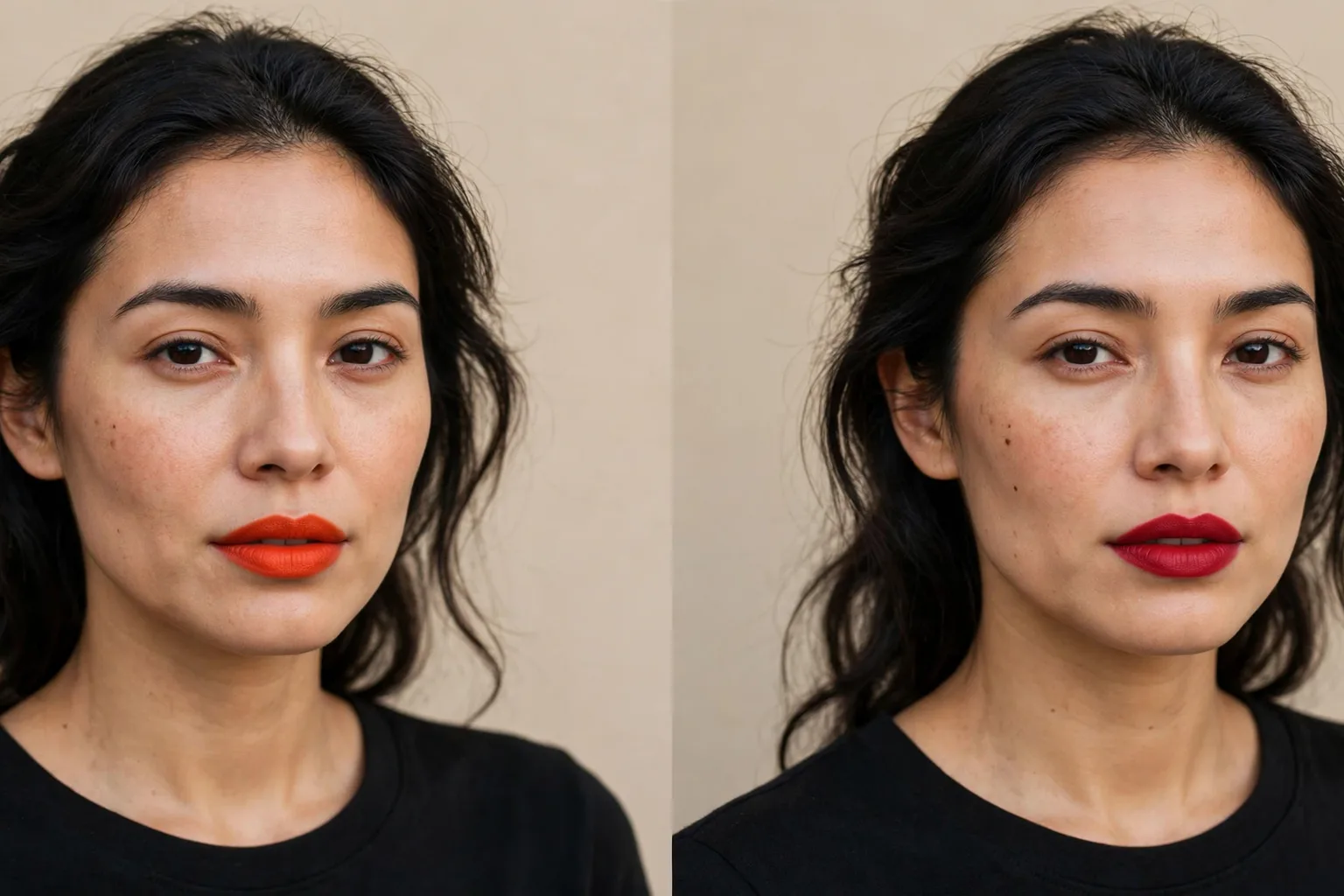
Same face, two reds: the blue-based red on one side, the orange-based red on the other, and only one of them is hers.
Direct answer
What red lipstick suits my undertone? Every red lipstick leans blue, orange or true, and the lean has to match your undertone before depth is even worth discussing. Cool undertones wear blue-reds, warm undertones wear orange-reds, and neutral undertones wear true reds and can borrow from both sides. Most people who say red does not suit them have only ever tried the wrong lean.
What is the difference between blue-red and orange-red lipstick?
The difference is the pigment hiding under the red. A blue-red is built on blue and pink pigment, so beneath the red it runs cool, like a cherry seen in shade. An orange-red is built on orange and yellow pigment, so it runs warm, like a tomato in sun. A true red balances the two and stays red from every angle.
At full strength in the tube, a blue-red and an orange-red can look nearly identical, which is why so many people own the wrong one. The lean only shows itself when the color is thinned out, worn down to a stain, or seen against skin in daylight. Your undertone then either harmonizes with the lean or fights it, and that fight, not the redness, is what reads as wrong.
Which red lipsticks lean which way?
Shade names almost never state their lean, so learn the benchmarks and measure other reds against them. If you want the shortlist built for you instead, the lipstick shade finder filters reds by undertone.
Brand descriptions are a lean label in disguise. A red described as cherry, berry or wine almost always leans blue; a red described as tomato, coral or brick almost always leans orange.
- MAC Ruby Woo: blue-red. Suits cool and neutral undertones. The reference blue-red; the very matte finish keeps the lean pure.
- MAC Lady Danger: orange-red. Suits warm undertones. A vivid coral-red; the warm benchmark, as bright as Ruby Woo is cool.
- NARS Cruella: blue-red, deepened. Suits cool undertones and deeper skin. A blue-based deep red in a velvet matte pencil; depth without warmth.
- Fenty Beauty Stunna Lip Paint in Uncensored: true red. Suits neutral, olive and most undertones. Sold as the universal red; the safest first red if your undertone is unclear.
- Gucci Goldie Red: warm red. Suits warm undertones. A warm red with a softer finish; warmth without the brightness of Lady Danger.
Source: Goodto, the best red lipstick shades for every complexion, tested by beauty experts
Source: Lipstick Queen, red lipstick guidance from MAC and L'Oreal Paris
How can you tell which way a red you already own leans?
Use the sheer swatch test. Swipe the lipstick onto white tissue or plain white paper and smear it thin with a fingertip. A blue-based red sheers out pink or berry at the thin edge; an orange-based red sheers out coral or salmon; a true red fades to a lighter, cleaner red. The edge of the smear is the confession the full-strength color never makes.
If you own a benchmark shade, a side by side is faster still. Next to Ruby Woo, an orange-red announces itself immediately.
- Full strength vs sheered out: at full strength nearly every red reads as simply red, because the pigment is at maximum and hides its own base. The lean lives at the thin edge of the smear, so judge the edge, never the thick part of the swatch.
- On skin vs on white paper: the back of your hand lends the swatch your own undertone, so a borderline red can look balanced there and still fail on your lips. White paper adds nothing of its own, which is exactly why it tells the truth.
Why does red lipstick look wrong on me?
In most cases, the lean is fighting your undertone. An orange-red on cool skin sits on the face instead of joining it, and can look garish even at a flattering depth; a blue-red on warm skin can turn cold and severe, and it is usually blamed on the shade being too dark when depth was never the problem.
The second cause is depth: a red far lighter than your skin can wash you out, and a red far deeper can take over the whole face. The third is your own lip color, which joins in under sheer and glossy formulas and can push a true red toward pink or a blue-red toward purple. Notice what all three causes share: none of them is red itself. Change the lean first, then the depth, and only then consider giving up on red. The longer guide to lipstick shades for your skin tone works through depth and finish in the same order.
What red lipstick suits olive skin?
Olive skin carries a greenish cast that most undertone charts ignore, and it treats the two leans unevenly. Bright orange-reds are the risky side: orange set against the green cast can read neon and separate from the face, so the warmest, brightest reds are usually the ones olive skin rejects.
True reds are the reliable center, which is why Uncensored earns its universal billing on olive skin more honestly than on most. The other safe direction is deeper and bluer: reds leaning plum, berry or burgundy harmonize with the cool side of olive coloring and are the classic evening choice. If you are olive and every red has looked wrong so far, you have probably been handed warm reds. Start at true red and move toward plum, not toward coral. If your undertone itself is still a guess, the guide to finding your skin undertone settles it before you spend anything.
Once the lean is right, how do you choose the depth?
Depth is the second decision, and it follows your skin depth and contrast. On fair skin, classic mid-depth reds keep the balance; very deep reds become the entire face, which is a legitimate evening choice rather than a mistake. Medium skin has the widest range and can wear almost any depth in the right lean.
On deep skin, saturated and rich reds hold their color and their lean; pale or sheer reds can turn ashy, pink or simply disappear, so depth is doing real work there. Formula matters too: matte shows the lean at full purity, while gloss and sheer formulas let your lip color through and soften everything by a step. When the lean is settled, test the depth on your own face with the makeup try-on instead of on the back of your hand.
Does blue-red lipstick make teeth look whiter?
Yes, modestly, and the reason is plain color logic. Blue and yellow sit opposite each other on the color wheel, so a blue-based red makes nearby yellow tones look quieter by contrast, and the yellow in teeth is the nearest yellow there is. An orange-red does the reverse and can emphasize whatever warmth your teeth already carry.
Set expectations honestly: the effect is a nudge, not whitening, and it will not rescue teeth that need a dentist. But if two reds in the right lean are otherwise equal, the bluer one is the kinder choice for your smile.
The lean is a starting point, not a law
Some faces carry a deliberate clash beautifully, and a red you love at the wrong lean will get worn while the correct one gathers dust. Treat the lean as the order to try reds in, not as a border. And because your own lip pigment edits sheer formulas, the final test is always your lips or your photo, never a swatch on your hand.
Take the theory out of it.
The article's central claim is that lean mismatch, not red itself, causes most red lipstick failures, and it is testable in one step: the same face wearing a blue-red and an orange-red, side by side, in identical light.
Questions people ask
What red lipstick suits my undertone?
Cool undertones suit blue-reds, warm undertones suit orange-reds, and neutral undertones suit true reds and can borrow from both sides. Match the lean first, then choose the depth.
What is the difference between blue-red and orange-red lipstick?
A blue-red has blue and pink pigment under the red, so it sheers out pinkish and reads cool. An orange-red has orange and yellow pigment under it, sheers out coral, and reads warm. At full strength the two can look almost identical, which is why the sheer swatch test exists.
Why does red lipstick look wrong on me?
Usually the lean is wrong, not the color: an orange-red on cool skin or a blue-red on warm skin fights your undertone at any depth. Try the opposite lean before you give up on red.
What red lipstick suits olive skin?
True reds are the reliable choice, and reds leaning plum or burgundy sit especially well against the greenish cast. Bright orange-reds are the risky ones, since they can clash with olive skin and read neon.
Does blue-red lipstick make teeth look whiter?
Yes, modestly. Blue sits opposite yellow on the color wheel, so a blue-based red makes the yellow in teeth look muted by comparison, while orange-reds can emphasize it.