






Lip colour on your face

Find a lipstick shade that belongs on you.

A colour can look perfect in the tube and disconnected on the face. Compare shade families on the same photo, then choose the depth, undertone and finish that support your colouring.

Try lipstick on your photoCompare shades on the same face
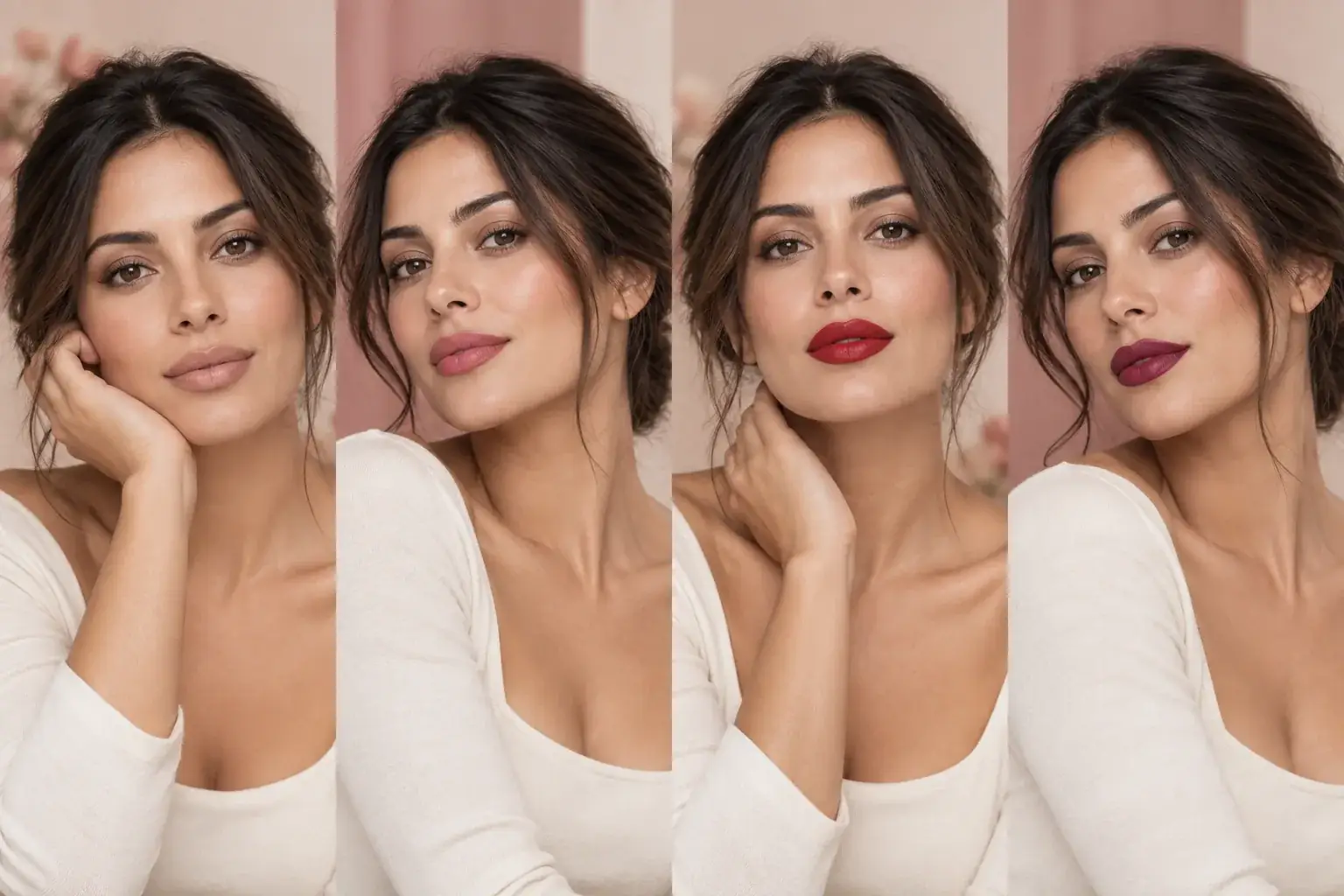
The same woman wears nude, rose, red and berry lipstick shades
Holding the face, hair and light steady makes the lip colour the only meaningful variable.
Quick answer

Start with one nude, one rose, one red and one berry at a depth close to your natural contrast. Compare them on the same unfiltered photo before refining the winner.

  • A good nude should still define the lip against the surrounding skin.
  • Warm colouring often supports brick, coral and caramel tones.
  • Cool colouring often supports blue-red, mauve, rose and berry.
  • Finish changes the impression: gloss expands, matte defines and satin balances.

01

The shade should work with your contrast

Contrast is the difference between your skin, hair, eyes and natural lip colour. A very pale nude on high-contrast colouring can erase the mouth, while a dense dark berry on very delicate low-contrast colouring may become the whole face. Neither is forbidden, but the effect should be intentional.

For an everyday result, choose a lipstick that is at least as deep as the natural inner lip and does not turn grey against the skin. For a statement result, increase either saturation or depth while keeping the undertone connected to the rest of the look.

Low contrast

Try muted rose, soft peach, gentle berry or a skin-related nude with enough pigment to outline the lips.

High contrast

Clear reds, deep berries and defined brown-rose shades can echo stronger hair, eye and brow contrast.
02

Nude does not mean beige

A useful nude is related to your own lip and skin colouring. On fair skin it might be pink-beige or peach. On olive skin it may need caramel, rose-brown or muted terracotta. On deep skin it might be cocoa, raisin, chestnut or a rich rosy brown. The goal is not to match foundation; it is to keep the mouth present without making it the loudest feature.

A liner one step deeper than the lipstick can reconnect a pale or glossy nude to the face. Blend the edge inward rather than drawing a hard ring.

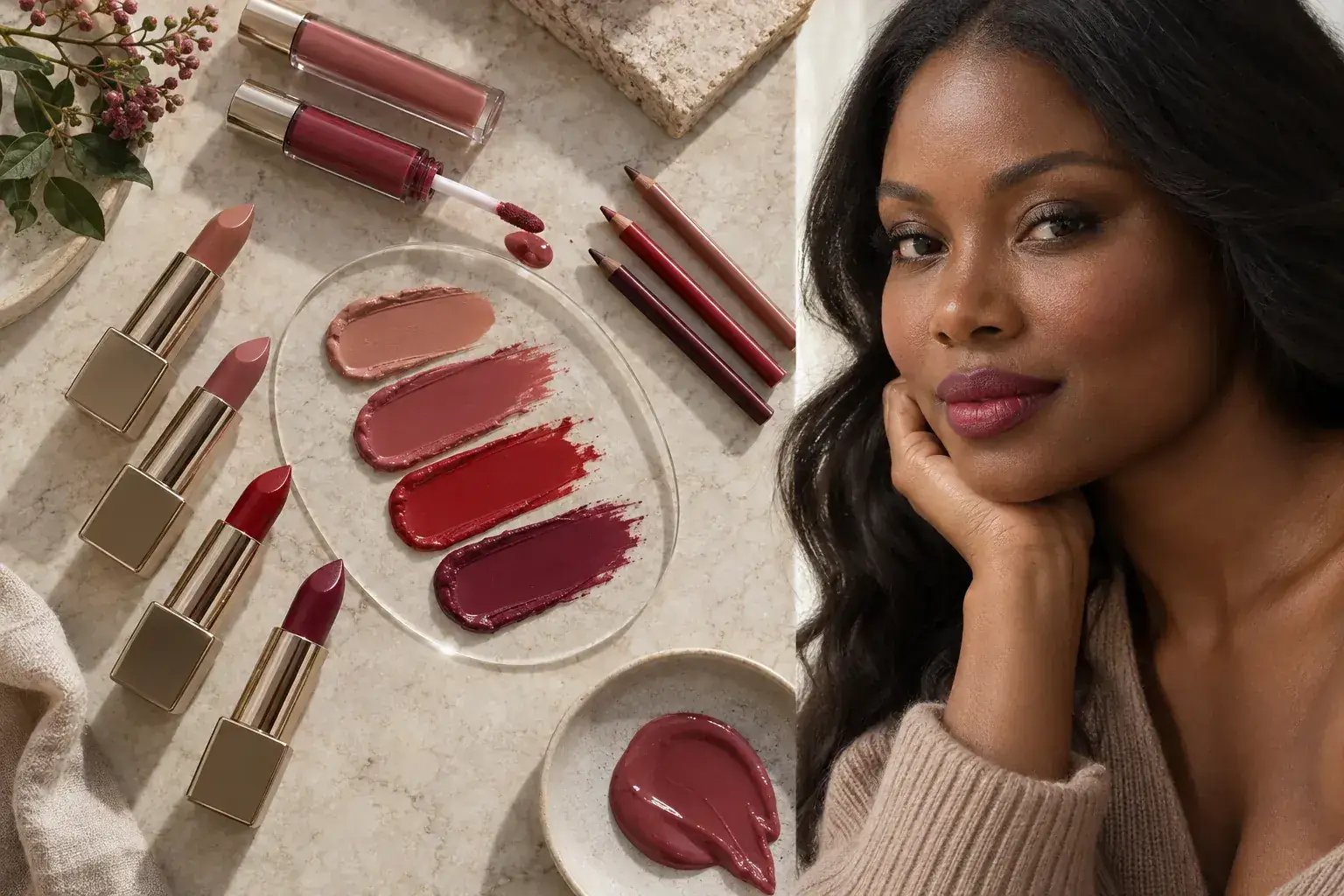
Woman in berry lipstick beside unbranded nude, rose, red and berry lip colour swatches
Compare a family first, then refine the exact depth and finish.

A practical path

From a colour family to a wearable shade

  1. 01

    Set a neutral reference

    Use a clear photo with bare lips and even light. Keep the same image for every comparison so expression and skin tone do not move the goalposts.

  2. 02

    Compare four families

    Test nude, pink or rose, red and berry before looking at tiny shade differences. The best family usually becomes obvious faster than one perfect product name.

  3. 03

    Choose depth and finish

    Move lighter or deeper within the winning family, then compare satin, matte or gloss according to the occasion and the condition of your lips.

03

Red, pink and berry by undertone

Undertone is a shortcut, not a law. Warm reds lean tomato, brick or orange-red. Cool reds lean cherry, cranberry or blue-red. Neutral reds sit between them. Olive skin may prefer a red with enough depth or a balanced base so it does not turn fluorescent.

Pinks range from warm coral and salmon to cool rose and fuchsia. Berry can mean soft raspberry, plum, wine or near-black blackberry. Compare the colour beside your eyes and teeth as well as your skin. A shade that makes the eyes clearer and the complexion more even is usually easier to wear.

If it turns grey

The shade may be too pale, too cool or too opaque. Add depth or choose a clearer, warmer version.

If it turns orange

Move from coral or tomato towards balanced red, rosewood, cranberry or berry.

04

Use the preview as a shortlist

Screens cannot reproduce pigment, shine and texture perfectly. A virtual result is best for comparing direction: muted or clear, warm or cool, lighter or deeper. Once the family is right, swatch a real product or buy from a retailer with a practical return policy.

Lip pigmentation also changes the result. Sheer formulas allow the natural lip to influence the colour; opaque formulas behave more like the preview. If your lips are unevenly pigmented, compare the shade with and without a liner or base.

Try before you decide

Stop guessing from the tube.

Preview the colour family on your own face first. Save the two strongest directions, then test their real-world finish and wear.

Try lipstick on your photoCompare shades on the same face

Useful answers

Questions people ask

Reviewed 19 September 2026

How do I find my best lipstick colour?

Compare nude, rose, red and berry families on the same photo. Choose the family that makes the complexion and eyes look clear, then adjust depth and finish.

What lipstick suits olive skin?

Olive skin often works with caramel nude, rose-brown, terracotta, balanced red and deep berry. Very pale cool shades can look grey, but the individual face matters more than the label.

Should my lip liner match my lipstick?

It can match, but it does not have to. A liner slightly deeper than the lipstick can define the shape and make a lighter shade feel connected to the face.

Is a virtual lipstick preview exact?

It is most reliable for comparing colour direction. Real pigment, natural lip colour, room light and screen settings can change the final shade and finish.