
Best Lipstick Shades for Olive Skin: Try Them Before You Buy
Olive skin makes lipstick shopping tricky, because a shade that looks perfect in the tube can turn orange or ashy on a green golden undertone. This guide names the five families that flatter it, and the test that settles every argument.
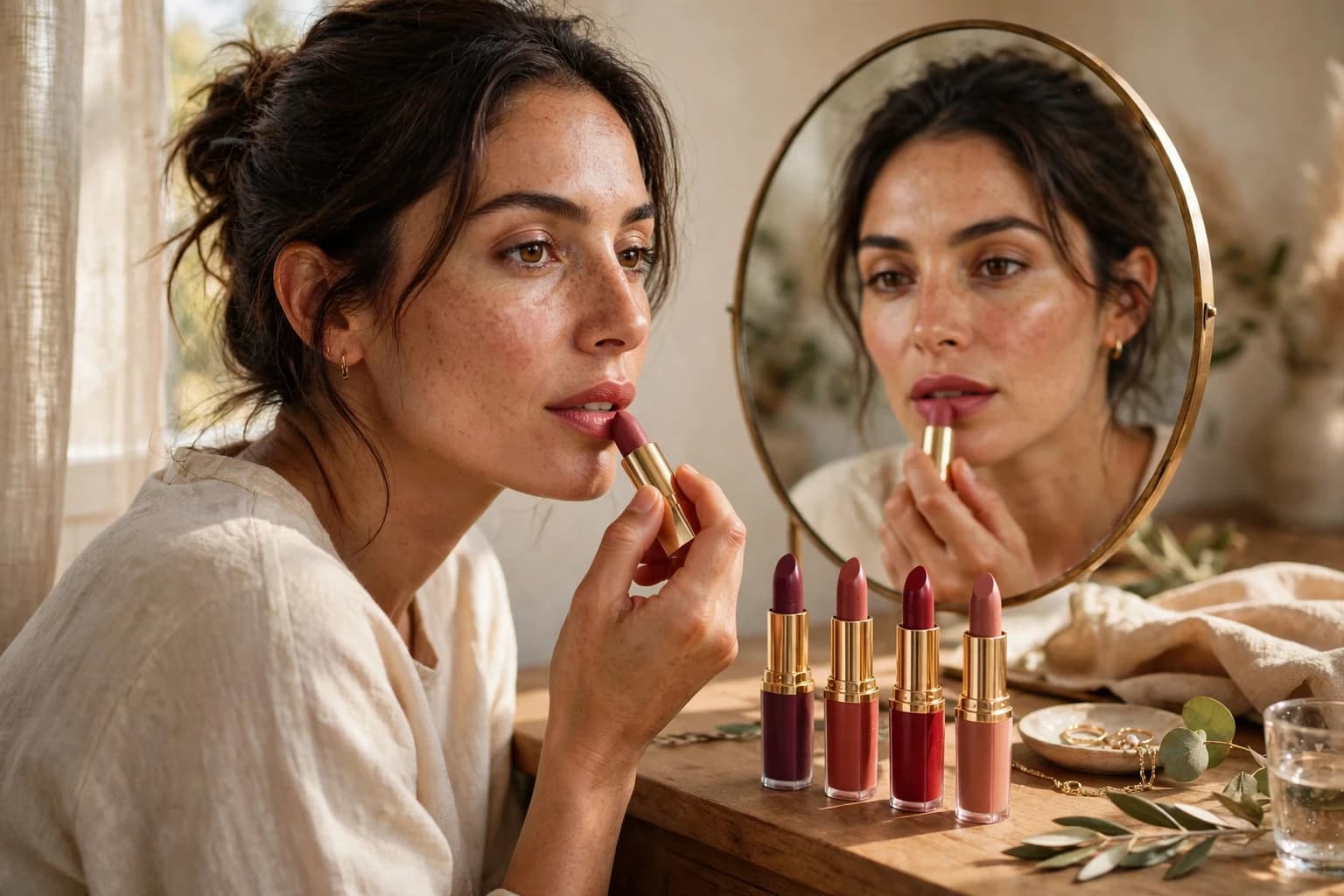
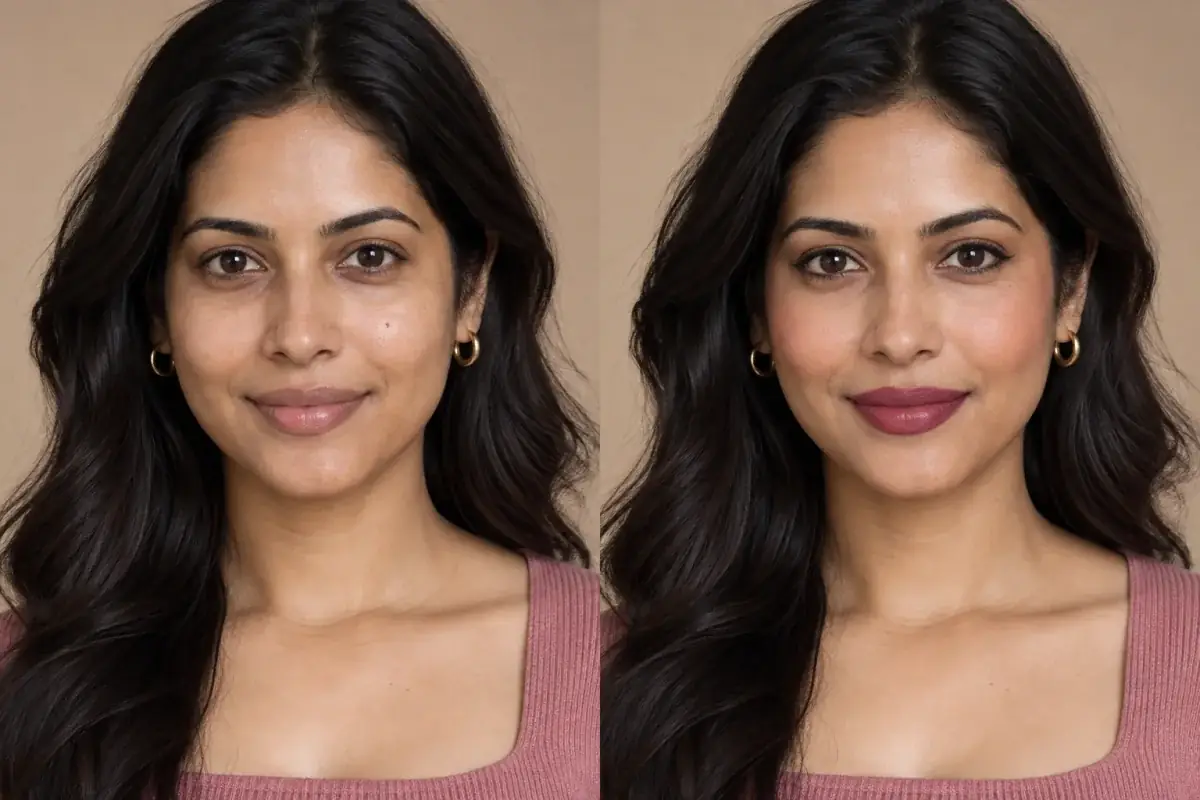
Five families, one face: the shade on your own lips settles what the tube never can.
Direct answer
The best lipstick shades for olive skin are muted rose, berry, brick, deep red and warm nude, because those families sit close to olive skin's own muted warmth instead of fighting it, and the fastest way to pick inside them is to try every family on your own photo before you buy.
That is the whole method behind this guide. Olive skin is not a depth, it is an undertone: a green golden cast that shows through light, medium and deep skin alike, and it changes how color reads. Bright orange reds pull orange on it, pale frosty pinks pull ashy, and very cool blue pinks can look grey. The five families below carry enough muted warmth to sit with the undertone instead of against it. Each section names the family, explains why it works, and ends in the same step: try it on your own photo through /makeup-try-on, where the first preview needs no account.
Key takeaways
- Olive skin carries a green golden undertone, so shades need muted warmth, not bright orange or pale frost.
- The five winning families are muted rose, berry, brick, deep red and warm nude.
- Skip neon orange reds, pale frosty pinks and very cool blue pinks, which read orange or ashy on olive skin.
- Judge a shade in daylight, at arm's length, against the clothes you actually wear.
- Try every family on your own photo through /makeup-try-on before you buy. The first preview needs no account.
What makes olive skin different when choosing lipstick?
Olive skin is often described as warm or cool and neither label quite fits, because the undertone is green golden: a muted, slightly yellow green cast under the surface color. That cast is why two people with the same depth can wear completely different reds. A shade that glows on warm golden skin can pull orange on olive skin, and a shade that flatters cool pink skin can pull ashy or grey. The undertone does not disappear under foundation either. It shows through, especially around the mouth, which is exactly where lipstick sits.
The practical rule follows from that. Olive skin wants shades with muted warmth: color that has depth and a little earthiness, not color that is loud, neon, or icy. Muted rose reads as your lips, only better. Berry reads as a stain from within rather than a color sitting on top. Brick and deep red read as warmth that belongs to the face. Warm nude reads as polish rather than a mask. If a shade looks perfect in the tube but wrong on your lips, the undertone is usually the reason, and no amount of liking the shade in the tube will fix it. Our olive skin makeup hub covers the wider picture, including foundation and blush: /blog/olive-skin-makeup-shades.
Which muted rose shades suit olive skin?
Muted rose is the safest family for olive skin, and the one to start with if you own nothing else. Think of rose with the brightness turned down: dusty rose, mauve rose, and rosewood. These shades sit close to the natural lip color of most olive skin, deepened by one or two steps, so they read as healthy rather than made up. They flatter light olive skin without washing it out, and they give medium and deep olive skin an everyday polished option that works for work, for daytime, and for occasions where a bold lip would be too much.
The reason muted rose works is that it mirrors the undertone instead of competing with it. Rose carries a little warmth and a little coolness at once, which is exactly the balance olive skin already has. The shades to watch inside this family are the bright ones: a bubblegum rose or a hot pink rose will pull cool and ashy on olive skin, while a dusty or wood toned rose will not. If you are choosing between two roses, try both on your own photo through /makeup-try-on and pick the one that makes your skin look clearer at arm's length, not just closer up. For the wider rose map, including how rose splits across undertones, see our red lipstick guide: /blog/red-lipstick-by-undertone.
Which berry shades suit olive skin?
Berry is the family where olive skin has a real advantage. Raspberry, blackberry, plum berry and wine berry all sit beautifully on a green golden undertone, because berry carries the same muted depth the skin already has. A berry lip on olive skin reads as a stain from within, rich and intentional, where the same shade on very fair skin can read as costume. This is the family to reach for in the evening, for occasions, and for the months when you want one bold lip that always works.
Depth matters more than exact hue inside this family. Light olive skin carries raspberry and mid plum best, while medium and deep olive skin carry blackberry and wine berry with more ease. The berry shades to avoid are the icy ones: a frosty purple berry or a blue toned berry with a grey cast can look dull on olive skin, where a warmer berry glows. Texture helps too. A satin or creamy berry forgives dry lips and reads as a stain, while a flat matte berry can emphasize texture. Try the finalists on your own photo in daylight before you buy, and judge them against the clothes you actually wear, since berry shifts with what surrounds it.
Which brick and deep red shades suit olive skin?
Brick and deep red are the classic olive skin reds, and the answer to the question every olive skinned shopper asks: can I wear red at all. Yes, and these are the reds. Brick red, terracotta red, and deep true red all carry the warmth olive skin needs, without the orange cast that ruins bright reds on it. A brick red reads as a warm, earthy red that belongs to the face. A deep true red reads as classic and confident, the shade that works for evenings, for photographs, and for the days when you want the lip to do the talking.
The split to understand is brick versus bright. A tomato red or a neon orange red will pull orange on olive skin, because the skin's golden cast amplifies the orange in the shade. A brick red avoids that by carrying brown and earth in the mix, which grounds it. A deep red avoids it by carrying depth, which darkens the orange out. If you love bright red, try it on your photo first and look honestly: if it reads orange at arm's length, move one step toward brick or one step deeper, and the shade will settle. Our red lipstick guide names the red map in full: /blog/red-lipstick-by-undertone. For help placing red inside your whole makeup routine, see our shade guide: /blog/lipstick-shade-for-your-skin-tone.
Which warm nude shades suit olive skin?
Warm nude is the hardest family for olive skin to buy blind, and the most rewarding once you find it. The right warm nude is a beige, caramel, or toffee shade with golden warmth, one or two steps deeper than your natural lip color, that reads as polished without erasing your lips. The wrong nude is a pale beige or a pink beige that matches the surface of your skin but fights the undertone, and it reads as ashy, grey, or like concealer on the lips. That is the single most common nude mistake on olive skin, and it is entirely avoidable with a photo test.
The rule is depth plus warmth. Light olive skin wants a warm beige nude with a caramel edge. Medium olive skin wants caramel and toffee. Deep olive skin wants toffee and warm brown nude, worn with a lip liner one step deeper to define the edge. In every depth, the nude should be warmer than your skin, not paler than it. A nude that disappears into your skin is not flattering, it is invisible, and a nude that is cooler than your skin will look grey within an hour. Try three nudes on your own photo through /makeup-try-on, one beige, one caramel, one toffee, and keep the one that reads as your lips, only more polished. If you are building a whole routine around the nude, start with our makeup guide: /blog/what-makeup-suits-me.
Which lipstick shades should olive skin avoid?
Three kinds of shade consistently disappoint on olive skin, and skipping them saves more money than any other advice in this guide. The first is neon and orange red: tomato, coral red, and bright orange red pull orange on a green golden undertone, because the skin amplifies the orange already in the shade. The second is pale frosty pink: bubblegum, frosted pale pink, and icy mauve pull ashy and grey, because they are cooler and paler than the undertone they sit on. The third is very cool blue pink with a grey cast, which can look dull and flat where a warmer berry would glow.
None of this means you cannot wear color. It means you should wear color with muted warmth and depth, and test the risky shades rather than trusting the tube. A coral you love can sometimes work as a sheer gloss rather than a full opaque lip, since sheerness lets your undertone show through instead of fighting it. A pale pink can work as a lip oil or a tint rather than a matte. But as a full strength lipstick, the three families above are the ones to skip, and the five families in this guide are the ones to buy. If a shade you already own falls in the avoid list, try it sheer or layered over a warm liner before you throw it away.
How do you try every shade family on your own photo before buying?
The test takes under a minute per shade, and it is worth doing for every family in this guide, because olive skin is where the tube lies most. First, take or choose a clear photo of yourself in daylight, facing the camera, with your face fully visible and no heavy filter on it. Second, open /makeup-try-on, or start at /tools if you want the full tool list. Third, upload the photo and try one family at a time: a muted rose, a berry, a brick red, a deep red, and a warm nude. Fourth, judge each result at arm's length as well as close up, in daylight, against the clothes you actually wear.
Two questions come up every time. The first is privacy: your photo is used for your try on, and the details of how photos are handled are in our photo safety guide. The second is cost: the first preview needs no account, and you only sign up to save or download a look. Save the winning photo for each family, because it shows the shade on your skin instead of describing it in words, and it is the most useful thing you can take into a store. If a shade wins on your photo, buy that shade with confidence. If it loses, you spent a minute, not the price of a lipstick you will never finish.
A try on shows the shade on your photo, not a promise
A photo try on shows you the shade on your own lips, which is far more information than a tube or a swatch gives you. It is not a guarantee: screens and lighting shift color, a lipstick formula differs from a gloss or a stain in the same shade name, and a shade can read differently in daylight than under shop lights. Check the winning shade in daylight before you buy it, and compare it against the shade you hold in the store. Shade families are a guide to what flatters olive skin, not a rule about any one product, since formulas vary across brands.
Take the theory out of it.
This guide is one category, lipstick, so it points at the makeup try on rather than the picker. Upload one photo, try muted rose, berry, brick, deep red and warm nude, and buy the family that already looks right on you. The first preview needs no account.
Questions people ask
What is the best everyday lipstick shade for olive skin?
Muted rose is the best everyday choice, in a dusty rose, mauve rose, or rosewood tone. It sits close to the natural lip color of most olive skin, deepened by one or two steps, so it reads as healthy rather than made up. It works for work, for daytime, and for occasions where a bold lip would be too much.
Can olive skin wear red lipstick?
Yes, and brick red, terracotta red, and deep true red are the reds that work. They carry the warmth olive skin needs without the orange cast that ruins bright reds on it. A tomato red or neon orange red will pull orange on a green golden undertone, so move one step toward brick or one step deeper and the shade will settle.
Why does nude lipstick look ashy on olive skin?
A nude looks ashy when it is paler or cooler than your undertone, which is the most common nude mistake on olive skin. The fix is depth plus warmth: choose a beige, caramel, or toffee shade one or two steps deeper than your natural lip color, warmer than your skin rather than paler than it. Try beige, caramel, and toffee on your own photo and keep the one that reads as your lips, only more polished.
Which berry shades suit olive skin best?
Raspberry, blackberry, plum berry, and wine berry all suit olive skin, because berry carries the same muted depth the skin already has. Light olive skin carries raspberry and mid plum best, while medium and deep olive skin carry blackberry and wine berry with more ease. Avoid icy or frosted purple berry, which can look dull where a warmer berry glows.
How do I know my lipstick shade suits me before buying it?
Try it on your own photo through the makeup try on, where the first preview needs no account. Judge the result in daylight, at arm's length, against the clothes you actually wear, and compare families side by side rather than trusting the tube. If a shade wins on your photo, buy it with confidence, and if it loses, you spent a minute instead of the price of a lipstick you will never finish.