What makeup suits me? What AI analysis can tell you, and what only a try-on can
People now ask ChatGPT what makeup suits them, and the answer is half right in a specific way: analysis can sort your colours, but it cannot show you a single shade on your skin.
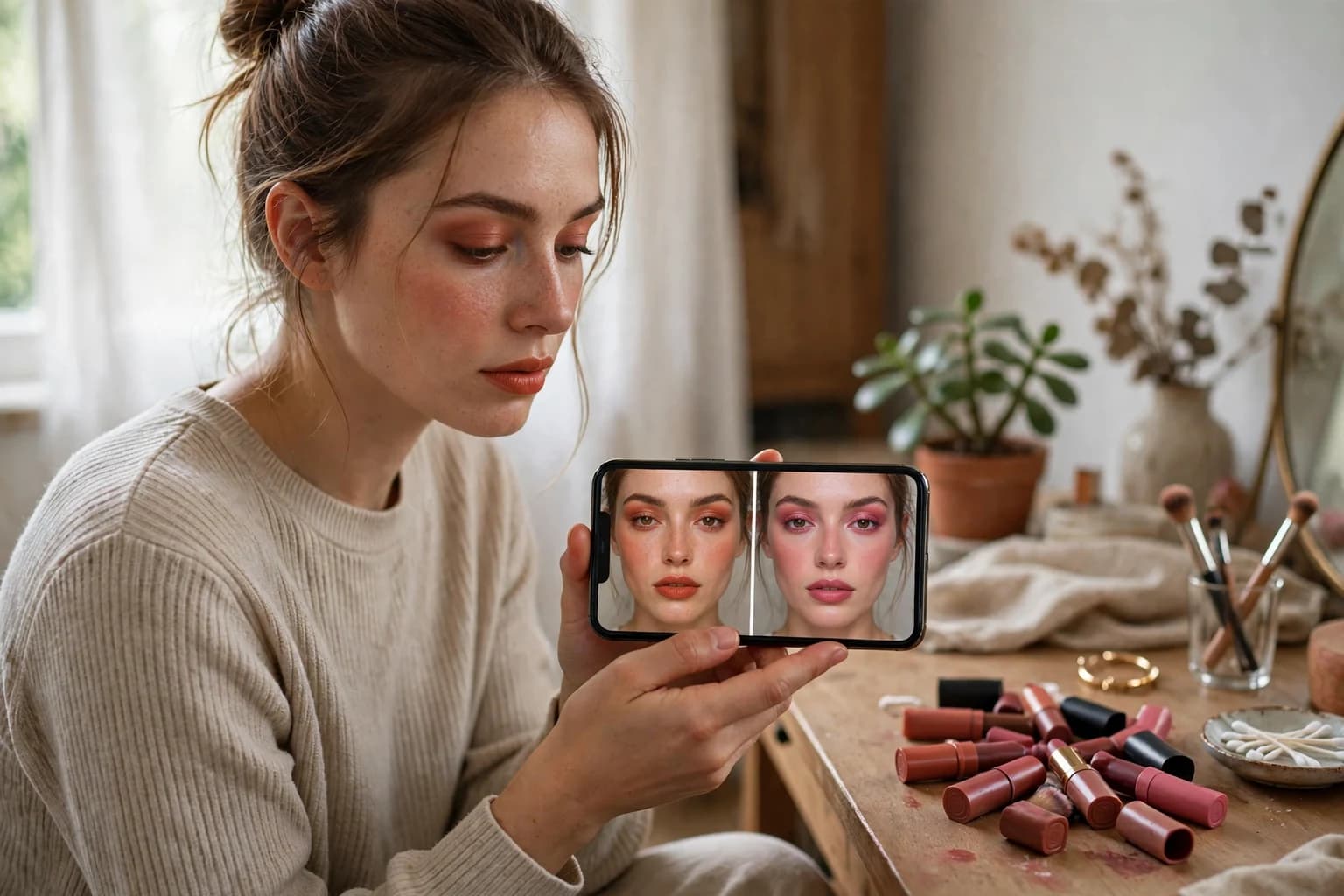
Analysis names the palette; the try-on settles the look. The two steps answer different questions, and skipping the second is where most shade mistakes happen.
Direct answer
What makeup suits me? Start with what a photo analysis can honestly give you: your undertone, your colour season, your face shape and your contrast level, which together narrow your makeup to the right shade families. Then stop analysing. Analysis cannot show you a lipstick sitting on your skin, a blush at your exact depth, or a foundation after it settles, and that last step is where most makeup mistakes actually happen. The answer you can trust comes from a four step workflow: analyse the photo, shortlist the shade families, preview the finalists on your own photo, then decide.
What can AI analysis actually read from your photo?
More than most people expect, provided the photo is honest: bare skin, daylight, no filter. Analysis reads undertone first, whether your skin's underlying cast runs warm, cool, neutral or olive, and undertone is the single most useful fact in makeup because it decides which version of every colour belongs to you. It reads your colour season, the family groupings of the twelve season system, which turn undertone into named palettes for lips, blush and eyes. It reads face shape well enough to place blush and contour sensibly, and it can estimate your contrast level, the gap between your hair, skin and eye depth, which is what decides whether you carry bold colour easily or look better in softer versions of the same shades.
This is real information, and it is why the analysis habit took off: a professional in-person colour consultation commonly costs 150 to 300 dollars, and an AI read gives you the sorting layer of that appointment from one selfie. Used as a sorting layer, analysis is genuinely good. The trouble starts when a sort is mistaken for a verdict.
What can analysis never tell you?
It cannot show you the shade on your skin, and shade behaviour is personal in ways a label cannot capture. A foundation that matches your undertone on paper can still oxidise a shade deeper on your skin by midday. A blush in your season's family can sit too strong or disappear entirely depending on your depth and how much natural redness your skin already carries. A lipstick's finish, matte against satin against gloss, changes its apparent colour more than most shade differences do. None of these are visible in an analysis, because an analysis outputs words and palette names, and words are where the precision ends.
There is a second, quieter limit: analysis is not stable. Different photos of the same person, taken in different light, regularly return different seasons, and write-ups of the viral ChatGPT colour analysis include people told the exact opposite of their professional result. Two neighbouring seasons, like Soft Autumn and Warm Spring, are confused often enough that any single label should be treated as a hypothesis. A hypothesis is useful. It tells you which finalists to test. It is not a reason to buy the lipstick.
What is the workflow that gets an answer you can trust?
Four steps, each doing the job it is actually good at:
- Analyse. Get your undertone, season and face shape read from one honest photo. If two reads disagree, keep both seasons and carry both into the next step; the disagreement is information, not failure. The colour analysis tool is built for this read, and the undertone guide shows how to check the result yourself.
- Shortlist. Turn the analysis into named finalists: two or three lip shades, two blush depths, one or two foundation finishes inside your families. A shortlist is a small set of specifics, not a palette of forty colours you will never test.
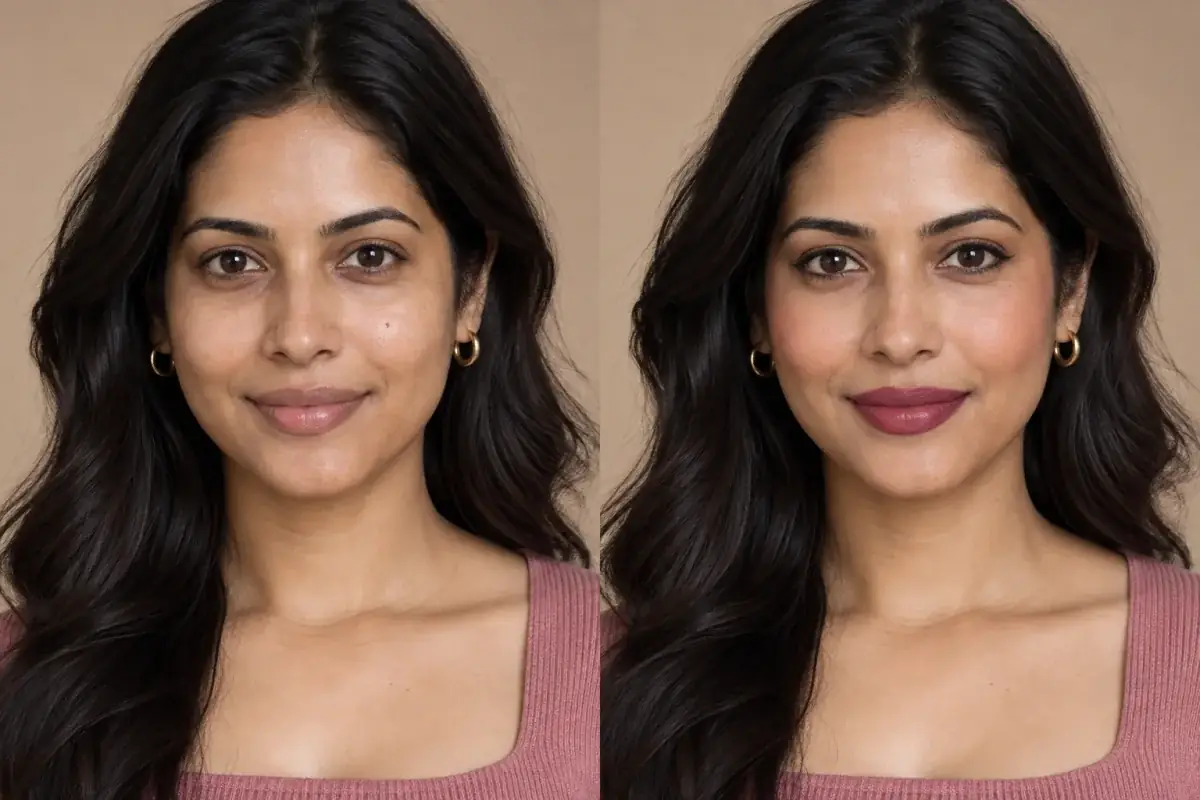
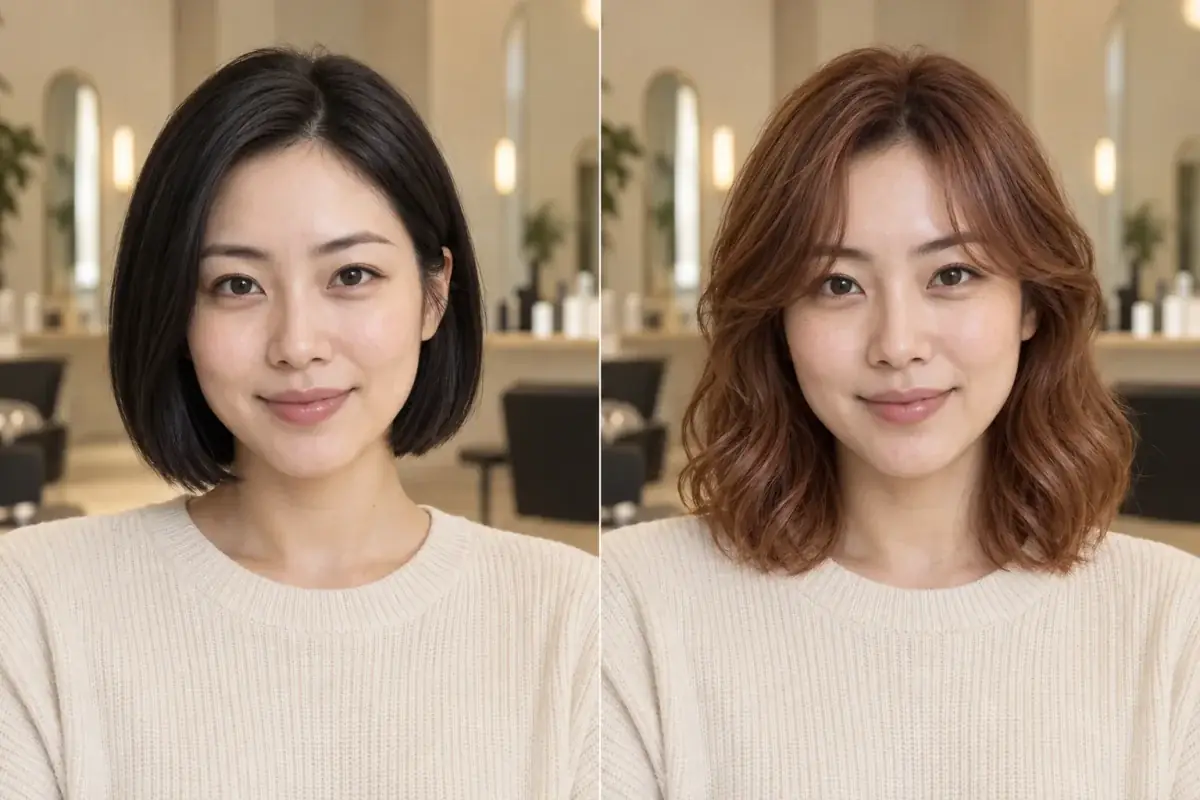
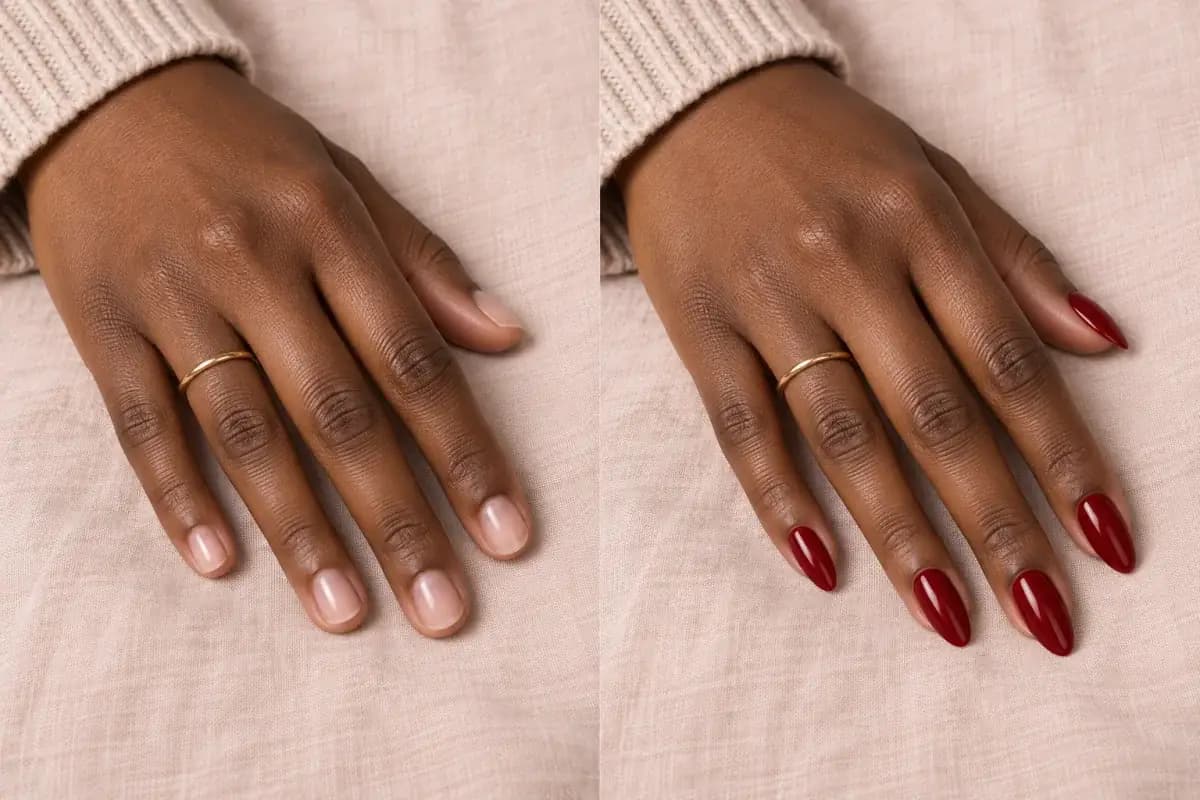
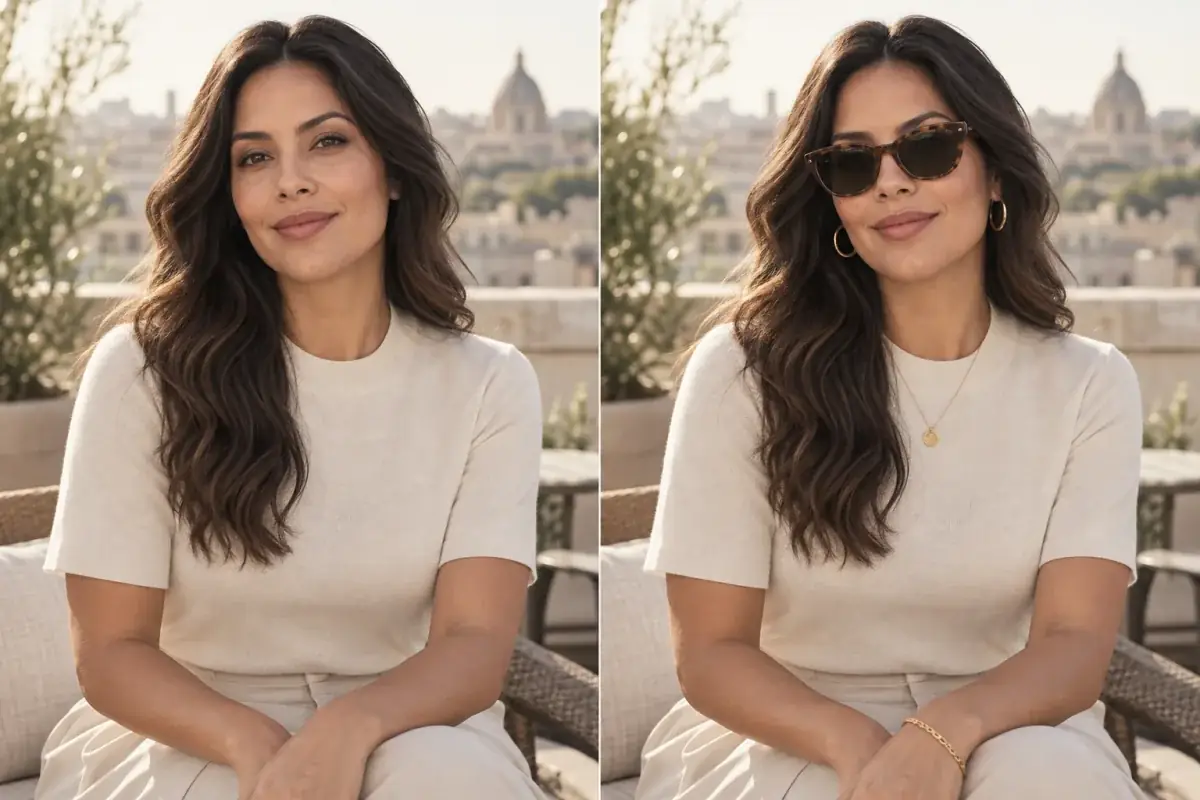
- Preview. Put each finalist on your own photo in the makeup try-on and compare them on the same face in the same light. This is the step analysis cannot do, and it is the step where the wrong finalist usually eliminates itself in seconds.
- Decide. Buy or book the winner, and save it. If the decision is for an appointment, save the look as a Salon Card so the shades and settings travel with you. If it is a purchase, you have now tested the shade the only way that counts before money moves.
Which questions should you ask at each step?
Ask analysis questions it can answer in facts: what is my undertone, which season am I closest to, what is my face shape, what is my contrast level. Ask it for families, not products: which lip families suit this colouring, which blush depth, which shades to avoid and why. Save the verdict questions for the try-on: does this exact red work on my skin, does this blush read natural or theatrical on me, does this foundation finish flatter my skin texture.
If you are torn between two seasons an analysis gave you, that is the highest value try-on of all: wear each season's signature lip on your photo and look at which one your face agrees with. That is also the honest way to use /does-this-suit-me: not as an oracle, but as a structured second opinion on a specific look you can already see.
What should a good try-on show you?
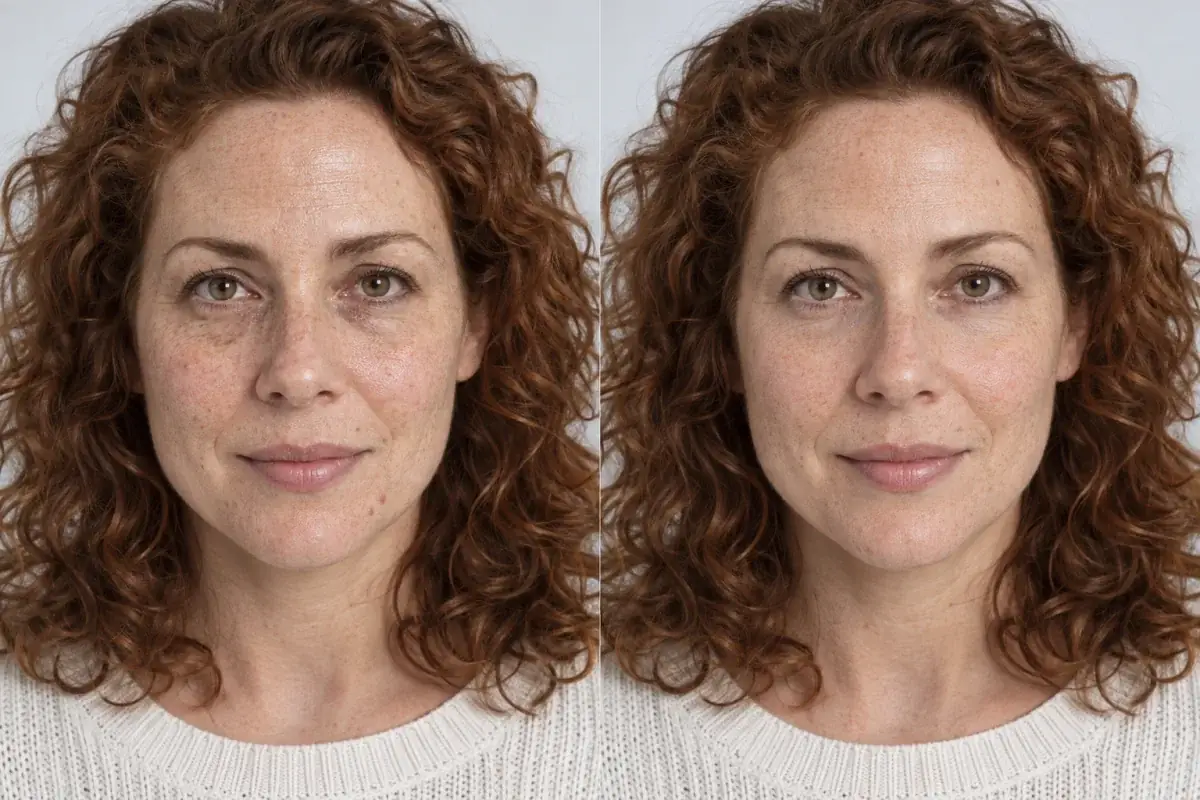
Three things separate a decision tool from a filter. First, it keeps your features: your face shape, skin texture and colouring stay yours, because a preview that redraws you is showing somebody else's answer. Second, it names what it applied, the exact shades and settings, so the result is repeatable in a shop or a salon rather than a screenshot you cannot act on. Third, it tells you why the look suits your colouring, in the language of the analysis you started with, so the two steps join up: the season said warm rose, the try-on shows warm rose, and you can see whether the season was right.
When those three hold, the workflow closes the loop that neither step closes alone. Analysis without a try-on is a palette you are guessing from. A try-on without analysis is twenty random looks. Together they are a sort, a test and a decision, which is all the question "what makeup suits me" ever needed.
How much does this workflow cost, in money and in time?
Less than the mistake it replaces. The analysis step is free or close to it: the prompt based reads people run on general AI assistants cost nothing, and a dedicated colour analysis read costs a credit or two at most. The preview step costs one credit per finalist look, and the workflow is designed so there are only two to four finalists by then. Set that against the prices of deciding badly. A single mid range lipstick costs roughly 20 to 35 dollars, a foundation 30 to 55 dollars, and a professional colour consultation 150 to 300 dollars for advice that still ends in words. One wrong foundation, bought on an analysis label alone, costs more than every preview in this workflow combined.
Time runs the same way. The analysis takes minutes. The shortlist takes ten honest minutes with your own makeup bag in front of you, tipping out the shades that were never in your families to begin with. The previews take an evening at most, and usually far less, because wrong finalists eliminate themselves quickly on a real face. What the workflow refuses to spend is the other currency: the weeks of wearing a shade that is nearly right, the returns and reorders, and the appointment where an artist has to undo a decision made from a palette name. Decide once, in the right order, and the total bill in money and evenings is the smallest version of this purchase you can make.
Source: Uptone guide: How to find your skin undertone
Source: Uptone colour analysis tool
A preview is not a wear test
A try-on settles how a look suits your face; it cannot tell you how a foundation wears at hour six, whether a formula irritates your skin, or how a product behaves on your skin type through a working day. Use the workflow to decide colour, depth and finish, then patch test and wear test the physical product before it matters.
Take the theory out of it.
Analysis gives you families; this is the step that shows the actual shades on your actual skin, which is where the decision gets made.
Questions people ask
Can AI really tell me what makeup suits me?
It can tell you the sorting facts: your undertone, colour season, face shape and contrast level, which narrow your makeup to the right shade families. It cannot show you a specific shade on your skin, which is where most mistakes happen. Treat the analysis as a shortlist and a try-on as the decision.
Why did two apps give me different colour seasons?
Because a photo read depends on light, white balance and how much makeup or tan is in the picture, and neighbouring seasons are genuinely close. Take the two results as two hypotheses, then wear each season's signature lip shade on your own photo: the one your face agrees with is your answer.
What photo gives the most accurate makeup analysis?
A bare faced photo in indirect daylight, hair pulled back, no filter and no beauty mode, against a plain background. Warm indoor light shifts your apparent undertone, and even a light foundation in the photo makes the read describe the makeup instead of your skin.
Can an analysis pick my exact foundation shade?
No. It can identify your undertone and depth range, which narrows a foundation line to two or three candidate shades. The exact shade depends on oxidation and finish on your own skin, so the candidates still need a swatch or a preview before you buy.
What is the difference between a makeup analysis and a makeup try-on?
An analysis reads your photo and answers in words: season, undertone, shade families to try and to avoid. A try-on applies specific shades to your photo so you can see the result on your own face. The analysis shortlists; the try-on decides.