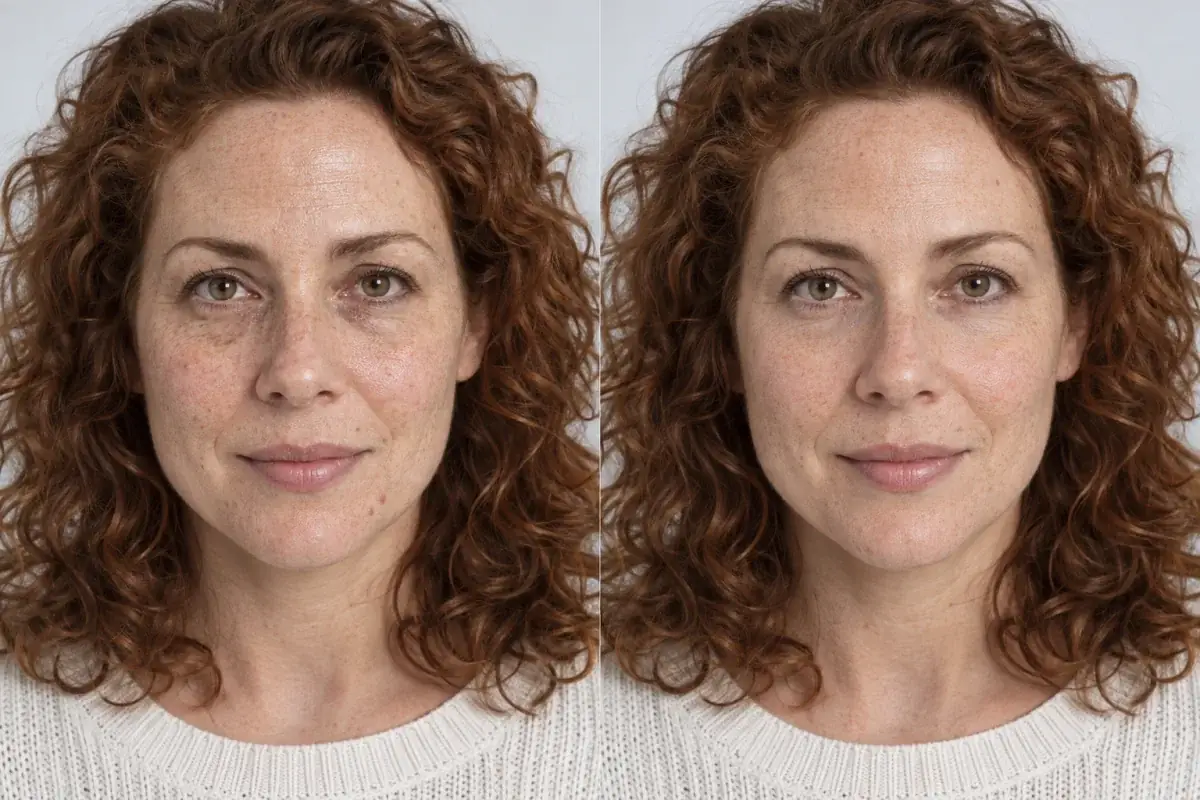

Eyemaxxing for Green Eyes: Try the Shades That Make Them Pop
Green eyes already draw attention, and the right eyeshadow makes them impossible to miss. The trick is not a brighter green. It is the shade sitting opposite green on the colour wheel, and this guide shows you which families to try first.
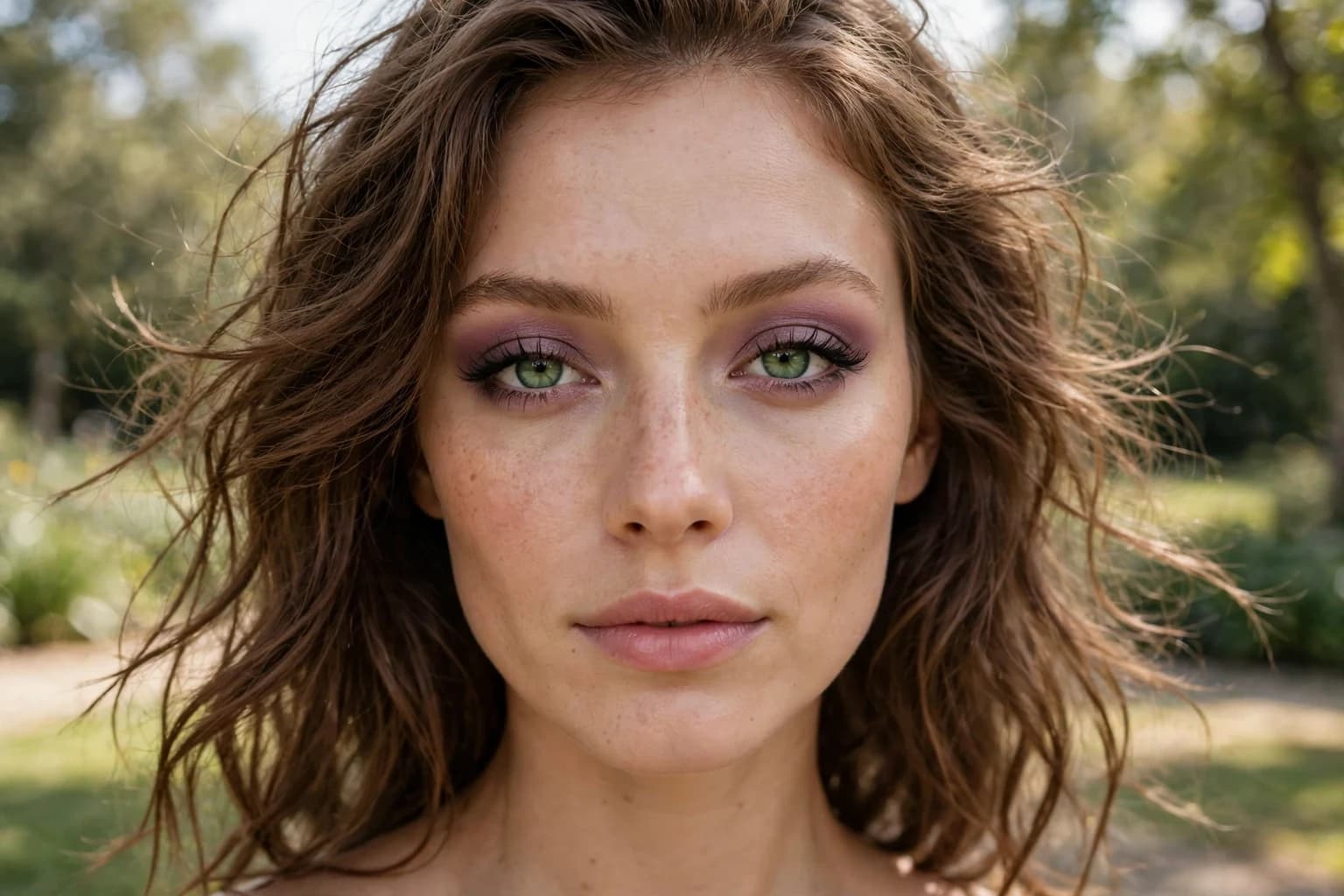
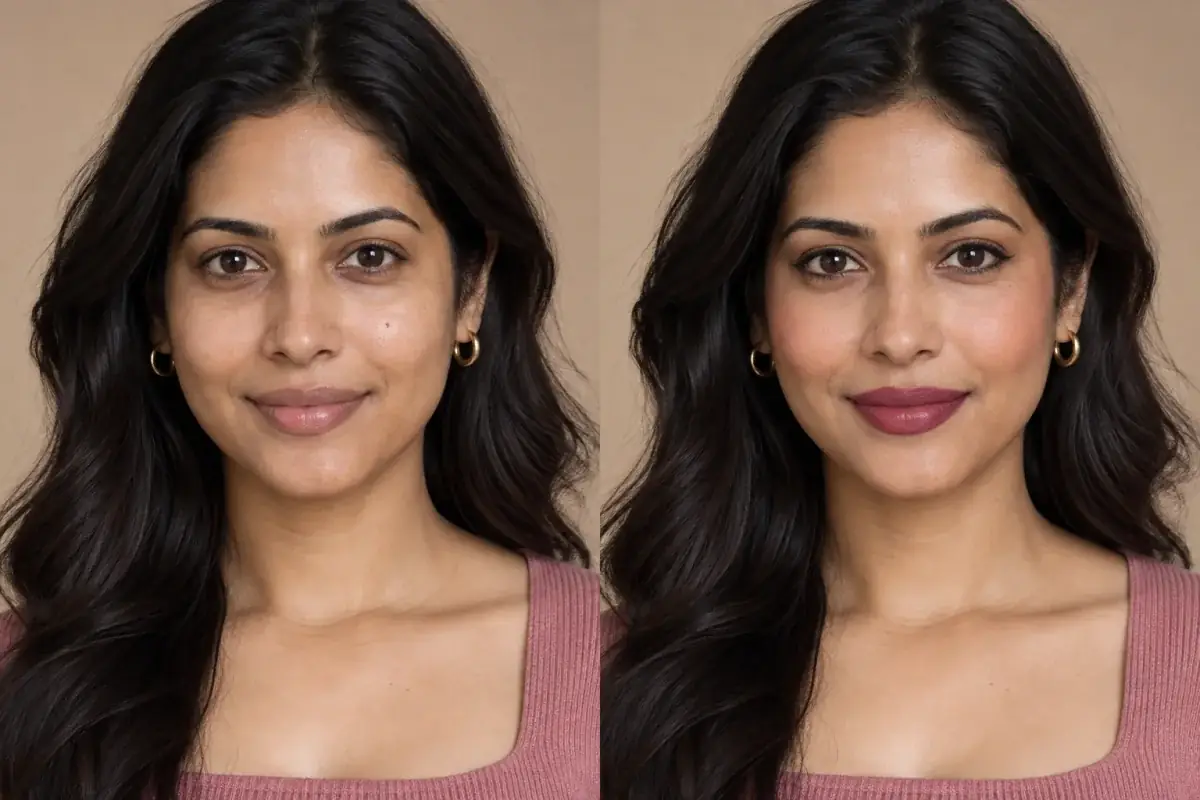
Plum against green: the contrast does the work, no bright color needed.
Direct answer
Eyemaxxing for green eyes means wearing the shades opposite green on the colour wheel, mainly purples, plums and burgundies, because opposite shades create the strongest contrast and make green eyes stand out. Copper and warm browns are the softer second option, warming the eye without the boldness of purple.
That is the whole method, and it is easy to test before you buy anything. Pick a shade family from this guide, try it on your own photo through /makeup-try-on, and keep the one that makes your eyes look greener at arm's length. Your first preview needs no account.
Key takeaways
- Green eyes sit opposite purples, plums and burgundies on the colour wheel, so those families make them pop hardest.
- Copper and warm browns are the softer second option, warming green eyes without the boldness of purple.
- Daytime calls for mauve and soft plum, evening calls for deep plum, burgundy and violet.
- Matching green eyeshadow to green eyes usually washes the eye out instead of defining it.
- Try every shade on your own photo first, since the same plum reads differently on warm, cool and olive skin.
What is eyemaxxing?
Eyemaxxing is the name for choosing makeup that makes your eye colour stand out, rather than choosing a shade because it is trending or because it looked good on someone else. The idea is old, and the name is new: colour theory has always said that a colour looks strongest next to its opposite on the colour wheel, and eyemaxxing simply applies that rule to eyeshadow, liner and mascara.
For green eyes the rule points in one clear direction. Green sits opposite the purple family, so purples, plums, violets and burgundies are the shades that contrast with green most. That contrast is why a plum shadow can make green eyes look greener, while a green shadow often does the opposite. The rest of this guide turns that one rule into a shortlist you can actually test, starting with the purple family and then the warmer second option.
Why do purple and plum shades make green eyes pop?
Because contrast is what the eye notices first. When two opposite colours sit next to each other, each one looks more vivid, and that is exactly what happens when a plum shadow sits against a green iris. The green looks greener because the purple beside it pushes it forward, and the purple looks richer because the green does the same in return. No brightness is needed. A muted plum works as well as a vivid violet, because the contrast comes from the pairing, not from the intensity.
This is also why eyemaxxing beats copying a look from a model. A plum that makes green eyes pop can fall flat on brown eyes, where the opposite family is blue, and a shade that flatters blue eyes can wash green eyes out. The rule is personal by design: it starts from your iris colour, not from a trend. If you want the same logic applied to other eye colours, see our eyemaxxing hub: /blog/eyemaxxing-makeup-by-eye-colour, with sibling guides for brown eyes at /blog/eyemaxxing-for-brown-eyes and blue eyes at /blog/eyemaxxing-for-blue-eyes.
Which eyemaxxing shades should you try first?
Start with plum, since it is the most wearable member of the purple family and the easiest to test. A soft plum across the lid with a deeper plum in the crease gives green eyes definition without looking dramatic, and it works in daylight, at work, and in photos. Mauve is the lighter cousin of plum and the best daytime entry point: it carries the same purple contrast in a quieter tone, so it flatters green eyes without announcing itself as a purple look.
For evening, move deeper. Burgundy adds warmth to the purple family and reads as a rich, almost wine toned shadow on green eyes, while violet is the boldest of the group and suits a full evening look with defined lashes. Try them in this order, mauve first, then plum, then burgundy, then violet, and judge each one on your own photo at arm's length. The winner is usually the shade that makes your iris look greener without making the rest of your face look washed out, and that winner changes with your skin tone, which is why the photo test matters more than any shade chart.
What about copper, bronze and warm browns?
Copper and warm browns are the second option for green eyes, and the right choice when purple feels too bold. They do not contrast with green the way purple does, but they warm the whole eye area, and warmth makes green eyes look deeper and more golden at the edges. A copper shimmer on the lid, or a warm bronze blended through the crease, gives green eyes a lit from within quality that purple cannot, and it pairs naturally with warm skin and with warm hair colours.
Warm browns are the everyday version of the same idea. A matte warm brown in the crease defines the eye without any colour statement at all, and it is the safest choice for a first eyemaxxing test if you have never worn purple. If you are also choosing a hair colour, the same warmth logic applies, and our green eyes hair colour guide covers it: /blog/what-hair-color-suits-green-eyes. Try copper and warm brown alongside plum on your photo and compare them side by side: purple usually wins on contrast, copper usually wins on warmth, and your winner depends on the look you want that day.
Which shades should green eyes avoid?
The main one to avoid is green eyeshadow matched to your iris. It sounds logical, wearing the colour you want to highlight, but matching green on green removes the contrast that makes the eye stand out, and the result is usually a flat, washed out eye rather than a greener one. If you love green tones, use them as a liner detail or a hint in the inner corner, not as the main lid colour, so the green in your eye still has something to stand against.
Very cool pastels are the second caution. Icy silver, pale blue and frosty grey can dull green eyes, because their coolness pulls attention away from the warmth that makes green irises glow. That does not make them forbidden, and a silver shimmer in the inner corner can still brighten the eye, but as a full lid colour they rarely beat plum or copper on green eyes. The rule stays the same: if a shade interests you, test it on your photo next to plum and copper, and let the comparison decide instead of the rule alone.
How do you pair eyemaxxing shades with the rest of your makeup?
Keep the rest of the face quiet, so the eyes stay the focus. A plum or burgundy eye already carries the contrast, and pairing it with a bold red lip splits attention and makes the whole look compete with itself. A neutral lip, a soft blush in a warm rose or peach, and an even skin base let the eye colour do the talking, and defined lashes frame the contrast: black mascara for evening, dark brown for daytime, with the lashes curled so the iris stays fully visible.
The same shade family carries you from day to evening without a new purchase. Wear mauve in daylight, deepen it to plum for dinner, and add a burgundy liner or a deeper crease shade for a full evening look, keeping the lip neutral throughout. That progression is the practical payoff of eyemaxxing: one rule, one shade family, and a look that scales by depth instead of by buying a new palette for every occasion. Test the day and evening versions on your photo side by side, since the shade that wins in daylight is not always the shade that wins under evening light.
How do you try eyemaxxing shades on your own photo?
The steps are simple, and the whole test takes less time than reading a single product review. First, take or choose a clear photo of yourself in daylight, facing the camera, with your eyes fully visible and no heavy filter on it. Second, open /makeup-try-on, or start at /tools if you want to see every tool in one place. Third, upload the photo and pick the shade family you want to test, starting with plum. Fourth, judge the result at arm's length as well as close up, in daylight, against the clothes you actually wear.
Test shades in pairs, not one at a time, because eyemaxxing is a comparison. Run plum against copper, then the winner against burgundy, then the winner against your current everyday shade. Save the winning photo: it shows the shade on your own eyes instead of describing it in words, and it is the most useful thing you can take into a store. Your first preview needs no account, and you only sign up to save or download a look.
A try on shows the shade on your photo, not a promise
A photo try on shows you the shade on your own eyes, which is far more information than a swatch or a model's photo gives you. It is not a guarantee: screens and lighting shift colour, and a shade can read differently in daylight than under shop lights. Check the winning shade in daylight before you buy it, and compare it against the shade you hold in the store.
Take the theory out of it.
Eyemaxxing is a comparison, and a photo try on lets you run that comparison on your own eyes. Upload one photo, try plum, copper and burgundy side by side, and keep the shade that makes your green eyes pop. The first preview needs no account.
Questions people ask
What is the best eyeshadow colour for green eyes?
Purples, plums and burgundies, because green sits opposite the purple family on the colour wheel and opposite colours create the strongest contrast. Plum is the most wearable starting point, mauve is the quietest daytime version, and burgundy and violet are the deeper evening options. Try them on your own photo and keep the one that makes your iris look greener at arm's length.
Does copper eyeshadow suit green eyes?
Yes, as the softer second option. Copper and warm browns do not contrast with green the way purple does, but they warm the whole eye area and make green eyes look deeper and more golden at the edges. Copper usually wins on warmth while plum wins on contrast, so test both on your photo and pick by the look you want that day.
Should green eyes wear green eyeshadow?
Usually not as the main lid colour, because matching green on green removes the contrast that makes the eye stand out and the result is often flat and washed out. If you love green tones, use them as a liner detail or a hint in the inner corner, so the green in your iris still has something to stand against. Test it next to plum on your photo and let the comparison decide.
What is eyemaxxing?
Eyemaxxing is choosing makeup that makes your eye colour stand out, using the colour wheel rule that a colour looks strongest next to its opposite. For green eyes the opposite family is purple, so plums, violets and burgundies are the core eyemaxxing shades, with copper and warm browns as the softer alternative. The idea is old and the name is new, and the test is simple: try the shade on your own photo before you buy it.
Do I need an account to try eyemaxxing shades on my photo?
No. Your first preview needs no account: upload one photo, pick the shade family, and see it on yourself. You only sign up when you want to save or download a look, which is worth doing for the winning shade, since the saved photo is the most useful thing you can take into a store.