

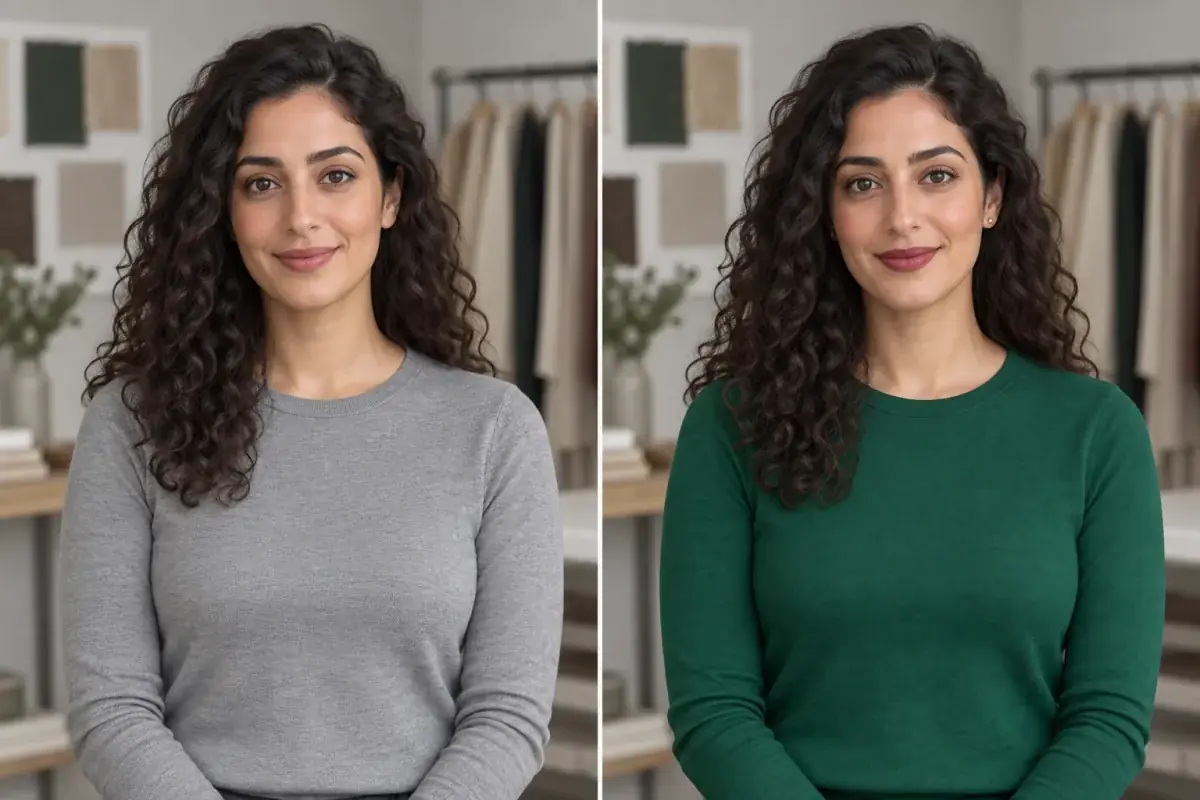
Eyemaxxing for Brown Eyes: Try the Shades That Make Them Pop
Brown eyes have a built in advantage: the shades that make them pop are the ones sitting opposite them on the color wheel. Blues, teals and navy are the contrast shades for brown eyes, and they make the brown look deeper and warmer by comparison. Golds and warm champagnes are the softer second option, adding glow without contrast. The only way to know which family wins on your eyes is to try them on your own photo first.
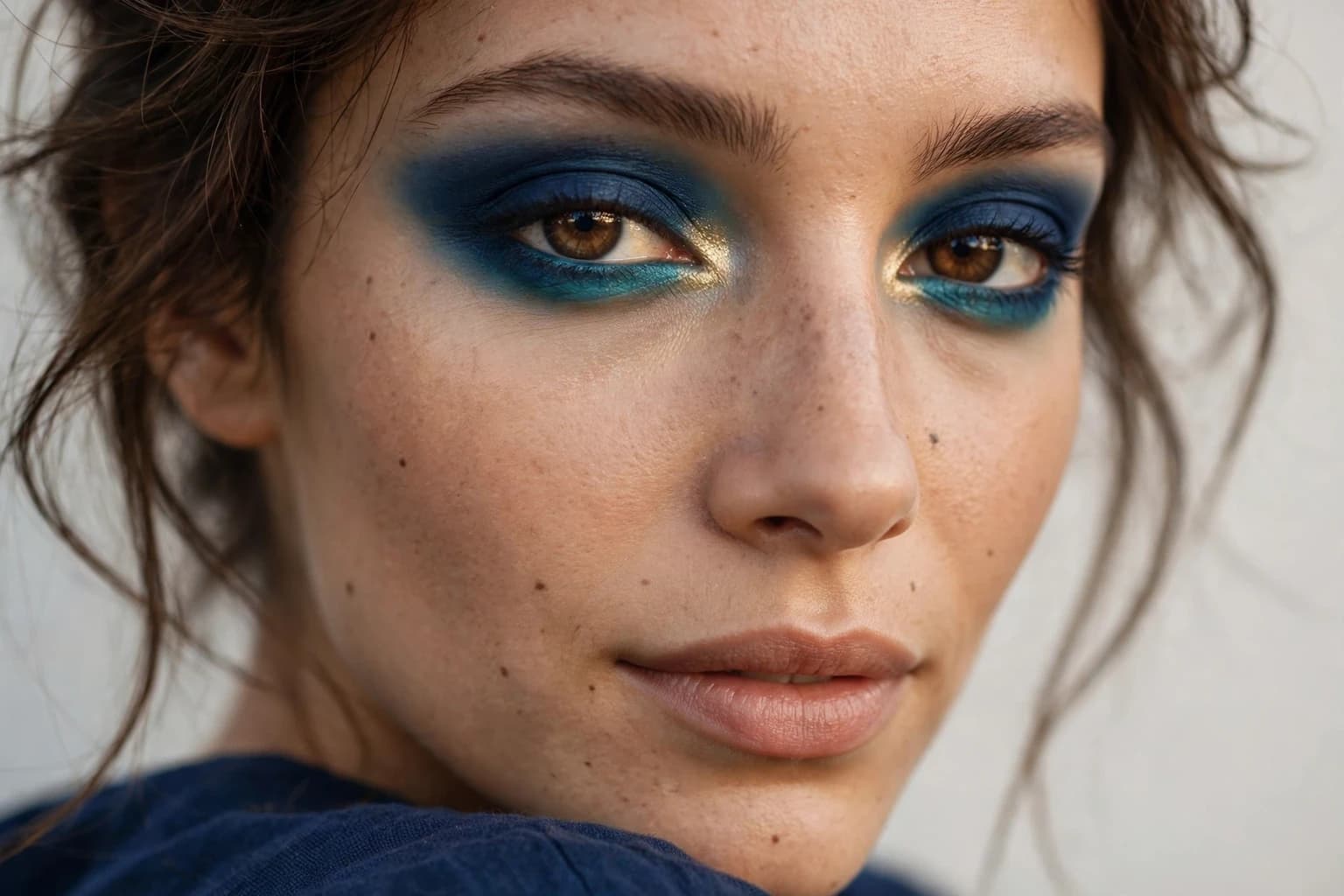
The whole idea in one frame: contrast shades against brown eyes, with gold in the inner corner.
Direct answer
For brown eyes, blues, teals and navy make them pop, and golds are the softer second option.
That is the whole color wheel rule in one line. Brown eyes sit on the warm side of the wheel, so their opposite side holds blues, teals and navy, and those shades create the contrast that makes brown eyes stand out. Golds and warm champagnes work by warmth instead of contrast, adding glow to the brown that is already there. Try both families on your own photo before you buy a palette, and judge the winner in daylight.
Key takeaways
- Brown eyes sit opposite blues, teals and navy on the color wheel, so those shades make brown eyes stand out most.
- Golds and warm champagnes are the softer second option: glow and warmth without strong contrast.
- Navy is the easiest contrast shade to wear daily, teal is bolder, and bright blue needs the lightest hand.
- Avoid shades too close to your eye color, like flat medium brown, because they blend instead of contrasting.
- Try every shade family on your own photo before buying a palette, and judge the winner in daylight.
What is eyemaxxing, and why does it work for brown eyes?
Eyemaxxing is the name for choosing eye makeup from the color wheel instead of from a trend list. The rule is simple: shades opposite your eye color on the wheel create contrast, and contrast is what makes eyes stand out. Brown eyes sit on the warm side of the wheel, so their opposite side holds blues, teals and navy. That is why a navy smoky eye makes brown eyes look deeper, while a brown shadow in the same tone as the eyes tends to disappear into them.
The technique itself is old, and the name is new. Makeup artists have used opposite shades for decades, and the trend gave it a short name and a clear search pattern: eyemaxxing for your eye color. What matters for brown eyes is that the rule is generous. Brown is the most common eye color, and it pairs with the widest range of contrast shades, from soft navy for daytime to deep teal for evening. The question is never whether contrast works for brown eyes. It is which contrast shade suits your skin tone and your comfort level, and that is what a photo try on answers.
Which shades make brown eyes pop the most?
Navy is the strongest all rounder. It reads as a neutral from a distance, so it works for work and daytime, but up close it carries real blue contrast against brown eyes. A navy smoky eye, a navy liner along the upper lash line, or navy blended into the outer corner all give brown eyes depth without shouting. If you buy one contrast shade, make it navy.
Teal is the bolder choice. It sits between blue and green on the wheel, and against brown eyes it reads vivid and modern, especially in evening light. Teal works best as an accent: a teal liner, a teal shimmer on the lid, or teal blended into the outer half of the eye, with the rest of the look kept neutral. Full teal across the whole lid suits a night out better than a workday, and it suits deeper skin tones especially well, where the contrast stays rich rather than harsh.
Bright blue and cobalt sit at the far end of the scale. They give the strongest contrast of all, and they are also the easiest to overdo. A thin cobalt liner or a touch of bright blue shimmer at the center of the lid can make brown eyes look striking. A full bright blue lid can look costume like unless the rest of the face stays quiet. Start with liner, judge it on your photo, and add more only if the photo says it works.
What about golds and warm champagnes?
Golds and warm champagnes are the second family for brown eyes, and they work by a different rule: warmth instead of contrast. Gold picks up the warm tones already inside brown eyes and makes them glow, which is why a gold shimmer on the lid or a champagne highlight in the inner corner flatters almost every brown eyed person. This family suits daytime, work, and anyone who finds blue shades too bold for daily wear.
The trade off is that gold does not create the same standout effect as navy or teal. It enhances rather than contrasts, so the eyes look warmer and brighter but not dramatically different. That makes gold the safe choice and the best partner shade: gold on the lid with navy liner, or champagne in the inner corner with teal on the outer half, gives you both warmth and contrast in one look. If you are new to eyemaxxing, start with gold to learn your eye shape and blending, then add a contrast shade once you are comfortable.
Which shades should brown eyes avoid?
Avoid shades that match your eye color too closely. A flat medium brown shadow in the same tone as your eyes blends into them instead of framing them, and the eyes end up looking smaller and less defined. This is the most common mistake with brown eyes: reaching for brown because it feels safe, then wondering why the look disappears in photos. Brown still has a role, as a transition shade in the crease or a soft liner, but it should not be the main lid shade.
Be careful with very cool silvers and icy pastels on their own. Silver can look striking against brown eyes in evening light, but on its own it can also read cold against warm skin and make the eyes look tired rather than bright. If you love silver, pair it with navy liner or a warm transition shade so the look keeps some warmth. The same caution applies to very bright greens: green sits close to teal on the wheel, but a yellow leaning green can clash with warm skin, while a deep teal leaning green flatters it. When in doubt, test the shade on your photo and judge it in daylight before buying.
How do you pick between blue, teal and navy?
Pick by skin tone first, then by occasion. Navy suits every skin tone and every occasion, which is why it is the default recommendation. Fair skin takes navy best as liner or a soft smoky blend, since a heavy navy lid can dominate a fair face. Medium skin carries navy across the lid comfortably, and deep skin carries the richest navy looks, where the blue stays vivid rather than fading into the skin.
Teal suits medium and deep skin tones most strongly, and it suits evening better than daytime. Fair skin can wear teal too, but as an accent rather than a full lid: teal liner, or teal shimmer on the outer half, keeps the contrast without overwhelming the face. Bright blue follows the same pattern with a lighter hand: liner and accent first, full lid only for evening, and only if the photo says it works. Your undertone matters less here than your depth: warm, cool and olive skin can all wear navy and teal, because the contrast rule comes from the eye color, not the skin. The photo try on settles the rest.
How do you try eyemaxxing shades on your own photo?
The steps take under a minute per shade, and the whole test takes less time than reading a single palette review. First, take or choose a clear photo of yourself in daylight, facing the camera, with your eyes fully visible and no heavy filter on it. Second, open the makeup try on at /makeup-try-on. Third, upload the photo and run the shade families one by one: navy first, then teal, then gold, then bright blue as a liner accent. Fourth, judge each result at arm's length as well as close up, in daylight, against the clothes you actually wear.
Two habits make the test honest. Test all families on the same photo, in the same light, so you compare shades instead of comparing photos. And judge the winner the way a stranger would: glance at the photo, not stare at it. The shade that makes your eyes stand out in a glance is the winner, even if a different shade looks more dramatic close up. If you want a second opinion on the tool itself, the full picker sits at /tools, where every Uptone tool is listed in one place.
What should you do with the winning look?
Save the winning photo. It is the most useful thing this guide produces, because it shows the shade family on your eyes instead of describing it in words. Take it into a store and match a palette against it, or show it to a makeup artist and ask which shades in their range get closest to it. If you already own palettes, use the photo to shop your own collection first: many people already own a navy or a gold they have never paired with their eye color on purpose.
For the full picture, read the hub guide at /blog/eyemaxxing-makeup-by-eye-colour, which explains the color wheel rule for every eye color, and the sibling guides at /blog/eyemaxxing-for-green-eyes and /blog/eyemaxxing-for-blue-eyes if you are buying for someone else or comparing families. Brown eyes are the most forgiving starting point in eyemaxxing, because the contrast shades are wearable neutrals like navy, not costume colors. Start there, trust the photo, and buy only the family that already looks right on you.
A try on shows the shade on your photo, not a promise
A photo try on shows you the shade on your own eyes, which is far more information than a palette swatch gives you. It is not a guarantee: screens and lighting shift color, and a shade can read differently in daylight than under shop lights. Check the winning shade in daylight before you buy it, and compare it against the shade you hold in the store. The color wheel rule behind eyemaxxing is a starting point, not a verdict, and the photo is the test that settles it for your eyes.
Take the theory out of it.
This guide is about one decision, which shade family flatters brown eyes, so it points straight at the makeup try on rather than the picker. Upload one photo, run navy, teal, gold and bright blue on it, and see which family makes your eyes pop. The first preview needs no account. The full picker at /tools lists every Uptone tool in one place.
Questions people ask
What is eyemaxxing?
Eyemaxxing is choosing eye makeup from the color wheel instead of from a trend list, using shades opposite your eye color to create contrast. For brown eyes, the opposite side of the wheel holds blues, teals and navy, which is why those shades make brown eyes stand out. The technique is old and the name is new, and the photo try on is what turns the rule into a personal answer.
Which eyemaxxing shade should brown eyes try first?
Navy, because it is the easiest contrast shade to wear daily and it suits every skin tone. It reads as a neutral from a distance but carries real blue contrast up close, so it works for work, daytime and evening. Try it as liner or a soft smoky blend first, then test teal and gold against it on the same photo.
Does navy eyeshadow suit fair skin with brown eyes?
Yes, worn as liner or a soft smoky blend rather than a heavy full lid. A heavy navy lid can dominate a fair face, while navy liner gives the same contrast in a lighter dose. Judge it on your photo at arm's length, where the balance between the shade and the rest of your face is easiest to see.
Can brown eyes wear gold eyeshadow every day?
Yes, gold is the most wearable daily family for brown eyes, because it works by warmth rather than contrast. A gold shimmer on the lid or a champagne highlight in the inner corner adds glow without demanding attention. Pair it with navy liner when you want both warmth and contrast in one look.
Do I need an account to try eyemaxxing shades on my photo?
No. Your first preview needs no account: upload one photo, run navy, teal, gold and bright blue on it, and see which family makes your eyes pop. You only sign up when you want to save or download a look, which is worth doing for the winning shade, since the saved photo is the most useful thing you can take into a store.