


What Is Eyemaxxing? Try the Shades That Make Your Eyes Pop
Eyemaxxing is a simple colour rule with a new name: wear the shades opposite your eye colour, and your eyes stand out. This guide explains the rule, names the shade family for each eye colour, and shows you how to test them on your own photo first.
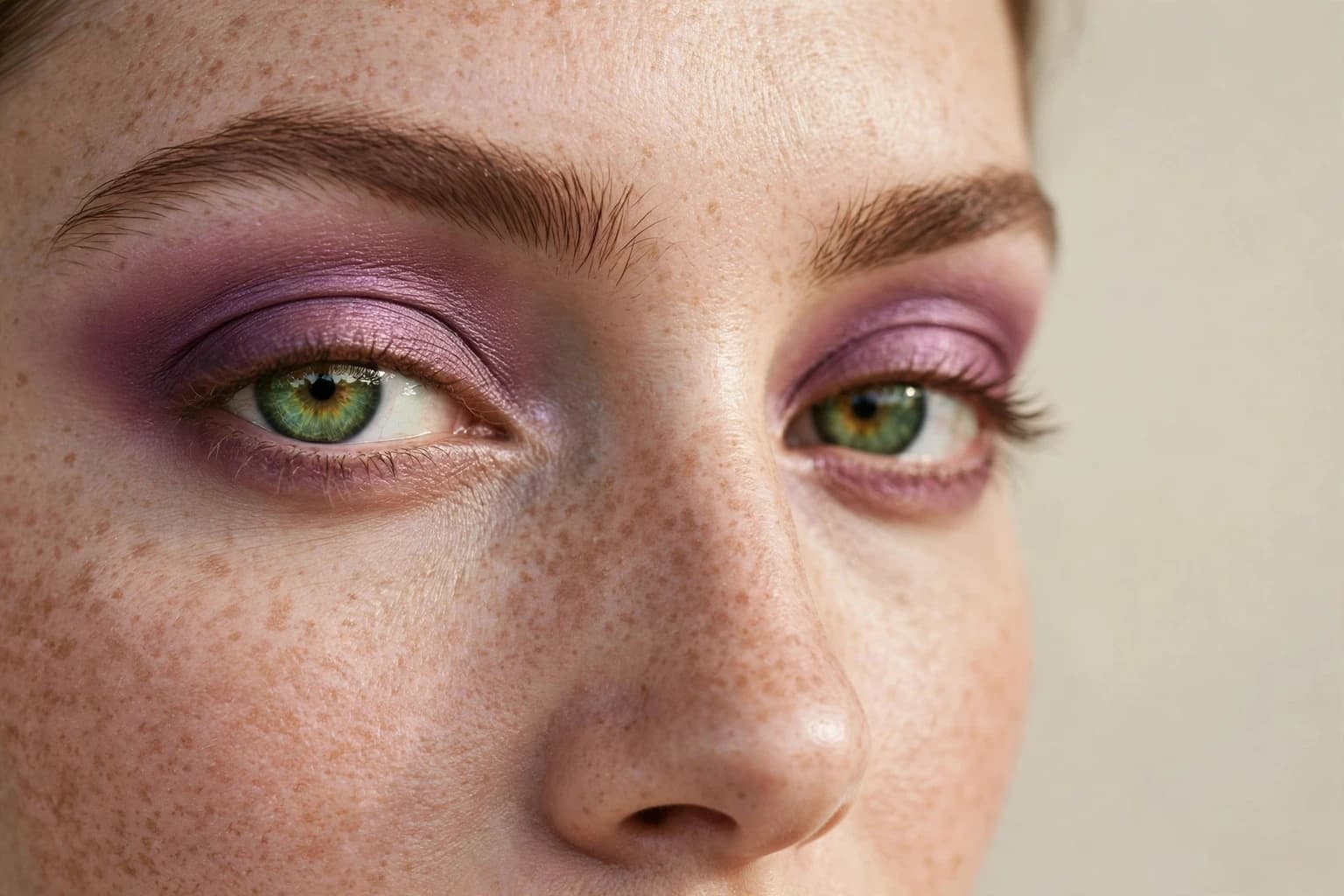
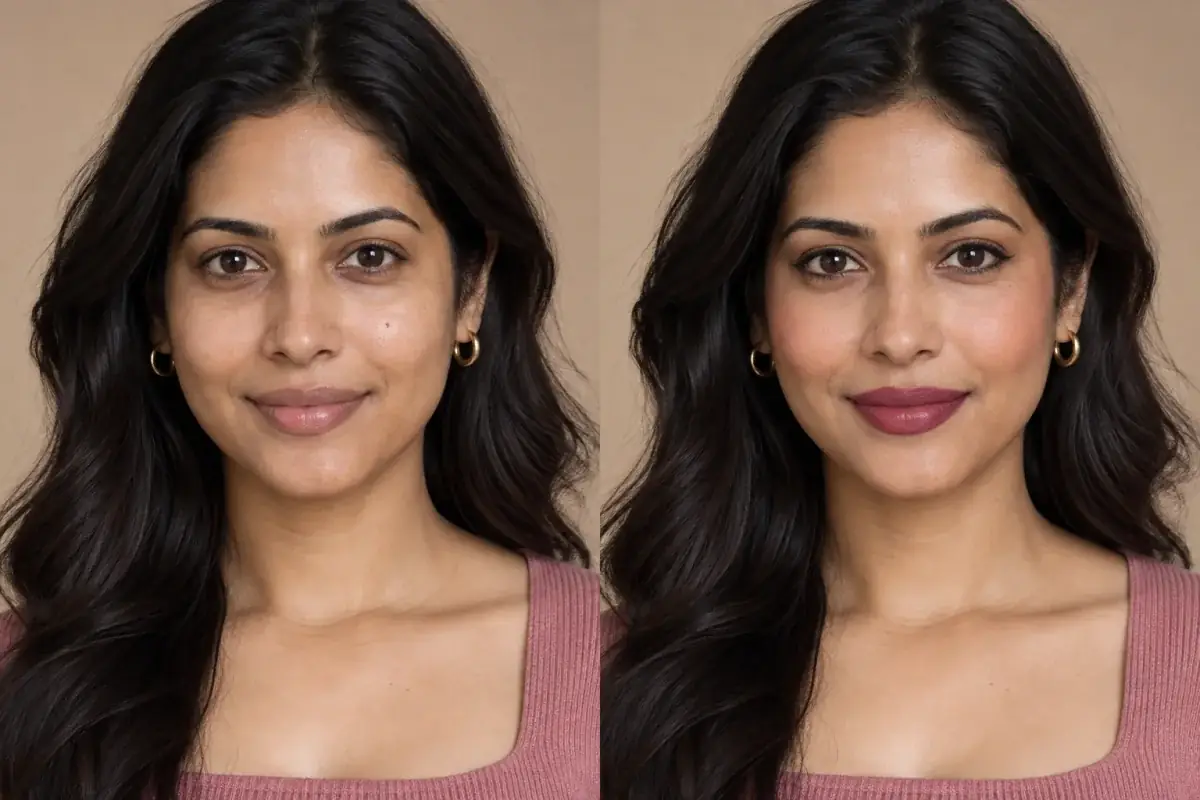
The rule in one frame: the shade opposite your iris colour pulls your eyes forward.
Direct answer
Eyemaxxing means choosing eyeshadow and liner shades that sit opposite your iris colour on the colour wheel, so the contrast makes your eyes look brighter and more defined. It works because contrast does the talking: a shade opposite your iris colour pulls the eye toward your eyes, while a shade close to your iris colour blends in and quiets them. The trend has a new name, but the technique is old: makeup artists have matched shadows to eye colour this way for decades, and the current wave simply gave it a name and a feed full of before and after clips.
This hub page covers the rule once, then points you to the shade family for your eye colour: green eyes get purples and plums, brown eyes get blues and teal, blue eyes get warm coppers and bronzes, and hazel eyes get a mix that follows whichever tone dominates. Each sibling page goes deeper on one eye colour, and every page ends the same way: try the shades on your own photo through /makeup-try-on before you buy anything, because a shade family narrows the choice and your photo makes the final call.
Key takeaways
- Eyemaxxing means wearing the shade family opposite your iris colour on the colour wheel, so contrast makes your eyes stand out.
- Green eyes pop against purples, plums and mauves; brown eyes against blues and teal; blue eyes against warm coppers, bronzes and peaches.
- Hazel eyes follow the dominant tone: green leaning hazel takes plum, brown leaning hazel takes blue accents.
- Skin undertone picks the temperature inside the family: cooler skin takes cooler purples and blues, warmer skin takes warmer coppers and bronzes.
- Test the shades on your own photo first through /makeup-try-on; the first preview needs no account.
What is eyemaxxing, in plain language?
Eyemaxxing is the practice of choosing eye makeup shades that contrast with your iris colour, with the goal of making your eyes the first thing people notice. The name comes from the current social wave around it, but the idea is the colour wheel rule that artists have used for years: colours opposite each other on the wheel intensify each other when placed side by side. Put a plum shadow next to green eyes and both look stronger; put a green shadow next to green eyes and both go quiet.
That is the whole trick, and it is why the trend caught on: it gives a clear answer to a question people actually ask, which shade should I buy for my eye colour, without needing a course in colour theory. It also explains why so many people own a drawer of shadows that do nothing for them: they bought shades that match their eyes instead of shades that contrast with them. Eyemaxxing flips that habit, and the rest of this guide is just the rule applied eye colour by eye colour.
How does the colour wheel rule work?
Picture the colour wheel as a circle with warm colours on one side and cool colours on the other. A colour's opposite sits directly across the circle: green faces red purple, blue faces orange, and warm brown, which leans orange, faces blue. That opposite pair is your eyemaxxing family, and it is the starting point, not the whole answer: inside the family you still choose depth and finish, sheer or bold, matte or shimmer.
Two more factors shape the result. First, your skin undertone sets the temperature: the same plum family reads cooler as violet and lavender, and warmer as burgundy and wine, so pick the end of the family that flatters your skin. Second, intensity matters more than exactness: a soft wash of the opposite family flatters every day, while a full bold lid in the same family is an evening look, and most people who try eyemaxxing for the first time should start sheer and build up. If a shade looks wrong, it is usually the temperature or the intensity that is off, not the rule itself.
Which shades make green eyes pop?
Green eyes sit opposite the red purple side of the wheel, so purples, plums, mauves and burgundy are the eyemaxxing family for green eyes. A soft mauve wash works for daytime, a deeper plum defines the eye for evening, and a warm copper used as a small accent along the lash line adds glow without competing with the purple. What to skip: green shadow in the same tone as your iris, which blends in and makes the eyes recede instead of standing out.
The full green eye guide goes deeper, with shade depth by skin tone and a step by step order for lid, crease and liner: /blog/eyemaxxing-for-green-eyes. If you only remember one line, remember this: green eyes want the purple family, and the deeper your skin, the deeper the plum you can carry.
Which shades make brown eyes pop?
Brown eyes lean warm, so their opposite family is blue: navy, cobalt, teal and slate blue all make brown eyes look lighter and brighter by contrast. A thin navy liner is the easiest entry point, because it reads as neutral from a distance and still gives the contrast up close, while a teal or cobalt wash across the lid is the bolder version of the same idea. Warm neutrals like bronze and gold do a different job: they deepen brown eyes rather than contrasting with them, so they flatter, but they are harmony, not eyemaxxing.
The full brown eye guide covers liner versus lid placement and which blues suit which skin depth: /blog/eyemaxxing-for-brown-eyes. One caution: very bright blue can read costume if the rest of the face is bare, so pair a bold blue lid with quiet skin and lips until you know how much contrast you like.
Which shades make blue eyes pop?
Blue eyes sit opposite the orange side of the wheel, so warm coppers, bronzes, peaches and terracotta are the eyemaxxing family for blue eyes. A copper wash across the lid is the classic version, and it works because the warmth pulls the cool blue forward; a peach shadow does the same job more softly for daytime, and a bronze liner defines the eye without a full lid of colour. Cool silver and icy blue shadows do the opposite: they match the eye's temperature and quiet it, which is why they so often disappoint on blue eyes.
The full blue eye guide goes deeper, including which coppers suit fair versus deep skin: /blog/eyemaxxing-for-blue-eyes. If you buy one thing first, buy a copper or bronze you can wear as both shadow and liner, since that one product tests the whole family.
What about hazel eyes?
Hazel eyes mix green, brown and gold, so they have no single opposite family, and the right choice follows whichever tone dominates your iris. Green leaning hazel takes the green eye route, plums and mauves, because the green in the iris is what the plum contrasts with. Brown leaning hazel takes blue accents, a navy liner or a teal wash, because the brown in the iris is what the blue contrasts with. Gold flecked hazel can take deep greens and plums, which pull out the flecks instead of fighting them.
The practical move is to look at your iris in daylight, name the tone you see most of, and start with that eye colour's family, then test the other family on your photo and compare. Hazel eyes change with light and clothing, so a photo test matters more here than anywhere: try both families through /makeup-try-on and keep the one that makes your eyes look clearer in the same light you will actually wear it in.
How do you try eyemaxxing shades on your own photo?
A shade family narrows the choice, but only your photo makes the final call, because the same plum reads differently on fair, medium and deep skin, and under warm and cool light. Upload one photo to /makeup-try-on, pick the shade family for your eye colour, and compare two or three depths side by side: a sheer wash, a medium lid, and the bold version. If you are unsure which tool fits, the picker at /tools lists them all, and your first preview needs no account.
Judge the result at arm's length and in daylight, not close up under bathroom light, since that is how other people will see it. Save the winning photo: it is the most useful thing you can take into a store, because it shows the shade on your skin instead of describing it in words, and it stops the usual mistake of buying a shade that looked right on someone else's eyes.
What mistakes should you avoid with eyemaxxing?
First, do not paint the whole lid in one loud opposite shade on your first try: start sheer, blend the edges, and let the contrast build, since a harsh block of colour reads as makeup first and eyes second. Second, do not ignore your skin undertone: the right family in the wrong temperature, a cool violet on warm skin or a hot copper on cool skin, can look off even though the rule is right. Third, do not trust a swatch on someone else's skin or a model's photo: the bottle, the swatch and your skin are three different colours, and only your photo settles it.
Fourth, do not buy five shades to test at home: that is the most expensive way to answer a question a photo answers in a minute, and four of the five will sit unused. Test the family on your photo, buy the one depth that wins, and add a second only after you have worn the first. Eyemaxxing is a shortcut to a shortlist, not a reason to own the whole shelf.
A photo try on shows the shade on your face, not a promise
A photo try on shows you the shade on your own face, which is far more information than a bottle or a swatch gives you. It is not a guarantee: screens and lighting shift colour, and a shade can read differently in daylight than under shop lights, so check the winning shade in daylight before you buy it. The shade families here follow the colour wheel rule, but your skin tone, eye depth and the finish you choose all shape the result, which is why the photo test, not the rule alone, makes the final call.
Take the theory out of it.
This hub covers eyes, so it points at the makeup try on rather than the picker. Upload one photo, pick the shade family for your eye colour, and compare depths before you buy. The first preview needs no account.
Questions people ask
What is eyemaxxing?
Eyemaxxing is the practice of choosing eyeshadow and liner shades opposite your iris colour on the colour wheel, so the contrast makes your eyes stand out. It is a new name for an old makeup artist technique, and it caught on because it answers a plain question, which shade suits my eye colour, with a clear rule instead of guesswork. The rule is simple: green eyes take purples, brown eyes take blues, blue eyes take warm coppers, and hazel eyes follow their dominant tone.
Do opposite shades really make eyes stand out?
Yes, because colours opposite each other on the wheel intensify each other when placed side by side, so a plum shadow next to green eyes makes both the shadow and the eyes look stronger. A shade close to your iris colour does the reverse, blending in and quieting the eyes, which is why matching shadows so often disappoint. The effect is strongest at medium depth: a sheer wash gives a gentle lift, while a bold lid gives a dramatic one.
Which eyemaxxing shades should I try first for my eye colour?
Start with the family for your eye colour: purples and plums for green eyes, navy or teal for brown eyes, and copper or bronze for blue eyes. Hazel eyes should start with the family of their dominant tone, plum for green leaning hazel and blue accents for brown leaning hazel. Test two or three depths of that family on your own photo before buying, since depth and temperature decide the winner inside the family.
Can I try eyemaxxing shades on my own photo before buying them?
Yes, through the makeup try on, which shows the shades on your own face at the depth you choose. That matters because the same plum reads differently on fair, medium and deep skin, and a shade that flatters a model can sit wrong on you. Your first preview needs no account, and saving the winning photo gives you the most useful reference you can take into a store.
Does eyemaxxing work for hazel eyes?
Yes, but hazel eyes need one extra step, because they mix green, brown and gold and therefore have no single opposite family. Look at your iris in daylight, name the tone you see most of, and start with that tone's family, then test the other family on your photo and compare. Hazel eyes also shift with light and clothing, so the photo test matters more here than for any single colour eye.