

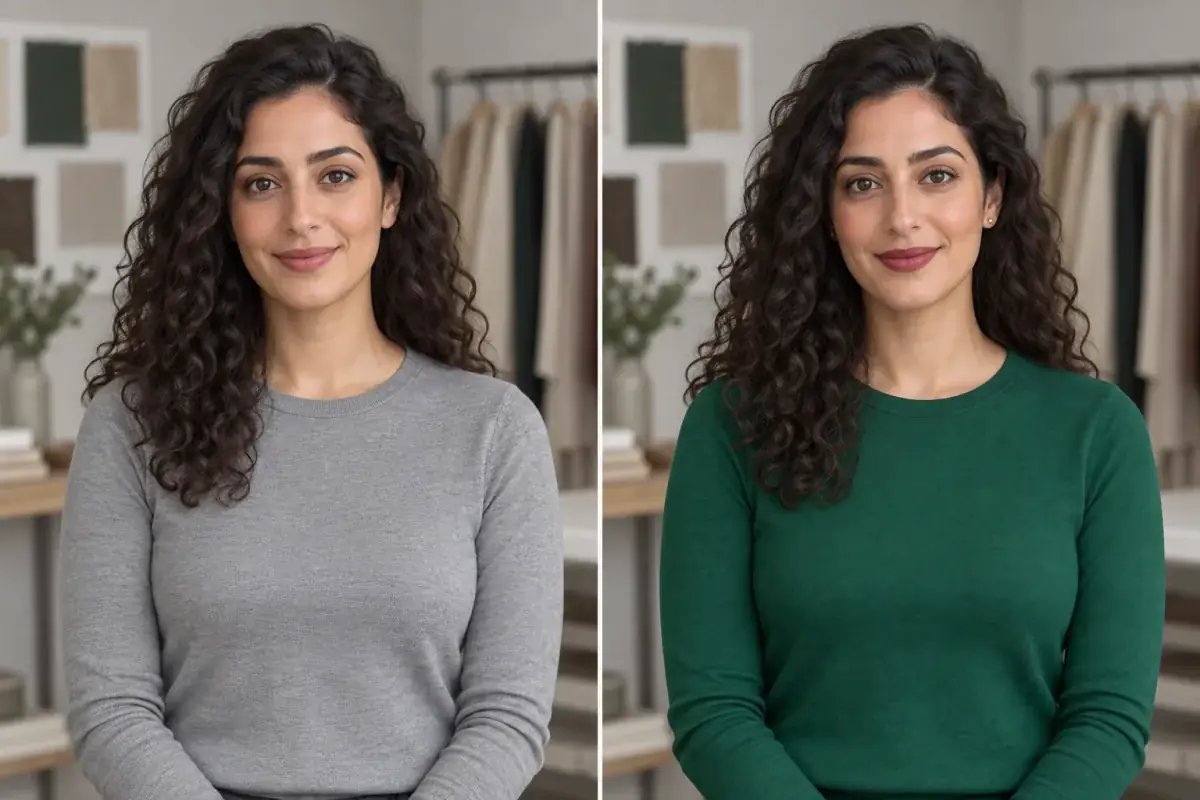
ChatGPT gave you a color season. Here is how to check it on your own face.
The viral hack hands you a season from one selfie and a hex code. It might be right. Here is the 10 minute check that tells you, using the only evidence that counts: the shades, on your face.
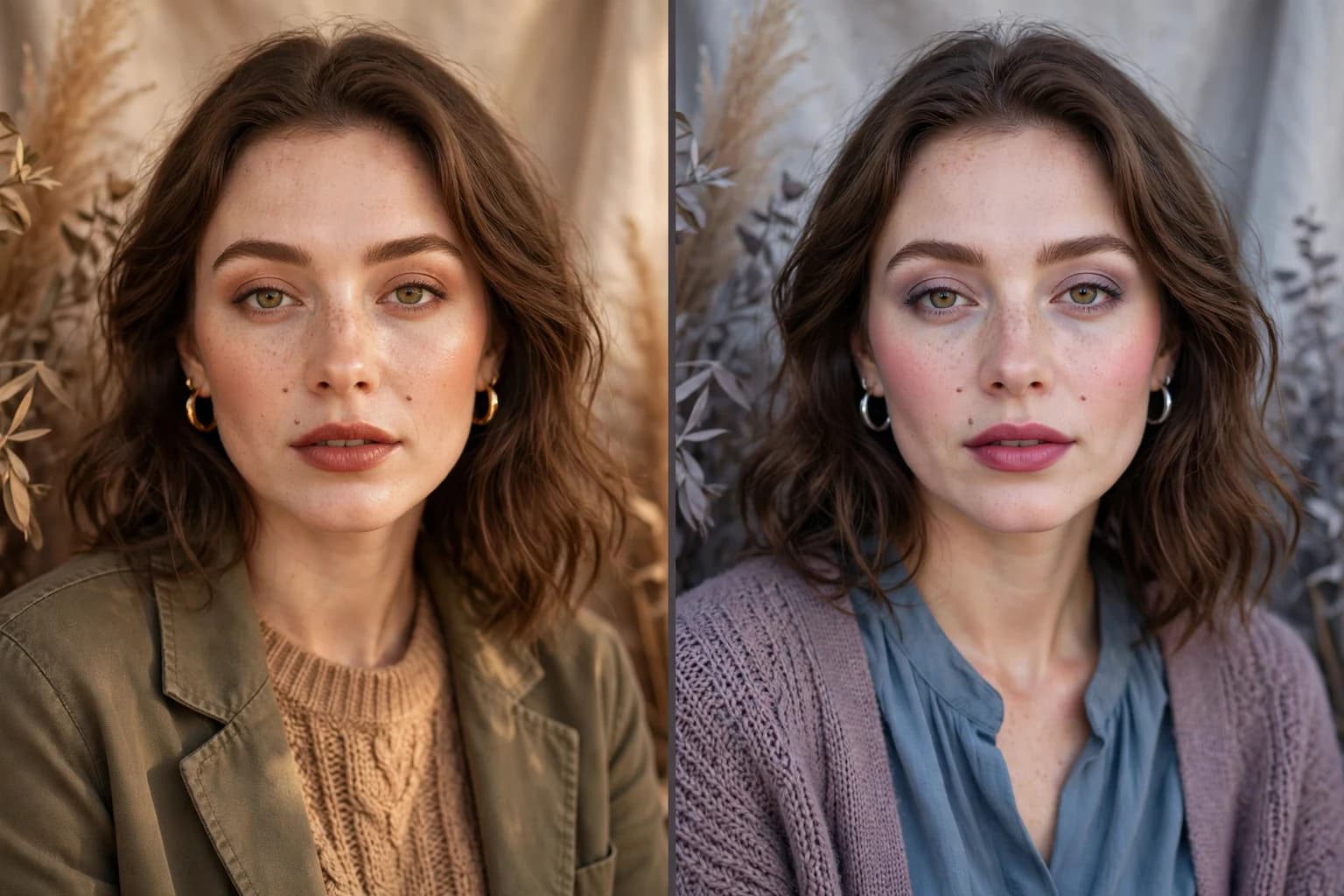
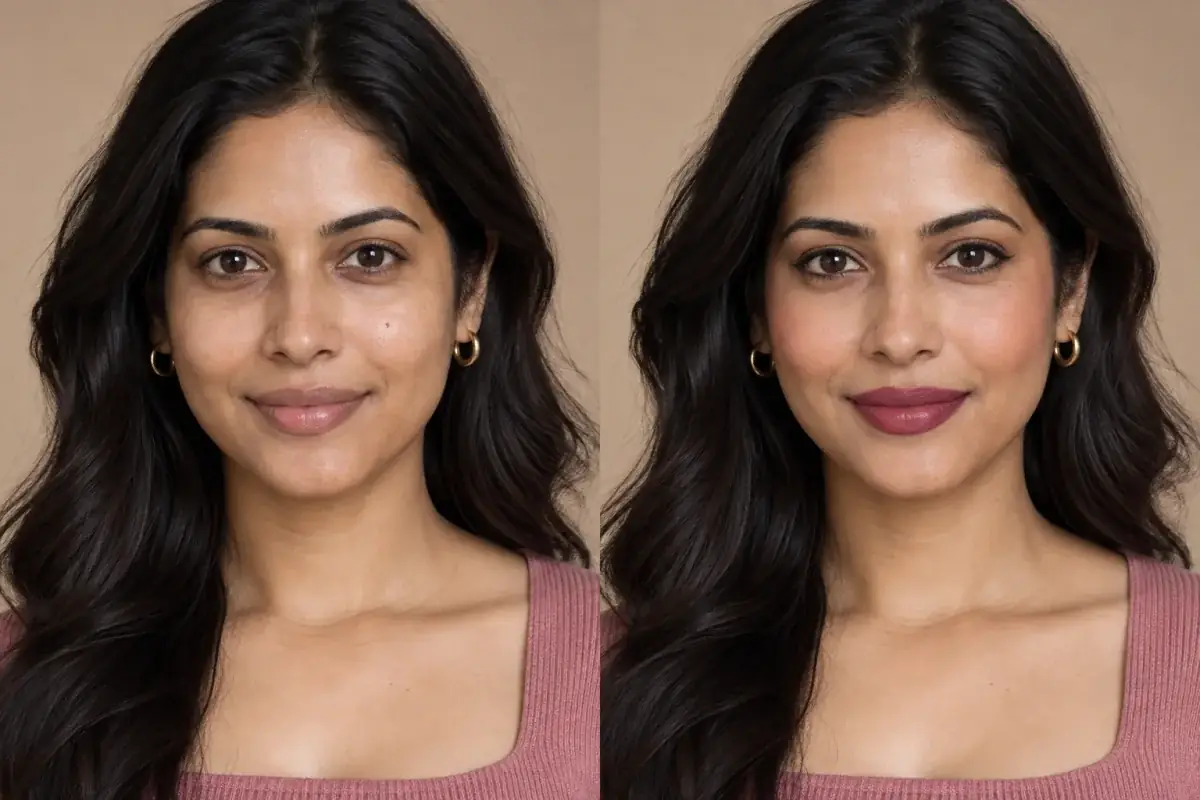
One face, two neighbouring seasons: the check is not which label sounds right, but which lipstick makes the skin look even and the eyes clear.
Direct answer
How do you check a color season ChatGPT gave you? Put the season's signature shades on your own photo and watch what your face does. If the label is right, its lipstick, blush and hair colors will make your skin look even and your eyes clear without effort; then run the two neighbouring seasons the same way, because a real season beats its neighbours head to head. A label that only sounds right in text has not been checked; a label that wins on your face has.
What did ChatGPT actually do when it named your season?
It read your photo, or the hex codes you pulled from it, and produced the most plausible sounding season in words. That is a language task, not a draping. The viral version of the workflow, tested by BuzzFeed, has you sample your skin, eye and hair colors with a phone color picker and paste the codes into a prompt; the original video passed 400,000 saves, partly because a professional analysis can cost around $500.
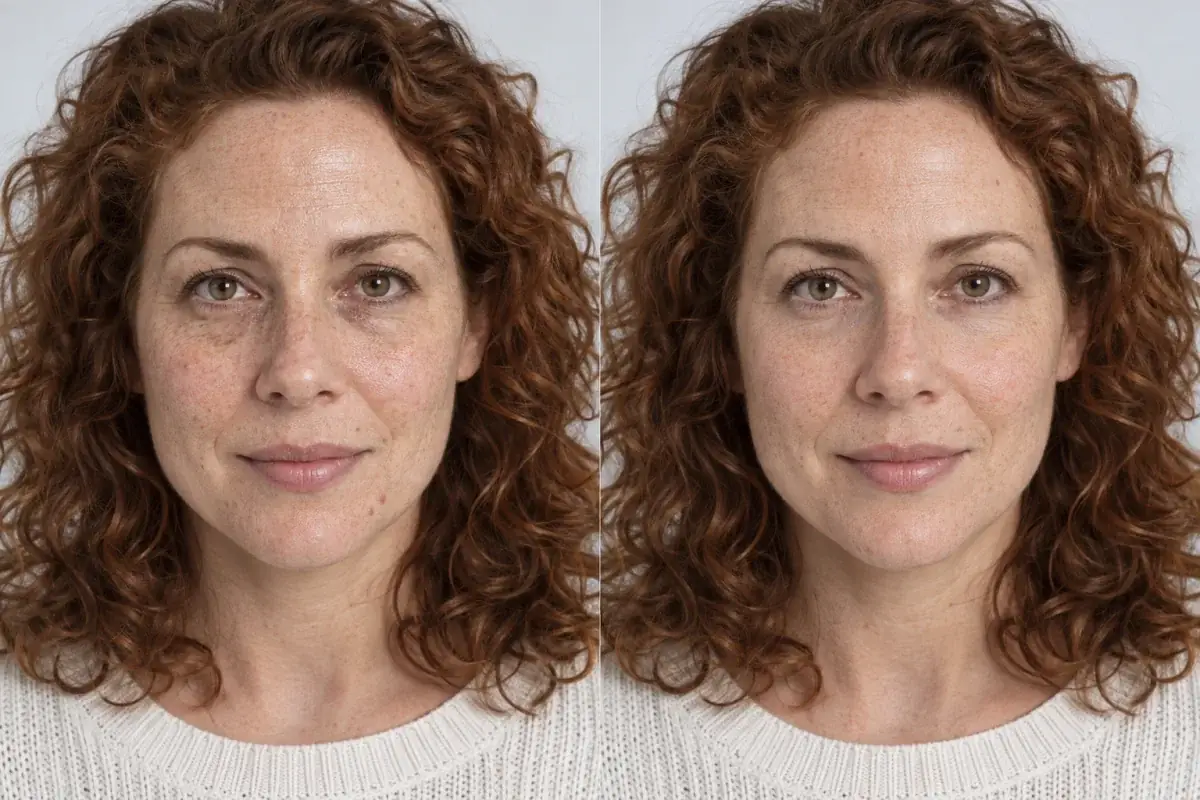
The limits show up fast in that same test. The writer was told her skin suggested spring, that with eyes and hair included she could "potentially fall into either the spring or autumn color palette", and she ended the experiment draping clothes from her own closet because the text would not settle it. A specialist quoted in the piece puts it cleanly: these models are trained to give you an answer that sounds like a human gave you an answer, which is not the same as an accurate one. There is also a known lean in the results: one longtime writer who tried the workflow notes that AI often chooses Soft Autumn for women over 50 who dye their hair. A default is not a diagnosis.
Why can two seasons both sound right?
Because neighbouring seasons share two of their three settings. Every season in the twelve season system is a combination of temperature (warm or cool), value (light or deep) and chroma (bright or soft, meaning muted). ChatGPT can usually read one or two of those from a photo with some confidence, most often the obvious one, and guess the third. Soft Autumn and Soft Summer are both soft and medium value; they differ only in temperature. Deep Autumn and Deep Winter are both deep and high contrast; temperature again. So when the label feels half right, it usually is: two settings correct, one guessed. The check below is designed to test the guessed setting, whichever one it is.
Our hub walks through all twelve seasons and what separates them.
How do you check the label on your own face?
Work in this order, and use one clear, front facing photo in daylight for every test, so the face is the constant and the color is the only variable:
The signature lip takes under a minute per season. Run your label first, then both neighbours.
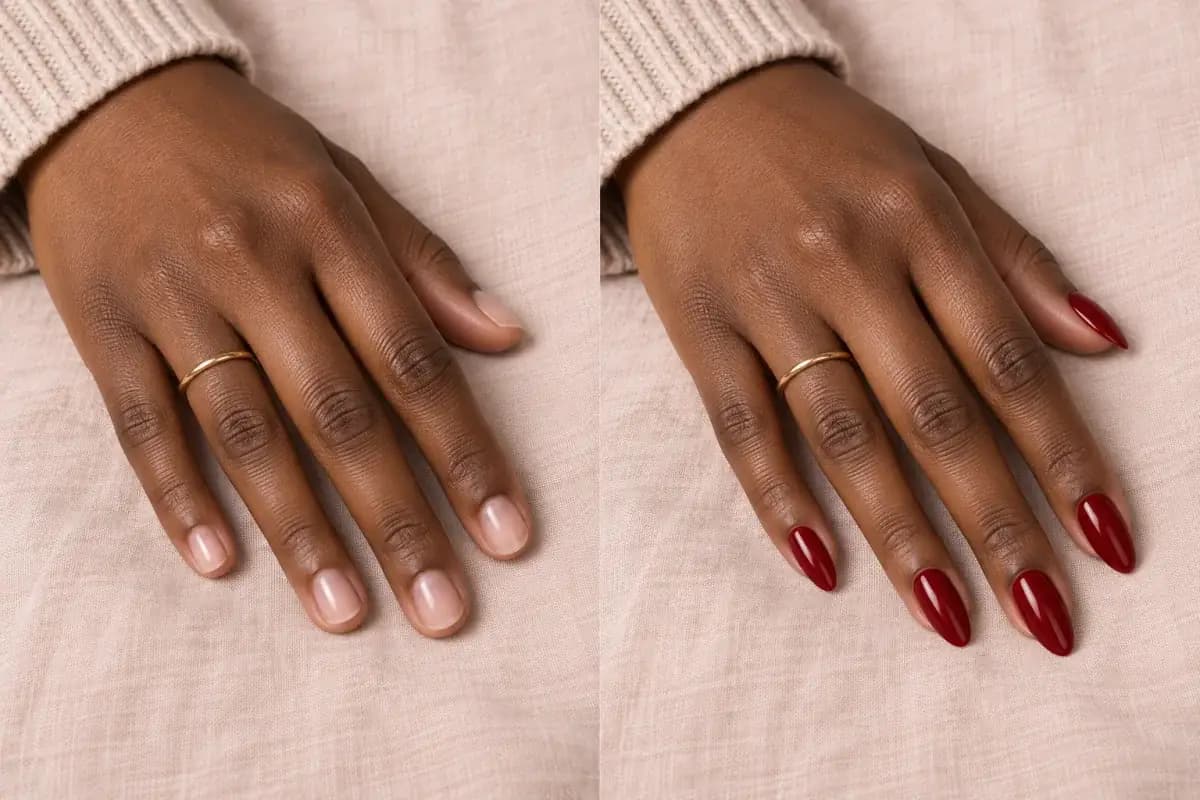
- Step one, the signature lip. Every season has a lipstick that acts as its flag: warm muted rose for Soft Autumn, cool dusty rose for Soft Summer, espresso toned red for Deep Autumn, clear fuchsia for Bright Winter. Put the labelled season's flag lip on your photo. If the label is right, the lip looks like it belongs to the face: skin evens out, eyes sharpen, and the color reads as part of you rather than on you.
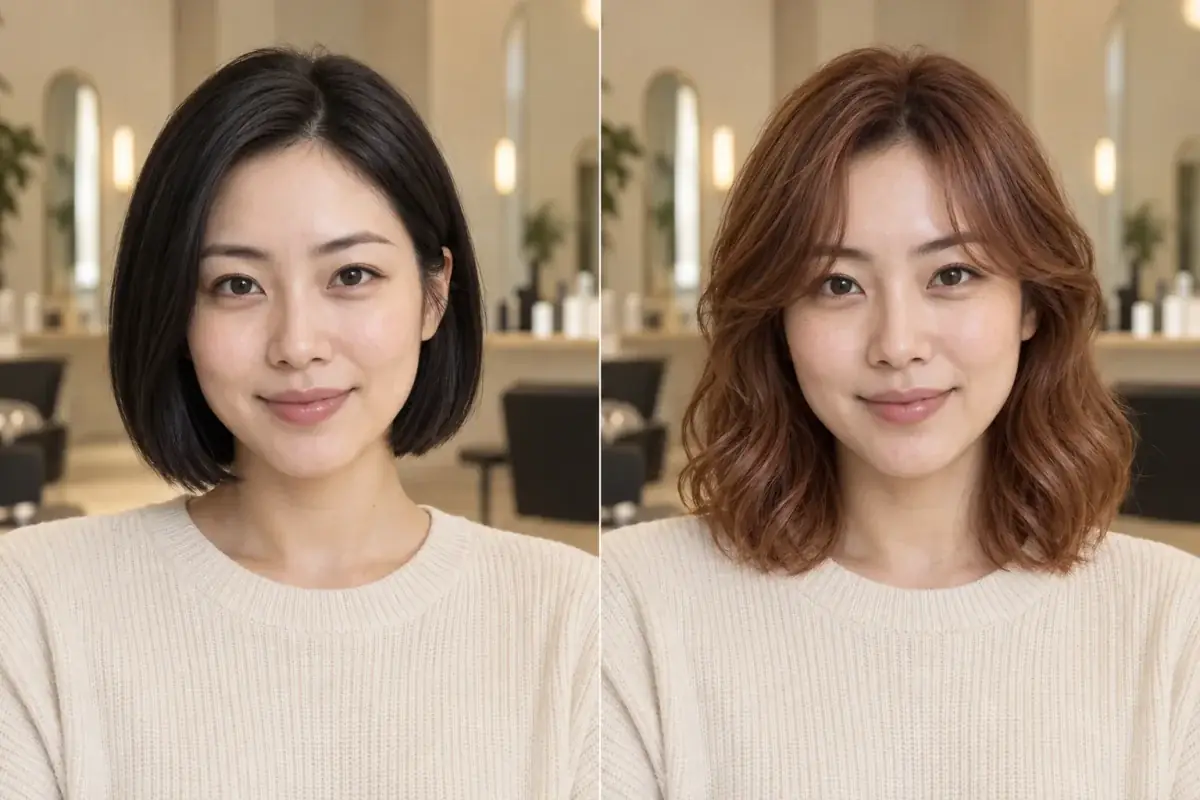
- Step two, the signature hair. Hair frames the whole face, so it is the stronger test. Run the season's classic hair color: golden brown for Warm Spring, ash brown for Soft Summer, copper brown for Deep Autumn, blue black for Cool Winter.
- Step three, the metal. Gold versus silver at the neck sorts temperature honestly. Warm seasons take gold as a glow; cool seasons take silver as clean. If your label says warm and silver is the one that lights your face, the label's temperature setting is wrong, and the season across the temperature line is your real neighbour to test.
- Step four, the verdict rule. Judge what the color does, never how pretty the color is. The right season's shades make you look rested on an ordinary day; the wrong one's make you look like you need concealer, sleep or a tan you do not have.
What are the boundary tests that settle the common mix-ups?
Most wrong labels are one of four confusions, and each has a specific test:
Notice the pattern: the test is never "read more about the season". It is always one shade pair, on your face, judged by what your skin does.
- Soft Autumn vs Soft Summer (temperature inside muted): compare a warm muted rose lip against a cool dusty rose. The Autumn face takes the warm one and looks healthy; the Summer face takes the cool one and looks clear. Our two guides run this boundary from both sides.
- Deep Autumn vs Deep Winter (temperature inside deep): espresso and burgundy against black cherry and fuchsia. Autumn warms up in the earthy pair; Winter sharpens in the icy pair. See.
- Light Spring vs Light Summer (temperature inside light): warm peach blush against cool powder pink blush. Both are pale; the temperature is the whole difference, and the blush shows it faster than any lip.
- Bright Spring vs Bright Winter (temperature inside bright): electric poppy against clear fuchsia, coral against magenta. If poppy settles and fuchsia strikes cold, you are on the spring side whatever the label said.
What should you do if both seasons still look right?
Then you sit on a real boundary, and that is information, not failure. Stylists meet boundary faces constantly, because the twelve seasons are a sorting system laid over continuous human coloring. Three practical rules follow. First, wear the overlap: the shades both seasons share will be your most reliable colors, and there are more of them than the charts suggest. Second, let your hair plans arbitrate: if you are about to go copper, the warm neighbour will govern your next two years; if you are growing out to your natural ash, the cool one will. Third, retest after any big change: dyed hair is part of the picture ChatGPT read, and several of the viral workflow's odd results trace straight back to it reading the dye instead of the woman.
A checked label is a tool, not a verdict
Color analysis is a sorting system, not a measurement, and no version of it, human or AI, can overrule your own eye in your own mirror. The check in this article does not make ChatGPT's label official. It does something better: it turns a guess you were handed into a conclusion you watched happen on your own face.
Take the theory out of it.
The article's method is visual verification: the labelled season's signature shades, then the neighbours', on one unchanged photo. The color analysis tool is the direct route into that test, with the twelve season guides as the shade references.
Questions people ask
How accurate is a ChatGPT color season?
It is a plausible guess, not a measurement. In BuzzFeed's test of the viral workflow, the same writer was steered to spring from her skin code, then told spring or autumn once eyes and hair were added. Treat the label as a starting hypothesis and check it visually before you shop by it.
Why do so many people get told they are Soft Autumn?
Soft Autumn is the system's safest middle: muted, medium and warm suits the averaged look of a selfie with dyed hair and soft indoor light. One writer who tested the workflow notes AI often chooses Soft Autumn for women over 50 who dye their hair, which is a default, not a finding.
What is the fastest way to check my season?
The signature lip test. Put the labelled season's flag lipstick on your photo, then the same test for the two neighbouring seasons. The right season makes your skin look even and your eyes clear; the wrong one makes you look tired no matter how pretty the shade is.
My label and its neighbour both look good. Which am I?
Probably a boundary face, which is common and workable. Wear the shades the two seasons share, let any planned hair color change arbitrate, and retest after the change, because dyed hair is part of what the AI read in the first place.
Should I just pay for a professional analysis instead?
A professional draping is the gold standard, and BuzzFeed's test notes it can cost around $500, which is exactly why the AI workflow went viral. The visual check in this article gets you most of the certainty for the price of a few photo previews, which is the sensible middle route for most people.