







Colour analysis without one-question myths

Is your undertone warm, cool, neutral or olive?

No single vein, jewellery or tanning question can classify everyone. Use a cluster of daylight clues, then verify the result with colours close to the face.

Analyse your colouringUse a bare-face daylight photo
Four adults with varied warm, cool, neutral and olive colouring in natural daylight
Undertone is the quieter cast beneath surface redness, tanning and temporary colour changes.
Quick answer

Compare gold with silver, cream with optic white, and warm peach with cool rose in indirect daylight. If several tests agree, you have a useful undertone direction.

  • Warm skin often looks clearer beside cream, camel, peach and gold.
  • Cool skin often looks clearer beside optic white, blue-red, berry and silver.
  • Neutral skin can carry both sides without either looking obviously wrong.
  • Olive skin may look green-gold or muted and can be warm, cool or neutral leaning.

01

Undertone is not skin depth

Depth describes how light or deep the skin appears. Undertone describes its underlying colour behaviour. Fair skin can be warm, cool, neutral or olive, and so can deep skin. Separating these two ideas prevents rules such as dark skin always being warm or pale skin always being cool.

Surface tone can change from sun, redness, acne, medication or lighting. Undertone is more stable, though it can be difficult to see directly. That is why comparison tests work better than staring at the skin alone.

Warm

Often golden, peachy or yellow leaning. Warm colours tend to look integrated rather than separate.

Cool

Often rosy, bluish or red leaning. Cool colour families tend to make the skin look calmer or clearer.

Neutral

Warm and cool comparisons are similarly successful, especially in softened rather than extreme shades.

Olive

A green-gold or muted cast that may reject foundations that are too pink, orange or saturated.
02

The tests that deserve less trust

Veins can look blue, green or purple because of skin depth, translucency and room light. Tanning and burning depend on sun exposure and biology, not only undertone. Jewellery preference is also shaped by taste. These clues can contribute, but none should decide the answer by itself.

Foundation oxidation can also create a false clue. If every base turns orange, the issue may be formula chemistry or overly warm shade options rather than proof of cool skin.

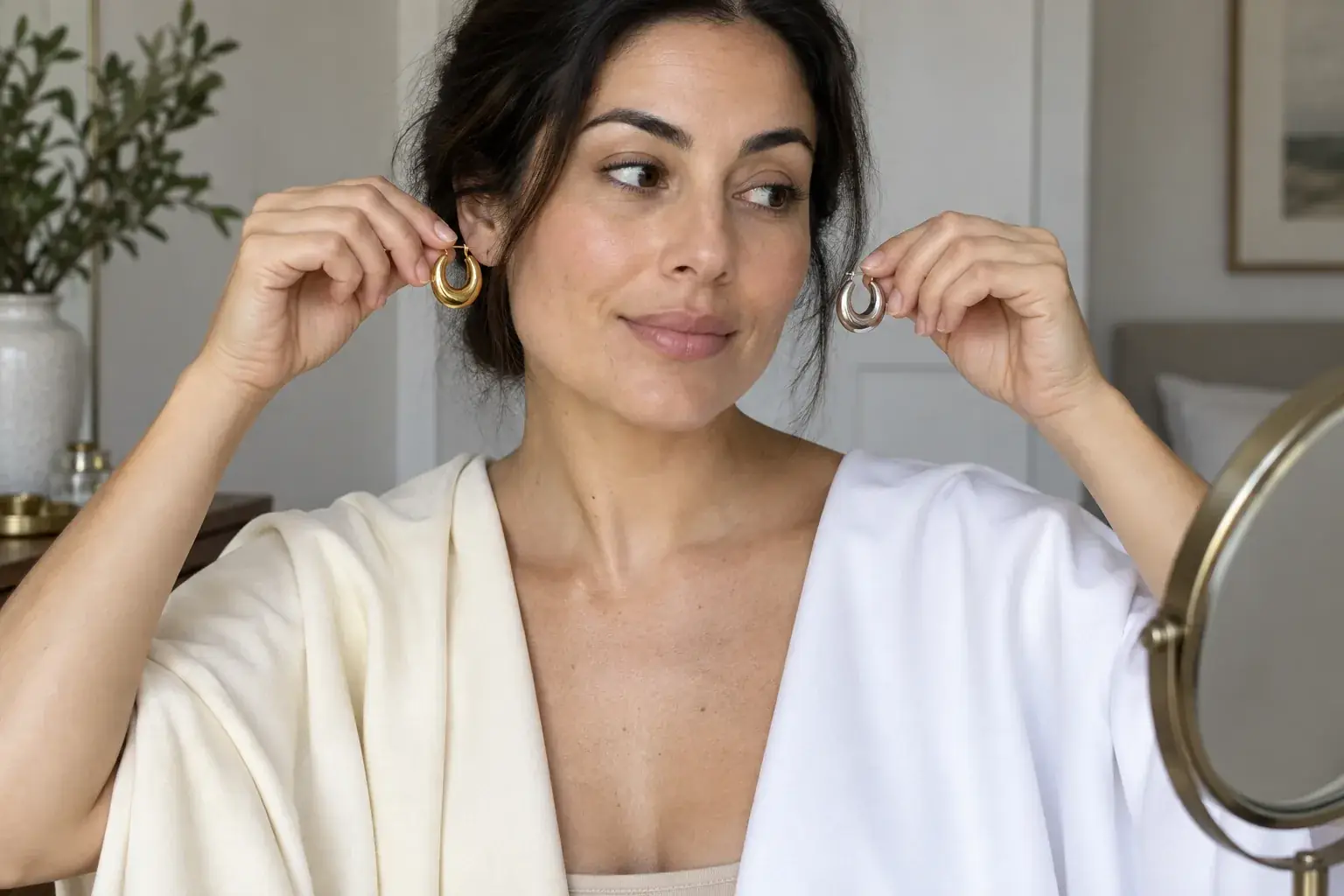
Woman compares gold and silver earrings with cream and white fabric in daylight
Jewellery and fabric tests are useful when you compare the overall skin, eyes and shadows rather than one small area.

A practical path

Run three comparisons, not one quiz

  1. 01

    Neutralise the conditions

    Remove heavy makeup and stand in indirect daylight. Wear a grey or neutral top and keep coloured walls out of the reflected light.

  2. 02

    Compare in pairs

    Hold gold and silver, cream and white, then peach and cool rose beside the face. Notice clarity, shadows and redness rather than asking which colour you simply like.

  3. 03

    Look for agreement

    Choose the direction supported by most comparisons. A mixed result usually means neutral, olive or a photo that needs retaking.

03

How to read the fabric and metal test

Place each option close to the bare face and switch quickly. The more useful side usually makes the whites of the eyes look clearer, reduces the appearance of uneven redness and leaves facial definition intact. The less useful side may cast a yellow, grey or ruddy film, or make shadows more obvious.

If gold and silver both work, compare very bright versions with softer brushed finishes. Neutral and olive colouring may prefer aged gold, pewter, champagne or mixed metal instead of either extreme.

Warm pair

Cream, camel, peach, tomato red and yellow gold.

Cool pair

Optic white, charcoal, cool rose, cranberry and bright silver.

04

Use undertone as a starting filter

Undertone helps organise choices in foundation, lipstick, blush, hair colour and jewellery. It should reduce bad options, not ban colours you enjoy. Intensity, contrast, texture and personal style still matter.

When choosing foundation, an olive label can be more important than warm or cool because it addresses the green-grey cast that many standard ranges miss. When choosing lipstick, depth and contrast can matter as much as temperature. Test the combined effect on your own face.

Try before you decide

Turn the result into colours you can use.

Use your photo to compare colour directions, then apply the result to foundation, lipstick, blush, hair and jewellery without treating it as a rigid label.

Analyse your colouringUse a bare-face daylight photo

Useful answers

Questions people ask

Reviewed 19 September 2026

Are green veins always a warm undertone?

No. Vein colour is affected by skin depth, translucency and lighting. Use fabric, metal and cosmetic comparisons together instead of relying on veins alone.

Can olive skin be cool?

Yes. Olive describes a green-grey or muted cast and can lean warm, neutral or cool. This is why warm foundation can still look orange on some olive skin.

Can my undertone change?

The underlying tendency is fairly stable, while surface colour changes with sun exposure, redness, health and lighting. Your best seasonal depth may change even if the undertone family stays similar.

What if gold and silver both look good?

You may be neutral, or you may prefer softer versions of both metals. Compare champagne gold, pewter and mixed metal, then check fabric and makeup clues too.