






Foundation matching guide

Find your foundation shade from a photo.

Start with a useful shade family, then verify it in daylight. This guide explains what a photo can reveal, what it cannot, and how to avoid buying a base that turns orange, pink or flat.

Start with your photoA clear front-facing photo works best
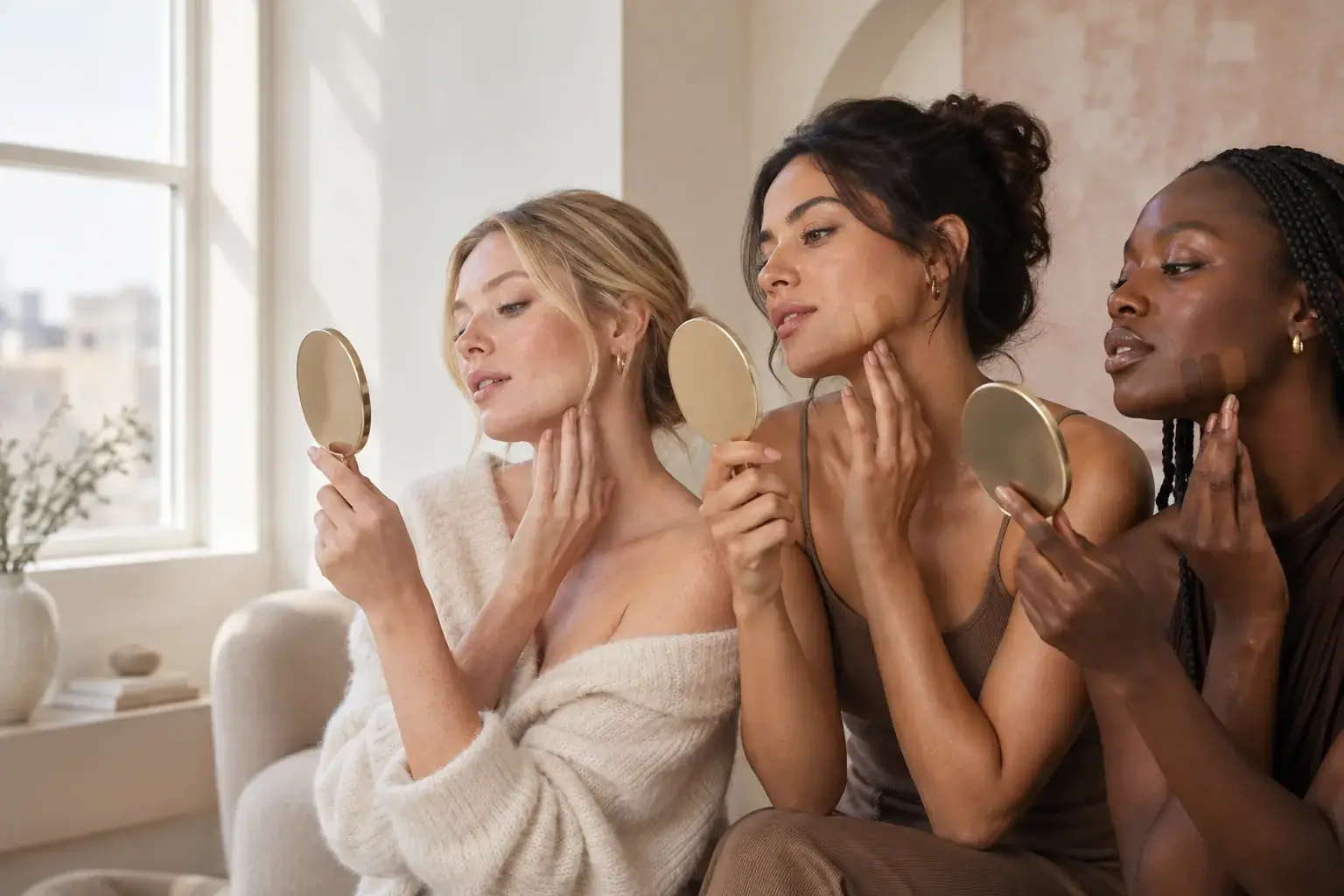
Three women with light, olive and deep skin compare foundation swatches along their jawlines in daylight
A useful photo shows bare skin, the face and neck together, and an honest range of undertones.
Quick answer

Use an unfiltered daylight photo to estimate depth and undertone, then confirm the result with a thin jawline swatch before committing to a full bottle.

  • Photograph the face and neck in indirect daylight.
  • Remove beauty filters, heavy base makeup and colour casts.
  • Match across the jaw so the face connects naturally to the neck.
  • Treat a photo result as a shortlist, not a laboratory measurement.

01

What a photo can identify well

A well-lit photograph can narrow the visible depth of your skin and show whether the surface reads golden, rosy, balanced or olive. That is enough to reduce a wall of shades to a manageable group. It can also reveal whether the face is noticeably deeper or more flushed than the neck, which is common and is one reason forehead-only matching fails.

The useful output is a direction such as light-medium neutral olive, not a promise that one named shade will match every formula. Brand shade names are inconsistent, coverage changes how a colour reads, and cameras process skin differently.

Depth

The light-to-deep value of the skin. Read it against the neck and chest, not the brightest point of the forehead.

Undertone

The quieter cast below surface redness or tanning. Warm, cool, neutral and olive are useful families, not rigid rules.
02

Why foundation often changes after application

Foundation may dry slightly deeper, warmer or more saturated than it looked when wet. Oils, skincare, primer and the formula itself can shift the finish. Let a swatch sit for at least ten minutes before deciding. If a colour only matches while wet, it is not the match you will wear.

Your preferred finish also matters. A sheer tint can tolerate a small shade difference because more natural skin shows through. Full coverage is less forgiving, so undertone accuracy matters more.

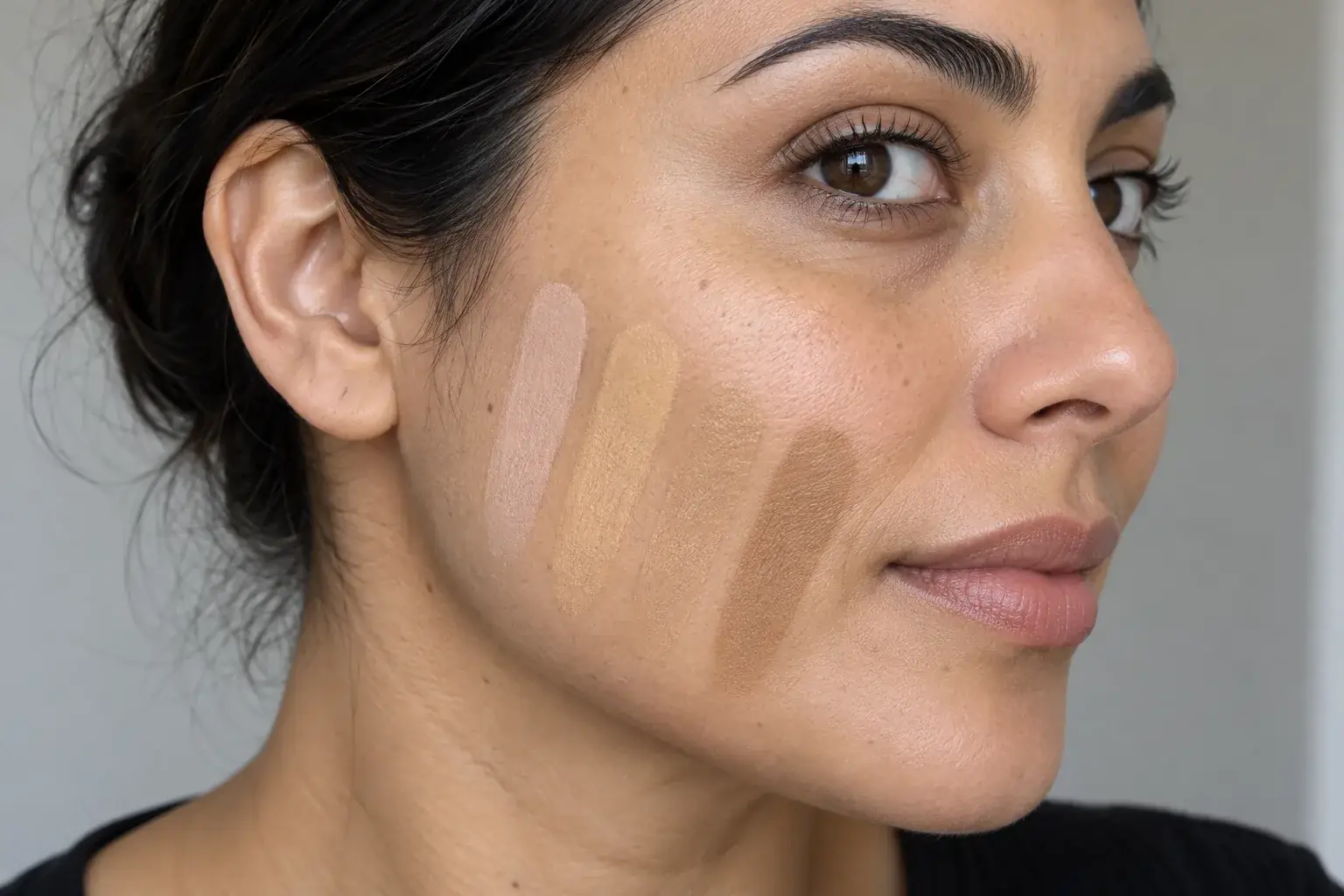
Close view of foundation swatches on an olive jawline with one shade blending into the skin
The best candidate should disappear across the jaw, not only match the centre of the face.

A practical path

A three-check match that survives real light

  1. 01

    Capture neutral light

    Stand beside a window with the camera facing you. Avoid direct sun, warm bathroom bulbs and light reflected from a bright coloured wall.

  2. 02

    Read depth and undertone

    Separate how light or deep the skin is from whether it leans warm, cool, neutral or olive. Two shades can share depth but look completely different after ten minutes.

  3. 03

    Verify at the jaw

    Place two or three thin stripes from lower cheek to jaw. Wait for them to dry, then check the winner in daylight and indoor light.

03

Choose the right photo

Use the rear camera if possible and keep the phone far enough away that the face is not distorted. Include the ears, jaw and upper neck. Tie back hair if it casts a strong shadow. A plain white or grey wall helps, but neutral daylight is more important than the background.

Do not use portrait mode blur, flash, screenshots from social media or a photo saved through a messaging app. Compression and automatic colour adjustment make fine undertone differences less reliable.

Good input

Even daylight, bare skin, sharp focus, neutral surroundings and the face looking towards the camera.

Retake it

One side is orange, the neck is cropped out, the skin is smoothed, or the camera has made whites look yellow or blue.

04

Season, redness and hyperpigmentation

Skin depth can change through the year, while undertone usually remains more stable. If you tan noticeably, save a winter and summer reference rather than trying to force one opaque foundation to work all year. A flexible skin tint or mixer can bridge the middle months.

Surface redness and dark marks should not determine the entire base shade. Match the overall skin and use targeted correction where needed. Matching foundation to a red cheek can leave the neck looking too pink; matching to one dark mark can make the whole face too deep.

Try before you decide

Narrow the shade family before you shop.

Use your own photo to understand the colour direction, then take that shortlist into daylight or to a counter for a final jawline check.

Start with your photoA clear front-facing photo works best

Useful answers

Questions people ask

Reviewed 19 September 2026

Can a photo give me an exact foundation shade?

A photo can narrow depth and undertone, but an exact commercial shade still depends on the camera, lighting, formula and how the product dries. Confirm with a sample or jawline swatch whenever possible.

Should foundation match my face or neck?

Aim for a result that connects the face naturally to the neck and upper chest. The jaw is the best practical checkpoint because it shows both areas at once.

Why does my foundation look orange later?

The formula may dry darker or warmer, or skin oils and skincare may shift the pigment. Wait before judging a swatch and compare it in more than one light.

Can I use a selfie with makeup on?

A light eye or lip look is fine, but remove foundation, concealer, bronzer and filters. The tool needs to see the skin it is trying to match.