






Makeup for olive skin: the foundation, blush and lipstick shades that actually work
Olive is the undertone the foundation industry mostly skips, and it is why a shade can match your depth perfectly and still turn orange at the jaw or grey by midday.
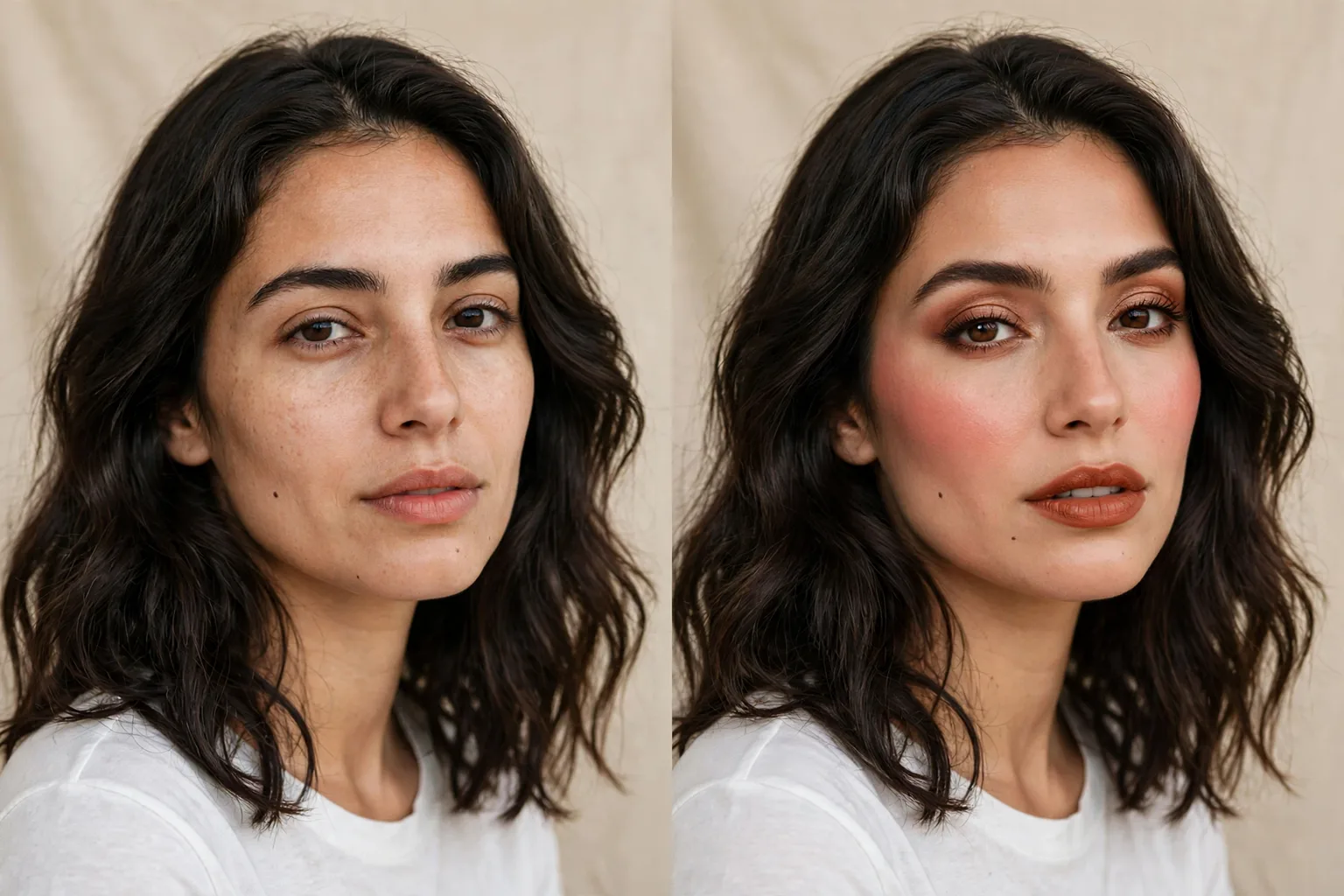
Same face, olive undertone respected: rosewood on the cheeks, bronze on the eyes, and no orange cast at the jaw.
Direct answer
What makeup suits olive skin? Makeup suits olive skin when it is built on muted, slightly greyed versions of colors rather than the clear warm or cool shades made for other undertones: green based foundation, rosewood and mauve blush instead of peach, and blue based or brown based lipstick instead of coral. Olive skin carries a green cast that most shade ranges ignore, and that single fact explains nearly every makeup failure on it, from foundation turning orange to blush sitting on the skin as a separate patch.
Why does foundation turn orange or grey on olive skin?
Most foundation ranges are built on three undertone families: warm (yellow and golden), cool (pink) and neutral (a balance of the two). Olive is a fourth family that rarely gets its own shades, and its green shows through because the skin's red tones are muted, leaving yellow and green to dominate what the eye sees.
A warm shade adds saturated yellow on top of yellow green. The result reads orange, usually worst at the jaw and around the mouth. Put a cool pink shade on it and the pink has nothing to agree with: pink laid over green grey skin turns the whole face grey and ashy, because opposite colors mute each other into mud. Plain neutral shades fail more quietly: beige and grey but no green, so they sit close in depth and wrong in cast, the ashy look people struggle to name.
This is why matching by depth alone never works on olive skin: a shade can be exactly your lightness and completely wrong for you, and the hand swatch told you nothing, because your hand is a different color from your face. A shade that matches at the counter and changes color later is a separate fault again, covered in our guide to why foundation turns orange.
How do I know if I have olive undertones?
The signs are mostly a history of near misses:
Olive is an undertone, not a depth. It runs from very fair skin through to deep skin, and the fair end is the worst served, because nearly every shade labeled olive sits at a medium depth. If the signs fit but every olive shade you find is too dark, that is a range problem, not a wrong diagnosis. The full test, with photos to compare against, is in our guide to finding your skin undertone.
- Foundations are always slightly too pink or slightly too orange on you, never just right.
- Both gold and silver jewelry look acceptable, and neither is an obvious winner. That indecision is itself a clue, most often misread as proof of a neutral undertone.
- In group photos your skin reads slightly green or grey next to pink toned friends, especially in daylight.
- Your veins look greenish, or impossible to call blue or green.
Source: Beautylish, how to tell if you have olive undertones
Which kind of olive am I: warm, neutral or cool?
Olive splits three ways, and the split decides which muted shades are yours.
Warm olive skin reads golden green. Gold jewelry wins by a small margin, the skin often tans golden brown, and muted warm colors clear it: soft terracotta, warm rosewood, muted brick.
Neutral olive is the greyest of the three, green and grey in near balance. Neither metal wins, almost every muted shade works, and anything clear or saturated looks loud.
Cool olive carries a blue green, almost slate cast. Silver wins by a small margin, the skin can look sallow next to warm colors, and muted cool shades are home: mauve, plum, cool rose, taupe.
If one metal wins clearly, you are probably not olive at all. If one wins by a hair, follow it: a slight gold edge means warm olive, a slight silver edge means cool olive, and a true tie usually means neutral olive. The split matters beyond makeup: copper hair behaves completely differently on warm olive than on cool olive, which is the whole subject of our guide to copper hair on olive skin.
Which foundation shades are actually made for olive skin?
Shades with a documented olive base, given as starting points to swatch on your jaw, not as guarantees. Undertone systems differ between brands, and your depth still has to match.
Search by undertone first and depth second if none of these depths is yours. The foundation shade match hub cross references shades across brands by undertone, so an olive match in one range can be translated into ranges you can actually buy.
Put a shortlisted shade on your own photo and check the jaw line in the preview before buying.
- Giorgio Armani Luminous Silk 6: medium warm olive. The shade most often named as a true olive.
- NARS Stromboli (Medium 3): medium neutral to warm olive. Check the undertone description per formula.
- NARS Gobi (Light 3): light warm olive. One of the few olive shades at a genuinely light depth.
- Koh Gen Do Aqua Foundation 213: light to medium warm olive. From a range built around yellow and green bases.
- Haus Labs Triclone Skin Tech 310: medium neutral olive. One of the shades the brand lists with an olive undertone.
Source: iDIVA, foundation ranges with the best shades for olive skin
What blush suits olive skin?
Blush is where olive skin gets its most visible failures, because blush is a large patch of saturated color. The rule is muting. Peach and coral, the standard recommendations for warmth, show their orange against the green and read as a separate patch instead of a flush. Bright pink does the opposite damage: too clear, it floats.
Placement cannot rescue the wrong family: if a blush sits on your skin rather than in it, the shade is too warm or too clear, and no blending fixes that. Test candidates on your photo before buying.
- Warm olive: muted terracotta rose and warm rosewood. Apricot only in its dusty form, never the bright version.
- Neutral olive: rosewood, dusty rose and mauve. This split can wear almost any blush that has been greyed down.
- Cool olive: mauve, plum rose and cool berry. Keep every trace of orange out.
What lipstick suits olive skin?
Lips forgive more than cheeks, because the area is smaller and the contrast is welcome. Two families carry most olive faces. Blue based reds work on olive skin out of proportion to expectations: the blue steadies the green yellow cast and clears the whole face. Brown based shades, rosewood, brick and muted wine, harmonize instead, echoing the muting already in the skin.
The failures are predictable. Coral and orange red add yellow orange against green skin and turn muddy. Pale beige nudes wash olive out, because beige over green reads grey; the nude that works is a rosewood or mauve version of your own lip color. If a nude makes you look tired, it is the beige, not you.
- Warm olive: muted brick, warm rosewood, brown red, never coral.
- Neutral olive: rosewood and mauve are the home shades, with blue red for contrast days.
- Cool olive: plum, mauve and cool berry, with blue red as the statement shade.
Which shades fail on olive skin: wrong vs right?
- Peachy coral blush vs rosewood blush: the coral's orange fights the green in the skin and sits on top as a patch. Rosewood keeps the warmth with the saturation removed, so it reads as blood under the skin.
- Golden warm foundation vs green based foundation: the golden shade can match your depth exactly and still read orange, because depth was never the problem. The green based shade agrees with your cast, so the jaw line disappears.
- Orange red lipstick vs blue red lipstick: orange red adds yellow to a face that already runs yellow green. Blue red adds the missing contrast and clears the skin around it.
- Bright pastel pink eyeshadow vs taupe and khaki: clear pastels look chalky on muted skin. Taupe and khaki share the skin's own greyness and green, so they deepen the eye instead of decorating it.
- Pale beige nude lipstick vs rosewood nude: beige over green goes grey and makes the wearer look drained. A rosewood nude keeps the lips quiet without removing the color from the face.
What eyeshadow suits olive skin?
Stay in the muted register and the eye is the easiest part of the face. Taupe, khaki, olive green, muted bronze, plum and charcoal all share something with the skin's own cast, which is why they look expensive rather than applied. Warm olive leans bronze and khaki, cool olive taupe and plum. Skip the clear brights: electric blue, hot pink and white shimmer read as costume on muted skin.
A shade name is not an undertone promise
Brands use the word olive loosely, and a shade labeled olive in one range can be a plain warm shade in another. Treat every name here, including the table, as a shortlist for a jaw swatch in daylight, not as a match made for you. Your depth also shifts between summer and winter, so a shade that was right in January can be wrong in August with the undertone unchanged.
Take the theory out of it.
Every recommendation here depends on which olive split the reader is, starting with confirming the green cast itself. The test reads undertone from a photo.
Questions people ask
What makeup suits olive skin?
Muted, slightly greyed shades: green based foundation, rosewood or mauve blush, blue based or brown based lipstick. Avoid clear peach, coral and gold, which are built for other undertones and fight the green in olive skin.
Why does foundation turn orange or grey on olive skin?
Orange means the shade is too warm and saturated for green yellow skin; grey and ashy means it is pink based or plain neutral, with no green in the formula. Both are undertone errors; neither is fixed by going lighter or darker.
What blush suits olive skin?
Rosewood, dusty rose, mauve and plum rose, chosen by your split: warm olive takes muted terracotta rose, cool olive takes mauve and berry. Peach and coral are the common failures, because their orange sits as a separate patch on green cast skin.
What lipstick suits olive skin?
Blue based reds, and brown based shades like rosewood, muted brick and wine. Coral, orange red and pale beige nudes are the mistakes: the first two turn muddy against green skin, and beige reads grey.
How do I know if I have olive undertones?
Foundations are always too pink or too orange on you, both gold and silver jewelry look fine without a clear winner, and your skin reads slightly green or grey in daylight photos. Olive runs at every skin depth, from very fair to deep.