



Which Black Friday Gift Set Should You Buy? Try the Shades First
A gift set looks like a bargain until you open it and find shades you will never wear. This guide fixes that with one step: try the shades in the set on your own photo first, then buy the set only if most of them suit you.
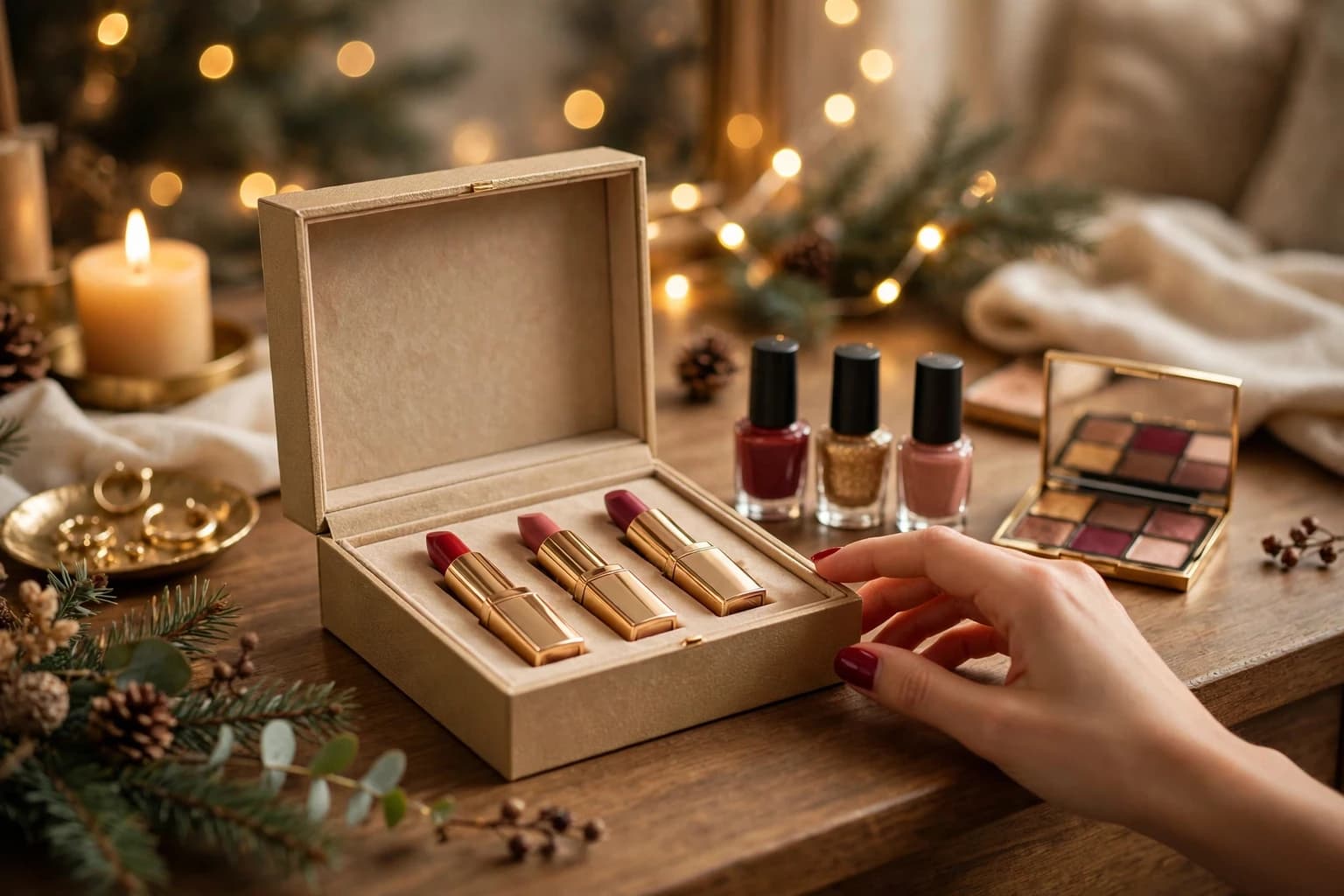
A gift set is only a bargain if you wear what is inside it. Test the shades on your own photo first.
Direct answer
A Black Friday gift set is worth buying if most of the shades inside it suit you, and the fastest way to know is to try those shades on your own photo before you buy the set, because a set is good value when you wear what is inside it.
That is the whole method behind this guide. Black Friday through Cyber Monday runs as one blended sale window, from about 21 November into early December, and gift sets are the week’s most tempting trap: five or six shades in one box, of which you may love two. The fix is one step, in the right order: pick the two or three shades in the set you would actually wear, try them on your own photo, and judge the set by the winners. Your first preview needs no account, and the test takes under a minute per shade.
Key takeaways
- A gift set is good value only if you wear most of the shades inside it. Count the winners, not the box size.
- Try the two or three shades you would actually wear on your own photo before you buy the set.
- Lip sets, nail sets and makeup sets all follow the same test, through the makeup tool or the nail tool.
- Buying for someone else? Prefer low shade risk sets: nudes, soft neutrals, and classic reds that suit a wide range of skin tones.
- The sale framing here ends in early December. After that, read this as a shade guide.
What makes a gift set good value?
A set is not good value because it contains many shades. It is good value because you wear many of them. A six shade set where you love two shades costs you more per worn shade than buying those two shades singly, and the other four sit in a drawer until they dry out or expire. Flip the question before you buy: not how many shades are in the box, but how many of them will you reach for in a normal month?
That is why the try on step matters more for sets than for single shades. A single shade is one decision. A set is six decisions bundled into one purchase, and sale week asks you to make that bundled decision fast. Testing the two or three shades you would actually wear settles it: if four or more shades in the set flatter you, the set is genuinely good value. If two or fewer flatter you, buy those two shades singly instead. If you are unsure which makeup families suit you at all, start with our makeup guide: /blog/what-makeup-suits-me, then come back and test the set against what you learned there.
Which lip set shades should you try first?
Start with the reds and berries, because lip sets are built around them and because lipstick is the least forgiving category in a set. A lipstick sits at the center of your face, so a wrong red shows in every photo while a right one lifts the whole look. Warm skin glows in tomato and brick reds, cool skin in blue based classic reds and berry shades, and olive skin in bright true reds and warm bricks. Black cherry and berry follow the same split, deeper and cooler toward wine, warmer toward brick.
Build your shortlist from our red lipstick guide (/blog/red-lipstick-by-undertone), then run the two or three reds you would actually wear through /makeup-try-on and keep the set only if most of them make your skin look clearer at arm’s length, not just close up. Test the exact shades in the set, not close cousins: two reds that look identical in the tube can sit a full step apart on your lips. A lip set where every red suits you is rare and worth buying. A lip set where one red suits you and four do not is just an expensive way to buy one lipstick.
Which nail set shades should you try first?
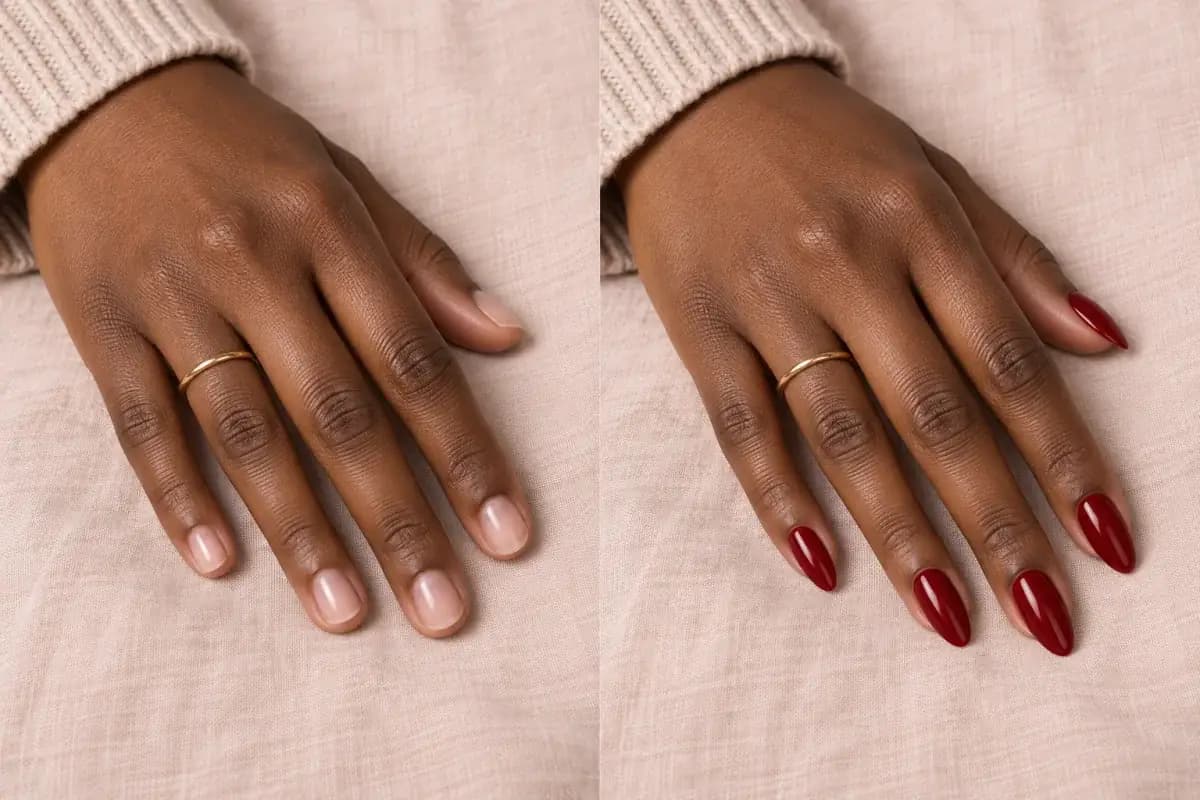
Start with red, bordeaux, and dark wine, because holiday nail sets are built around them and because nail polish is the category where the bottle lies most. A red that looks rich in the bottle can read orange on warm skin or muddy on cool skin, and a dark shade that looks elegant on long nails can overwhelm short ones. Testing on your own hands settles both questions at once, and nail sets are the cheapest sets to get wrong, which is exactly why people buy five of them.
Narrow by undertone with our nail color guide (/blog/best-nail-colors-for-your-skin-tone): warm undertones glow in coral, terracotta, and tomato red; cool undertones in berry, wine, and blue based red; olive skin in earthy shades, deep greens, chocolate, and copper; deep skin carries the richest saturation of all. Then run the finalists through /nail-try-on in daylight, at arm’s length, against the clothes you actually wear. Judge a nail set the same way as a lip set: if most of the shades flatter your hands, buy the set. If only one does, buy that one bottle.
Which makeup set shades should you try first?
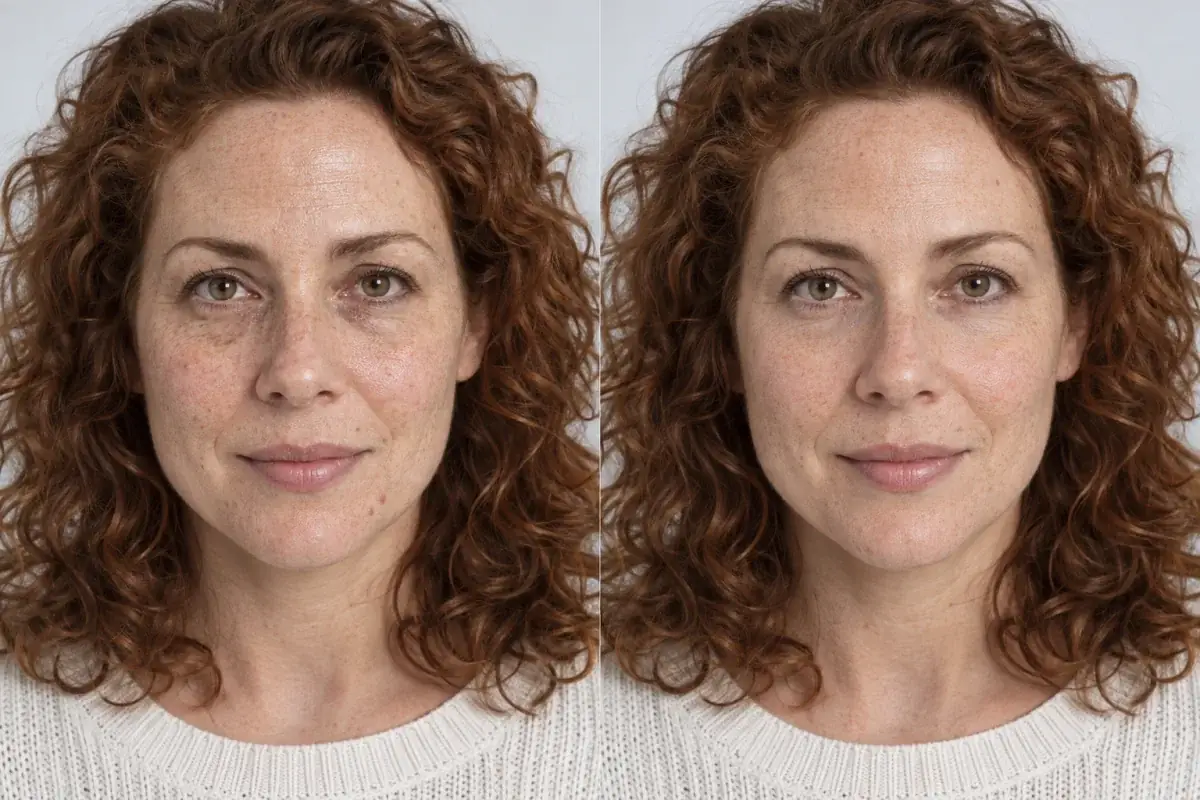
Start with the shades you will wear most often, not the shades that photograph best in the box. Makeup sets usually bundle a lipstick, a blush, an eyeshadow or two, and sometimes a bronzer or highlighter, and the set is only as good as its weakest shade. Blush deserves special attention because placement and depth decide it: a blush that is one step too deep reads as a stain, and a blush that is one step too light disappears entirely. Eyeshadow follows undertone the same way lipstick does, warm golds and coppers for warm skin, cool taupes and plums for cool skin.
Test the set shade by shade through /makeup-try-on, starting with the blush and the lipstick, since those two sit closest to your skin tone and show first. If you are unsure which makeup families suit you at all, our makeup guide is the place to start: /blog/what-makeup-suits-me. A makeup set where the blush, the lipstick, and one eyeshadow all suit you is a genuine bargain. A makeup set where only the highlighter suits you is a highlighter with packaging.
What if you are buying the set as a gift for someone else?
Then the rule changes: prefer low shade risk sets. You cannot test shades on the recipient’s photo, so the safest sets are the ones where almost any shade inside suits almost anyone. That means nudes, soft neutrals, classic reds, sheer balms, and neutral eyeshadow palettes, and it means avoiding bold, unusual, or very deep shades unless you know the recipient wears them already. A low shade risk set is not a boring gift. It is a gift that gets worn instead of exchanged.
Two more checks before you buy a gift set. First, buy from what the recipient already wears: if her bag holds nudes and soft pinks, a nude set is a safe bet and a bright red set is a gamble. Second, prefer sets where the shades are visible and named, so the recipient can see what she is getting and swap one shade if needed. A mystery set is a gamble twice over. And if you are torn between two sets, choose the one with more wearable neutrals over the one with more dramatic shades, because neutrals get worn on ordinary days and drama gets worn twice a year.
How do you try a whole set on your photo in minutes?
The steps are the same for every category, and the whole test takes less time than reading a single product review. First, take or choose a clear photo of yourself in daylight, facing the camera, with your face or hands fully visible and no heavy filter on it. Second, open the matching tool: /makeup-try-on for lipstick and makeup shades, /nail-try-on for nail shades, or start at /tools if you are unsure which tool fits. Third, upload the photo and pick the shades from the set, two or three at a time. Fourth, judge each result at arm’s length as well as close up, in daylight, against the clothes you actually wear.
Two questions come up every time. The first is privacy: your photo is used for your try on, and nothing requires posting the result anywhere. The second is cost: the first preview needs no account, and you only sign up to save or download a look. Save the winning shades: a photo of the shade on your own skin is the most useful thing you can take into a store, and it ends the oldest sale week argument there is, the one where the shade looked right in the shop and wrong at home.
When does the Black Friday gift window actually run?
Black Friday through Cyber Monday runs as one blended sale window, not two separate events. Most deals open well before Black Friday itself, run through the weekend, and extend into Cyber Monday and the days after it, with some events stretching into early December. That is why this guide treats the whole stretch as one window: the shopping is continuous, the same sets are on offer throughout, and the try before you buy step is worth doing at any point inside it.
Cyber Monday is the tail of that window, not a second peak. It is online by origin, built around last chance framing and online only codes, and it suits the shopper who missed the weekend or is still deciding. Do not wait for Cyber Monday expecting better or different gift sets. The window from late November is the window, and the sets worth testing are the same throughout it.
One timing note matters for this guide itself. The sale framing here ends in early December. After that point, the shades and the method still hold, but the sale week language goes stale, and the guide should be read as a shade guide rather than a sale guide. If you are reading this after early December, skip the sale framing and use the try on steps exactly the same way.
What should you not do with gift sets during sale week?
Do not buy the set because the box is beautiful. The box gets recycled. The shades get worn or they do not, and the box has no vote in that. Do not buy a set for the one shade you love and four shades you tolerate: buy the one shade singly and spend the difference on something you will actually wear. Do not trust the shades as photographed in the set: the photo shows them under studio light on someone else’s skin, and studio light flatters every shade.
Do not buy a gift set only because it is viral. A set can trend for reasons that have nothing to do with your undertone, and virality is not a shade match. Test the viral set the same way as any other: if most of its shades flatter you on your photo, buy it with confidence, and if they do not, let it trend without you. Do not let a free shade decide where you spend. A free shade bundled with a set is only a good deal if you wear the shade. Sale week rewards the shopper who decides slowly about shades and quickly about nothing else.
A try on shows the shade on your photo, not a promise
A photo try on shows you the shade on your own face or hands, which is far more information than a box photo or a swatch gives you. It is not a guarantee: screens and lighting shift color, and a shade can read differently in daylight than under shop lights. Check the winning shades in daylight before you buy the set. Also note that the sale framing in this guide ends in early December; after that point, read it as a shade guide and use the try on steps exactly the same way.
Take the theory out of it.
Gift sets span lipstick, makeup, and nails, so the guide points at the tool picker rather than one category. Pick the matching tool, upload one photo, and see the set shades on yourself before you buy the set. The first preview needs no account.
Questions people ask
Should I try gift set shades before buying the set?
Yes, because a set bundles five or six shades and you will love two of them, and the rest sit in a drawer. Pick the two or three shades you would actually wear, try them on your own photo, and judge the set by the winners. If most of them flatter you, the set is genuinely good value, and if only one does, buy that one shade singly instead.
What is a low shade risk gift set?
A low shade risk set is one where almost any shade inside suits almost anyone, which makes it the safest gift when you cannot test on the recipient. That means nudes, soft neutrals, classic reds, sheer balms, and neutral eyeshadow palettes, and it means avoiding bold, unusual, or very deep shades unless you know the recipient wears them already. A low shade risk set is not a boring gift: it is a gift that gets worn instead of exchanged.
Can I try nail polish shades from a set on my own hands?
Yes, through the nail try on, which shows the polish on your own hands at the length you wear. That matters because a red can read orange on warm skin or muddy on cool skin, and a dark shade can overwhelm short nails while flattering long ones. Judge the finalists in daylight and at arm’s length, and buy the set only if most of its shades flatter your hands.
Is a gift set better value than buying shades singly?
Only if you wear most of what is inside it. A six shade set where you love two shades costs more per worn shade than buying those two shades singly, and the other four sit unused. Test the shades you would actually wear first: if four or more flatter you, the set is genuinely good value, and if two or fewer do, buy those shades singly instead.
When do Black Friday gift set deals end?
Black Friday through Cyber Monday runs as one blended window, with most deals opening well before Black Friday itself and extending through Cyber Monday and into early December. Cyber Monday is the tail of that window, built around last chance framing and online only codes, not a second peak with a different set of deals. The sale framing in this guide ends in early December, after which the shades and the method still hold but the sale language goes stale.