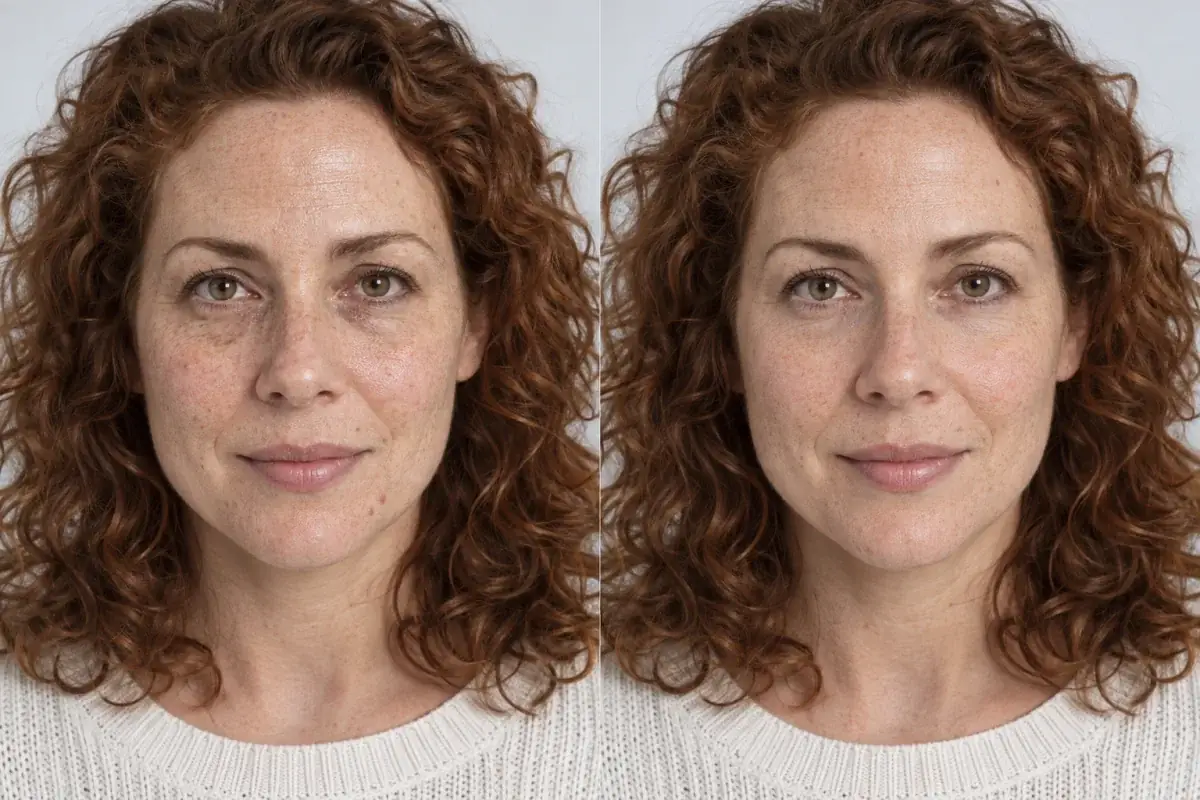
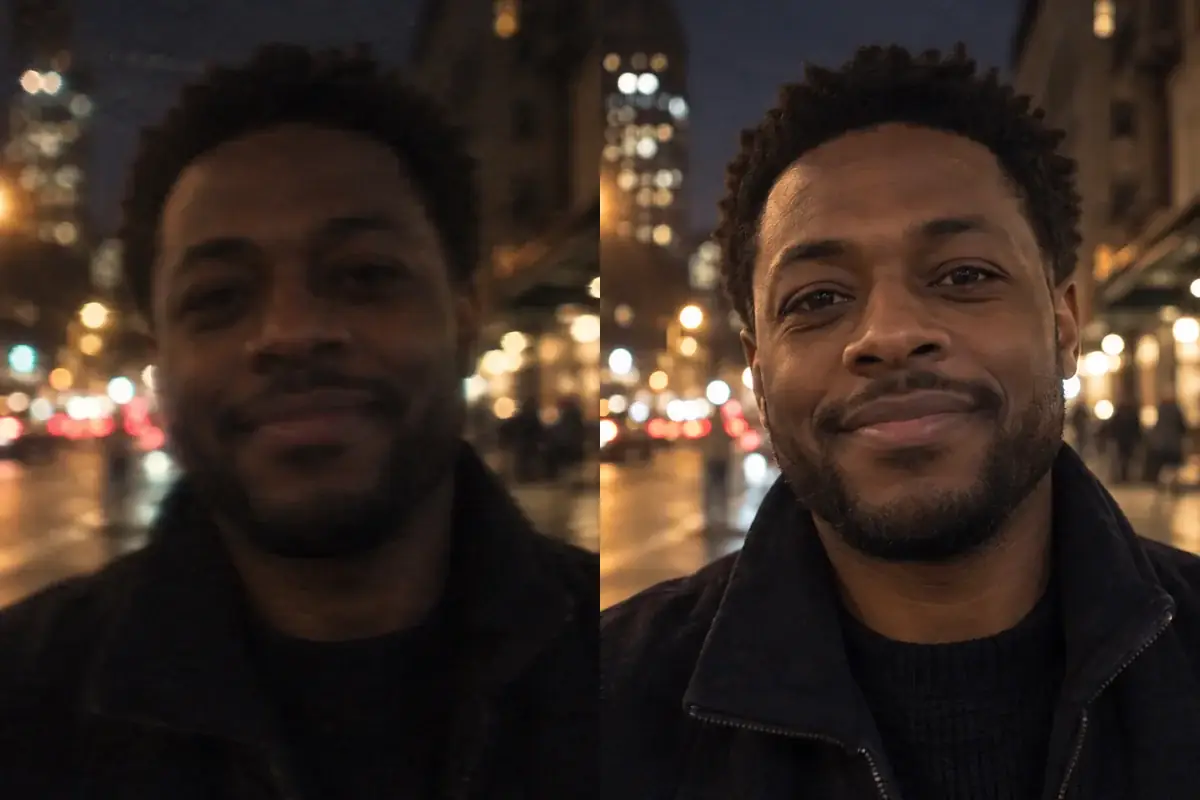
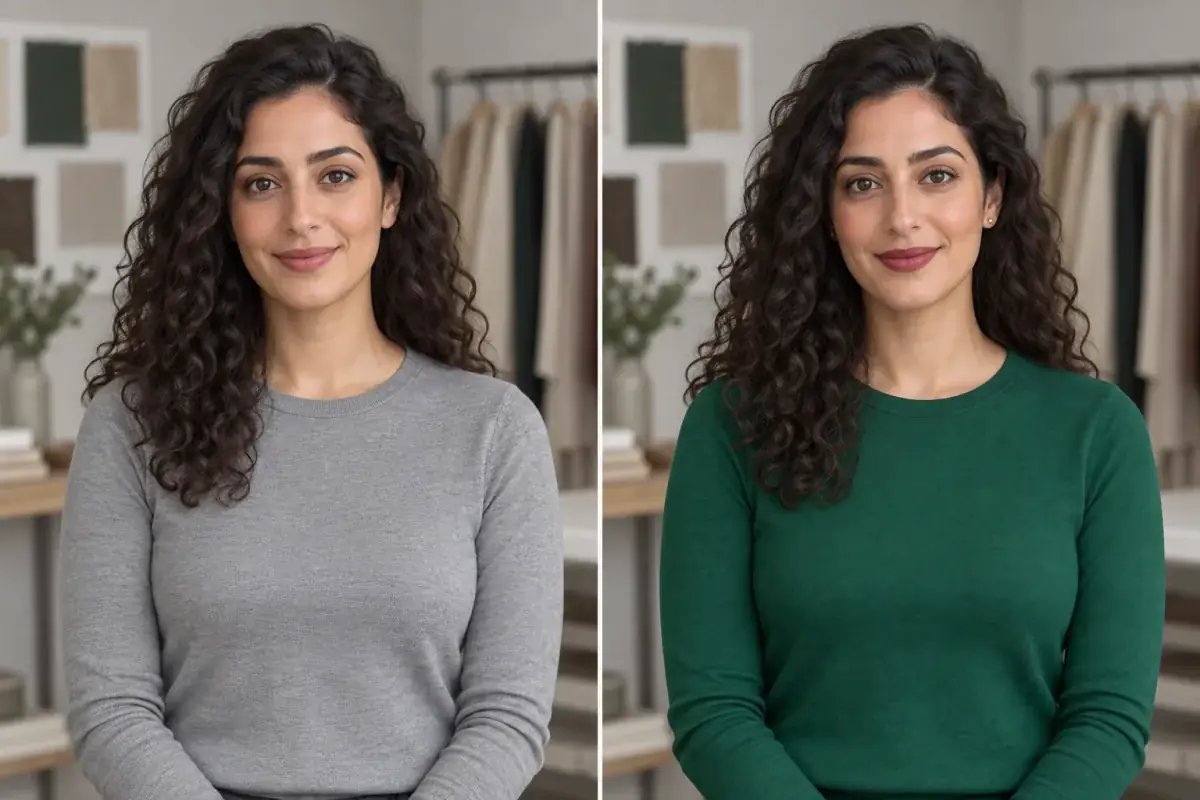
Balayage vs highlights vs ombre: the decision guide
The three names describe three different places for lightness to live: scattered through the lengths, root to tip in foils, or graded into the ends. Where the lightness sits decides the grow out, the calendar and the bill.
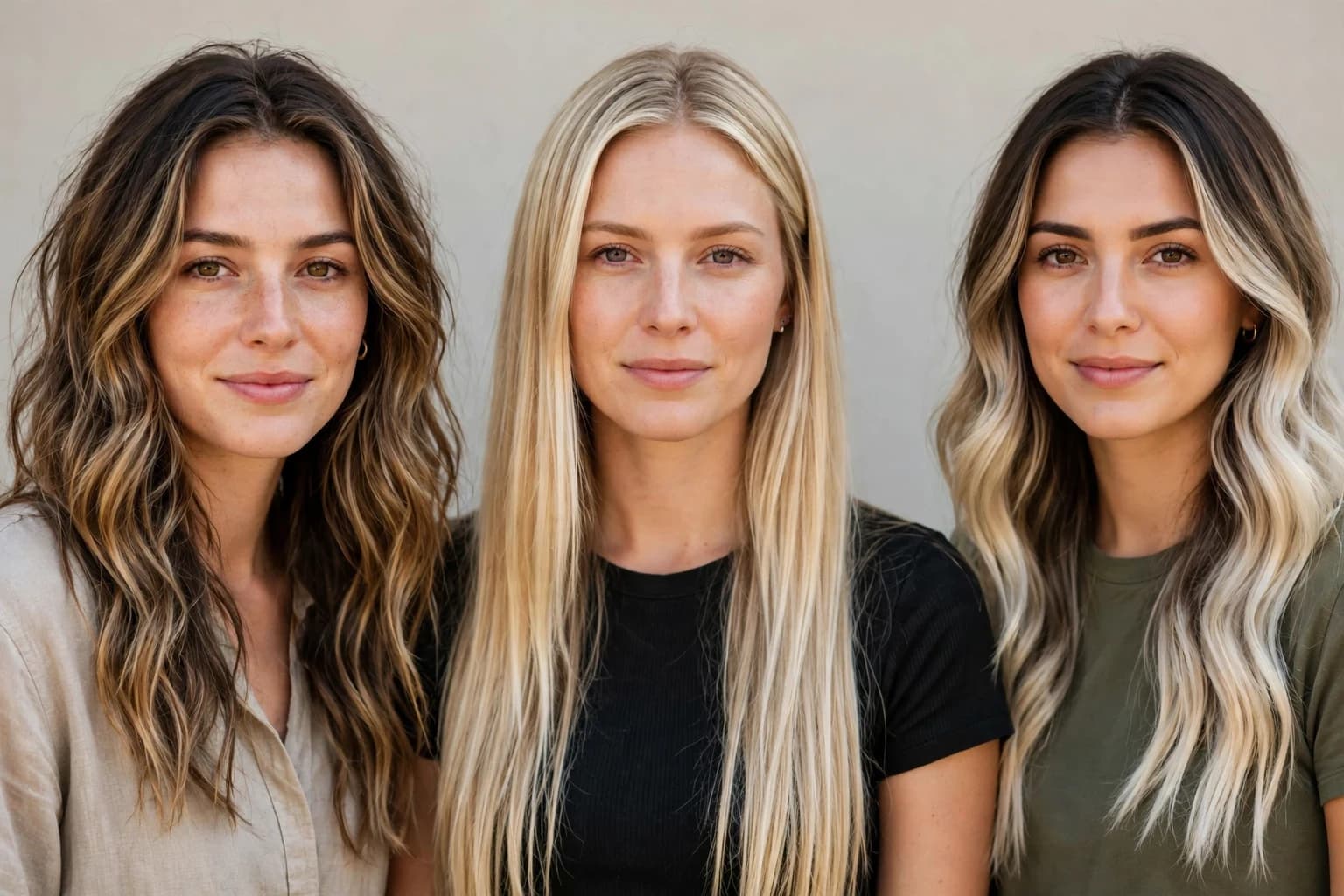
Same goal, three placements: balayage scatters lightness through the lengths, highlights run it root to tip, and ombre grades it into the ends.
Direct answer
What is the difference between balayage, highlights and ombre? Balayage is a technique: lightener painted freehand onto the surface of the hair, concentrated in the mid lengths and ends, so lightness looks sun scattered and grows out without a line. Highlights are a placement: strands saturated in foils and lightened root to tip, giving the brightest, most uniform result and the most visible regrowth. Ombre is a gradient: hair stays dark at the root and grades steadily lighter toward the ends, so the contrast is the point and the root never needs touching.
Key takeaways
- Balayage grows out softest of the painted options: touch ups every 8 to 14 weeks, roughly 2 to 4 full appointments a year.
- Highlights give the most brightness and the most upkeep: a visible root line, with appointments every 4 to 8 weeks.
- Ombre needs the fewest root appointments of all, because the root is your own color; its upkeep is gloss for the ends, not lightener at the scalp.
- Per appointment, balayage usually costs the most (about $200 to $500 for a full head in the US) and ombre a step less (about $150 to $400); highlights often carry the lowest single ticket and the highest yearly total.
- The honest comparison is per year, not per visit: multiply the ticket by the calendar before you choose.
What actually happens in a balayage appointment?
Balayage, from the French word for sweeping, is lightener applied with a brush in freehand strokes, painted onto the surface of each section rather than saturated through it. The colorist chooses where the light would naturally land: more around the face and through the ends, less at the root, which is mostly left alone. Because the product sits on the surface and the placement is scattered, the result is dimension rather than stripes, and a skilled hand can grade each piece differently.
The practical consequences follow from that placement. Chair time for a full balayage is long, often 2 to 4 hours, because every piece is placed by eye. The lift is gentler and less uniform than foils, so balayage on a dark base gives warmth and glow more readily than icy brightness. And because almost no lightener touches the root zone, there is nothing up there to grow out as a line, which is the entire reason the technique became the low maintenance default. A worked example of the look at its best is the mocha version in our balayage guide.
What actually happens in a highlights appointment?
Highlights are built in foils. The colorist weaves or slices out strands, paints them with lightener and wraps each section in foil, where trapped heat drives an even, predictable lift from root to tip. A partial set covers the top and sides; a full head covers everything, including the underneath layers that show when hair is worn up. Finer weaves produce babylights, the softest and most time consuming version.
The payoff is brightness nothing else matches: uniform, defined, and as light as the hair can safely go, including the cool and icy tones freehand painting struggles to reach on dark bases. The price is the regrowth line. Because the lightened strands start at the scalp, your natural color grows in against them at about half an inch a month, and the contrast at the part is visible within 4 to 8 weeks. Highlights are also the closest of the three to the root, which is why they double as a grey blending strategy when combined with a base color, something neither balayage nor ombre can do on its own.
What actually happens in an ombre appointment?
Ombre builds one continuous gradient. The root area keeps your natural color, or a color close to it, and from a chosen transition point, usually somewhere between the cheekbones and the shoulders, the hair is lightened progressively so the ends are the lightest part of the head. The transition is blended by backcombing or diffused painting so there is no hard band, but the two tone structure is deliberate: dark above, light below. Sombre is the same idea at lower contrast.
Everything about ombre's upkeep follows from the root being yours. There is no root appointment, ever, because nothing was applied there; the gradient simply travels down as hair grows, and many wearers refresh it 2 or 3 times a year or let it grow out and cut it off. The work concentrates instead on the ends, which are the oldest, most processed hair on your head and the first to fade and dry out, so gloss and toner appointments every 4 to 6 weeks are the real ombre calendar. Length is the hard requirement: a gradient needs room to grade, which makes ombre a medium to long hair technique.
How do the three compare side by side?
Read the cost row as a shape, not a quote: prices move with city, hair length and the colorist's seniority, and our full cost breakdown for balayage specifically is its own guide. What the table makes plain is the inversion that decides most real choices. The technique with the most expensive appointment, balayage, is usually the cheapest year, and the technique with the friendliest ticket, highlights, quietly books you 5 to 8 times a year. The calendar math behind that inversion, technique by technique, is worked through in our low maintenance guide.
- How it is applied: Freehand painting on the surface of sections; Highlights: Strands saturated and wrapped in foils; Ombre: Blended horizontal sections, lightened progressively downward
- Where the lightness sits: Scattered through mid lengths and ends; root mostly untouched; Highlights: Root to tip, evenly; Ombre: Concentrated in the lower third to the ends
- How it grows out: No line; brightness melts into regrowth; Highlights: A visible line at the part within 4 to 8 weeks; Ombre: The gradient shifts down; no root line at all
- Full appointments per year: 2 to 4; Highlights: 5 to 8; Ombre: 2 to 3 refreshes, or none if grown out
- Between visit care: Optional gloss every 6 to 8 weeks; Highlights: Toner or gloss at most visits; Ombre: Gloss for the ends every 4 to 6 weeks
- Typical cost shape, US: Highest ticket: about $200 to $500 for a full head; Highlights: Lowest ticket of the three per visit, highest visit count; Ombre: Mid ticket: about $150 to $400
- Best lengths: Any, best at shoulder length and longer; Highlights: Any, including short hair; Ombre: Medium to long only
- Where the damage lands: Mid lengths and ends, spread thin; Highlights: Along the full strand, the most hair processed; Ombre: The ends, which are the oldest hair
Which one suits your hair, and which one suits your life?
- Fine or flat hair: highlights and babylights earn their keep here, because fine, evenly spaced brightness creates the illusion of volume and movement. Balayage works too, at lower contrast; a strong ombre can overwhelm fine lengths and make ends look thinner.
- Straight hair: every transition shows. Foil lines, balayage edges and the ombre band all read more sharply on straight hair, so blending skill matters more and sombre beats ombre. Wavy and curly hair blur every boundary and forgive all three.
- Dark bases, level 5 and below: highlights give the most controlled, uniform lift and the only reliable route to cool brightness. Balayage on dark hair is beautiful but lands warm unless the target is modest. Ombre needs the most lift at the ends and shows brass there first.
- Grey coverage: none of the three covers grey at the root. Highlights sit closest to the scalp and blend incoming grey best, especially with a base color between foils. Balayage and ombre leave the root entirely yours, grey included.
- Short hair: balayage and highlights both work at any length. Ombre does not; without length there is no room for a gradient, and the result reads as grown out color rather than a style.
- Your calendar: if two salon visits a year is your real budget of time, the answer is balayage or ombre regardless of which photos you prefer. If brightness is the point and you enjoy the salon rhythm, highlights are honest about what they cost.
How do you choose between them in one step?
Choose by the appointment you are willing to repeat, not by the photo you like most, because you will repeat the appointment 2 to 8 times a year and see the photo's freshness for about a fortnight of it. If the deciding factor is brightness, choose highlights. If it is the softest grow out with real dimension, choose balayage. If it is a bold gradient and never booking a root appointment, choose ombre.
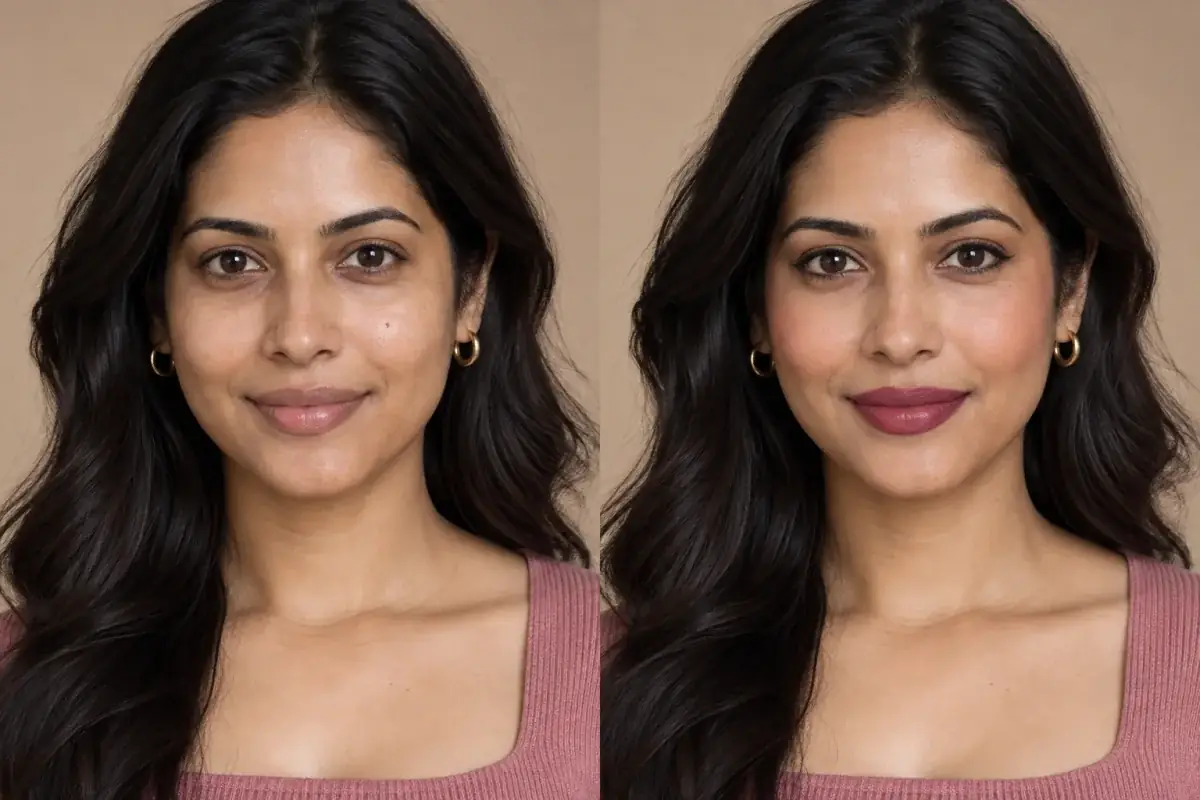
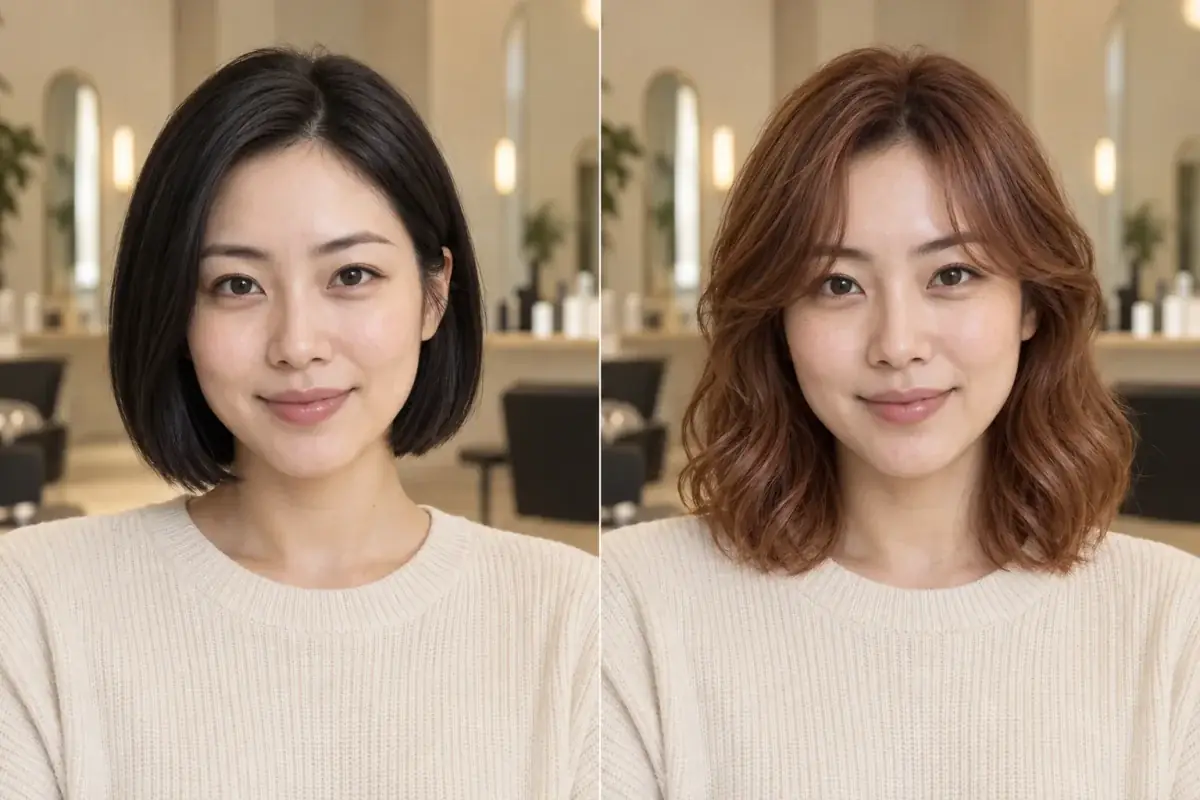
Then preview the placement, not just the color. The same copper reads three different ways scattered through the lengths, run root to tip, or graded into the ends, and that difference is visible on your own photo before it is visible in a salon mirror. Our salon preview guide walks through judging finalists this way.
Take one shade and move the lightness around on your own photo: painted, foiled or graded.
Source: Uptone low maintenance guide, salon price data and visit calendars
Source: Uptone mocha balayage guide
Salon vocabulary is looser than this table
Salons use these three words with real overlap, and hybrids are now the norm: foilayage paints with foils for extra lift, a root smudge can soften highlights into balayage territory, and many ombres are built with balayage strokes. Judge any service by the answers to three questions, where does the lightness start, how is it applied, and what grows out, rather than by the name on the menu. If a stylist's description of her balayage sounds like foils to the root, it is highlights wearing a French name, and it will keep a highlights calendar.
Take the theory out of it.
The article's claim is that placement, not shade, is the real decision between the three. The try-on lets the reader hold the shade constant and move the lightness, which is the exact comparison the table describes.
Questions people ask
Is balayage just a type of highlights?
Balayage is a way of applying highlights, freehand with a brush instead of in foils. The word names the technique; highlights name the result of lightened strands. In salon practice the useful distinction is placement: balayage keeps lightness off the root for a soft grow out, while foil highlights run root to tip and regrow with a line.
Which is cheapest over a whole year?
Usually balayage or ombre, despite balayage carrying the highest single ticket at about $200 to $500 in the US. Highlights often cost least per visit but need 5 to 8 visits a year, so their yearly total commonly passes the others. Multiply any quote by its realistic visit count before comparing.
Which technique damages hair the least?
Damage tracks how much hair is lifted and how far, more than the technique's name. Balayage lightens less hair and skips the root, so it is usually gentlest overall. Ombre concentrates the strongest lift on the oldest ends, and full highlights process the most total hair, so both need the most deliberate aftercare.
Can I switch from highlights to balayage or ombre?
Yes, and it is a common transition. A stylist typically adds a shadow root or root smudge to soften the foil line, places new lightness lower, and may add lowlights to rebuild depth. Expect the change to take one to two appointments rather than a single sitting.
Does ombre work on short hair?
Not really: a gradient needs length to grade through, so ombre belongs on medium to long hair, and at chin length and above it tends to read as grown out color. Short hair takes balayage and highlights well, and a soft sombre on a long bob is the closest short hair gets to the ombre idea.