
Will bangs suit me? The five styles decided on your photo
Almost everyone who asks about bangs is really asking about five specific styles, and the honest answer is different for each one, so decide style by style, on your own face.
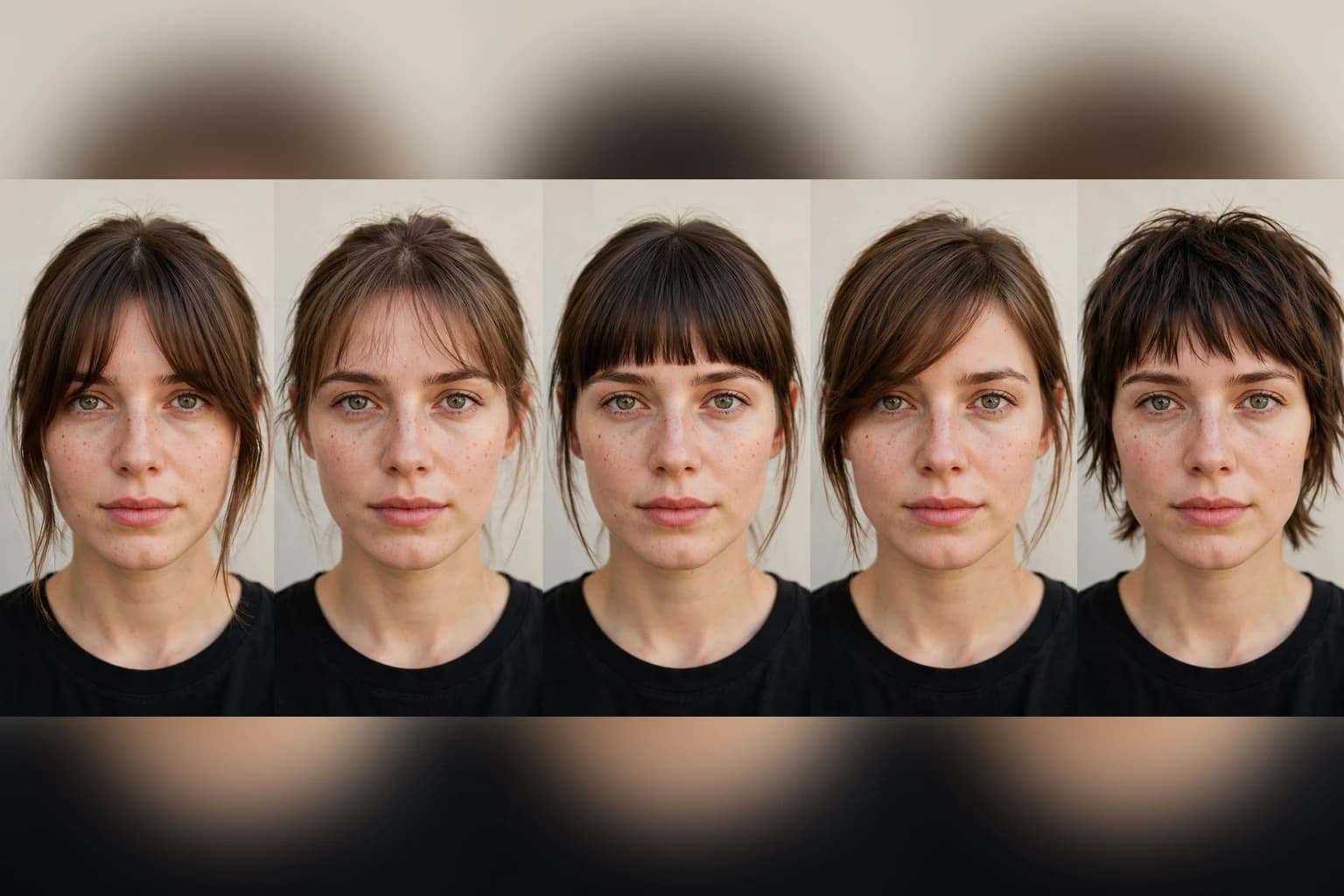
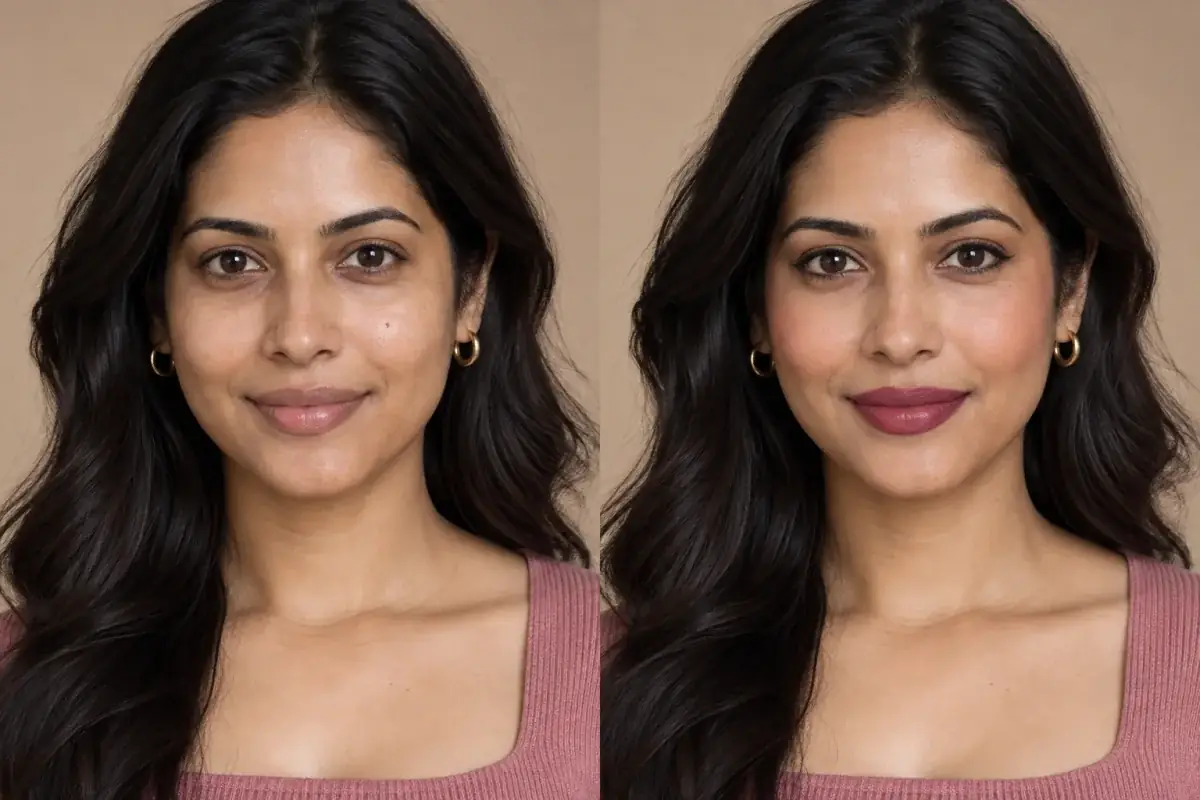
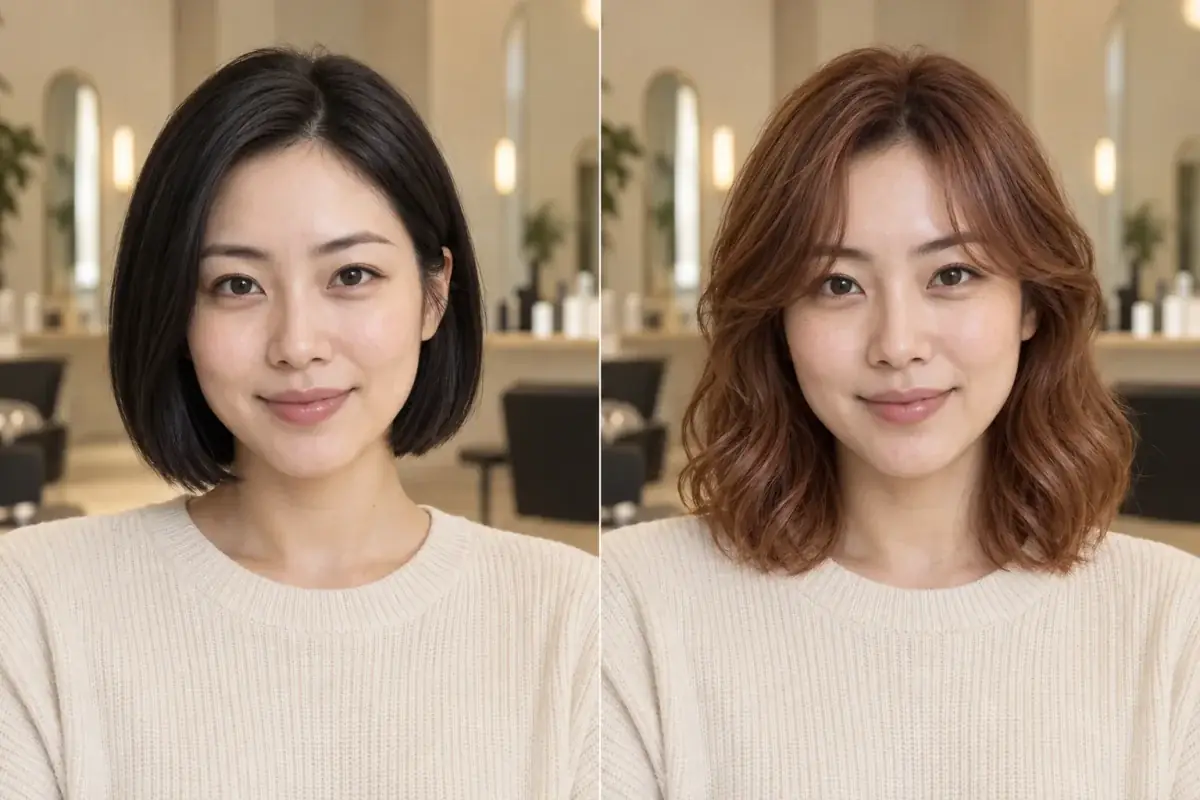
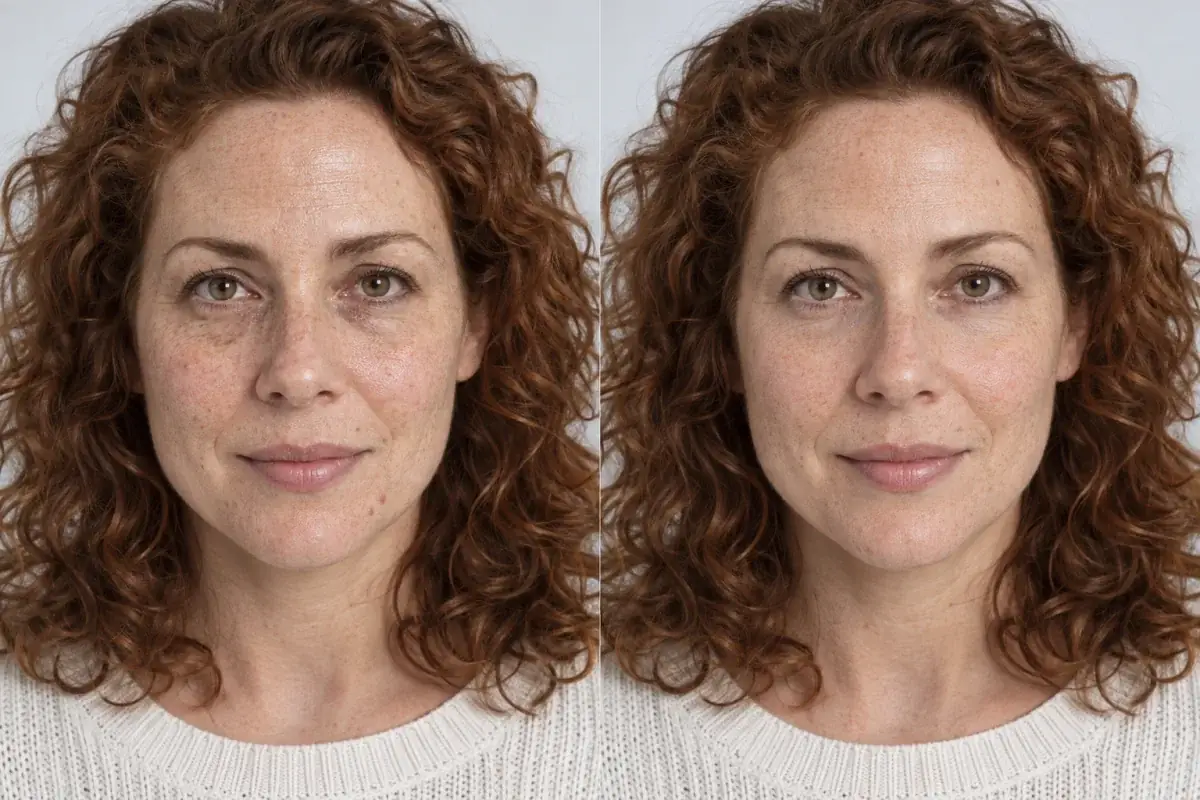
One face, five fringes: the style changes the answer more than the face does, which is why the decision belongs on your own photo.
Direct answer
Will bangs suit me? For most faces, yes, but the style decides it, not the idea of bangs in general. Curtain and side-swept bangs suit the widest range of face shapes and hair types, wispy bangs are the lowest risk first fringe, and blunt bangs are the boldest look and the longest commitment. Choppy bangs sit in between: strong on oval and heart faces, harder work on fine hair. The reliable way to answer the question is to put all five styles on your own photo and compare them on the same face, in the same light, before anyone cuts.
What are the five bangs styles everyone chooses between?
Search data and salon menus agree on the same shortlist. If you are picturing bangs, you are picturing one of these five:
- Curtain bangs: parted in the middle, longest at the cheekbones, sweeping out to both sides like curtains. The current default fringe, and the one most people mean when they say they want bangs but not a big change.
- Wispy bangs: a thin, feathered fringe that lets the forehead show through. Cut with space between the strands, so the effect is softness rather than a solid line.
- Blunt bangs: a straight, full fringe cut level across the forehead, usually ending at or just above the brows. The strongest statement of the five and the least forgiving of a wrong call.
- Side-swept bangs: a longer fringe worn diagonally across the forehead from a side part. Technically a fringe and a face-framing layer at once, and the easiest style to abandon if you change your mind.
- Choppy bangs: a textured fringe with deliberately uneven ends, cut point by point rather than in one clean line. More edge than blunt, less polish, and the style that reads most modern on short hair.
Which face shapes and hair types does each style flatter or fight?
Curtain bangs flatter round, square and heart shaped faces, because the centre part opens the forehead while the longer sides slim the cheeks and soften a strong jaw. They fight very small foreheads, where the two curtains meet before they have room to sweep, and very fine hair, which can separate into strings instead of a soft frame. Wispy bangs flatter square and long faces, softening a hard hairline and breaking up forehead length without weight, and they are the safest style on fine hair because they ask so little of it. They fight thick, coarse hair, which has to be thinned hard to read as wispy at all.
Blunt bangs flatter oval and long faces with thick, straight hair: the full horizontal line shortens a long face and the hair has the density to hold the shape. They fight round faces, where the straight line adds width at exactly the wrong height, and wavy or curly hair, which springs up and turns a precise brow line into a daily negotiation. Side-swept bangs flatter nearly everyone, and round and square faces most, because the diagonal line lengthens and lifts. They fight strong cowlicks at the front hairline, which will keep trying to split the sweep in the middle. Choppy bangs flatter oval and heart faces and medium to thick hair, where the texture shows. They fight fine hair, which can look thinner at the ends, and very curly hair, where the uneven ends disappear into the curl pattern.
What does the decision table say?
Read your row honestly. Most bangs regret is not a face shape problem; it is a styling minutes problem or a grow-out problem that was visible in the table before the cut.
- Curtain; Flatters most: Round, square, heart faces; medium hair; Fights hardest: Small foreheads, very fine hair; Daily styling: About 5 minutes; Grow-out: Blends into layers within weeks.
- Wispy; Flatters most: Square and long faces; fine hair; Fights hardest: Thick, coarse hair; Daily styling: About 2 minutes; Grow-out: Fastest of the five, barely a stage.
- Blunt; Flatters most: Oval and long faces; thick straight hair; Fights hardest: Round faces, wavy or curly hair; Daily styling: 5 to 10 minutes, plus regular trims; Grow-out: The long one: months of pinning back.
- Side-swept; Flatters most: Almost every face; the round face favourite; Fights hardest: A strong front cowlick; Daily styling: About 3 minutes; Grow-out: Sweeps into face framing layers fast.
- Choppy; Flatters most: Oval and heart faces; medium to thick hair; Fights hardest: Fine hair, very curly hair; Daily styling: 3 to 5 minutes with product; Grow-out: Grows out soft, texture hides the stages.
How many minutes does each style cost you every morning?
Bangs are the only part of a haircut you style at close range, in the mirror, every single day, so price them in minutes. Curtain bangs need roughly five minutes with a round brush and a dryer, rolling each side away from the face so the sweep sits open. Wispy bangs need about two minutes, often just a downward blast of warm air and a fingertip of smoothing, because there is so little hair involved. Blunt bangs are the expensive ones: five to ten minutes of drying flat and straightening the ends on most hair types, plus a fringe trim every three to four weeks to hold the line at the brows. Side-swept bangs take about three minutes to dry across in the opposite direction first, then sweep back, which is the trick that makes them lie flat. Choppy bangs take three to five minutes, mostly product work: a pea of texture paste worked through the ends so the uneven cut reads deliberate rather than accidental.
If your honest morning budget is under five minutes, the table has already answered your question: wispy or side-swept. A style you will not style is a style that does not suit you, whatever your face shape says.
What is growing each style out actually like?
Hair grows about half an inch a month on average, according to the American Academy of Dermatology figure quoted by Dyson, so every inch of fringe you want rid of costs roughly two months. What differs by style is how visible those months are. Curtain bangs start long, so they blend into face-framing layers within a few weeks and are effectively gone as a separate feature inside two months. Wispy bangs are so thin that the grow-out barely registers; they thin into your hairline and disappear. Side-swept bangs sweep further and further across until they are simply layers, usually inside three months.
Blunt bangs are the honest warning. A full fringe cut at the brows takes around four to six months to reach a length you can sweep aside and tuck, and the middle months, too long to wear down and too short to tie back, are the pinning and clipping stage everyone complains about. Choppy bangs grow out kindly because the uneven ends disguise each stage; nothing lines up, so nothing looks wrong. None of this makes blunt bangs a bad choice. It makes them a six month decision wearing the clothes of a one hour appointment, and the table above exists so you take them with open eyes.
How do you decide on your photo before anyone cuts?
Decide in the order the table cannot help you with: on your own face. Take one clear front facing photo in daylight, hair in its natural state, and put the five styles on it in the haircut try-on. Compare like with like: same photo, same light, five fringes. Two things usually happen. The style you were surest about drops out, and one you had not considered, often wispy or choppy, wins on your actual bone structure rather than on the model you saw it on.
If two styles survive, take the tie and ask the narrower question about the specific look. If you are also weighing a bigger cut around the fringe, the butterfly cut guide shows how a fringe decision interacts with layers, and the face shape guide walks the shape maths in full. When one style wins, save it and take the photo to your stylist: a picture of the fringe on your own face is a better brief than any celebrity screenshot. Each try-on uses credits from your plan, so run the five serious styles, not twenty.
A preview cannot feel your hairline
A photo test shows how a fringe looks on your face; it cannot feel how your hair behaves. A strong cowlick, a very low hairline or hair that frizzes in humidity can overrule a style that photographs perfectly. If your hairline fights every parting you have ever tried, weight the grow-out column of the table more heavily, or ask your stylist to cut a test section longer than the final length so you can live with the direction for a week first.
Take the theory out of it.
The whole question collapses into one comparison: five fringes, one face, same light. The try-on shows exactly that, and the winner is the photo you take to the salon.
Questions people ask
What bangs suit a round face?
Curtain and side-swept bangs suit round faces best, because both keep length at the sides of the face and draw a diagonal or vertical line instead of a horizontal one. Avoid a full blunt fringe at brow level, which adds width at the widest point. Whichever you lean toward, check it on your own photo, since forehead height changes the answer.
Do bangs suit fine or thin hair?
Yes, if you pick the style that asks the least of the hair. Wispy bangs are cut for fine hair, and curtain bangs work if your stylist keeps them light at the centre. Blunt and choppy fringes usually disappoint on fine hair because both need density at the ends to read properly.
How long do bangs take to grow out?
Hair grows about half an inch a month on average, so a brow length blunt fringe takes roughly four to six months to reach a sweepable, tuckable length. Curtain, wispy and side-swept styles blend into layers far sooner, often inside two to three months, because they start longer or thinner.
Can I try bangs without cutting my hair?
Yes. A try-on puts each style on your own photo so you can compare all five on the same face before committing, and a clip-in fringe piece is the physical version of the same test. Either way, decide with your own face in front of you rather than a model's.
What should I ask my stylist for if I want curtain bangs?
Ask for a centre parted fringe that starts around the cheekbones and blends into face-framing layers, and bring the photo of the style on your own face. Name the length at the shortest point, since curtain bangs cut too short at the centre stop sweeping and start reading as a grown out fringe.