


Drugstore vs Prestige Lip Liner: Try Both on Your Photo
Lip liner is the fastest growing makeup segment right now, and the choice looks simple: drugstore or prestige. The real choice is not the shelf. It is the shade and the finish on your own lips, and a photo try on settles that in under a minute.
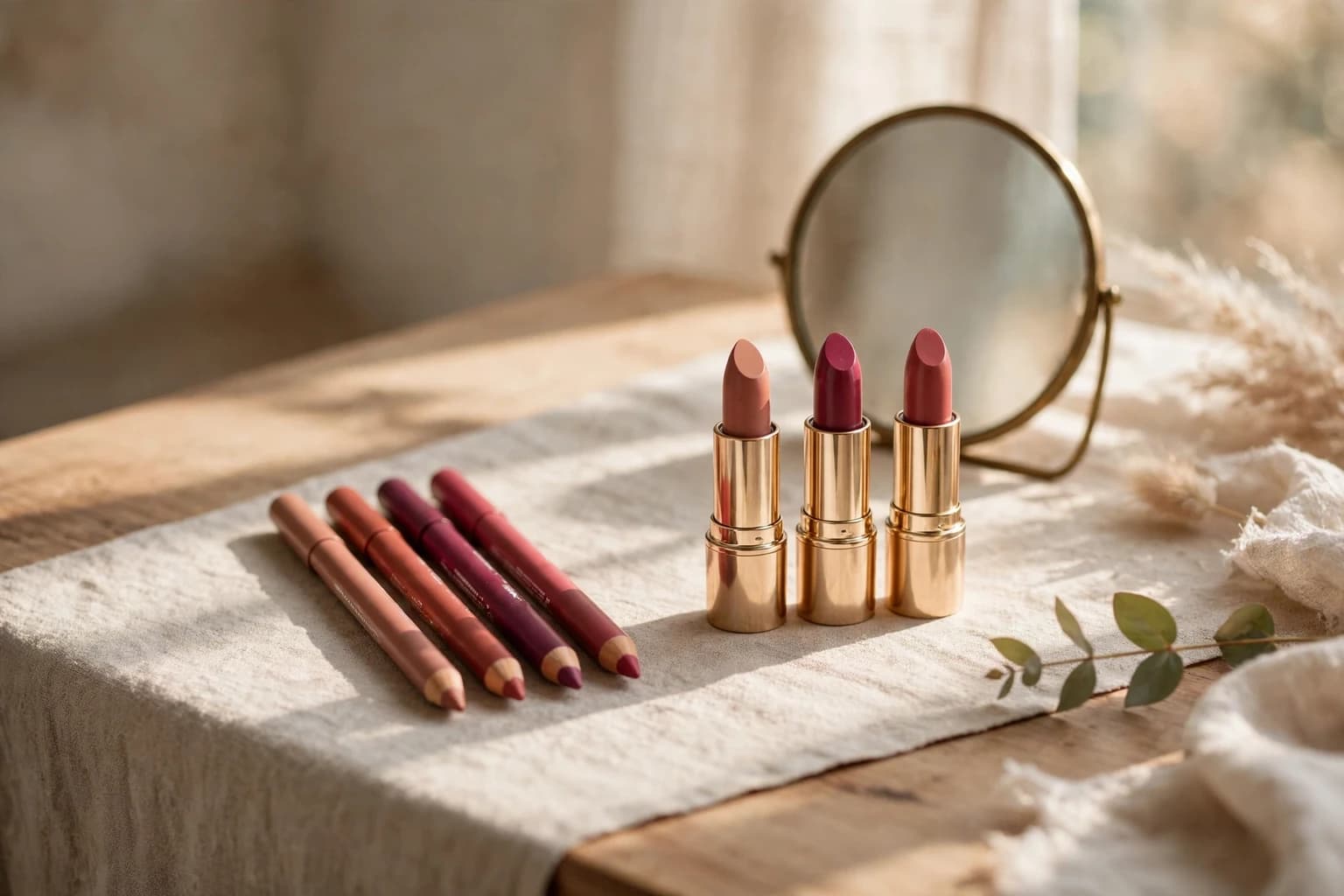
Two shelves, one question: the shade that suits your lips, not the price tier.
Direct answer
Neither drugstore nor prestige lip liner wins outright. The winner is the shade and finish that suits your lips, your undertone, and the lipstick you actually wear, and that winner changes from face to face. A prestige liner in the wrong shade loses to a drugstore liner in the right one, every time.
That is why this guide compares the two categories without naming a winner. Drugstore and prestige differ in price logic, shade range logic, and wear logic, and each logic suits a different kind of buyer. The method is the same either way: narrow by undertone, then try both looks on your own photo through /makeup-try-on before you buy either. Your first preview needs no account.
Key takeaways
- Drugstore and prestige are price and range logics, not quality verdicts. The shade on your lips decides.
- Lip liner is the fastest growing makeup segment, which means more shades to choose from and more reason to test before you buy.
- Match liner to your lips for everyday wear and to your lipstick for a bold lip. The photo shows which works on you.
- Try both looks on your own photo through /makeup-try-on. A swatch on your arm is not your lips.
- Buy the liner you will finish, not the one with the best packaging. A liner in a drawer helps no look.
What is actually different between drugstore and prestige lip liner?
Start with price logic, because it shapes everything else. A drugstore pencil costs little enough that buying two or three shades to test feels reasonable, and replacing a lost or finished pencil is painless. That low price per pencil encourages experimenting: you can try a brick, a berry, and a nude in one trip and keep the one that works. A prestige pencil costs several times more, so it is usually bought as one considered shade, kept longer, and replaced deliberately. Neither logic is wrong. The drugstore logic suits the explorer. The prestige logic suits the person who already knows her shade and wears it daily.
Shade range logic works differently too. Prestige ranges are often built around full lipstick lines, so finding an exact match for a prestige lipstick is straightforward, and the shade names and families stay stable season to season. Drugstore ranges are built around best selling shades, so they turn over faster with trends, which is good when you want the current shade and frustrating when your favorite disappears. Wear logic, though, does not follow the shelf. Both categories contain long wearing matte formulas and creamy comfortable ones, and the finish you choose matters more than the price tier: matte holds longer and dries more, satin balances wear and comfort, and creamy feels best on dry lips but needs reapplying. Judge the formula, not the tier.
Which lip liner shade suits your lips?
Undertone decides the shade family before price enters the picture. Warm skin glows in brick, tomato, warm brown, and terracotta liner shades, which warm up the whole face. Cool skin glows in berry, plum, and blue based red liners, which sharpen and brighten. Olive skin sits between the two and carries true red, warm brick, and deep rose best, the shades that neither wash it out nor turn orange on it. Our red lipstick guide maps these families shade by shade: /blog/red-lipstick-by-undertone. Start inside your family, then let the photo decide the exact shade.
Depth and lip shape narrow it further. Deeper skin carries deeper, more saturated liner shades, while very pale skin can find the same shade reading harsh, so depth should move with your skin, not against it. Thin lips suit a liner close to your natural lip color, which defines without shrinking, while full lips carry bolder shades easily. And remember what a nude liner means: it should match your lips, not your skin. A nude that matches your skin disappears, while a nude that matches your lips defines.
Should your liner match your lipstick or your lips?
There are two schools, and both are right at different times. Matching your liner to your lipstick gives a seamless bold lip: the edge disappears, the color looks deeper, and feathering into fine lines slows down. Matching your liner to your lips gives definition that works under any lipstick, gloss, or nothing at all, which is the better everyday choice. The first is a lipstick decision. The second is a face decision.
Test both on the same photo and the answer usually appears at once. Run the lipstick matched look first, then the lip matched look, and judge each at arm's length, not close up, because liner is worn in rooms, not in mirrors. The everyday winner is usually the lip matched shade, while the bold lip winner is usually the lipstick matched one. Keep both if you wear both kinds of days. A liner wardrobe of two is not excess. It is the whole system.
How do you try both looks on your own photo?
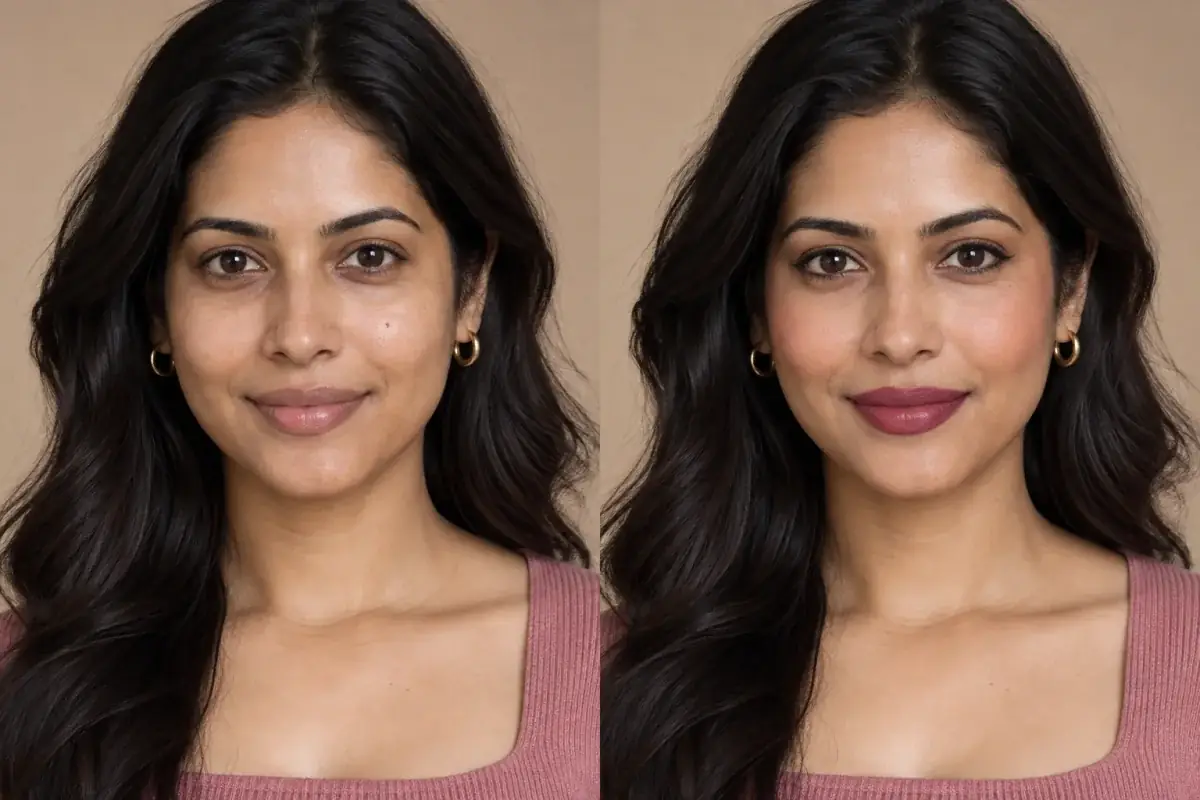
The test itself takes under a minute per look. Take or choose a clear photo of yourself in daylight, facing the camera, with your face fully visible and no heavy filter on it. Open /makeup-try-on, or start at /tools if you are unsure which tool fits, upload the photo, and pick the liner look. Run the drugstore shade family first, then the prestige shade family, and compare them side by side on the same face, in the same light. That sameness is the point: the same face removes every variable except the liner.
Judge the result the way other people see it: at arm's length, in daylight, against the clothes you actually wear, with the lipstick or gloss you would pair it with. Test the exact shade family you plan to buy, not a close cousin, since two liners that look identical in the pencil can sit a full step apart on your lips. Save the winning photo. It shows the shade on your skin instead of describing it in words, and it is the most useful thing you can take into a store. Your first preview needs no account, and you only sign up to save or download a look.
When is prestige worth it, and when is drugstore enough?
Prestige is worth it when the pencil is a daily tool, not a trial. If you wear one signature shade every day, the higher price per pencil spreads across months of wear, and the exact match to a prestige lipstick you already own removes the shade hunt entirely. It is also worth it when you finish pencils rather than collect them, because a finished pencil is the cheapest pencil there is. In that usage pattern, prestige is not a luxury. It is a subscription you already pay by wearing it.
Drugstore is enough when you are still exploring. If you are testing a new shade family, following a trend, or unsure whether you even like liner, several low priced pencils teach you more than one expensive one, because the lesson is the shade, not the brand. It is also enough when you lose pencils, share them, or want a different shade for every lipstick you own. The honest test is usage: count how many days a week you wear liner, and buy the tier that matches the count, not the tier that matches the shelf you admire.
What should you not do when choosing a lip liner?
Do not buy five liners to test at home. That is the most expensive way to answer a question a photo answers in a minute, and four of the five pencils will sit unused. Do not trust the swatch on your arm either: arm skin is not lip skin, and lips are more pigmented, more textured, and more central to your face, so a shade that reads soft on your wrist can read loud on your mouth. And do not outline your lips much darker than your lipstick. That dark outline is the one liner mistake everyone notices, and it survives every price tier.
Do not buy a shade only because it is viral. A liner can trend for reasons that have nothing to do with your undertone, and virality is not a shade match. Test the viral shade the same way as any other: if it flatters you on your photo, buy it with confidence, and if it does not, let it trend without you. Do not let a set decide either. A liner bundled in a set is only a good deal if you wear the shade, and a free shade you never wear is the most expensive shade of all, because it cost you the decision.
How do you keep lip liner comfortable on dry lips?
Finish matters most when your lips are dry, and this is where the tier question fades entirely. Creamy and satin liners glide, forgive texture, and sit comfortably for hours, while matte liners hold longer but show every dry patch. If your lips are often dry, choose a creamy finish in either tier over a matte finish in either tier. The comfortable liner is the one you keep wearing, and the one you keep wearing is the one worth its price.
Prep helps every finish. Exfoliate gently, apply balm, blot the excess, then line, and the liner will sit evenly instead of catching on dry skin. Wear liner as a base under lipstick and it extends the lipstick's wear, since the lipstick has something to grip. For touch ups, blot and reapply the center of the lips rather than redrawing the whole outline, which keeps the edge soft. If you are unsure which makeup families suit you at all, start with our makeup guide: /blog/what-makeup-suits-me.
A try on shows the shade on your photo, not a promise
A photo try on shows you the liner shade on your own lips, which is far more information than a pencil or an arm swatch gives you. It is not a guarantee: screens and lighting shift color, and a shade can read differently in daylight than under shop lights. Check the winning shade in daylight before you buy it, and compare it against the shade you hold in the store.
Take the theory out of it.
Drugstore and prestige differ in shade families and finishes, so this guide points at the makeup try on rather than the picker. Upload one photo, try the lip matched and lipstick matched looks, and buy the liner that already looks right on you. The first preview needs no account.
Questions people ask
Is prestige lip liner really better than drugstore lip liner?
No, not as a category. Both tiers contain long wearing mattes and creamy comfortable formulas, and the finish matters more than the shelf. The better liner is the shade and finish that suits your lips, which is why testing both on your photo beats trusting either tier.
Which lip liner shade should I start with?
Start inside your undertone family: warm skin in brick and tomato, cool skin in berry and plum, olive skin in true red and deep rose. Then choose a shade close to your natural lip color for everyday wear, since that defines without shrinking. Test two or three finalists on your photo and keep the one that looks clearest at arm's length.
Should lip liner match my lipstick exactly?
It should match your lipstick for a bold, seamless lip, since the edge disappears and the color reads deeper. It should match your lips for everyday wear, since that definition works under any lipstick, gloss, or nothing at all. Test both on the same photo and keep the version you actually reach for on ordinary days.
Can I try lip liner shades on my photo before buying?
Yes, through the makeup try on, which shows liner looks on your own photo in under a minute per look. Use a clear daylight photo with no heavy filter, and judge the result at arm's length against the clothes you wear. Your first preview needs no account, and you only sign up to save or download the winning look.
How do I stop lip liner from drying out my lips?
Choose a creamy or satin finish over matte when your lips are dry, in either price tier, since matte shows every dry patch. Prep with gentle exfoliation, balm, and blotting before you line, so the liner sits evenly instead of catching. For touch ups, blot and reapply the center rather than redrawing the whole outline, which keeps the edge soft.