
Does AI color analysis work on deep skin?
The honest answer is yes, with conditions the tools rarely state. Deep skin exposes every shortcut in photo based analysis, and the fixes are mostly in your hands, not the app's.
The draping question works on deep skin exactly as it works on fair skin. What fails is the photo the algorithm reads it from.
Direct answer
Does AI color analysis work on deep skin? Yes, when the photo is honest and the method shows its work, and no when either is sloppy, which is more often than the tools admit. Deep skin concentrates the three documented failure modes of photo analysis: cameras that expose and white balance for lighter faces, models trained on datasets that overrepresent light skin, and generative editors that lighten skin outright. The fix is not a better label. It is disciplined photo conditions, boundary tests between the deep seasons, and verifying the winning shades on your own face. Uptone's analysis is built to end in that visual check.
What are the key takeaways?
- The 12 season system itself includes deep skin fully; most deep skinned women land in Deep Autumn or Deep Winter, but every season occurs at every depth.
- The classic home tests fail here first: the vein test and the white paper test do not read reliably on deep skin, while the gold versus silver jewelry test does.
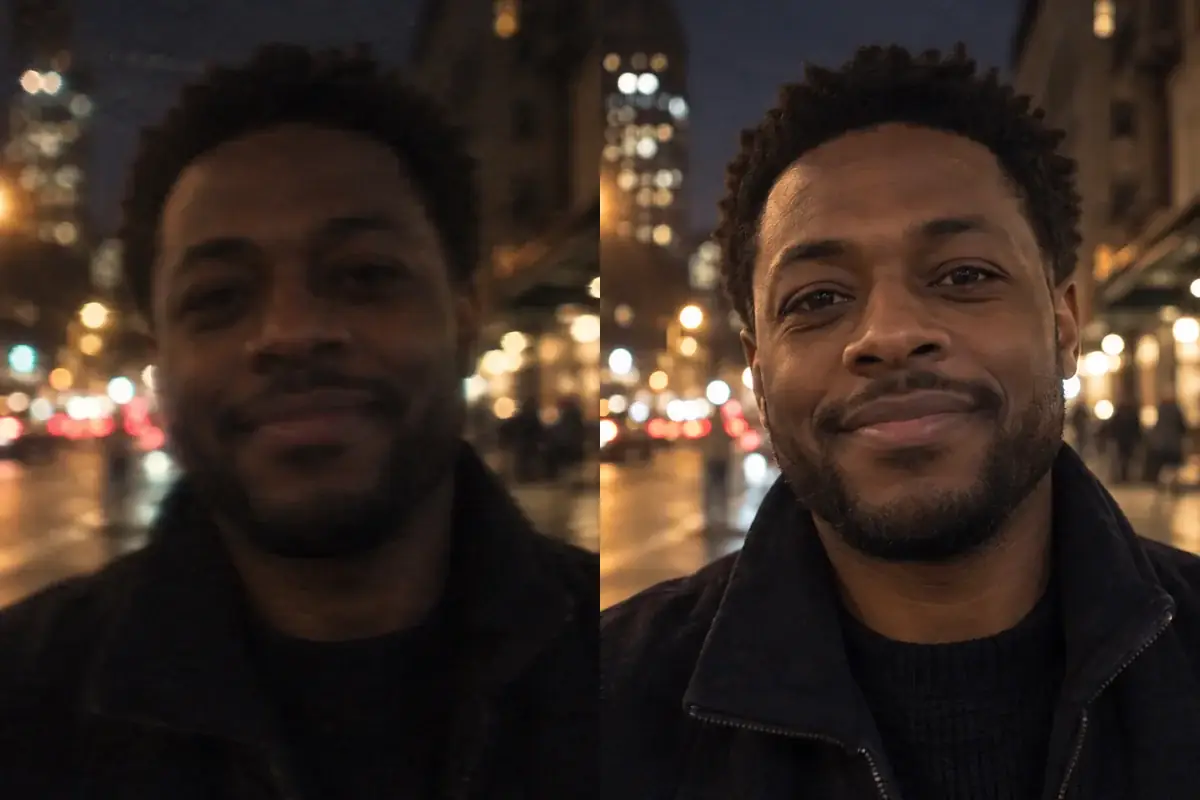
- Generative AI has a documented lightening drift on deep skin, including skin lightened and brown eyes turned blue in headshot tools.
- Cameras are the quiet culprit: exposure and white balance shift the very measurements an analysis reads, so photo conditions decide the verdict before the algorithm does.
- A trustworthy result shows drapes or shades on your face and survives a boundary test against the neighbouring season.
Why does photo based analysis struggle more on deep skin?
Start with the raw material. An analysis reads three things from your photo: skin, hair and eye colors. On deep skin, the undertone signal those readings depend on is genuinely subtler at the surface. Inclusive analysts put it plainly: at deep depths, the difference between warm and cool is subtle in the skin tone but dramatic in the color response, which is why professionals drape rather than measure. A camera then corrupts what signal there is. Exposure and white balance are set by the phone's guesses about the scene, warm indoor light pushes readings toward Autumn, and a bright background can make the same face read cooler and deeper than it is.
The training data compounds it. The 12 season system was built and popularized by practitioners who primarily worked with light skinned women, and digital systems learned from datasets with the same skew. One industry overview reports early color analysis algorithms running up to 30 percent less accurate on deeper skin tones for exactly this reason; the overview does not name its underlying study, so treat the figure as a warning about direction rather than a precise measurement. The direction itself is not in dispute.
What is the lightening drift, and is it documented?
Yes, and it is the ugliest failure mode because it does not look like an error. When AI ethics advocate Christelle Mombo-Zigah tested popular headshot apps, her dark skin was lightened, her hair texture changed, and her face was remixed toward what she called a biased blueprint for professional. MIT student Janelle Chin uploaded a photo for a refined headshot and got back lighter skin and brown eyes turned blue, asking whether the tool thought she should become white to be more professional. A 2023 University of Washington study found image generators defaulting toward whiteness on vague prompts, ignoring darker skin tones entirely in most cases.
Analysis tools are not headshot generators, and a measuring tool does not redraw you. But the drift matters here for two reasons. First, the same training skew sits under the whole category. Second, any workflow that routes your photo through a generative edit, including asking a chatbot to show you in a color, can hand you back a lighter face and let you judge your season on a stranger's coloring. We documented that mechanism in full in the AI changed my face guide. If the face in the result is lighter than the face in the mirror, every conclusion drawn from it is void.
Which home tests mislead on deep skin, and which still work?
Skip the vein test: wrist veins are hard to read through melanin, and the green versus blue call becomes guesswork. Skip the white paper test too; holding paper beside the face mostly measures the camera's exposure reaction to the paper. Both tests were calibrated on light skin and fail quietly on deep skin, returning confidence without information.
Use the jewelry test instead: gold versus silver at the neck in daylight. Warm deep skin lights up against gold; cool deep skin reads cleaner against silver, and the effect is visible even where the undertone itself is subtle, because you are watching the color response rather than hunting for a hue in the skin. Pair it with the draping pairs a professional would use: cream against pure white for temperature, and espresso and burgundy against black cherry and fuchsia for the Deep Autumn versus Deep Winter boundary, which is where most deep skin verdicts are actually decided. Our season check guide runs those boundary tests step by step.
How do you take a photo an analysis can actually read?
The conditions matter more than the app. Face a window in indirect daylight, never direct sun and never a warm bathroom bulb. Go bare faced, because foundation rewrites the exact measurement being taken. Wear white or light grey, and keep the background neutral; one careful tool, MyColorAnalysisAI, uses that white top as a reference to strip the camera's color cast before measuring, which is the right instinct whoever you use. Keep dyed hair in the analysis if it is your everyday reality, but know the reading includes it. And before you upload anywhere, check what the tool says it does with your photo; our privacy guide walks through what to look for.
One more reading that does work at home: the black and white selfie. Photograph yourself in daylight, convert the shot to greyscale, and look at the gap between your skin, your hair and your eyes. That contrast level, high, medium or low, is the axis cameras read most reliably on deep skin, because it survives the color errors entirely. It will not name your season, but it tells you whether the dramatic, high contrast palettes of the Winter family or the softer Autumn ones are even in contention, and it gives you a fixed fact to check any app's verdict against. If a tool calls a visibly low contrast face a Bright Winter, you have caught it guessing.
Then distrust any single run. Take the photo twice, on different days if the first verdict surprises you, and treat agreement as the signal. A tool that shows a confidence level and a runner-up is being more honest with you than one that hands down a single season, and a tool that lets you see the candidate palettes or shades on your face is being more honest still.
How do you verify the verdict on your own face?
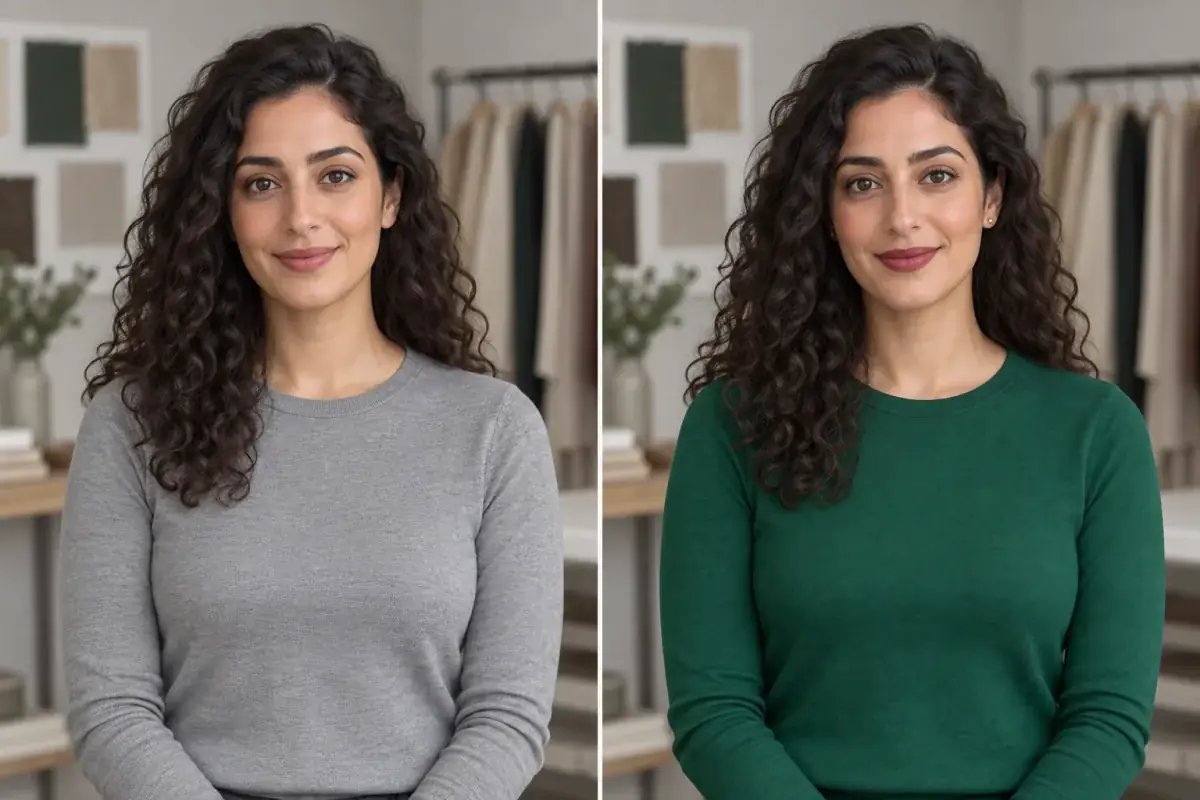
By making the season perform. Take its signature shades, a Deep Autumn's copper and olive, a Deep Winter's fuchsia and black cherry, a Bright Winter's icy brights if that is the claim, and preview them as makeup and hair on your own photo, next to the neighbouring season's set. The right season makes deep skin look even, rich and awake; the wrong one makes it look ashy, grey or flat, and on deep skin that failure is unmissable once you see the pair side by side. This is also where shade decisions get practical: our guide to hair color for deep skin works through the named shades that hold up at depth, from warm espresso and burgundy to golden balayage.
Judge the tool by whether it invites this test. An analysis that ends in a label is asking for your faith. An analysis that ends in shades on your face is offering evidence, and on deep skin, where the label error rate runs higher for documented reasons, evidence is the only version worth paying for.
What this guide cannot promise
No photo tool, Uptone included, fully escapes the camera and dataset problems described here, and this guide does not claim otherwise. What a careful tool can do is refuse to redraw your face, show its shades on your actual photo, and let your own eye arbitrate. If two careful runs still disagree, an in person draping with an analyst experienced in deep skin is the honest next step, not a third app.
Take the theory out of it.
The article argues that on deep skin a label is not enough; the verdict has to be visible. Uptone's analysis ends in on-photo previews of the season's shades, with the face and its depth left exactly as they are.
Questions people ask
What color season are most women with deep skin?
Most land in Deep Autumn or Deep Winter, the two deep, high contrast seasons, and inclusive analysts note those categories hold far more deep skinned women than most color content acknowledges. But depth is not a season by itself: all 12 seasons occur at every skin depth, which is why the warm versus cool boundary test matters.
Why did an app give me a different season from my friend with similar skin?
Because depth is only one axis. Two women with equally deep skin can sit on opposite sides of the temperature line, one Deep Autumn and one Deep Winter, and cameras add their own noise through exposure and white balance. Similar depth with different undertone is the norm, not an error.
Can I trust a color analysis if my photo was taken indoors?
Less than one taken in daylight. Warm indoor light pushes readings toward warm seasons, and the camera's white balance guesses wrong in exactly the direction that changes verdicts. Retake it facing a window in indirect light, bare faced, in a white or light grey top, before you believe or reject a result.
Does AI really lighten deep skin, or is that exaggerated?
It is documented, not exaggerated. Users testing headshot tools have had dark skin lightened, hair texture changed and brown eyes turned blue, and a 2023 University of Washington study found image generators defaulting toward whiteness on vague prompts. Any result where your face looks lighter than your mirror is a redraw, not an analysis.
What is the most reliable test I can do at home?
The jewelry test plus one draping pair. Compare gold and silver at your neck in daylight for temperature, then hold a warm pair (cream, espresso, burgundy) and a cool pair (pure white, black cherry, fuchsia) at your face. The vein and paper tests do not read reliably on deep skin, so retire them.