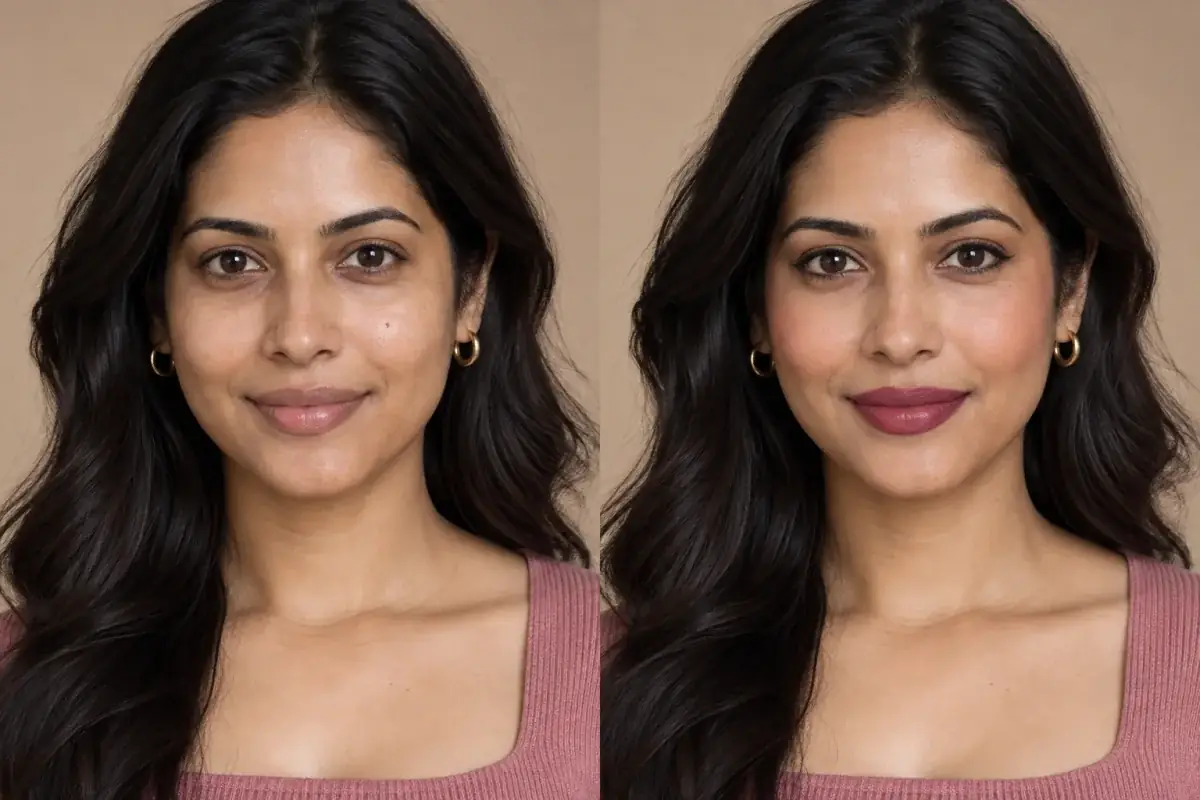

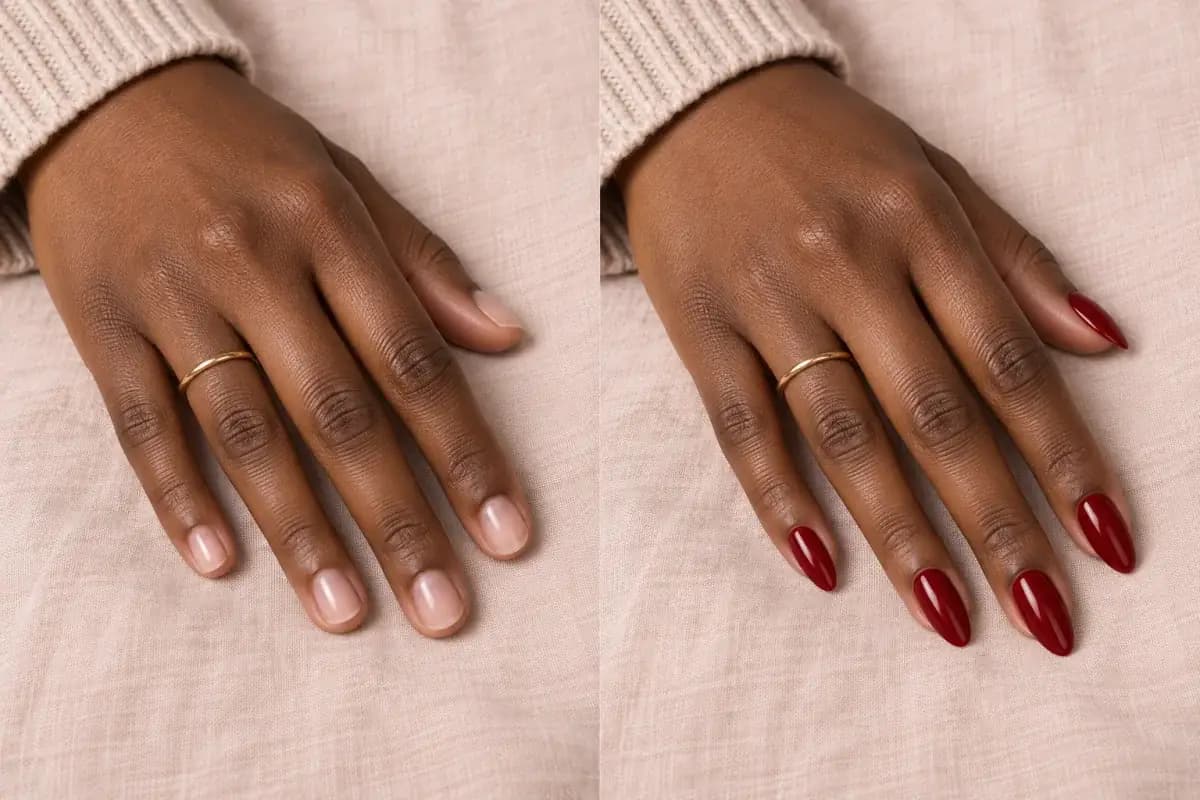

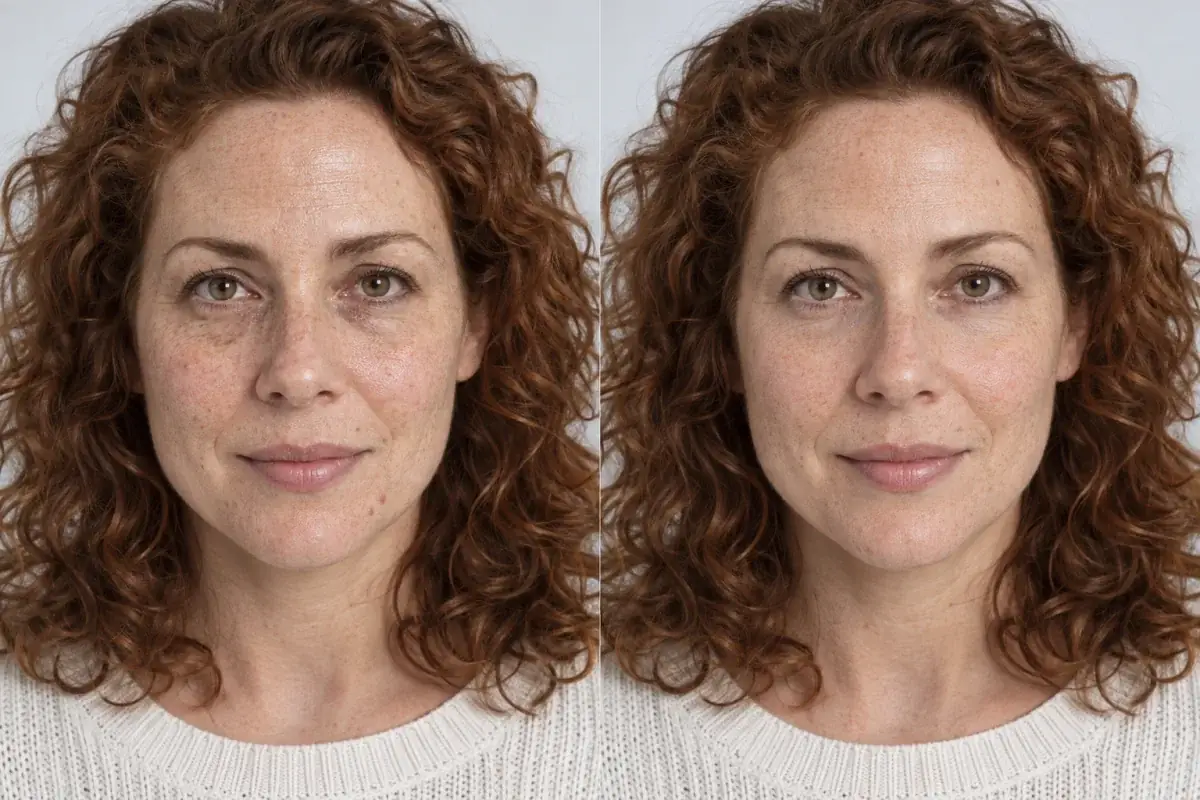


Bright Spring makeup and hair colors: clear first, and the poppy test
Bright Spring is the clearest season in the twelve season system: clarity first, warmth second, and every mistake this season makes is a shade that has been muted, grayed or cooled.
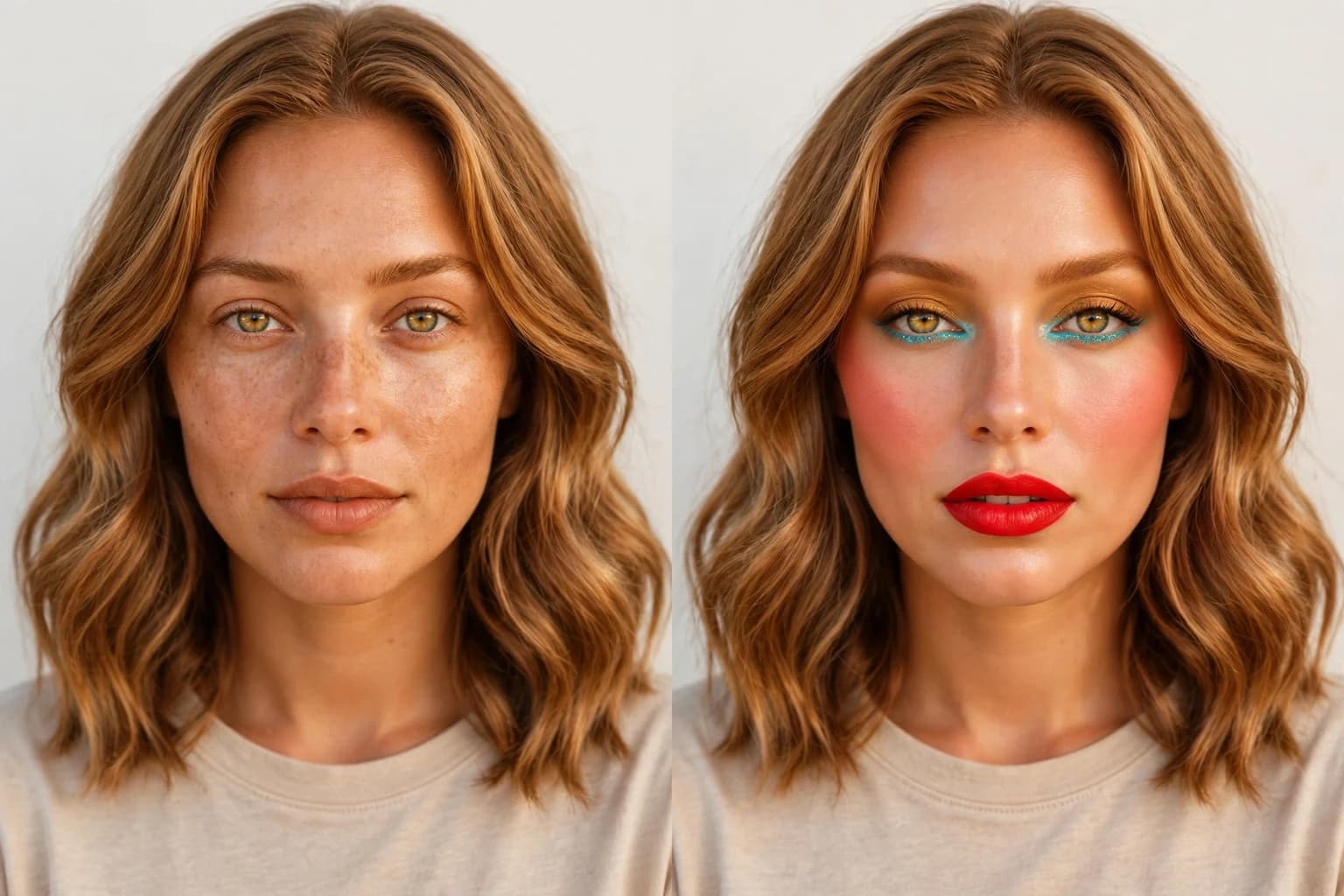
Same face, Bright Spring clarity: the lip is electric poppy, the blush is fresh coral, and nothing about it is muted or cool.
Direct answer
What is Bright Spring makeup? Bright Spring makeup is clear, warm colour at full strength: electric poppy, pure coral and watermelon lips; fresh coral pink blush; golden brown and warm turquoise eyes, with nothing muted, dusty or grayed in the bag. Bright Spring (also called Clear Spring) is the clearest of the warm seasons, defined by clarity first and warmth second, and its shades pass one test: an electric poppy lip looks loud on most faces and simply looks like you on this one.
Why does the poppy test decide this season?
Every clear season has one shade that separates it from its neighbours, and for Bright Spring it is electric poppy, tested against clean coral. Both shades are warm and both are clear, so warmth cannot explain the difference between them. Only saturation can, and saturation is this season's whole identity.
Put clean coral on and it looks pleasant: tidy, healthy, finished. That is exactly the problem. Pleasant disappears on this face, because the lip is working at a lower intensity than the coloring underneath it. Put electric poppy on and the picture changes: the eyes clear, the skin evens out and the features sharpen, because the shade is finally running at the same strength as the face itself. If the reverse happens, and poppy feels like a lot while clean coral completes you, your warmth is leading and your clarity is second, which is the Warm Spring pattern instead.
Stylists illustrating this season reach for Emma Stone and Sophia Bush. Treat those faces as pictures of the palette, not as proof of your type: typings by eye differ between stylists, and the poppy test on your own face outranks any celebrity comparison. The warm family's full map is in our hub.
Which makeup colors suit a Bright Spring?
Think of a spring garden at noon rather than at dawn: every shade warm and flowering, all of them at full saturation, none of them icy or dusty.
Foundation follows the same rule as the lips: golden and warm based foundations sit natural on this coloring, while pink based ones gray it. Bronzer is the trap purchase, because most bronzers are mixed for depth rather than clarity; choose a clear coral or caramel toned bronzer, and leave cocoa and espresso shades to the autumns.
- Electric poppy: lips. The signature lip and the diagnostic test: warm red at full saturation.
- Pure coral: lips. The everyday bright: clear, warm, never dusty.
- Watermelon: lips. Pink red with warmth inside it; the spring answer to a pink lip.
- Tomato red: lips. Red with orange underneath, never blue; the evening strength.
- Bright peach: lips, blush. The softest this season goes; still clear, never pastel.
- Fresh coral pink: blush. More pronounced than on the other springs; a muted blush disappears here.
- Warm salmon: blush. The bridge shade when lip and blush need to share one tone.
- Golden brown: eyes, lid and crease. The base family: browns lit with gold, never gray.
- Warm bronze, champagne gold: eyes, metallic. The shimmer set; silver reads cold and separate.
- Warm turquoise: eyes, accent liner. The complementary pop: blue green works because the face supplies the warmth.
- Leaf green: eyes, accent. Green with yellow underneath; blue based greens fail like blue based reds.
Which shades fail on a Bright Spring: wrong vs right?
Put fuchsia and poppy on your own photo, side by side, and watch which one your face keeps.
- Dusty, muted shades of any family vs their full strength versions: mutedness is the one thing this coloring cannot absorb, and a grayed shade lands on a Bright Spring face as dirt rather than depth. If a shade has the word dusty, smoky or muted in its name, it belongs to another season.
- Cool fuchsia vs electric poppy and pure coral: fuchsia is the Bright Winter signature, and its blue base strikes cold on warm skin however vivid it is. Poppy keeps the same saturation and drops the cold base.
- Gray smoky eyes vs golden browns: gray is blue based by construction, and a smoky gray eye is the one look this season never gets forgiven. Golden brown and warm bronze give the same definition at the face's own temperature.
- Cool mauve and burgundy lips vs tomato red: both read as bruised or aged against clear warm coloring, because their depth comes from blue and gray. Tomato red carries equal strength with warmth underneath.
- Silver jewelry vs polished gold and rose gold: silver sits on this skin as a separate cold object, on constant display at the neck and ears. Polished gold, light gold and rose gold match the skin's own cast.
What hair colors suit a Bright Spring?
Keep the warmth, keep the clarity, and keep some contrast. This season's hair list is generous, as long as the finish stays glossy and the reflect stays warm.
Salons lose this season's hair in two specific ways, and both are worth naming before you sit down. The first is ash toning, the default finishing step in most salons, which kills the vividness the color was chosen for. The second is lightening too far, which steals the contrast this coloring depends on. For the same reasons, keep away from ash blonde, platinum blonde, blue black, cool violet brown and gray brown: every one of them cools or grays the hair and leaves the skin looking tired beside it.
Test golden brown and copper brown on your photo before anyone reaches for an ash toner.
- Golden brown: the signature color, mid brown lit with gold; the shade this season is photographed in for a reason.
- Warm chestnut: brown with a red gold reflect, bright rather than earthy; the everyday option for natural brunettes.
- Copper brown: brown warmed through with copper, the hair version of the poppy lip.
- Warm chocolate: the deepest safe shade, dark brown with warmth kept in it; go darker than this and the coolness creeps in.
- Bright golden blonde: blonde at full warmth and full shine, including the honey, butter and caramel blonde family; dimension comes from gloss, not from ash.
Am I Bright Spring or Bright Winter?
This is the hardest split in the whole system, because these are the only two high chroma seasons and both look flat in muted shades. Brightness, the thing you see first, does not separate them. Temperature does, and from the Spring side you run the warm versions first.
Coral and poppy first: a vivid coral settles into this face and looks healthy, while on a Bright Winter it sits disconnected and fuchsia does the settling instead. Gold first: warm gold and bright brass glow against this skin, where silver and platinum sharpen the Winter. Ivory first: hold ivory and optic white under the chin, and ivory reads soft and natural here, while the Winter takes the bright white as clean and energising and finds ivory dull. Our Bright Winter guide runs this same boundary from the other side, fuchsia and silver first.
Source: TruHue, Bright Spring palette and shade scoring guide
Am I Bright Spring or Warm Spring?
Temperature settles nothing inside this pair, because both springs are warm, both are clear and both live in coral and gold. The divider is intensity: how much saturation the face needs before it wakes up. Warm Spring is warmth first and clarity second (our Warm Spring guide breaks that pattern down in full), while Bright Spring is clarity first, with a warmth that can even tolerate a slightly cool bright pink as long as the saturation stays high.
The poppy test is the whole story here. If clean coral finishes your face, warmth is leading and you are reading the wrong guide. If clean coral disappears and only full strength shades make your eyes and definition snap, clarity is leading, and this one is yours.
Am I Bright Spring or Light Spring?
Light Spring is the gentle end of the same family: light valued, low to medium contrast, the softest warm season. Bright Spring sits one step deeper and several steps stronger, medium light with medium high contrast. The blush version of the test shows it fastest: hold a soft peach blush against a vivid warm red blush. If you have to sheer the vivid one out heavily before it looks like yours, you lean Light, and our Light Spring guide covers that side in full. If the soft one needs layering and still shows nothing, you lean Bright.
What should I ask my colorist for?
Bright, warm hair is easy to lose in a salon, because ash toners are the default finishing step and going lighter is treated as the goal even when the contrast is the point. Brief against both, and bring a photo of the target shade on your own face rather than a celebrity reference. Save the shade name, level and gloss as a Salon Card. Testing shades on your photo first uses credits from your plan, so run the two or three finalists, not the whole palette.
- Keep it warm, keep it clear and finish it glossy: gold, copper or chestnut reflects only, and no ash toner at the end. Say the toner part out loud; on this coloring, toning out the warmth means toning out the season.
- Your depth agreed before anything is mixed: agree the darkest and lightest points of the result, because lightening past them steals the contrast this face runs on.
- A gloss with a name: golden, copper, warm chestnut. Warm alone in a busy salon can still come back neutral, which reads cool on this face.
- The fade plan: warm pigment fades toward dull before it fades toward cool, so ask which gloss restores the shine and saturation between visits, not just the color.
Clarity is a quality, not a volume setting
Bright does not mean neon, and it does not mean loud. It means clean: a shade with nothing grayed, cooled or dirtied inside it. A vivid shade that is cool or dirty fails this season just as completely as a muted one, which is why poppy works and fuchsia does not. Test every bright purchase for cleanliness first, and the saturation will take care of itself.
Take the theory out of it.
The article's central claim is that one shade pair, electric poppy against clean coral, can diagnose this season because it tests saturation at the face's own warmth. That is testable in one step: both shades on the reader's own photo, instead of another round of guessing at a makeup counter.
Questions people ask
What is Bright Spring makeup?
Bright Spring makeup is clear, warm colour at full strength: electric poppy, pure coral and watermelon lips; fresh coral pink blush; golden brown eyes with warm metallics. Nothing muted, dusty or grayed belongs in the bag, because muting is this season's one real enemy.
Is Bright Spring the same as Clear Spring?
Yes. Bright Spring and Clear Spring are two names for one season, the clear, warm, high contrast spring, and different systems simply picked different names for the same palette. A guide written for one name describes the other exactly.
Am I Bright Spring or Bright Winter?
Run the warm versions first: coral or poppy on the lips, warm gold at the neck, ivory under the chin. If those settle and look like home while fuchsia, silver and optic white strike cold, you are on the Spring side; the Bright Winter guide runs the same test in reverse.
What is the difference between Bright Spring and Warm Spring?
Warmth is not the divider, because both seasons are warm, clear and coral friendly. Intensity is: Warm Spring is led by warmth and finished by clean coral, while Bright Spring is led by clarity and needs electric poppy strength before the face wakes up.
Can a Bright Spring wear black?
Yes, but only with a vivid shade at the face, such as a poppy lip or a turquoise earring, because black on its own can sit heavier than this coloring. On quieter days, warm charcoal brown and bright navy are the softer default darks.