


Blush by undertone: dusty rose, terracotta or peach?
Shade family comes from your undertone, placement comes from your face shape, and most blush mistakes are one of those two decisions made wrong.
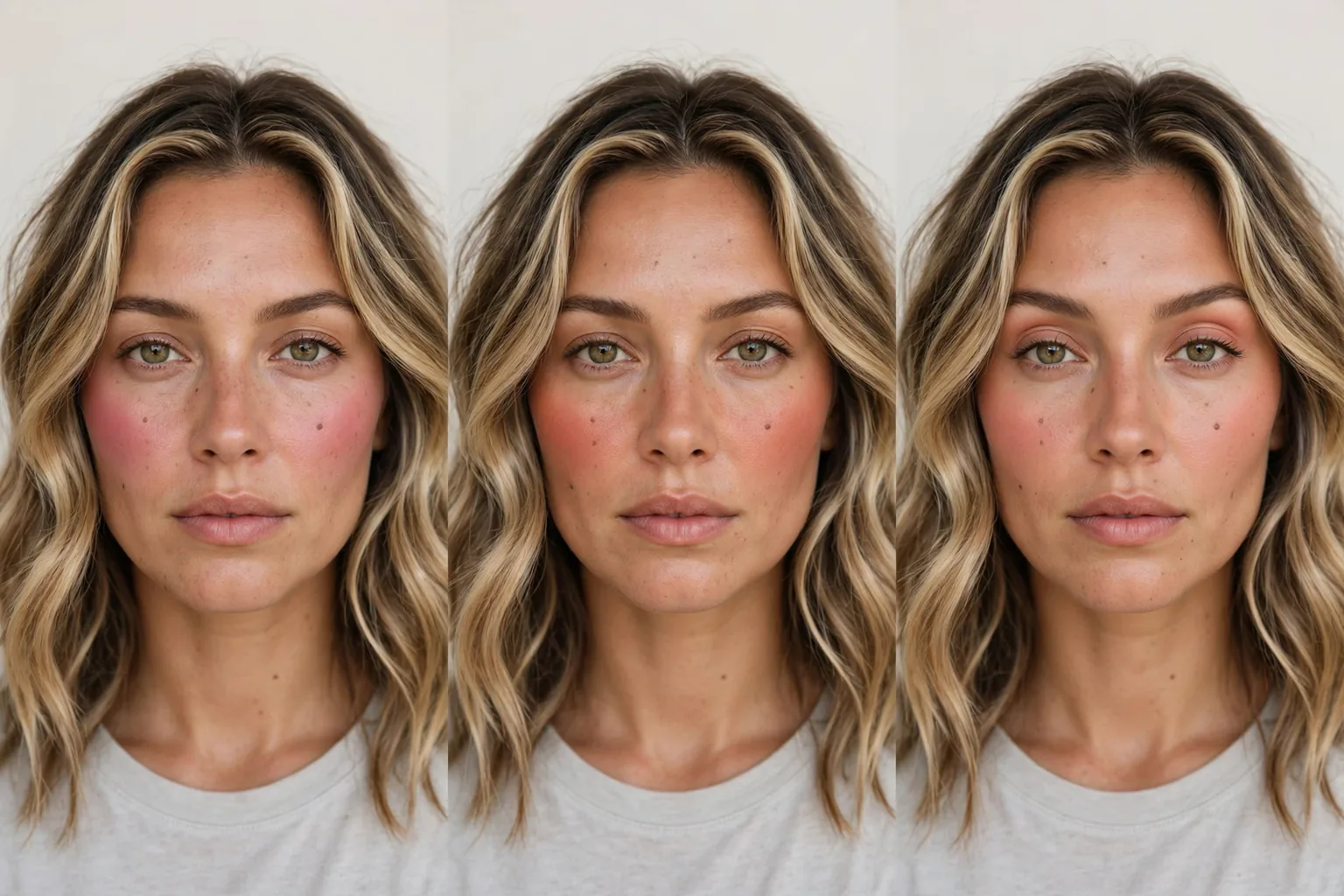
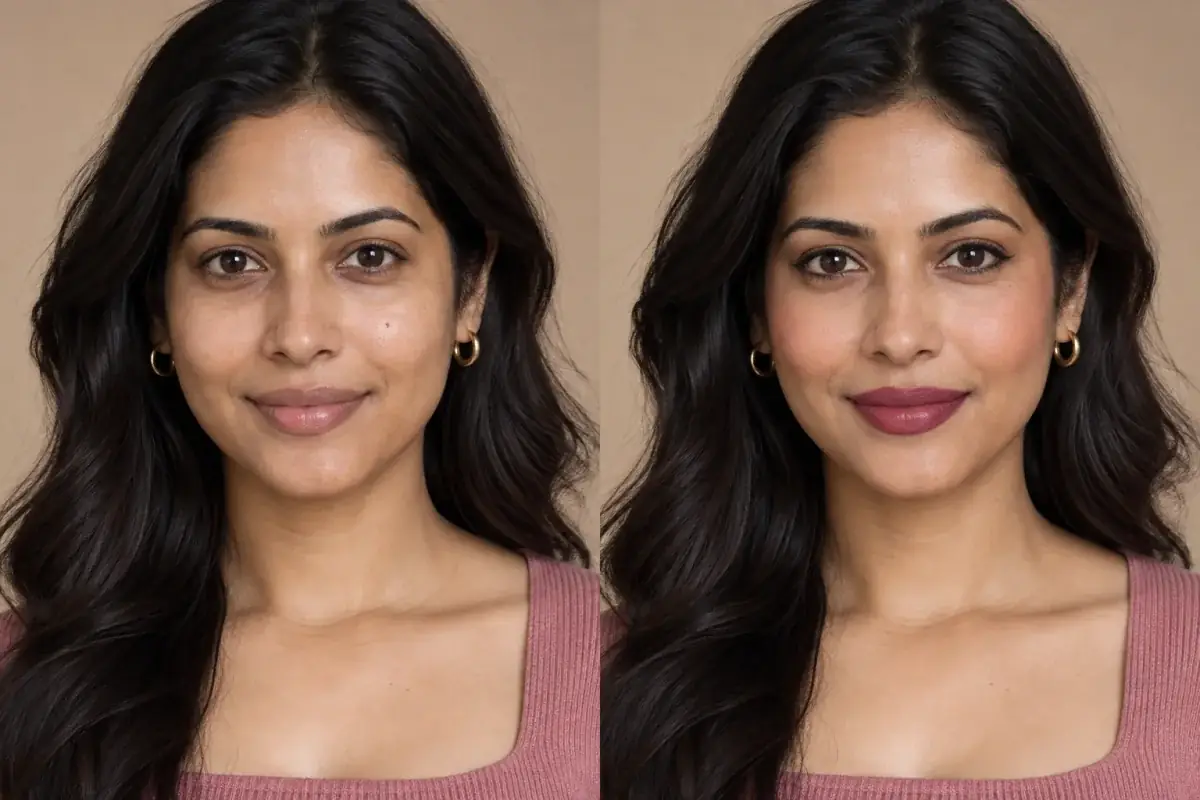
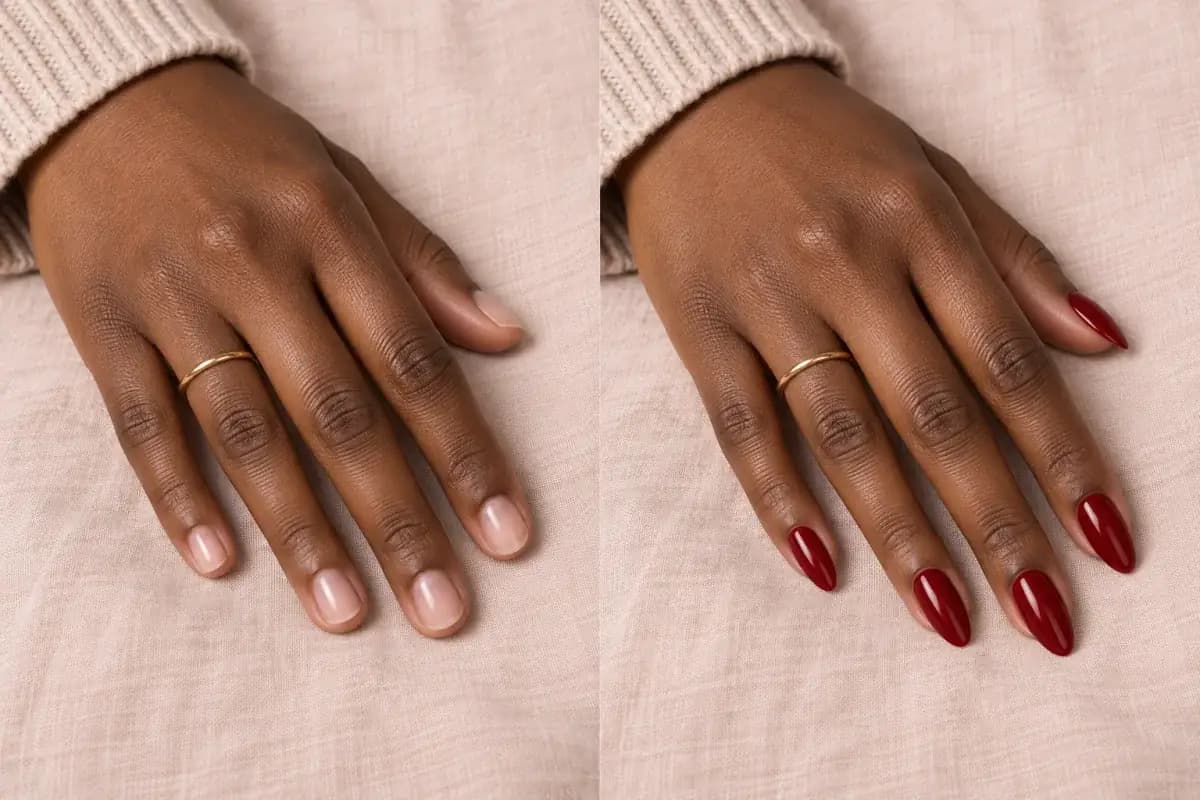
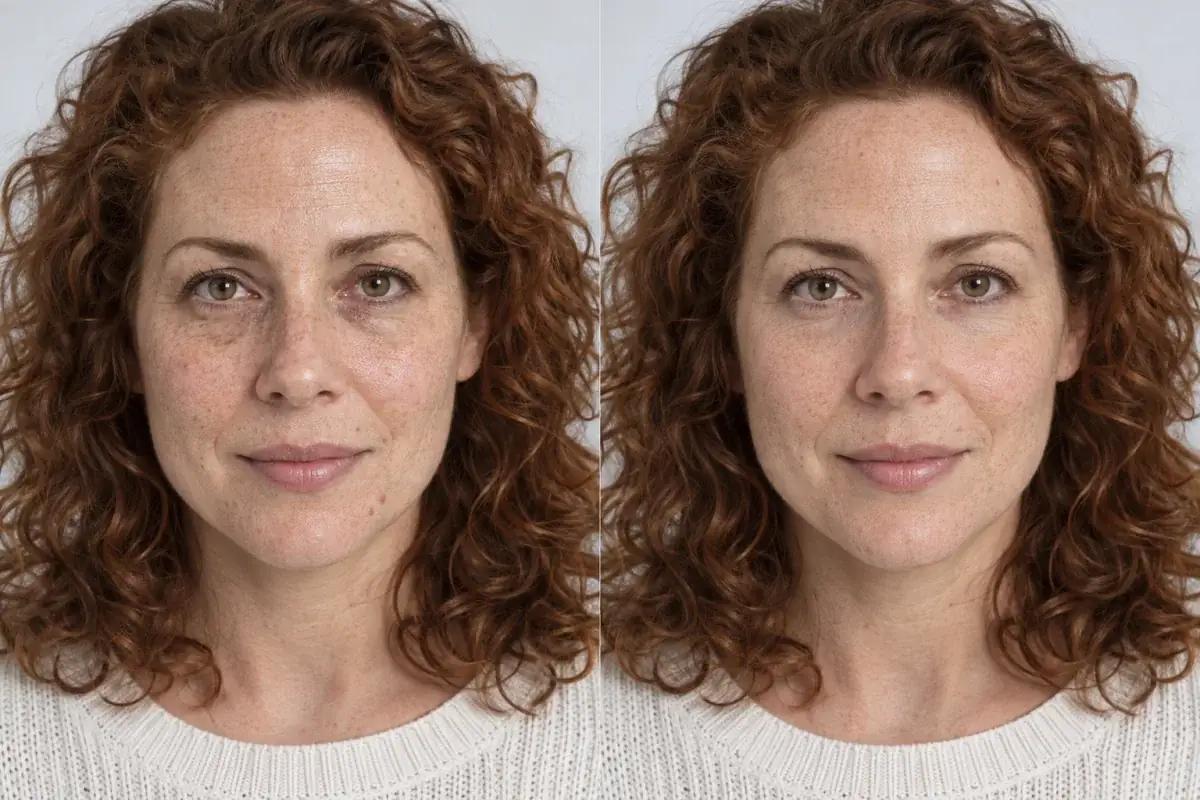
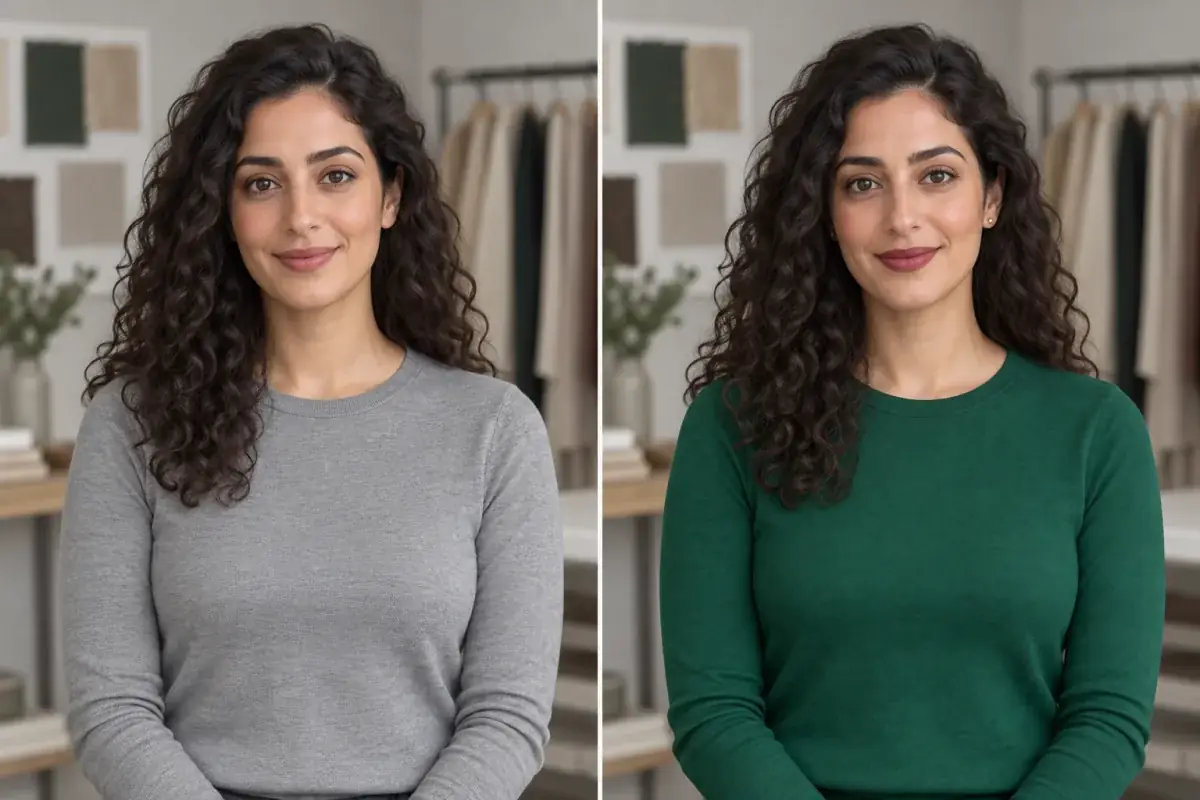
Same face, three blush families: dusty rose, terracotta and peach, and undertone picks the one that looks like skin instead of makeup.
Direct answer
Which blush color suits your undertone? Dusty rose suits cool undertones, terracotta suits warm undertones and deeper skin, and peach suits warm and neutral undertones and is the most forgiving of the three. If your undertone is olive, avoid the bright version of every family and choose muted, slightly grayed shades instead. Once the family is right, placement is the second decision: the same blush placed for the wrong face shape can undo a correct shade choice.
Which blush suits a cool undertone?
Dusty rose. Cool skin carries pink and blue tones, and a dusty rose blush repeats that coolness at a muted level, so it reads as a natural flush rather than a stripe of color. The word dusty is doing the work: a clear, bright pink on cool skin can look doll like, while the grayed, muted rose sits inside the skin's own color range. This is also why dusty rose is the safe blush for fair cool skin that finds most blush too strong within two swipes.
Named shades in this family: Rare Beauty Soft Pinch Liquid Blush in Encourage, a neutral mauve rose; Tarte Amazonian Clay Blush in Paaarty, a dusty nude rose; Westman Atelier Baby Cheeks in Petal, a soft cool rose. Pinterest's 2026 trend data has dusty rose blush searches up 189 percent year on year, and cool toned readers are the ones driving it. If your jewelry test says silver, this is your family: the quick cross-check is our gold or silver jewelry guide.
Which blush suits a warm undertone?
Terracotta first, peach a close second. Warm skin carries yellow and golden tones, and terracotta's baked orange brown matches that warmth at full strength without turning orange on the cheek, because the brown in it keeps the color earthy. It is the strongest of the three families and the one that holds up best on medium and deep warm skin, where dusty rose can disappear and peach can turn chalky. On fair warm skin, terracotta works applied lightly and blended wide; the color is right, only the dose changes.
Named shades: MAC Powder Blush in Gingerly, a muted terracotta; Rare Beauty Soft Pinch in Love, a matte terracotta; NARS Blush in Taj Mahal for deep warm skin, a burnt orange with shimmer. Terracotta blush searches are up 164 percent in Pinterest's 2026 trend data. Warm readers who find terracotta too much for daytime usually land happily on peach, which is the same warmth at half the commitment.
Which blush suits a neutral undertone?
Peach. Neutral skin sits between warm and cool, and peach is the family that leans warm without committing: its orange pink balance flatters neutral skin in most lights and rarely clashes with either lipstick direction. Peach is also the most forgiving family for beginners, because it fades into skin tones across a wide depth range instead of announcing its undertone. Searches for peach blush makeup are up 148 percent in Pinterest's 2026 data, and neutral readers are a large part of that rise.
Named shades: MAC Powder Blush in Melba, a soft coral peach; Kosas Color and Light in Papaya, a warm peach; NARS Blush in Orgasm, the famous peach pink, which sits on the border of this family and the rose family and is a fair test of which way a neutral face leans. Neutral readers can borrow dusty rose for evening and terracotta in summer; the rule is only that the borrowed shade stays muted.
How do the three blush families compare?
- Dusty rose: suits cool undertones. Named shades: Rare Beauty Encourage, Tarte Paaarty, Westman Atelier Petal. Watch out: it can look gray or disappear on deep skin.
- Terracotta: suits warm undertones, and deep skin of most undertones. Named shades: MAC Gingerly, Rare Beauty Love, NARS Taj Mahal. Watch out: too strong on fair skin unless applied lightly.
- Peach: suits warm and neutral undertones. Named shades: MAC Melba, Kosas Papaya, NARS Orgasm. Watch out: bright versions clash with olive skin.
- Muted mauve and grayed rose: the olive fix, and for neutral cool skin. Named shades: Rare Beauty Encourage worn sheer, Tarte Paaarty. Muted beats bright in every family on olive skin.
How does your skin depth change the blush rules?
Undertone picks the family, but depth sets the dose and the formula. On fair skin, every family shows at nearly full strength, so the failure mode is too much: choose sheer or buildable formulas, apply once, and blend longer than feels necessary. Fair skin is also where dusty rose earns its reputation, since its gray content stops the color looking raw.
Medium skin has the widest workable range and can wear all three families honestly, which is why medium skinned readers so often own several blushes and like none of them: family, not dose, is usually their problem. On deep skin the failure mode reverses. Dusty rose and pale peach can vanish or turn ashy, because there is not enough pigment to stand against the depth. Deep skin needs saturation: terracotta at full strength, NARS Taj Mahal rather than a pastel peach, or a rose deepened toward berry. Cream and liquid formulas tend to serve deep skin better than powders, because they keep the color in the skin instead of sitting on top of it as a pale film.
What blush suits olive skin?
The honest answer is that olive skin is the undertone the standard charts fail. Olive carries a greenish cast, and blush interacts with it in ways the warm and cool rules do not predict. Bright pink reads neon against the green. Saturated orange fights it and can look jaundiced. Very warm terracotta sometimes turns muddy, because orange and green pull each other toward brown.
What works is mutedness. Muted mauve, grayed dusty rose, and softer terracotta kept deep rather than bright all sit quietly on olive skin, because their gray content matches the muted quality of the skin itself. Rare Beauty Encourage worn sheer and Tarte Paaarty are the reliable starting points. If you do not yet know whether you are olive, our find your skin undertone guide settles the question first, and the full olive makeup picture, beyond blush, is in our makeup for olive skin guide. Olive readers should treat every shade recommendation, including these, as a hypothesis to test on a photo rather than a promise.
Where should blush go for your face shape?
Shade comes from undertone; placement comes from face shape, and placement is where a correct shade still goes wrong. The working rules:
- Round face: place blush higher on the cheekbone and sweep it back and up toward the temple, in a soft diagonal. Color low on the apples adds roundness; color high and angled adds length.
- Long face: keep blush horizontal across the apples and slightly lower than feels natural, blended straight out toward the ears. The horizontal line shortens the face visually; never sweep it upward, which lengthens.
- Square face: apply on the apples in a round, soft edged shape, keeping color away from the jaw's angles. Round placement softens a strong bone structure; keep the edges feathered, never a hard diagonal.
- Heart shaped face: place blush on the lower apples and blend outward below the cheekbone, keeping color off the forehead's width. This balances a wider top half against a narrower chin.
- Oval face: the classic placement is yours: apples blended up along the cheekbone. Oval faces can also carry the draped placement, color swept from cheek to temple, better than any other shape.
Source: Patrick Ta, choosing blush and how to best apply it: placement techniques for every face shape
How do you test shade and placement together before buying?
Blush is the hardest makeup to judge from a swatch, because both of its variables, family and placement, only exist on a face. Test them together: upload a daylight photo to the blush try-on and put dusty rose, terracotta and peach on your own cheeks, each at the placement your face shape calls for. The wrong family shows itself as a color that sits on the skin; the right one looks like the color your face would make itself. Each try-on uses credits from your plan, so run the three finalists rather than a whole brand's shade range, and judge the result in the light you actually live in, not the brightest light you can find.
Undertone sorts the shelf; it does not finish the decision
Skin depth, surface redness and the rest of your makeup all edit how a blush reads, and a technically wrong family worn at the right placement often beats the right family placed badly. Use undertone to choose the three shades worth testing, then let your own face rank them.
Take the theory out of it.
The article's central claim is that blush failure is usually a family or placement error, and both are testable in one step: the same face, three families, each placed for the reader's face shape, before any money is spent on the wrong pan.
Questions people ask
Which blush color suits my undertone?
Dusty rose suits cool undertones, terracotta suits warm undertones and deeper skin, and peach suits warm and neutral undertones. If you are olive, choose muted, slightly grayed versions of any family and avoid bright shades.
Can warm undertones wear dusty rose blush?
Yes, if the rose is muted and leans mauve rather than blue pink. A grayed rose can read as a neutral flush on warm skin, but a clear cool pink usually sits on top of warm skin instead of joining it.
Does terracotta blush suit fair skin?
Yes, with a lighter hand and a wider blend. The family is right for fair warm skin; only the dose changes. Fair cool skin should reach for dusty rose first, since terracotta can read as a tan stripe on it.
Where should blush go on a round face?
High on the cheekbone, swept back and up toward the temple in a soft diagonal. Placing color on the fullest part of the apples adds width, while the higher angled placement adds length.
What blush suits olive skin best?
Muted shades: grayed dusty rose, muted mauve and deep, soft terracotta. Olive skin's greenish cast makes bright pink look neon and saturated orange look muddy, so mutedness matters more than the warm or cool label.