






A blend you can control

How to do a smokey eye without muddy edges.

Start with one mid-tone, place depth close to the lashes and outer eye, and expand in thin layers. The gradient matters more than how dark the palette looks.

Preview a smokey eyeCompare soft and dramatic depth
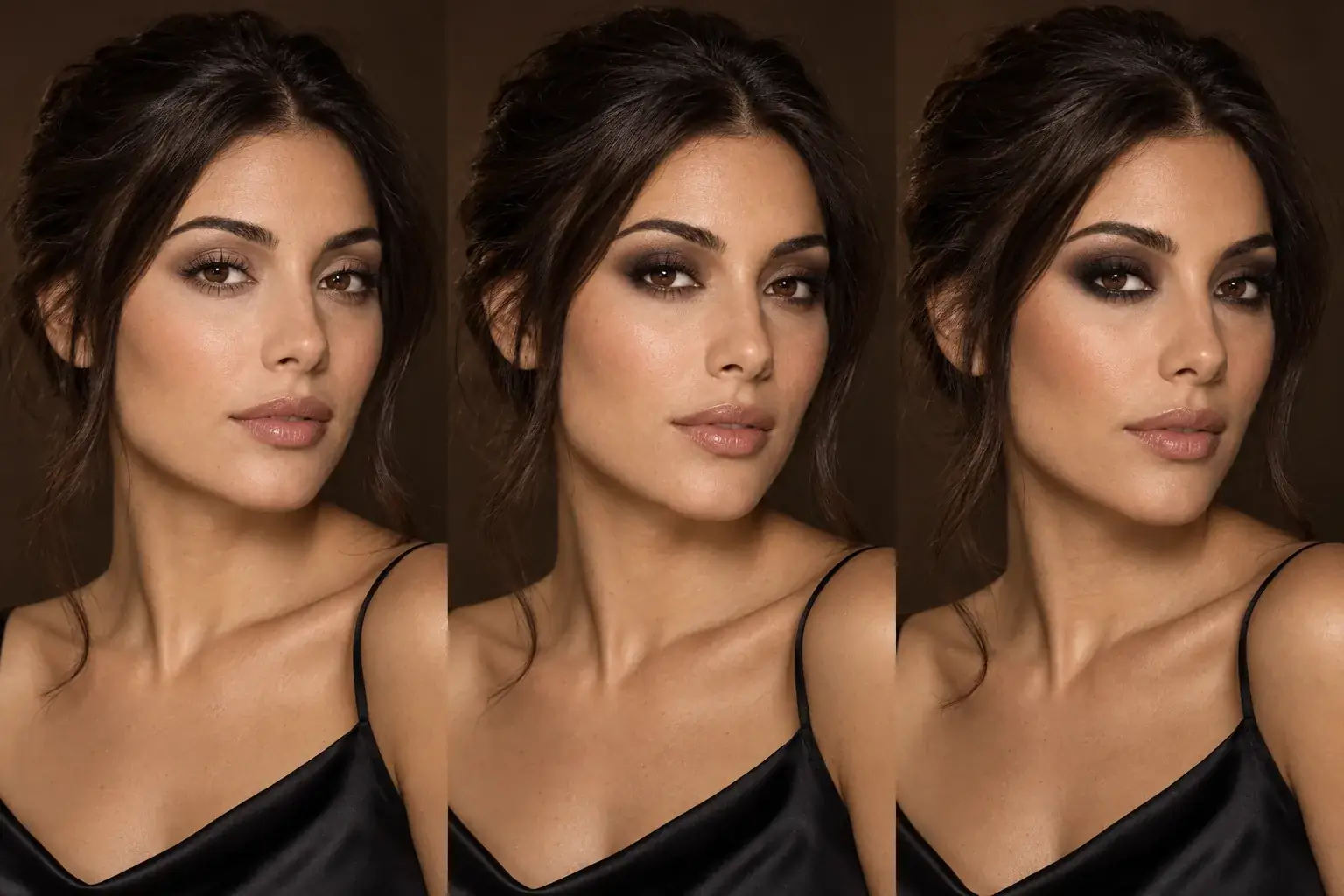
The same olive-skinned woman wears soft taupe, classic brown charcoal and dramatic smokey eyes
A smokey eye can be soft or dramatic. What defines it is the controlled gradient from dark to light.
Quick answer

Use a mid-tone brown as the map, press a deeper shade along the lashes and outer third, blend the meeting point, and finish the outer edge with a clean brush instead of adding more pigment.

  • Choose brown, taupe, plum or navy before reaching for black.
  • Press depth where you want it, then blend the edge rather than sweeping pigment everywhere.
  • Keep the inner eye and brow area cleaner to preserve dimension.
  • Match lower-lash intensity to the size and shape of the upper smoke.

01

Choose the right depth and colour

A daytime smokey eye can use taupe, soft brown or muted mauve. A classic evening version can add espresso, charcoal or deep plum. Navy and forest green create colour while remaining sophisticated. Black is useful for the final lash-line depth, but it is rarely the easiest transition colour.

Choose a palette with a clear light, mid and deep relationship. If every shade is equally dark, the finished eye will lack a gradient. If every shade is very shimmery, the shape may be harder to control in photographs.

Brown eyes

Taupe, bronze, plum, navy and olive can all create contrast or warmth.

Blue or grey eyes

Bronze, warm brown, charcoal and muted plum often make the iris clearer.

Green or hazel eyes

Plum, burgundy-brown, bronze and deep forest tones can emphasise mixed colour.

Any eye colour

Neutral taupe through espresso is reliable when placement and contrast are well judged.
02

Prepare without creating a heavy base

Use a thin eye primer or a small amount of concealer and set only if the lid remains tacky. Too much powder can make shadow skip or look dry. Complete foundation before the eyes if you are comfortable cleaning fallout, or do the eyes first when using dark loose pigment.

Keep two brushes: one for placing colour and one mostly clean for the outer edge. Repeatedly blending with a pigment-loaded brush expands the shadow until there is no clear boundary.

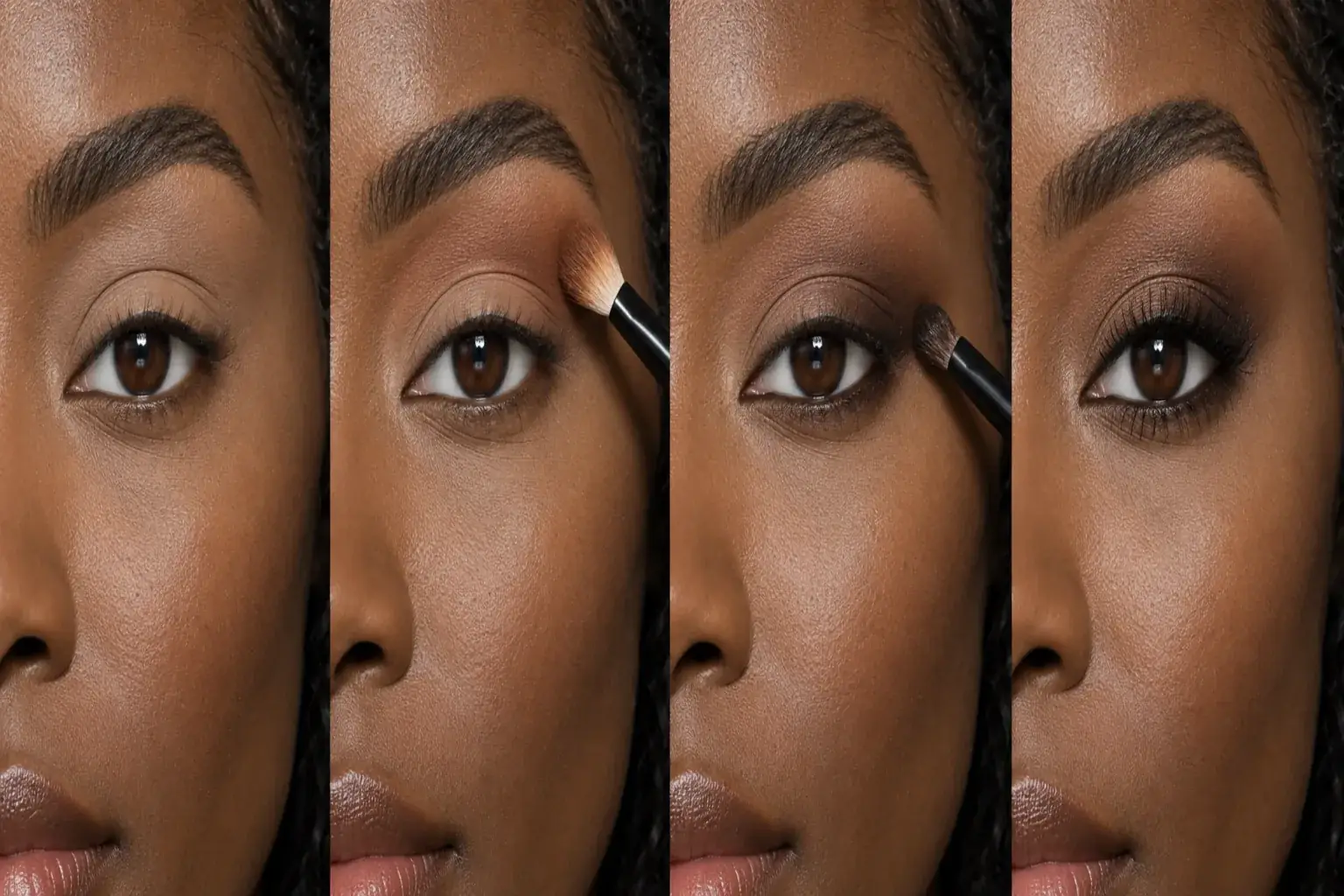
Four close views show a brown smokey eye built from base to transition, deep outer corner and finished lashes
Build colour in stages and keep a clean brush ready for the final edge.

A practical path

A four-stage smokey eye

  1. 01

    Map with a mid-tone

    Place a soft brown or taupe through the outer lid and crease, then check the shape with both eyes open.

  2. 02

    Press in depth

    Use a smaller brush to press espresso, plum or charcoal along the outer lash line and outer third. Keep it below the first blend.

  3. 03

    Connect and finish

    Blend only where the shades meet, add controlled lower-lash colour, then curl lashes and apply mascara.

03

Build the upper eye in layers

Place the mid-tone first with the eye open so the shape remains visible. Press the deep shade close to the outer lashes, then soften only the seam between deep and mid tones. Repeat with small amounts until the depth is sufficient. The darkest point should normally remain near the lashes and outer corner.

Add a satin shade to the centre or inner lid if you want dimension. Keep the brow bone close to the natural skin tone so the smoke has somewhere to fade.

For hooded eyes

Map the mid-tone slightly above the fold and preserve visible space with thin liner.

For deep-set eyes

Avoid taking the darkest colour too high into the socket, where natural shadow already adds depth.

04

Finish the lower lash line and clean the shape

Use the mid-tone along the outer two-thirds of the lower lashes, then add a smaller amount of the deep shade at the outer corner. Connect it softly to the upper shadow. A fully dark waterline and lower lash line create more drama but can make the eye appear smaller, so add them only when that is the intended effect.

Remove fallout with a clean brush or cotton bud, then refine the outer angle with concealer if needed. Finish complexion and under-eye makeup after the smoke is stable. Mascara, lashes and liner should support the gradient rather than cover it.

Try before you decide

Choose the intensity before you start blending.

Preview a soft brown, classic charcoal or coloured smoke on your photo, then recreate the strongest direction with gradual layers.

Preview a smokey eyeCompare soft and dramatic depth

Useful answers

Questions people ask

Reviewed 19 September 2026

What colours do I need for a smokey eye?

Use a light skin-related shade, a mid-tone such as taupe or brown, and a deeper shade such as espresso, plum, navy or charcoal. Black can be reserved for the lash line.

How do I stop a smokey eye looking muddy?

Use small amounts, keep separate brushes for placement and clean blending, and preserve a visible gradient from deep lash line to soft outer edge.

Can I do a smokey eye on hooded eyes?

Yes. Map the transition shade with the eye open, lift it slightly above the fold and keep the deepest colour controlled around the outer lashes.

Should I do eye makeup before foundation?

Either order works. Eyes first make dark fallout easier to remove; complexion first can help you judge the final balance. Choose based on the pigment and your routine.