






Wedding makeup with a real wear plan

Bridal makeup looks that still feel like you.

Choose a finish and focal point that suit the dress, setting, photography and your normal style. Then test the complete look in the light and timing of the day.

Preview a bridal directionUse the same photo for each look
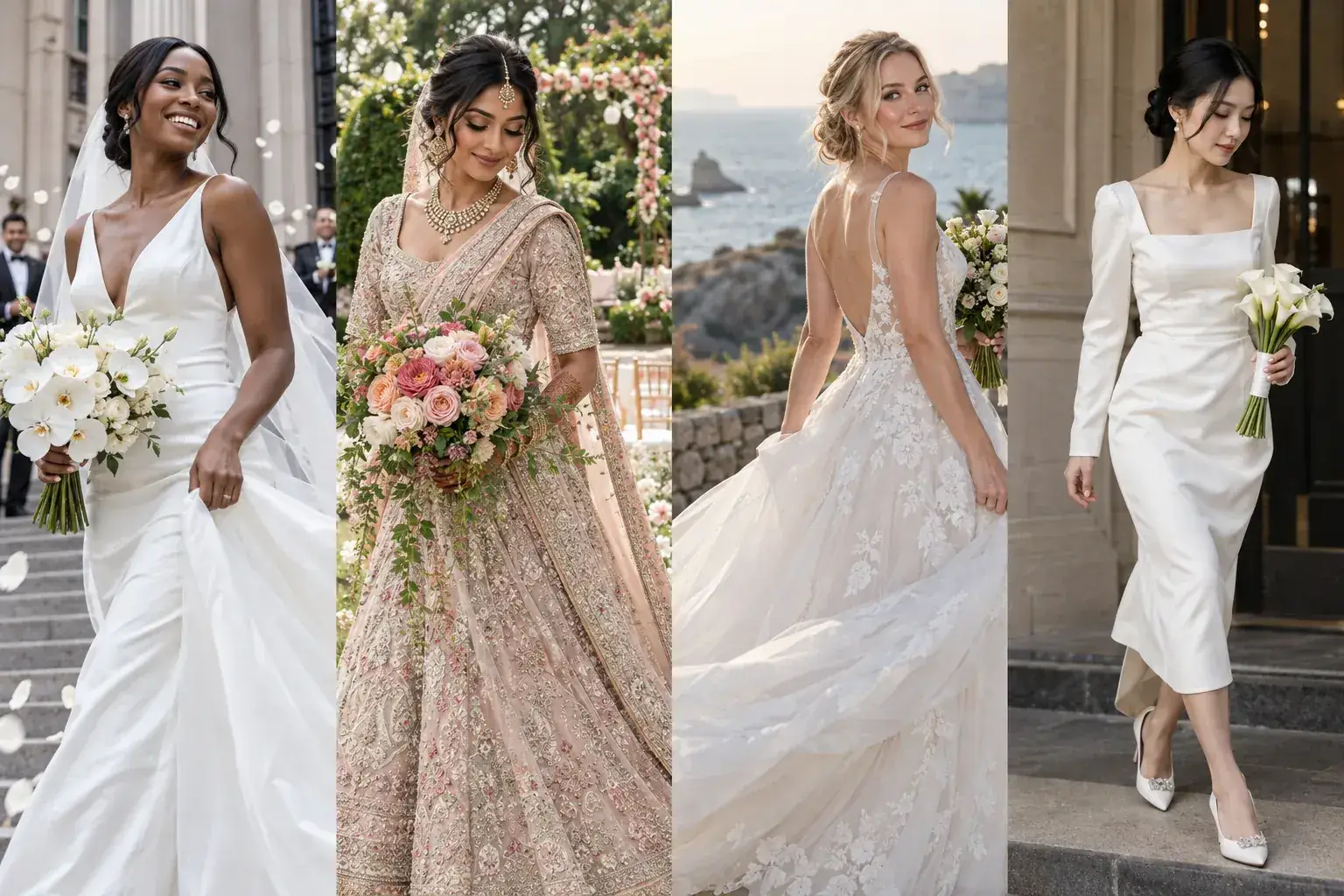
Four brides in city, South Asian garden, coastal and registry wedding settings with distinct makeup looks
Natural, soft glam, classic and radiant can all be bridal when the look fits the person and setting.
Quick answer

Choose one focal point, keep complexion texture believable, and test the finished look in daylight, flash and the expected weather. The best bridal makeup reads clearly in photographs without feeling like a different person.

  • Bring dress, hair, jewellery and venue references to the trial.
  • Test the exact sunscreen and skincare under the makeup.
  • Photograph the trial in window light, room light and flash.
  • Build a touch-up plan for lips, shine, tears and weather.

01

Four useful bridal directions

Natural bridal makeup uses sheer to medium complexion coverage, softly defined eyes and a lip close to the wearer's natural colouring. Soft glam adds more sculpting, lash definition and a polished neutral or rose lip. Classic bridal makeup often pairs clean skin, defined lashes and liner with rose, berry or red. Radiant bridal makeup uses controlled luminosity on high points without making every surface reflective.

An editorial direction may use graphic liner, unexpected colour or a stronger lip. It works best when it connects to the dress, flowers or personal style and has been tested from every camera angle.

Natural

Skin-first, soft definition and colour that closely relates to your own features.

Soft glam

Polished complexion, blended eyes, fuller lashes and balanced neutral colour.

Classic

Clear structure, enduring colour choices and one recognisable focal point.

Radiant

Fresh light on selected high points with powder and grip where wear matters.
02

Plan for the venue and schedule

A midday outdoor ceremony exposes every layer of texture and can involve heat, wind and strong sun. An evening ballroom absorbs subtle definition and may need more contrast around eyes, brows and lips. A registry wedding may call for quick, camera-ready polish that moves naturally into lunch or dinner.

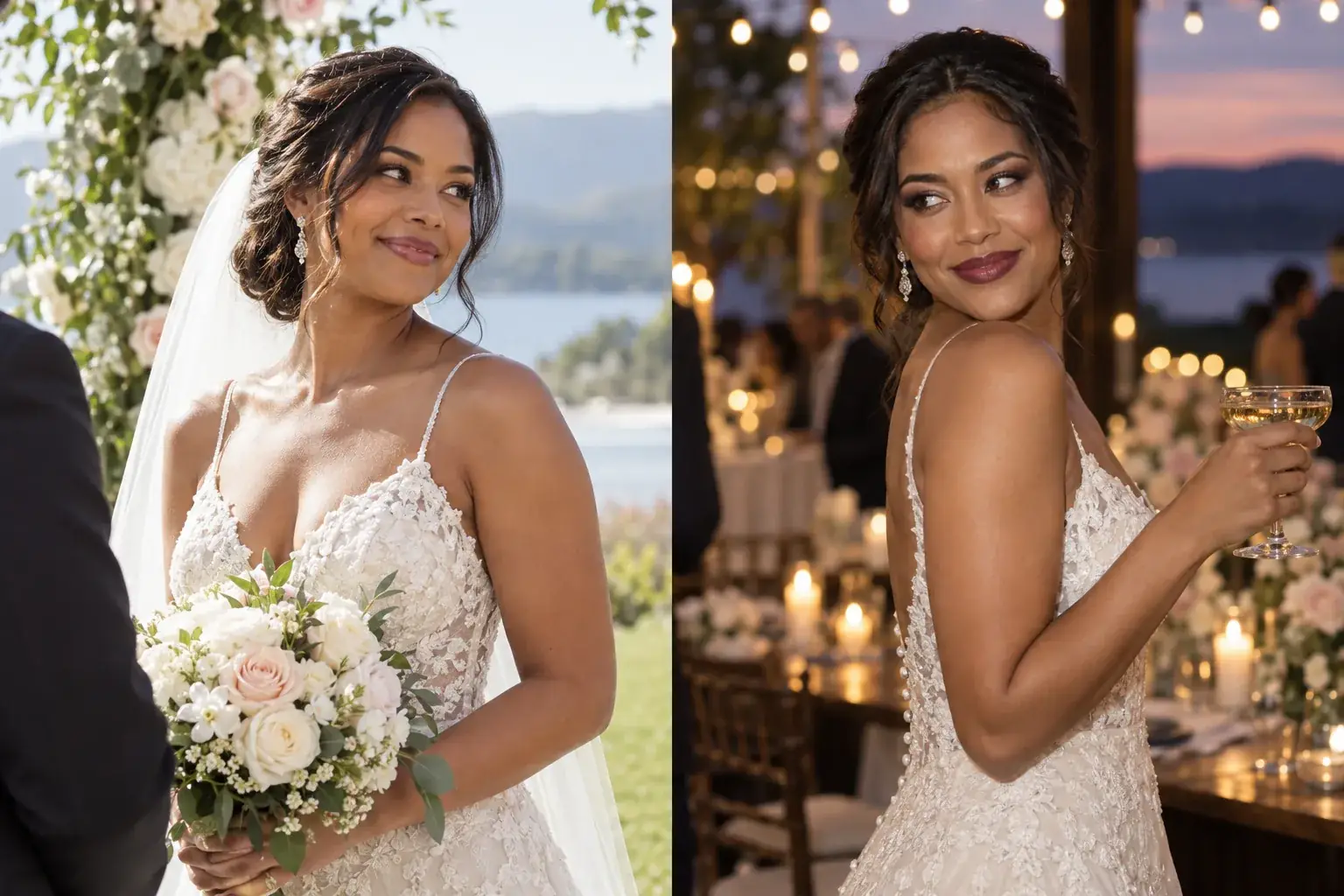
Weather matters, but so does transition. If the ceremony and reception have different light, plan one easy update such as a deeper lip, extra outer-corner shadow or a small amount of powder and highlight refresh.

The same bride wears a luminous daytime ceremony look and a slightly deeper reception look
A small lip or eye change can carry the same makeup from ceremony light into the reception.

A practical path

From inspiration to a wedding-day plan

  1. 01

    Choose the mood

    Select natural, soft glam, classic, radiant or editorial, then name the feature that should lead the look.

  2. 02

    Run a full trial

    Wear the complete skin, eye and lip plan for several hours with the intended skincare, lashes and setting products.

  3. 03

    Record and prepare

    Photograph the result, list the shades and techniques used, and pack a concise touch-up kit for the day.

03

Make photography part of the trial

Take photos from the distance of a portrait and a group shot, not only a close selfie. Check natural light, indoor ambient light and direct flash. Look for sunscreen flashback, complexion colour that separates from the neck, lashes that hide the eye, and lip colour that disappears from a distance.

Do not solve every concern with heavier makeup. Strategic definition around brows, lash line and lips often reads better than adding more opaque foundation.

Close view

Skin texture, blend lines, lash comfort and the lip edge should remain believable.

Full view

The face should still have definition beside the dress, hair, jewellery and venue.

04

Build a small touch-up kit

Pack the lip colour and liner, blotting paper, a small amount of powder, cotton buds, lash adhesive if you wear strips, and tissues that do not shed. Ask one trusted person to hold it and to check teeth, lipstick edges and shine before key photographs.

Keep the kit based on the tested look. Introducing a new powder or lipstick on the day creates avoidable colour and texture surprises.

Try before you decide

Compare the full look before the trial.

Use your own photo to narrow the mood, focal point and colour family, then take a clear direction to your artist or practice session.

Preview a bridal directionUse the same photo for each look

Useful answers

Questions people ask

Reviewed 19 September 2026

What is the difference between natural bridal makeup and soft glam?

Natural bridal makeup keeps coverage and feature definition close to the person's everyday face. Soft glam adds more polish, contour, blended eye depth and lash definition while keeping edges soft.

How long before the wedding should I have a makeup trial?

Many people schedule it one to three months before the wedding, with enough time to adjust products, skincare or the brief. Coordinate with hair and dress decisions if possible.

How can I avoid foundation flashback?

Test the exact skincare, sunscreen, powder and foundation with direct flash. Products high in certain reflective ingredients can look pale on camera even when they look fine in person.

Should bridal makeup be heavier for photos?

It needs enough definition to read at distance, but heavier foundation is not always the answer. Focus on balanced contrast around brows, eyes, cheeks and lips, then test in real lighting.