






How to whiten teeth: what works, what does not, and what nobody tells you
Almost every whitening guide skips the question that decides your result: what is actually staining your teeth. Get that wrong and the most expensive treatment on the list will do nothing.
Teeth were never white
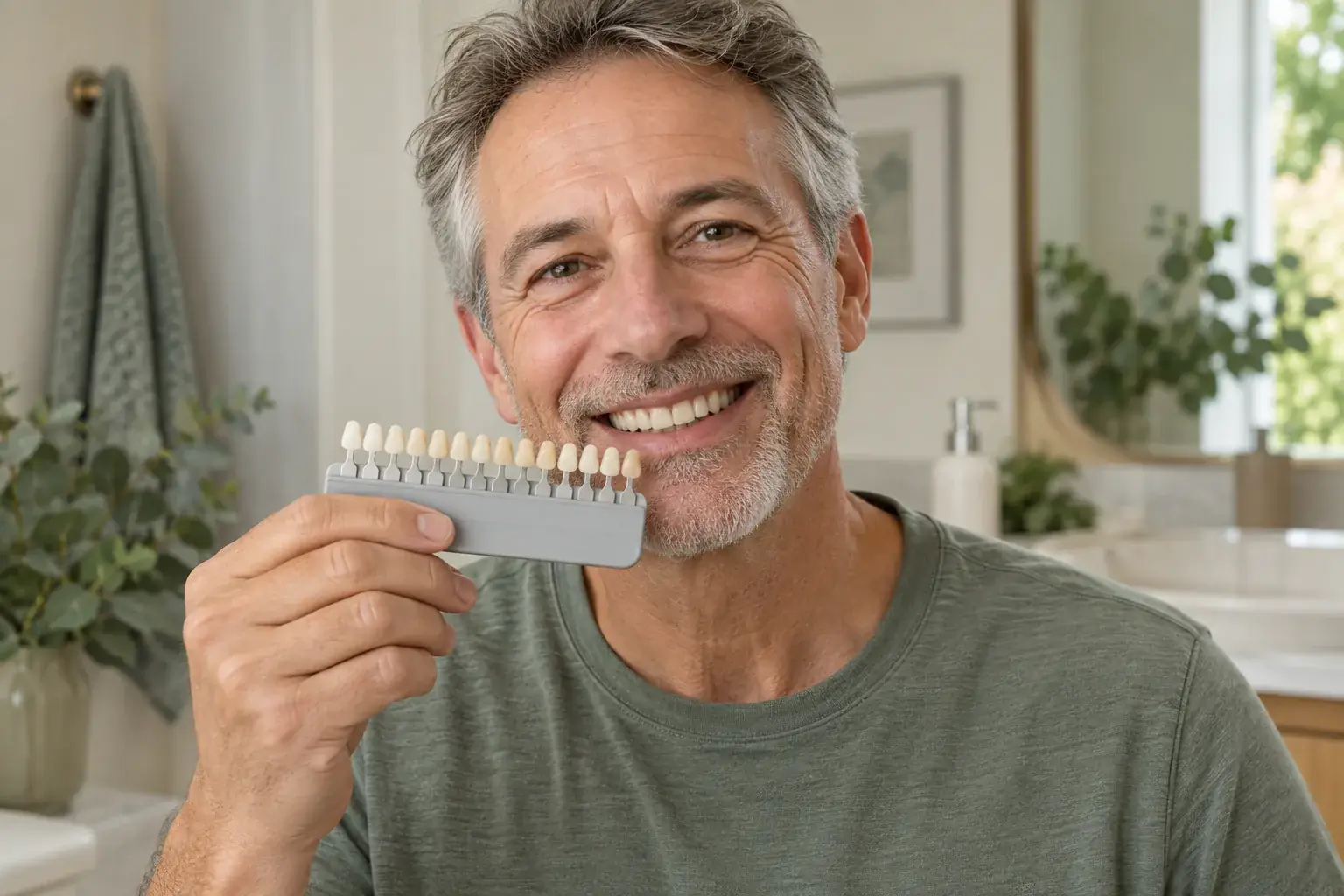
The first useful thing to know is that healthy teeth are not white. They are a pale, slightly warm off-white, and they vary from person to person and from tooth to tooth. Canines are naturally a little deeper than the front incisors in most people.
That colour comes from two layers. Enamel on the outside is semi-translucent, and dentine underneath is yellower. What you see is dentine through enamel, which is why enamel thinning with age makes teeth look darker even when nothing has stained them.
It matters because it sets the ceiling. Whitening lightens what is there; it does not repaint a tooth. The paper-white smiles used to sell whitening are almost always veneers, which are a different procedure with a different price and a different amount of drilling.
Two kinds of stain, and only one really shifts
This is the distinction the rest of the decision hangs on, and it is the one most guides leave out.
- Extrinsic stains sit on the surface of the enamel. They come from pigments in coffee, tea, red wine and tobacco, and they build up gradually. These respond well: to a hygienist's clean, to whitening toothpaste up to a point, and to peroxide.
- Intrinsic stains are inside the tooth, in the enamel or the dentine beneath it. They come from how the tooth formed (dental fluorosis, developmental conditions) or from later trauma to the tooth, a dead nerve, or old root-canal materials. These respond slowly, partially, or not at all to anything you can buy.
What actually changes the colour of a tooth
Only one family of ingredients genuinely alters tooth colour rather than cleaning the surface: peroxides. Hydrogen peroxide, or carbamide peroxide which breaks down into it. Everything else on the shelf is either removing surface stain or making a claim it cannot keep.
- In-chair professional whitening. The strongest concentrations, applied with your gums protected, in one or two appointments. Fastest, most expensive, most controlled.
- Dentist-supplied take-home trays. Custom trays and a lower-concentration gel used over a couple of weeks. In the UK the legal maximum for a product supplied by a registered dental professional is 6% hydrogen peroxide. Widely considered the best balance of result and cost.
- Over-the-counter strips. Lower concentration again, no custom fit, so the gel does not sit evenly on every tooth. They do work on extrinsic staining. Used as directed the evidence does not show permanent enamel damage; the risk goes up with overuse.
- Whitening toothpaste. Mostly abrasives that remove surface stain, sometimes with a very low peroxide content. Good at maintaining a result. It will not lighten the underlying colour of your teeth, whatever the box says.
What the evidence does not support
Three things get recommended constantly and are worth being sceptical about.
- Charcoal. There is not adequate evidence that charcoal oral-care products whiten teeth safely and effectively, and studies have found charcoal-based whitening toothpaste increases enamel surface roughness. A rougher surface picks up stain faster, so the long-run effect can run backwards.
- Lemon juice, vinegar, and other acid tricks. These strip enamel. Enamel does not grow back, and thinner enamel shows more of the yellower dentine underneath, so the classic DIY whitening hack makes teeth darker over years while looking like it worked for a week.
- Baking soda on its own. Mildly abrasive, so it lifts some surface stain. It does not change intrinsic colour, and scrubbing harder is not a strategy.
The part nobody mentions: your fillings will not change
Whitening works on natural tooth structure and has no effect on crowns, veneers or composite bonding. They stay exactly the colour they were.
If you have a crown on a front tooth, or bonding on a chipped incisor, whitening the teeth around it does not brighten your smile evenly. It makes the restoration stand out, because it was originally colour-matched to teeth that are now lighter. People discover this after paying for the whitening.
It is not a reason not to whiten. It is a reason to raise it with a dentist first, because the usual answer is to whiten and then replace the restoration to match the new shade, and the order matters.
Sensitivity, and who should not
The most common side effect of peroxide whitening is tooth sensitivity, as the peroxide passes through enamel and irritates the nerve. It is usually temporary and settles within days of stopping, and it is more likely with higher concentrations and longer wear.
Untreated decay, gum disease, cracked teeth and exposed roots all change the picture, and whitening over any of them can hurt considerably more and risk more. That is the actual reason the supervision rule exists rather than a bureaucratic one: in the UK, whitening must be carried out by or under the supervision of a dentist registered with the General Dental Council. A beauty salon offering it without that is operating illegally.
None of this is advice about your teeth, which we are in no position to give. It is the set of questions worth walking in with.
Before you spend: look at it on your own face
Whitening runs from a few pounds for strips to several hundred for in-chair treatment, and it is not reversible in the sense that you cannot un-spend it. It is worth knowing what you are buying.
Two shades is the realistic move for most people, and two shades is a smaller change than the marketing implies. Some people look at a preview and decide it is exactly the thing that was bothering them. Others look and realise the difference is not worth three hundred pounds and a fortnight of sensitivity, and that is an equally good outcome. It is just one that nobody selling whitening will help you reach.
Uptone will show you the second version for nothing. It edits your own photo rather than a model's, keeps the texture and shading that make teeth read as real, and does not touch your lips or gums. It also cannot whiten an actual tooth, and it is not a prediction of what a dentist would achieve on yours. How far real teeth lift depends on whether the staining is extrinsic or intrinsic, which no photograph can tell you.
This is not dental advice
We build a beauty preview tool, not a dental practice, and nothing here is a recommendation about your own teeth. Staining has causes that need looking at rather than covering: a single dark tooth in particular is often a dead nerve rather than a stain, and no amount of whitening is the right response to it. Anything beyond an over-the-counter product is a conversation with a dentist, and the sensible order is that conversation first and the shopping second.
Take the theory out of it.
Free to start, no watermark, and a failed generation costs you nothing. It whitens the photo, not the tooth, but it is the cheapest way to find out whether the change is one you actually want.
Questions people ask
What is the fastest way to whiten teeth?
In-chair professional whitening, which uses the highest concentrations with your gums protected and works in one or two appointments. It is also the most expensive. Dentist-supplied take-home trays get to a similar place over a couple of weeks for less.
Do whitening strips damage enamel?
Used as directed, the evidence does not show permanent enamel damage. The risks rise with overuse, and with existing problems like decay, gum disease or exposed roots. The usual side effect is temporary sensitivity rather than erosion.
Does whitening toothpaste actually work?
It removes surface stain, which is a real effect and worth having. It does not lighten the underlying colour of the tooth, because that requires peroxide reaching inside the enamel rather than an abrasive polishing the outside.
Does charcoal toothpaste whiten teeth?
There is not adequate evidence that it does, and research has found charcoal-based whitening toothpaste increases enamel surface roughness. A rougher enamel surface takes up stain more readily, so it can work against you over time.
Why did whitening not work on one of my teeth?
Two common reasons. It may be a crown, veneer or composite filling, none of which change colour. Or the discolouration may be intrinsic (inside the tooth rather than on it), which is often a dead nerve after trauma and needs a dentist rather than a stronger gel.
How white can teeth actually get?
Lighter than they are, not white. Whitening lifts the existing colour; it does not repaint the tooth. The uniformly paper-white smiles in advertising are almost always veneers, which is a different procedure entirely.
Can I see what whiter teeth would look like on me first?
Yes, on a photo. Uptone whitens the teeth in your own picture while keeping the natural shading and leaving the lips and gums alone, which is the cheapest way to decide whether the change is one you want before booking anything. It previews the look; it does not tell you what your teeth would actually reach.